Industry News

Tracks company news, strategic changes, funding activities, and personnel adjustments across the blockchain and crypto industries, delivering a full-spectrum industry overview for our users.

The RWA Narrative is Shifting: Why is Tokenized Gold Being Repeatedly Mentioned?

The narrative around Real World Assets (RWA) is shifting from theoretical discussions about which assets can be tokenized to a more practical focus on which tokenized assets can achieve long-term viability and scale. Tokenized gold is increasingly highlighted as one of the most promising directions in RWA development. Gold possesses inherent advantages: it is a globally recognized store of value with established custodial, auditing, and settlement systems. The primary challenge for its on-chain adoption isn't proving its legitimacy but rather improving its accessibility, lowering transaction costs, and enabling seamless cross-border movement. Tokenization addresses the low liquidity and high friction associated with physical gold, allowing it to circulate like a digital asset within crypto financial systems. This trend is further amplified by the current macro environment marked by geopolitical uncertainty and inflation, which reinforces gold's traditional role as a safe-haven asset. The conversation is moving beyond feasibility to examine practical operational requirements: physical custody, verifiable reserves, data consistency between on-chain and off-chain systems, and compliance across jurisdictions. Early infrastructure platforms, such as Matrixdock's XAUm token, which is backed by LBMA-standard physical gold, are emerging. They emphasize building robust foundational layers—including verifiable reserves and regulatory compliance—rather than merely offering a trading product. Ultimately, the next phase of RWA evolution will be a systemic test of asset selection, operational stability, and sustainability. Tokenized gold represents a clear and verifiable intersection of asset maturity, real-world demand, and on-chain utility.

marsbit12/26 09:16

The RWA Narrative is Shifting: Why is Tokenized Gold Being Repeatedly Mentioned?

marsbit12/26 09:16

Stepping into the Stablecoin Wave for Six Years, He Sees the Embryonic Form of the Future of Payments

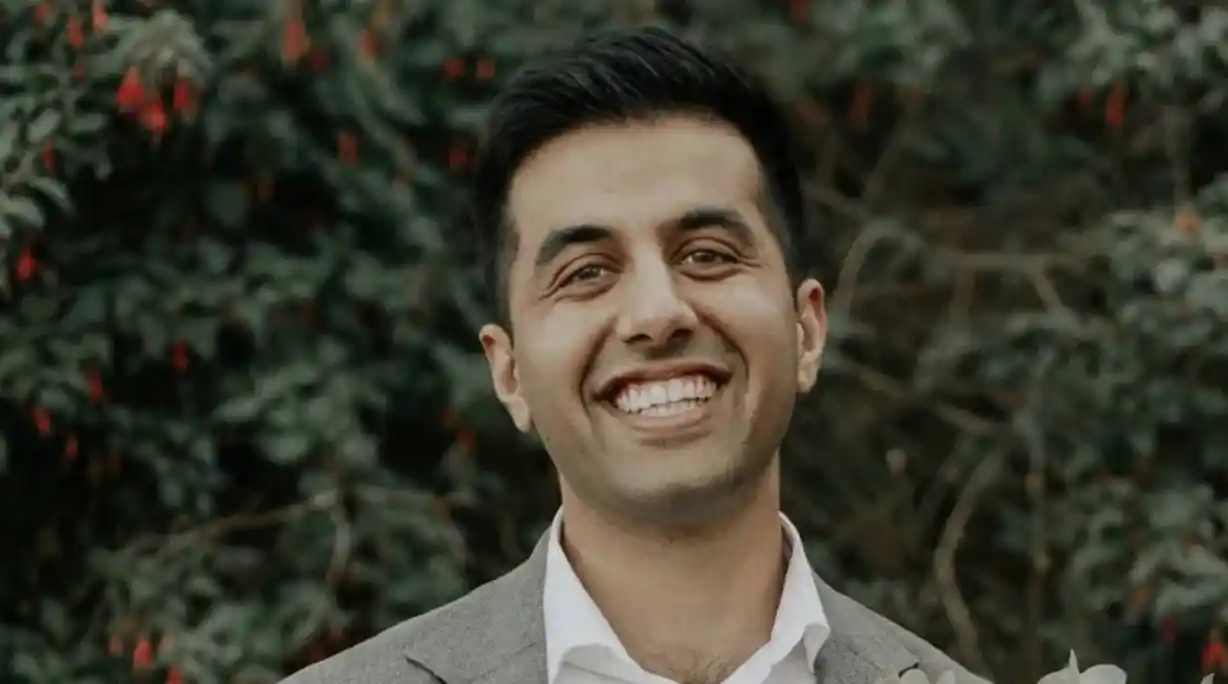
"Six years into the stablecoin wave, Raj Parekh, former head of crypto at Visa and now leading payments at Monad, reflects on the evolution and future of digital payments. He identifies 2019 and Facebook’s Libra project as a pivotal moment that forced traditional finance to take crypto seriously. At Visa, he led efforts to integrate USDC for near-instant settlement, overcoming slow, costly legacy systems. Parekh later founded Portal Finance to build payment infrastructure, but encountered scalability limitations across blockchains. This led to Portal’s acquisition by Monad, where he now focuses on high-performance, EVM-compatible chains capable of sub-second finality—critical for global payment adoption. He sees stablecoins entering a "email moment" for money: enabling instant, low-cost global value transfer. New business models are emerging where issuers share interest earnings with users, transforming stablecoins into interest-bearing assets even during transactions. This shift, coupled with supportive regulation like the GENIUS Act, is driving broader institutional adoption. Looking ahead, Parekh is excited about AI-powered agentic payments and high-frequency finance, where autonomous agents execute microsecond-speed transactions. He envisions a future where decentralized infrastructure seamlessly integrates into everyday apps, enabling global, efficient, and programmable money movement—ushering in a new era for both finance and user experience."

marsbit12/26 05:40

Stepping into the Stablecoin Wave for Six Years, He Sees the Embryonic Form of the Future of Payments

marsbit12/26 05:40

Crypto Morning Brief: Offshore RMB Breaks Through 7.0 Against USD Again, Trust Wallet Users' Funds Stolen

China's offshore yuan strengthened past 7.0 against the U.S. dollar, reaching its highest level since September 2024. Bitcoin mining difficulty saw a slight increase to 148.26 T. In regulatory developments, Hong Kong is advancing legislation for OTC digital asset trading and custody services to enhance compliance and combat fraud. A significant security breach affected Trust Wallet users, with at least $6 million stolen due to a vulnerability in its browser extension. Meanwhile, an analyst confirmed that Trend Research’s Ethereum holdings are facing approximately $143 million in unrealized losses. In political news, the Wall Street Journal reported that Changpeng Zhao benefited from an emerging "informal pardon" system during Trump’s presidency, where lobbying for clemency reportedly involved multi-million dollar fees. The AI-related cryptocurrency sector experienced a sharp decline, losing 75% of its market value—approximately $53 billion—in 2025, with several major tokens dropping over 70%. Infinex reduced the valuation for its INX token sale to $99.99 million following market feedback. Pantera Capital’s Jay Yu shared 12 predictions for 2026, including the rise of tokenized gold, AI-integrated crypto interfaces, and consolidation among digital asset trading platforms. An annual CoinGlass report highlighted Binance, OKX, and Bitget as leaders in BTC and ETH liquidity and derivatives trading volume. Finally, Caixin warned about legal risks associated with the use of "U Cards" in China—offshore bank cards that facilitate payments using USDT.

marsbit12/26 01:45

Crypto Morning Brief: Offshore RMB Breaks Through 7.0 Against USD Again, Trust Wallet Users' Funds Stolen

marsbit12/26 01:45

活动图片