Cardano stalls after NIGHT launch – Can ADA hold $0.405?

ambcryptoPublished on 2025-12-14Last updated on 2025-12-14

Abstract

The launch of Midnight's NIGHT token occurred during a period of significant losses for Cardano (ADA) holders, initially sparking a 30.6% rally from $0.37 to $0.484. However, the bullish momentum stalled as buyers failed to reclaim the key $0.52 resistance level. Technical indicators now signal a strong downtrend, with the critical support at $0.405 under threat. A break below this level could accelerate selling toward $0.37. While a cluster of short liquidations near $0.48 may attract prices upward, current market conditions and rising capital outflows suggest continued bearish pressure. Traders are advised to monitor a potential breakdown below $0.405 for short opportunities, though Bitcoin's volatility remains a factor that could disrupt this outlook.

The launch of the Midnight’s [NIGHT] native token came at a time when Cardano holders were facing heavy losses.

Those losses represented an “extreme buy” event for Cardano, and a rally could have been catalyzed by the Midnight sidechain launch.

A week before the 8th of December NIGHT launch, Cardano [ADA] token prices began a rally from $0.37. By the 9th of December, they were able to drive a 30.6% move to $0.484. However, the rally ended there.

The inability of the bulls to sustain the pressure and reclaim the $0.52 long-term resistance level meant that the bullish strength was no reliable strength after all.

Cardano indicators signal a strong downtrend in progress

On the 1-day chart, the swing low at $0.405 was under threat from sellers. A daily close below this level would shift the structure bearishly.

Further south, the $0.37 was another key support level. A breakdown below these two would herald the downtrend’s continuation.

The CMF showed that selling pressure was rising once again, with a drop below -0.05. Significant capital outflows confirmed what the DMI had been showing since the 10/10 crash.

Taken together, the daily indicators suggested the bearish trend remained intact.

The bullish Cardano argument

The 1-month Liquidation Heatmap showed a build-up of short liquidations above the recent swing high at $0.48. This magnetic zone could pull prices higher, like it did earlier this month.

While there was a sparsity of liquidations between $0.4 and $0.5, the $0.43-$0.44 pocket could oppose a quick rally.

Traders’ call to action- be prepared for bearishness

The price action on the daily chart showed that the structure remained bullish. However, the technical indicators and the recent Bitcoin [BTC] volatility did little to aid the ADA bulls.

Moreover, the rally that stalled at $0.48 was not halted at $0.45 or $0.43. This indicated a lack of buying pressure, which the CMF confirmed.

Therefore, traders can watch out for a drop below $0.405. Such a drop, followed by a retest of the same level as resistance, could offer a selling opportunity.


Final Thoughts

  • Traders looking for the downtrend to continue, be warned- the Bitcoin volatility could mess with a bearish continuation. Monday’s price action could give clues for next week’s moves.
  • If the $0.405 level is defended and Cardano climbs back above $0.43, bulls have reason to be cautiously optimistic.

Disclaimer: The information presented does not constitute financial, investment, trading, or other types of advice and is solely the writer’s opinion

Related Reads

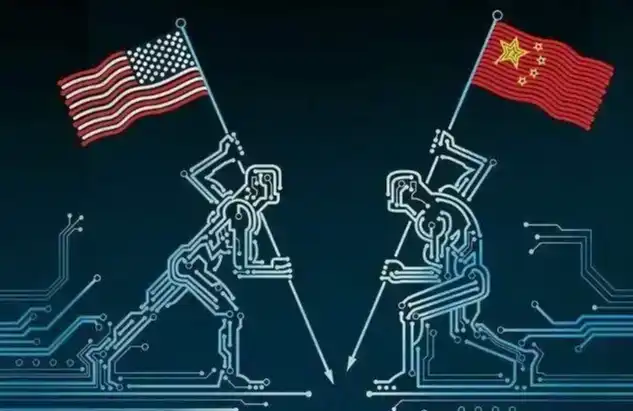
Who Will Define the Rules of the AI Era? Anthropic Discusses the 2028 US-China AI Landscape

This article, based on Anthropic's analysis, outlines the intensifying systemic competition between the U.S./allies and China for AI leadership by 2028. It argues that access to advanced computing power ("compute") is the critical bottleneck, where the U.S. currently holds a significant advantage through chip export controls and allied innovation. However, China's AI labs remain competitive by exploiting policy loopholes—via chip smuggling, overseas data center access, and "model distillation" attacks to copy U.S. model capabilities—keeping them close to the frontier. The piece presents two contrasting scenarios for 2028. In the first, decisive U.S. action to tighten compute controls and curb distillation locks in a 12-24 month AI capability lead, cementing democratic influence over global AI norms, security, and economic infrastructure. In the second, policy inaction allows China to achieve near-parity through continued access to U.S. technology, enabling Beijing to promote its AI stack globally and integrate advanced AI into its military and governance systems, altering the strategic balance. Anthropic contends that maintaining a decisive U.S. lead is essential for shaping safe AI development and governance. The core recommendation is for U.S. policymakers to urgently close compute and model access loopholes while promoting global adoption of the U.S. AI technology stack to secure a lasting strategic advantage.

marsbit1h ago

Who Will Define the Rules of the AI Era? Anthropic Discusses the 2028 US-China AI Landscape

marsbit1h ago

“Why Didn’t You Buy 2x Long SK Hynix?”

The article discusses the immense popularity of the "2x Long SK Hynix ETF" (07709.HK) in Hong Kong, which became the world's largest single-stock leveraged ETF by May 2026. Launched in October 2025, the ETF's net value soared over 1000% in seven months, significantly outperforming the 324% gain of SK Hynix's underlying stock, driven by the AI boom and a critical shift in industry demand from computing power to memory. It highlights the mechanics and risks of daily-rebalanced leveraged ETFs. In a smooth bullish market, they generate amplified returns, but during volatile periods—exemplified by market swings during geopolitical tensions in the Strait of Hormuz in March-April 2026—they suffer severe "volatility decay," where choppy price action can cause losses far exceeding twice the drop of the underlying asset. The piece frames SK Hynix, as NVIDIA's primary HBM supplier, within the classic cycle of the memory chip industry—a commoditized sector prone to boom-and-bust cycles of shortage, price hikes, overcapacity, and crashes. While current AI-driven demand and high margins (Q1 2026毛利率~79%) create a "super cycle," the article questions its sustainability. It warns that extreme profits will inevitably tempt competitors like Samsung and Micron to ramp up HBM production, potentially eroding scarcity. Furthermore, the entire narrative remains tethered to the massive AI capital expenditure of tech giants. In conclusion, the ETF's trajectory symbolizes the accelerated, all-in nature of the current AI revolution, where timeframes are compressed and market moves are extreme. However, it also underscores that while industry trends define ultimate returns, macro-geopolitical risks dictate the volatile and uncertain path to get there.

marsbit1h ago

“Why Didn’t You Buy 2x Long SK Hynix?”

marsbit1h ago

a16z Crypto: A Guide to the CLARITY Act for Crypto Entrepreneurs

The CLARITY Act, a bipartisan crypto market structure bill, has advanced through the Senate Banking Committee, marking a potential historic shift in U.S. digital asset regulation. For years, a lack of clear rules has stifled innovation, pushed development overseas, and exposed consumers to risk. This bill aims to establish a comprehensive framework, providing long-needed regulatory clarity for blockchain networks and digital assets. It builds upon previous legislative efforts like FIT21 and the House version of CLARITY, which gained strong bipartisan support. CLARITY is crucial because it recognizes that blockchain networks are fundamentally different from traditional companies. Networks operate through decentralized, shared rules rather than centralized control. Applying corporate legal frameworks to networks forces them into a centralized model, concentrating power and value. In contrast, decentralized blockchain networks can function as user-owned public infrastructure, distributing value more equitably among participants. The bill seeks to enable the safe launch of networks in the U.S., clarify regulatory jurisdiction between the SEC and CFTC, oversee crypto exchanges, and enhance consumer protections. Its passage would align U.S. law with the nature of decentralized technology, allowing builders to operate transparently and fund projects domestically without structural compromises due to regulatory uncertainty. Similar to the positive impact seen after the stablecoin-focused GENIUS Act, CLARITY could unlock a new wave of innovation, helping the U.S. reclaim leadership in the crypto space while combating fraud and abuse.

链捕手2h ago

a16z Crypto: A Guide to the CLARITY Act for Crypto Entrepreneurs

链捕手2h ago

Trading

Spot
Futures

Hot Articles

Discussions

Welcome to the HTX Community. Here, you can stay informed about the latest platform developments and gain access to professional market insights. Users' opinions on the price of ADA (ADA) are presented below.

活动图片