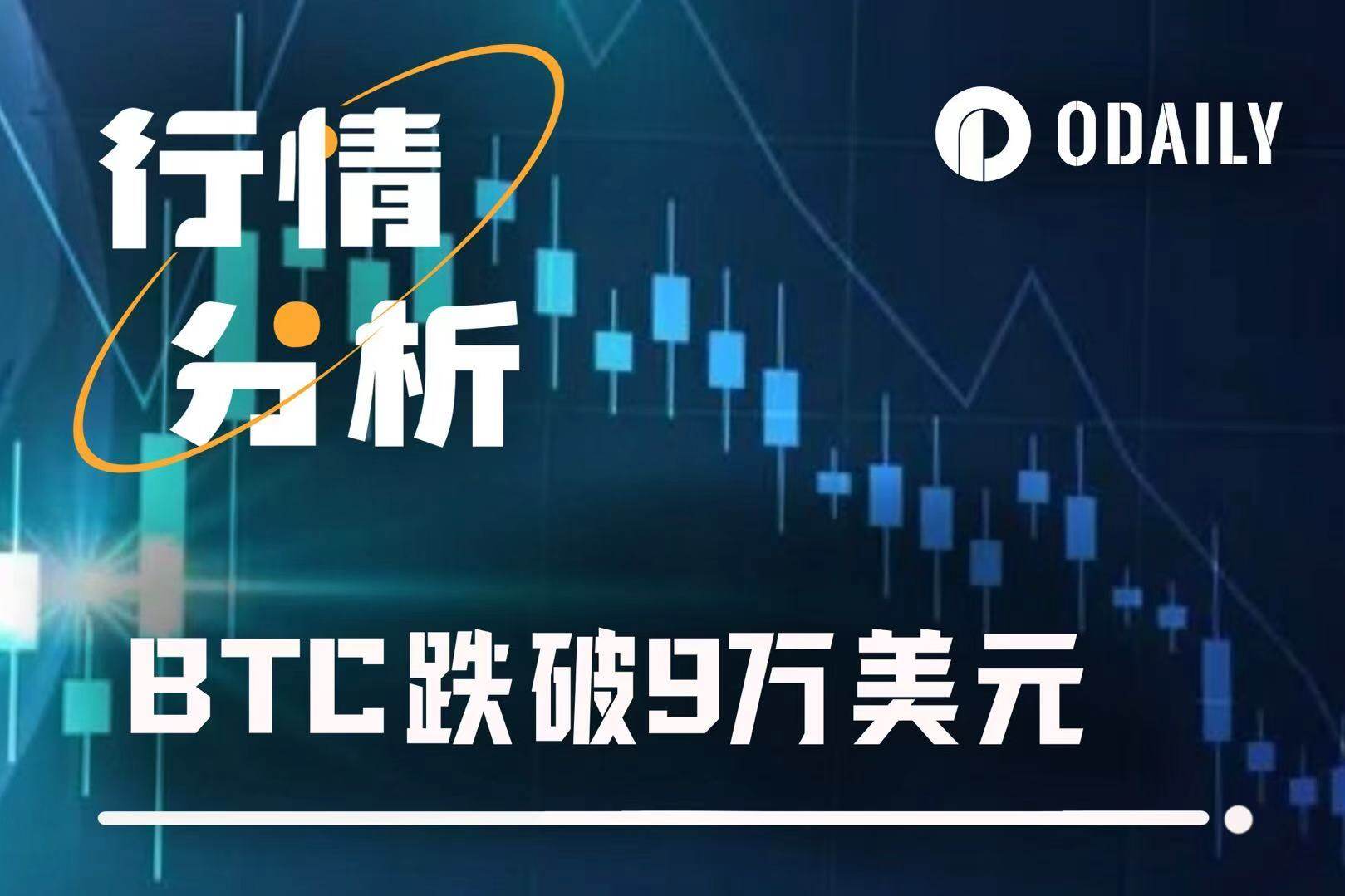
BTC Drops Below $90,000: Rate Cut Realized Equals Exhausted Positive News

Odaily星球日报Published on 2025-12-11Last updated on 2025-12-11

Abstract

Fed Chair Powell announced a 25-basis-point rate reduction, bringing the benchmark rate to 3.50%-3.75%, marking the third consecutive cut this year. However, the dot plot revealed significant internal divergence, with seven officials dissenting—six preferring no cut. The median rate projection remained unchanged from September, signaling a likely slowdown in future easing, with only one cut anticipated in 2025 and 2026 each. This mixed, cautious signal failed to boost market confidence. Bitcoin fell below $90,000, Ethereum dropped under $3,200, and Solana declined beneath $130. Most crypto sectors saw losses, with over $468 million in liquidations—$331 million from long positions. Analysts attribute the downturn to year-end liquidity constraints and subdued sentiment. Greeks.live noted that despite the Fed’s dovish move, low holiday liquidity limits bullish momentum. ING expects two 2026 rate cuts if inflation nears 2%, while Goldman Sachs views further easing as contingent on weaker labor data. Short-term, the market is expected to remain defensive amid thin liquidity. Longer-term, the focus shifts to labor market performance—should data weaken, more aggressive rate cuts may follow. Until macro conditions clear and liquidity returns, cautious positioning is advised.

Original | Odaily Planet Daily (@OdailyChina)

Author | Ethan (@ethanzhang_web3)
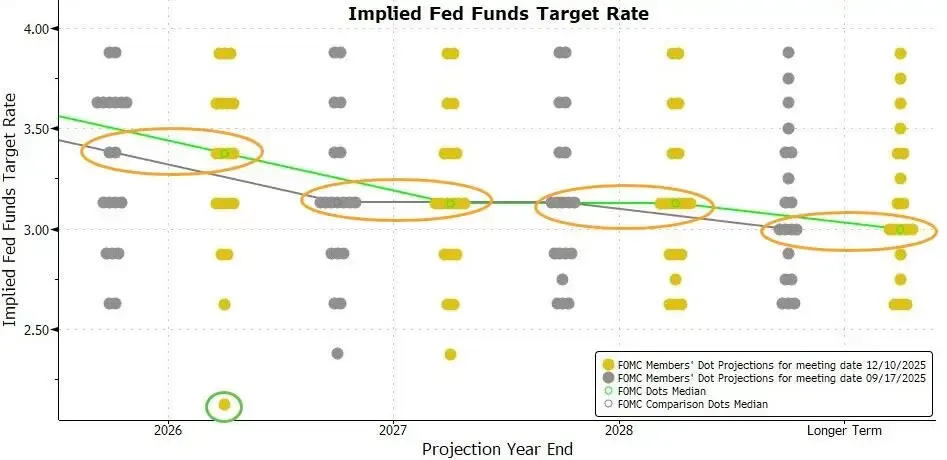
Early this morning, Powell announced as scheduled a 25 basis point cut in the benchmark interest rate to 3.50%-3.75%. This marks the third consecutive rate cut this year, concluding the year with a cumulative reduction of 75 basis points. However, the signals from the dot plot are not entirely optimistic, reflecting intense internal debate within the Fed. Although the overall expectations are slightly more dovish compared to the last meeting, the internal consensus is loosening: this time, as many as 7 officials dissented from the decision, with 6 even favoring no change (maintaining the current rate). Additionally, the median interest rate forecast remains exactly the same as in September, suggesting that after this year's aggressive cuts, the pace of easing in the next two years will slow significantly (likely only one cut each year). This complex, "hawkish-dovish" mixed signal and the extremely cautious expectations do not seem to have provided the market with sufficient confidence to go long. Consequently, the crypto market, dominated by risk speculation, is shrouded in fear, experiencing a continuous decline.
OKX real-time data shows that around 11:40 today (all subsequent times refer to this point), BTC fell to a low below $90,000, temporarily reported at $89,790.5, a 2.45% drop in 24 hours, breaking below the $90,000 mark; ETH fell below $3,200, currently at $3,181.24, down 4.47% in 24 hours; SOL dropped below $130, currently at $129.5, down 4.88% in 24 hours.

According to SoSoValue, various sectors of the crypto market generally pulled back, with the DePIN sector leading the decline, down 4.28% in 24 hours, where Filecoin (FIL) fell 7.50% and Render (RENDER) dropped 5.52%. In other sectors, the CeFi sector fell 1.00% in 24 hours, with Cronos (CRO) down 3.39%; the Layer2 sector declined 2.15%, but Mantle (MNT) held relatively firm, up 1.12%; the DeFi sector fell 2.35%, while Hyperliquid (HYPE) bucked the trend, rising 2.95%; the Layer1 sector dropped 2.54%, with previously strong performer Zcash (ZEC) falling 10.78%.

In the U.S. stock market, according to msx.com data, as of the close, the Dow rose 1.05%, the S&P 500 gained 0.67%, and the Nasdaq increased by 0.33%. Crypto-related stocks mostly fell, with ETHZ down over 8.1%, HODL down over 6.39%, and ABTC down over 5.37%.

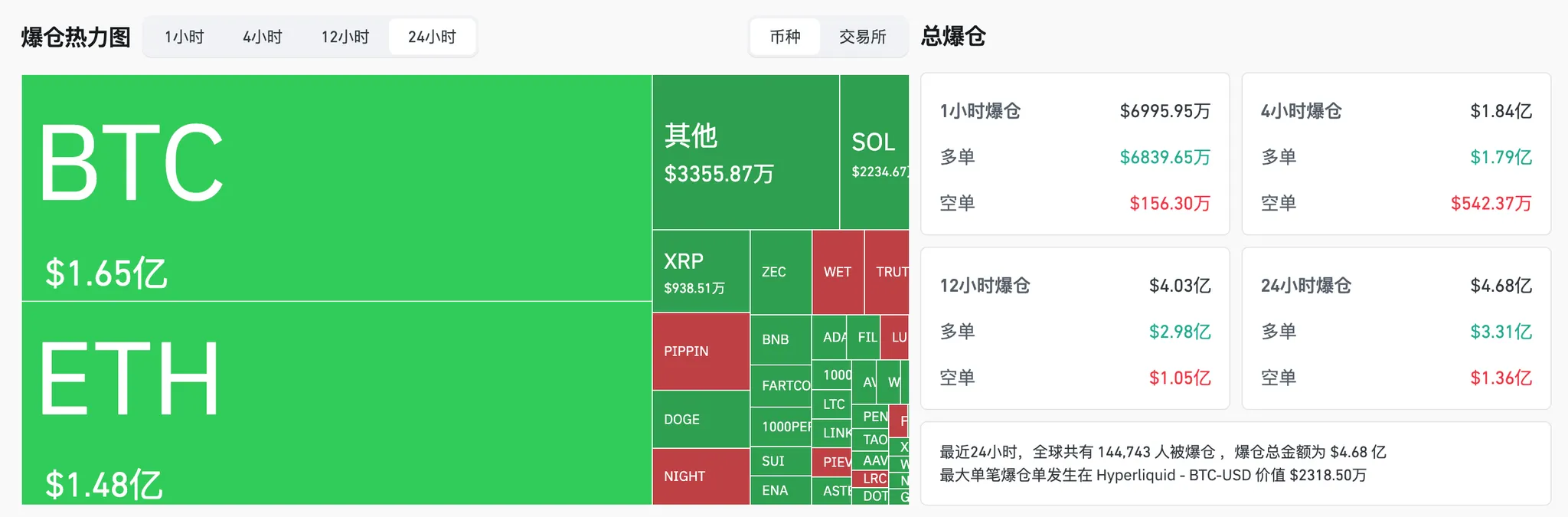
In derivatives trading, Coinglass data shows that over the past 24 hours, there was $468 million in liquidations across the network, with long positions accounting for $331 million and short positions $136 million. By cryptocurrency, BTC saw $165 million in liquidations, and ETH $148 million.
Market sentiment is being released, and the downturn continues. Discussions about whether "expectations are exhausted and the market is weak" are heating up.

Below, Odaily Planet Daily will summarize the views and arguments of institutions and analysts regarding the future market trend.

What will be the subsequent trend of Bitcoin?

Greeks.live: Year-end liquidity drying up, limited momentum for restarting the bull market

Adam, a researcher at Greeks.Live, posted on social media, stating that the Fed's interest rate meeting cut rates by 25 basis points as expected and announced the restart of a $40 billion short-term U.S. Treasury bill (T-bills) purchase plan; its dovish stance will effectively supplement the financial system's liquidity, constituting a clear positive for the market.

However, it is still too early to talk about "restarting quantitative easing (QE) to drive a bull market restart": with Christmas and year-end settlements approaching, this period has historically been the worst for crypto market liquidity, with low market activity and very limited momentum for a bull market restart.

Looking at cryptocurrency options data, over 50% of option positions are accumulated by the end of December, with BTC's max pain point at the $100,000 integer mark and ETH's at $3,200; the implied volatility (IV) for major tenors has declined across the board this month, indicating a continued decrease in market expectations for volatility this month.

In summary, the current crypto market performance is weak, pressured by year-end liquidity and low market sentiment; "slow decline" is the mainstream expectation in the options market. However, one must also be wary of potential sudden positive news that could trigger a market reversal.

ING: Improved inflation environment, maintaining forecast for two rate cuts in 2026

ING Bank stated that the market currently expects the Fed to cut rates by another 50 basis points in 2026.

However, considering the current situation—the economy continues to grow, unemployment is low, the stock market is near historical highs, and inflation is closer to 3% than the Fed's 2% target—there is insufficient justification for the Fed to further ease policy. Nevertheless, the bank suspects that the inflation environment in the coming months will be more conducive to rate cuts, providing support for further dovish action: although tariff threats remain, their impact is slower and weaker than expected, buying more time for factors easing inflation such as falling energy prices, slowing rental growth, and weakening wage increases; the bank believes this will push inflation closer to 2% faster than the Fed expects.

Coupled with rising uncertainty in the "employment" dimension of the Fed's dual mandate—Powell mentioned that the Fed believes recent employment growth data has been overestimated by about 60,000 people—ING Bank maintains its original forecast that the Fed will cut rates twice in 2026, by 25 basis points each in March and June.

Goldman Sachs: Pacifying the hawkish camp, the threshold for future easing is significantly raised

Goldman Sachs analyst Kay Haigh stated that the Fed has completed this round of "preemptive rate cuts." She noted: "To justify additional near-term easing, the core prerequisite is that labor market data must weaken further."

The "hard dissent" among voting members and the "soft dissent" in the "dot plot" both highlight the hawkish camp within the Fed; the reintroduction of wording about the "extent and timing" of future policy decisions in the statement was likely to pacify this camp. This adjustment, while preserving the possibility of future rate cuts, means that a relatively high degree of labor market weakness would be required to trigger a new round of easing.

Analyst: Policy statement "dovish on the surface, hawkish underneath," expects 100 basis points of cuts next year

Analyst Anna Wong stated: "My assessment is that this policy statement and the updated forecasts are overall dovish in tone, though with some hawkish signals隐含. On the dovish side, the Committee significantly upgraded the economic growth path, lowered the inflation outlook, and kept the 'dot plot' forecast unchanged; the FOMC also announced the start of reserve management purchase operations."

"On the other hand, one signal in the policy statement indicates the Committee's inclination towards a prolonged pause in the rate-cutting cycle." She added: "Although the 'dot plot' shows only one rate cut in 2026—differing from the market's expectation of two—we believe the Fed will ultimately cut rates by a cumulative 100 basis points next year. The core basis is that we expect wage growth to remain weak and currently see no clear signs of inflation reigniting in the first half of 2026."

Summary

Although the Fed cut rates as expected this morning, the internal divisions and slowed easing expectations revealed by the "dot plot" have subjected the market to a complex "hawkish-dovish" mixed signal. BTC breaking below the $90,000 mark and over $300 million in long liquidations indicate that, in the absence of incremental funds, the "realization of the rate cut" alone can no longer掩盖 the reality of year-end liquidity drying up.

Institutions generally believe that in the short term, constrained by the Christmas holiday and year-end settlements, market activity will decline significantly. "Slow decline" and "defense" are likely to be the main themes year-end, with very limited momentum to restart the bull market. However, looking further ahead, the focus of contention has shifted from单纯 inflation data to the performance of the labor market. Although institutions like Goldman Sachs提示 that the threshold for future easing has been raised, if wage growth weakens or employment data deteriorates further next year, the market could still迎来 a more aggressive rate-cutting path than expected. For investors,盲目 bottom-fishing is not the optimal strategy before liquidity returns and macro signals become clearer.


Trending Cryptos

Related Questions

QWhat was the immediate market reaction to the Fed's 25 basis point rate cut announcement?

AThe market reacted negatively with a 'hawkish-dovish' mixed signal. Bitcoin fell below $90,000, dropping 2.45% in 24 hours, and over $331 million in long positions were liquidated across the market.

QAccording to Greeks.live, what are the main factors limiting a bull market restart in crypto despite the rate cut?

AGreeks.live cited year-end liquidity drying up due to the Christmas holiday and annual settlements, which are historically periods of the lowest liquidity and market activity in crypto, severely limiting the momentum for a bull run restart.

QWhat is the new condition set by Goldman Sachs for the Fed to justify further near-term easing policies?

AGoldman Sachs analyst stated that the core prerequisite for justifying additional near-term easing policies is that labor market data must show further signs of weakening.

QWhat does the 'dot plot' from the Fed meeting reveal about internal consensus and future rate expectations?

AThe 'dot plot' revealed significant internal divergence within the Fed, with 7 officials dissenting from the decision. It also signaled that the pace of easing will slow significantly after this year's aggressive cuts, with expectations for only one rate cut each in the following two years.

QWhich analyst maintains a prediction of 100 basis points of rate cuts in 2026, and what is their reasoning?

AAnalyst Anna Wong maintains a prediction of 100 basis points of cuts in 2026. The core rationale is the expectation of continued weak wage growth and a lack of clear signs that inflation will reignite in the first half of 2026.

Related Reads

Selling Call Options: On-Chain Protocol Attempts to Achieve 4-14% APY with Gold

Selling Call Options: On-chain Protocol Aims to Generate 4-14% Annual Yield from Gold Gold, a $30+ trillion asset, produces no inherent cash flow. Traditional methods to generate yield involve lending it out or selling its volatility via call options. While the covered call strategy is proven, access has been limited to institutions, burdened by fees, issuer risk, and opaque pricing. On-chain gold leads in custody and liquidity but lags in yield generation. Lending demand is thin, and AMM liquidity provision exposes holders to impermanent loss, eroding gold's price upside. Enhanced is a structured products infrastructure tackling this. Its core is an RFQ auction engine where institutional market-makers competitively bid to purchase call options sold against user-deposited assets, converting asset volatility into premium income. Its first product, the PAXG Volatility Yield Vault, allows users to deposit PAXG (tokenized gold). The vault automatically sells bi-weekly, out-of-the-money call options via the RFQ auction. Premiums are distributed to depositors, targeting 4-14% APY. The strategy dynamically adjusts strike prices based on market conditions to balance yield and retained upside. Unlike first-generation on-chain vaults, Enhanced emphasizes competitive price discovery, alignment with holders via flexible OTM strikes, and a focus on yield-starved real-world assets (RWA) like gold. The protocol acknowledges the trade-offs: capped upside, no principal protection, and dependence on volatility. It suits holders seeking to generate income from otherwise idle assets while maintaining most of their underlying exposure. Enhanced represents a shift towards on-chain wealth management, transforming volatility from a cost into yield. Starting with gold, the infrastructure is designed to expand to tokenized equities, commodities, and broader RWA, marking a new phase for structured products on-chain.

marsbit4m ago

Selling Call Options: On-Chain Protocol Attempts to Achieve 4-14% APY with Gold

marsbit4m ago

In South Korea's AI Battle, Lee Jae-myung Cannot Afford to Lose

South Korean President Yoon Suk-yeol is betting the nation's future on an all-out push into AI and semiconductors, despite slumping approval ratings. In a high-stakes move, he ordered the relocation of a military airport in Gwangju by mid-2028 to make way for a major semiconductor cluster, demanding "lightning war" speed to rival projects like Taiwan's TSMC in Japan. His administration has unveiled trillion-won investment plans to double DRAM capacity and build AI data centers. This aggressive industrial policy collides with a harsh financial reality for ordinary citizens. Fueled by the AI narrative, the KOSPI index skyrocketed 116% in early 2026, led by leveraged ETFs tied to chip giants Samsung and SK Hynix. However, the market subsequently crashed by 40%, entering a technical bear market. The crash triggered a devastating chain reaction: leveraged ETFs were forced into mass sell-offs, amplifying losses. Over 1.2 million margin accounts faced liquidation calls, with an estimated 350,000 to 460,000 completely wiped out. Young investors were hit hardest, suffering collective losses estimated in the tens of trillions of won. The article paints a stark contrast: while the president champions a national "golden era" of AI, a generation of retail investors is experiencing financial ruin, their dreams shattered by a brutal market correction. The nation's strategic gamble on high-tech supremacy unfolds alongside a profound social crisis of household debt and lost savings.

marsbit5m ago

In South Korea's AI Battle, Lee Jae-myung Cannot Afford to Lose

marsbit5m ago

Everyone Thinks Cryptocurrency is Dead, But He Says It's About to Explode

Title: A Bullish Case Amidst Doubt: Bitcoin's Path for Ordinary Investors While many declare crypto dead, Scott Melker argues the opposite. In a wide-ranging interview, he reflects on the industry's evolution into a more institutionalized landscape in 2026. Dismissing the myth of trading success, Melker advocates for "boring" investment as the key to financial freedom for the average person. His core advice is straightforward: buy Bitcoin, consistently dollar-cost average, and hold. He warns against trying to time the volatile market, calling it a dangerous path where most lose out. Melker shares his journey from a DJ and trader to a media entrepreneur, highlighting the importance of building a durable brand based on reputation rather than hype. He acknowledges the structural shifts in the market, noting that many tokens fail to accrue value to holders, while assets with real institutional adoption, like Bitcoin, Ethereum, and Solana, will thrive. The lessons from the 2022 bear market are clear: avoid unrealistic yield traps and focus on hard assets. For investors, he recommends an 80% Bitcoin, 10% Ethereum, 10% Solana portfolio, using strategies to generate cash flow to buy more Bitcoin. Melker's ultimate goal is promoting Bitcoin to the mainstream, viewing it as the most critical financial asset for escaping the inflationary "rat race." His philosophy for 2026 and beyond is simple: "Bitcoin and chill." He urges investors to stay the course, emphasizing that the current market, with its institutional adoption and ETFs, represents the industry's best era yet.

marsbit11m ago

Everyone Thinks Cryptocurrency is Dead, But He Says It's About to Explode

marsbit11m ago

Why Are Crypto VCs Focusing on Stablecoin Infrastructure?

Crypto VC Focuses on Stablecoin Payment Infrastructure Despite an overall cooling crypto VC market in Q1 2026, investment in stablecoin payment infrastructure is gaining momentum. Capital is concentrating on mature projects with existing users, transaction volume, and clearer revenue models over purely speculative token-based ventures. Stablecoins are evolving from trading tools into backend infrastructure for efficient, 24/7 cross-border payments (e.g., B2B, remittances, payroll). Startups are building along the entire payment stack—connecting stablecoins to bank accounts, cards, forex liquidity, and local compliance systems. Recent large funding rounds for companies like Rain (cards), OpenFX (cross-border), and RedotPay highlight this trend. VC interest stems from several factors: solving real inefficiencies in traditional cross-border settlement, established fee-based revenue models (transaction fees, forex spreads), stablecoins becoming an invisible backend tool for end-users, clearer US regulatory frameworks attracting traditional finance, and acquisition exits to companies like Stripe and Mastercard. However, challenges remain. High on-chain stablecoin volume doesn't equal real retail payment volume; funding is concentrated in a few top performers; services risk commoditization; global expansion requires navigating local banking and regulations per market; and large traditional payment firms are both potential clients and future competitors. Future investment may focus on cross-border B2B payments, bank-stablecoin connectivity, stablecoin-linked cards, multi-chain/asset payment orchestration platforms, and infrastructure for AI Agent payments. Ultimately, VCs are betting not on a single stablecoin's dominance, but on the critical infrastructure needed to integrate programmable, global settlement assets into the traditional financial system.

marsbit12m ago

Why Are Crypto VCs Focusing on Stablecoin Infrastructure?

marsbit12m ago

Billions in USDT Flee Korea. Police Powerless in the Fight Against Money Laundering

South Korea is facing a severe and rapidly escalating challenge with crypto-based money laundering. Police data shows cases surged 152-fold in the first half of 2026 compared to all of 2025, with laundering now constituting 79.4% of all detected crypto-related crimes. The primary method is the "Hwanchigi" scheme, which uses cryptocurrency transfers to move illicit funds overseas, bypassing the regulated banking system. Tether (USDT) is the preferred vehicle for converting proceeds from drug trafficking, illegal gambling, and phishing into dollars before moving them to offshore exchanges. Despite enhanced monitoring and enforcement efforts, a stark gap exists between detection and prosecution. While authorities tracked and blocked millions in illegal assets in high-profile cases, arrests have lagged dramatically. In the first half of 2026, only 18 arrests were made despite over 1,200 detected cases. Customs seized approximately $4.92 billion in illegal foreign exchange operations, with over 90% of crypto-related crimes for prosecution flowing through unlicensed channels. The situation highlights a systemic disconnect: blockchain analytics can track transactions nearly in real-time, but the judicial process moves slowly. This asymmetry raises questions about whether detection statistics alone are a meaningful measure of effectiveness in combating money laundering, as the low cost and high speed of these schemes allow criminal networks to scale faster than law enforcement can respond.

cryptonews.ru27m ago

Billions in USDT Flee Korea. Police Powerless in the Fight Against Money Laundering

cryptonews.ru27m ago

Trading

Spot

Hot Articles

What is $BITCOIN

DIGITAL GOLD ($BITCOIN): A Comprehensive Analysis Introduction to DIGITAL GOLD ($BITCOIN) DIGITAL GOLD ($BITCOIN) is a blockchain-based project operating on the Solana network, which aims to combine the characteristics of traditional precious metals with the innovation of decentralized technologies. While it shares a name with Bitcoin, often referred to as “digital gold” due to its perception as a store of value, DIGITAL GOLD is a separate token designed to create a unique ecosystem within the Web3 landscape. Its goal is to position itself as a viable alternative digital asset, although specifics regarding its applications and functionalities are still developing. What is DIGITAL GOLD ($BITCOIN)? DIGITAL GOLD ($BITCOIN) is a cryptocurrency token explicitly designed for use on the Solana blockchain. In contrast to Bitcoin, which provides a widely recognized value storage role, this token appears to focus on broader applications and characteristics. Notable aspects include: Blockchain Infrastructure: The token is built on the Solana blockchain, known for its capacity to handle high-speed and low-cost transactions. Supply Dynamics: DIGITAL GOLD has a maximum supply capped at 100 quadrillion tokens (100P $BITCOIN), although details regarding its circulating supply are currently undisclosed. Utility: While precise functionalities are not explicitly outlined, there are indications that the token could be utilized for various applications, potentially involving decentralized applications (dApps) or asset tokenization strategies. Who is the Creator of DIGITAL GOLD ($BITCOIN)? At present, the identity of the creators and development team behind DIGITAL GOLD ($BITCOIN) remains unknown. This situation is typical among many innovative projects within the blockchain space, particularly those aligning with decentralized finance and meme coin phenomena. While such anonymity may foster a community-driven culture, it intensifies concerns about governance and accountability. Who are the Investors of DIGITAL GOLD ($BITCOIN)? The available information indicates that DIGITAL GOLD ($BITCOIN) does not have any known institutional backers or prominent venture capital investments. The project seems to operate on a peer-to-peer model focused on community support and adoption rather than traditional funding routes. Its activity and liquidity are primarily situated on decentralized exchanges (DEXs), such as PumpSwap, rather than established centralized trading platforms, further highlighting its grassroots approach. How DIGITAL GOLD ($BITCOIN) Works The operational mechanics of DIGITAL GOLD ($BITCOIN) can be elaborated on based on its blockchain design and network attributes: Consensus Mechanism: By leveraging Solana’s unique proof-of-history (PoH) combined with a proof-of-stake (PoS) model, the project ensures efficient transaction validation contributing to the network's high performance. Tokenomics: While specific deflationary mechanisms have not been extensively detailed, the vast maximum token supply implies that it may cater to microtransactions or niche use cases that are still to be defined. Interoperability: There exists the potential for integration with Solana’s broader ecosystem, including various decentralized finance (DeFi) platforms. However, the details regarding specific integrations remain unspecified. Timeline of Key Events Here is a timeline that highlights significant milestones concerning DIGITAL GOLD ($BITCOIN): 2023: The initial deployment of the token occurs on the Solana blockchain, marked by its contract address. 2024: DIGITAL GOLD gains visibility as it becomes available for trading on decentralized exchanges like PumpSwap, allowing users to trade it against SOL. 2025: The project witnesses sporadic trading activity and potential interest in community-led engagements, although no noteworthy partnerships or technical advancements have been documented as of yet. Critical Analysis Strengths Scalability: The underlying Solana infrastructure supports high transaction volumes, which could enhance the utility of $BITCOIN in various transaction scenarios. Accessibility: The potential low trading price per token could attract retail investors, facilitating wider participation due to fractional ownership opportunities. Risks Lack of Transparency: The absence of publicly known backers, developers, or an audit process may yield skepticism regarding the project's sustainability and trustworthiness. Market Volatility: The trading activity is heavily reliant on speculative behavior, which can result in significant price volatility and uncertainty for investors. Conclusion DIGITAL GOLD ($BITCOIN) emerges as an intriguing yet ambiguous project within the rapidly evolving Solana ecosystem. While it attempts to leverage the “digital gold” narrative, its departure from Bitcoin's established role as a store of value underscores the need for a clearer differentiation of its intended utility and governance structure. Future acceptance and adoption will likely depend on addressing the current opacity and defining its operational and economic strategies more explicitly. Note: This report encompasses synthesised information available as of October 2023, and developments may have transpired beyond the research period.

1.7k Total ViewsPublished 2025.05.13Updated 2025.05.13

What is $BITCOIN

Discussions

Welcome to the HTX Community. Here, you can stay informed about the latest platform developments and gain access to professional market insights. Users' opinions on the price of BTC (BTC) are presented below.

活动图片