Bitwise CIO Defends Bitcoin In 401(k)s Amid Sen. Warren’s New Warning

bitcoinistPublished on 2026-01-14Last updated on 2026-01-14

Abstract

Bitwise CIO Matt Hougan defends the inclusion of Bitcoin in 401(k) plans, arguing that restrictions are "ridiculous" and that Bitcoin's volatility is comparable to stocks like Nvidia. He highlights the Trump administration's pro-crypto shift and relaxed stances from major firms like Vanguard. Meanwhile, Senator Elizabeth Warren warns the SEC about risks, citing volatility, lack of transparency, and potential conflicts of interest. Despite her concerns, multiple U.S. lawmakers support efforts to expand crypto access in retirement accounts, including a proposed bill to codify Trump's executive order.

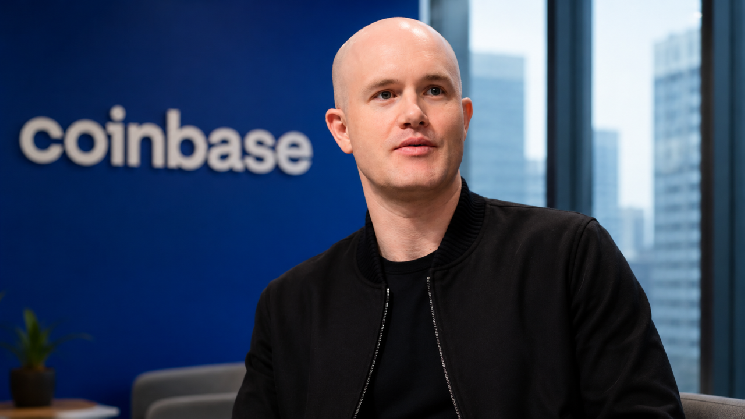
While a senator presses the Securities and Exchange Commission (SEC) against Bitcoin (BTC) and other cryptocurrencies in 401(k) plans, Bitwise’s CEO has defended the Trump administration’s push to allow digital assets’ inclusion in retirement funds.

Hougan Slams Bitcoin Restrictions In 401(k)s

On Monday, Bitwise CIO Matt Hougan discussed whether 2026 will be the year investors can own Bitcoin and other cryptocurrencies in 401(k) plans, as the inclusion of digital assets is becoming more common in individual retirement accounts (IRAs).

In an interview, the executive argued that providers are “slow to move,” but noted that the Trump administration’s pro-crypto shift, which removed “what was effectively a ban on Bitcoin from 401(k)s,” has opened the doors.

Hougan pointed out that large firms like Vanguard had strong restrictions but have recently relaxed their stance on Bitcoin investments. He argued that these bans are “ridiculous,” calling BTC “just another asset” that is no more volatile than stocks, such as those of Nvidia.

Does it go up and down? Absolutely. Is there risk in it? Absolutely. But it’s actually less volatile over the last year than Nvidia stock. And you don’t see any rules about banning 401k providers from offering Nvidia stock. That’s not that would seem ridiculous.

Recent K33 Research data showed that Bitcoin recorded the least volatile year in the asset’s history in 2025. Notably, BTC registered its lowest volatility level last year, with just 2.24%.

“So, I don’t know if the 401(k) providers will get all the way to the point of actually putting it in this year. These are very slow moving institutions, but we’re moving in that direction and eventually it’ll be normalized like other assets, which is how it should be treated,” he concluded.

Senator Warren Issues New Warning

Bitwise CEO’s remarks came as Democratic Senator Elizabeth Warren reached out directly to SEC chairman Paul Atkins to question how the Commission intends to protect investors from potential financial risks now that crypto investments are allowed in retirement plans.

As reported by Bitcoinist, the Department of Labor (DOL) rescinded in May a 2022 guidance that discouraged fiduciaries from including cryptocurrency investments in 401(k) retirement plans.

Months later, US President Donald Trump signed an Executive Order (EO) that aimed to allow more private equity, real estate, cryptocurrency, and other alternative assets in 401(k) retirement accounts.

The EO, signed on August 7, 2025, directed the DOL and the SEC to reduce regulatory barriers that prohibited investments in alternative assets in their defined contribution retirement plans.

In a new letter, the anti-crypto senator shared her concerns, cautioning that allowing Bitcoin and other crypto assets into these accounts could enable significant risks. She listed the “volatility associated with cryptocurrencies, the lack of market transparency, and potential conflicts of interest” as reasons to be cautious about introducing these assets into retirement plans.

She also emphasized that 401(k) plans are a vital source of retirement security for most Americans. Therefore, they should not be treated as a “playground for financial risk” that could put investors in vulnerable positions.

Despite Warren’s warnings, multiple US lawmakers have supported the Trump Administration’s efforts. In September, nine House members asked Atkins to provide “swift assistance” in implementing the president’s executive order and work with the DOL to protect workers.

Later, House of Representatives member Troy Downing proposed a bill to codify Trump’s directive, giving “the force and effect of law” and making it easier for investors to access Bitcoin and other alternative assets in their 401(k) retirement plans.
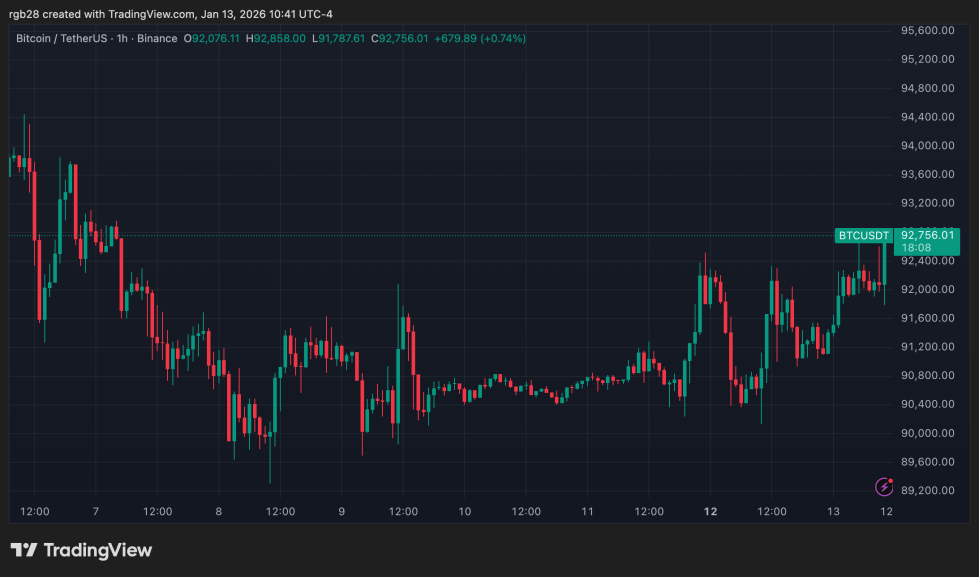
Bitcoin (BTC) trades at $92,756 in the one-week chart. Source: BTCUSDT on TradingView


Related Questions

QWhat is the main argument made by Bitwise CIO Matt Hougan regarding Bitcoin in 401(k) plans?

AMatt Hougan argues that Bitcoin is 'just another asset' and that restrictions on its inclusion in 401(k) plans are 'ridiculous.' He points out that Bitcoin's volatility is comparable to, or even less than, that of stocks like Nvidia, and that it should be normalized and treated like any other investment option.

QWhat recent regulatory change opened the door for Bitcoin to be included in 401(k) plans?

AThe Trump administration signed an Executive Order on August 7, 2025, which directed the Department of Labor (DOL) and the SEC to reduce regulatory barriers that had previously prohibited investments in alternative assets like cryptocurrency in defined contribution retirement plans. This rescinded a 2022 DOL guidance that discouraged such investments.

QWhat are Senator Elizabeth Warren's primary concerns about including cryptocurrency in retirement accounts?

ASenator Warren's concerns include the volatility of cryptocurrencies, the lack of market transparency, and potential conflicts of interest. She warns that 401(k) plans are a vital source of retirement security and should not be treated as a 'playground for financial risk' that could put investors in vulnerable positions.

QAccording to the article, how did Bitcoin's volatility in 2025 compare to its historical performance?

AAccording to K33 Research data cited in the article, Bitcoin recorded its least volatile year in history in 2025, with a volatility level of just 2.24%.

QWhat legislative action was proposed to support the inclusion of Bitcoin in 401(k) plans?

AHouse of Representatives member Troy Downing proposed a bill to codify President Trump's executive order, giving it 'the force and effect of law' to make it easier for investors to access Bitcoin and other alternative assets in their 401(k) retirement plans.

Related Reads

When AI Begins to Audit the World: From Claude Discovering the ZEC Vulnerability, Watching the Encryption Industry Enter the 'Recursive Security Era'

**When AI Audits the World: From Claude's Discovery of a ZEC Vulnerability, Viewing the Crypto Industry Entering a "Recursive Security Era"** This article examines a pivotal shift in the blockchain security landscape, triggered by the convergence of two events: Anthropic's research on AI's "Recursive Self-Improvement" and Claude Opus 4.8's discovery of a critical vulnerability in Zcash's code. Traditionally, crypto security has relied on human experts and automated tools for periodic audits. However, the article argues AI is transitioning from a mere tool to an active participant in understanding and analyzing complex systems. Claude's ability to identify a subtle flaw in Zcash's zero-knowledge proof system demonstrates AI's potential to dramatically lower the cost and time required for risk discovery. This goes beyond finding a single bug; it signals a change in the very mechanism of how vulnerabilities are found. The core thesis introduces the concept of "Recursive Security," drawing a parallel to Anthropic's "Recursive Self-Improvement." Just as AI can accelerate its own development through feedback loops, security systems are evolving towards a continuous cycle of analysis, risk identification, remediation, and re-analysis. Security is becoming a persistent, evolving capability integrated into a system's lifecycle, rather than a one-time pre-launch audit. This shift is particularly urgent for the crypto industry, where system complexity from Layer-2 networks, modular architectures, and ZK-proofs is growing faster than human analysis capacity. AI excels at the pattern recognition and contextual understanding needed to navigate this complexity. Importantly, the article cautions that AI augments both defenders and potential attackers, accelerating the entire threat landscape. The future competitive advantage may not lie in having zero vulnerabilities, but in having the fastest risk discovery, validation, and response capabilities. The Claude-Zcash incident is thus an early signal of an era where AI-driven, recursive security systems become essential for managing risk in an increasingly complex digital world.

marsbit42m ago

When AI Begins to Audit the World: From Claude Discovering the ZEC Vulnerability, Watching the Encryption Industry Enter the 'Recursive Security Era'

marsbit42m ago

From MSTR to STRC+: Where Is the Limit of the Strategy Universe?

From MSTR to STRC+: The Evolution and Limits of the Strategy Universe This article examines the transformation of Strategy (formerly MicroStrategy) from a simple "Bitcoin treasury" company into a complex financial engineering firm building a BTC-backed credit system. **Core Thesis:** Strategy's true significance lies not just in its massive BTC holdings (~844k BTC), but in its attempt to transform this static reserve into a multi-layered credit curve within traditional capital markets and, subsequently, into on-chain yield infrastructure. **The MSTR Flywheel:** The initial model was a reflexive loop: BTC price rises → MSTR stock rises → company raises capital (debt/equity) at a premium → buys more BTC → increases per-share BTC exposure → MSTR premium grows. This "amplified Bitcoin" equity (MSTR) thrives on bullish momentum but is vulnerable to tightening premiums and rising funding costs. **Building the Credit Curve:** Strategy's innovation is slicing its single BTC balance sheet into different risk/return profiles via specialized securities: * **MSTR:** High-volatility equity layer absorbing full BTC upside/downside. * **STRC:** Key product. A perpetual preferred stock designed as "short duration high yield credit," offering ~11.5% floating monthly dividends. It attracts fixed-income investors seeking yield without direct BTC exposure, funding Strategy's operations. * **STRD/STRK/STRF:** Other preferred/share classes with varying durations, conversion rights, and fixed dividends. **Risks of the STRC Model:** STRC's high yield is not risk-free. Its stability depends on: 1) Sufficient BTC asset coverage, 2) Strategy's continued ability to pay dividends, and 3) Market faith in the MSTR/STRC funding flywheel. Stress points include deep BTC price declines eroding the asset buffer, rising dividend costs if STRC trades below par, and a broken flywheel if MSTR's premium (mNAV) falls persistently. **On-Chain Expansion: STRC+:** Projects like **Saturn** and **Apyx** aim to package STRC's (and other DAT preferred stock) cash flows into on-chain stablecoin yield (e.g., sUSDat, apyUSD). They offer DeFi a new yield source distinct from trading fees or incentives—cash dividends from traditional securities. However, this introduces compounded risks: off-chain custody, issuer credit risk, BTC volatility, and protocol execution risk. **Conclusion: The Ultimate Boundary** Strategy's endgame is not infinite BTC accumulation. It is the market's long-term acceptance of a new credit system where BTC serves as collateral for tradable securities whose cash flows can power on-chain financial applications. Its "universe" expands if this BTC-native credit curve gains legitimacy, but contracts if these instruments are repriced purely as high-risk, yield-bearing credit assets without stablecoin mythology.

marsbit1h ago

From MSTR to STRC+: Where Is the Limit of the Strategy Universe?

marsbit1h ago

Trading

Spot
Futures

Hot Articles

Discussions

Welcome to the HTX Community. Here, you can stay informed about the latest platform developments and gain access to professional market insights. Users' opinions on the price of S (S) are presented below.

活动图片