Bitcoin’s Long Game Is Winning, Even If The Short Term Looks Messy—CEO

bitcoinistPublished on 2025-12-26Last updated on 2025-12-26

Abstract

Bitcoin's price has declined around 27% from its October all-time high, trading near $88,750, amid net outflows from US spot Bitcoin ETFs and a record-sized options expiry that suppressed volatility. Market sentiment remains in "Extreme Fear," reflecting short-term pressure. However, executives like Phong Le of Strategy emphasize strong long-term fundamentals, citing solid market conditions and policy progress, including a US executive order for a Strategic Bitcoin Reserve. Despite institutional interest and clearer regulatory signals, short-term factors like ETF outflows and persistent fear keep the market volatile and range-bound.

US-listed spot Bitcoin ETFs have shown net outflows in recent days, and that pull of money has added pressure to a market already under strain. According to CoinMarketCap, Bitcoin traded around $88,750 at the time of recent reports, down about 27% from its all-time high of $125,100 hit on Oct. 5.

Reports have disclosed that a record-sized Bitcoin options expiry landed on Friday, Dec. 26, and several analysts say that event effectively “pinned” price into a narrow range — at least until volatility returns.

Market Flows And Options Pressure

According to multiple sources, outflows from major spot ETFs removed a key support for price that helped push Bitcoin higher earlier this year. The Crypto Fear & Greed Index has been in “Extreme Fear” since Dec. 12, which shows how fragile sentiment remains despite product and policy gains.

Options expiries of this size can concentrate bets and push price toward strike clusters. When those contracts roll off, the market often needs a new catalyst to move beyond the band it’s been stuck in.

Strong Fundamentals

Executives managing large Bitcoin treasuries argue fundamentals are solid even as price drops. Strategy CEO Phong Le told a podcast that the market’s long-term picture looks strong and that short-term moves “do what they do.”

“The fundamentals of the market for Bitcoin couldn’t be better this year,” Le said, pointing out that he doesn’t care too much about its short-term performance.

Reports note that Strategy’s market value relative to its Bitcoin holdings, mNAV, has fallen below 1 and sits at 0.93 according to Saylor Tracker. The company’s balance shows 671,268 Bitcoin, with an estimated value of about $58 billion. Those figures underline how a decline in spot price can quickly reshape the math for firms that hold Bitcoin on their books.

BTCUSD trading at $88,815 on the 24-hour chart: TradingView

Traditional Banks Trying To Catch Up

Le and Strategy’s executive chairman Michael Saylor have been meeting with banks across the US and the UAE, based on his comments, as institutions seek how to adjust to growing client demand and new product types.

According to reports, Galaxy Digital researcher Alex Thorn had said earlier in the year there was a “strong chance” the US government would signal a formal reserve move. US President Donald Trump signed an executive order in March establishing a Strategic Bitcoin Reserve and a US Digital Asset Stockpile, although a fully detailed plan has not been released.

Policy Signals And Market Reaction

Policy support is a clear positive, yet markets do not always respond immediately to regulatory shifts. Signals can lower legal risk and widen access, but they do not always create instant buying. The mNAV reading below 1, plus ETF outflows and a fear reading stuck at “Extreme Fear,” shows there is skepticism about when that demand will arrive. Some players remain methodical, building dollar and Bitcoin treasuries and relying on model-based rules rather than emotion.

Based on reports and market indicators, the picture is mixed. Long-term commitments from firms and clearer policy language point to stronger structural backing. At the same time, short-term flows, options dynamics, and entrenched fear mean price can stay volatile and range-bound. Investors watching both the fund flows and policy calendar will likely decide which signal matters more next.

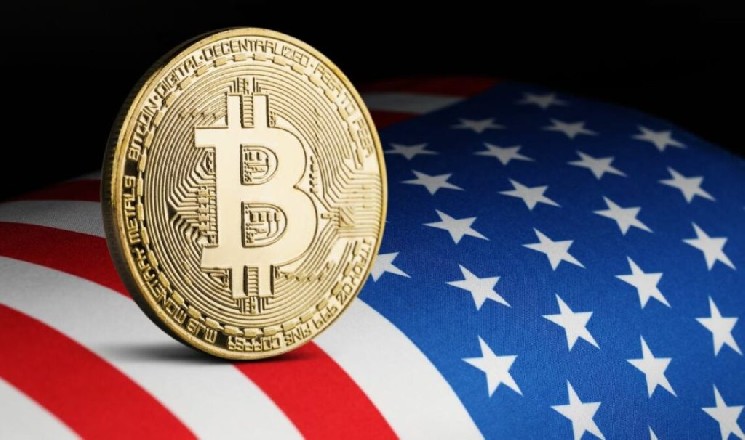
Featured image from World, chart from TradingView

Trending Cryptos

Related Questions

QWhat is the current market sentiment according to the Crypto Fear & Greed Index as mentioned in the article?

AThe Crypto Fear & Greed Index has been in 'Extreme Fear' since December 12.

QAccording to the article, what event on December 26th contributed to price pressure in the Bitcoin market?

AA record-sized Bitcoin options expiry landed on Friday, December 26th, which analysts say 'pinned' the price into a narrow range.

QWhat does CEO Phong Le say about Bitcoin's fundamentals despite the short-term price drop?

APhong Le stated that 'the fundamentals of the market for Bitcoin couldn't be better this year' and that the long-term picture looks strong, while he doesn't care too much about short-term performance.

QWhat is the significance of the mNAV reading falling below 1 for MicroStrategy, as reported?

AMicroStrategy's mNAV (market value relative to its Bitcoin holdings) falling below 1 to 0.93 illustrates how a decline in Bitcoin's spot price can quickly impact the financial math for companies that have large Bitcoin holdings on their balance sheets.

QWhat policy action did US President Donald Trump take regarding Bitcoin, according to the article?

AIn March, US President Donald Trump signed an executive order establishing a Strategic Bitcoin Reserve and a US Digital Asset Stockpile, although a fully detailed plan has not been released.

Related Reads

Bank of Japan Signals Interest Rate Hike Despite Keeping Them at 1%

The Bank of Japan (BOJ) kept its benchmark interest rate at 1% on July 31, as widely expected, following a June hike to a 31-year high. The decision passed with an 8-1 vote, with board member Hajime Takata again dissenting in favor of a hike to 1.25%. Despite holding rates steady, the BOJ signaled a hawkish tilt, warning that underlying inflation is likely to accelerate and exceed 2% from the latter half of the fiscal year. While it slightly lowered its core inflation forecast for FY2026, officials expressed stronger confidence that an overshoot will occur later, driven by yen weakness, corporate pricing behavior, and lingering energy shock effects. Markets were focused on the BOJ's forward guidance. Analysts noted the central bank appeared to balance short-term caution with a long-term warning of tighter policy. Governor Kazuo Ueda faces the challenge of reconciling a government reluctant to tighten further with bond markets already pricing in additional hikes, with the timing of the next move debated. Adding complexity, the BOJ reportedly intervened in currency markets hours before the rate decision, buying yen to support the currency which had fallen to 40-year lows against the dollar. Yen weakness stems from the wide U.S.-Japan interest rate gap, high fuel prices, and market skepticism about the pace of BOJ policy normalization. The yield on Japan's 10-year government bonds fell to 2.8%, indicating investor expectations for future monetary tightening.

cryptonews.ru6m ago

Bank of Japan Signals Interest Rate Hike Despite Keeping Them at 1%

cryptonews.ru6m ago

Why Are Leveraged ETFs like 7709 Inherently Negative EV Products?

This article argues that the SK H力士 2x Leveraged ETF (7709) is fundamentally a negative expected value (EV) product, rather than simply a "double SK H力士" investment. Its core issue stems from its daily rebalancing mechanism to maintain a 2x leverage target. After a price move, the fund must buy more after a rise or sell after a fall to readjust its leverage, creating a systematic pattern of buying high and selling low. This introduces a "delay loss": it always reacts to past price changes, missing potential gains from adjusting earlier during an uptrend and suffering greater losses from adjusting later during a downtrend. While more frequent intraday rebalancing would improve returns in strong, smooth trending markets by reinvesting profits or cutting losses sooner, it also dramatically increases volatility drag (frictional losses) during choppy, oscillating markets due to more frequent high-buy/low-sell trades. The author draws a parallel to an option seller who delta hedges (short gamma), which involves similar "buy high, sell low" dynamic hedging. However, unlike an option seller who receives upfront premium (IV and theta) as compensation for this risk, the leveraged ETF investor receives no such compensation. Instead, they bear all the path-dependent volatility decay, plus additional costs like swap/derivatives financing, management fees, and trading slippage. Thus, the product's return profile can be framed as: 2x directional return minus realized variance drag minus financing costs minus derivatives costs minus management fees minus transaction costs. For the investor to profit, SK H力士's price must not only rise significantly but do so in a strong, sustained, and smooth trend to overcome these inherent structural costs. High volatility and frequent price reversals are particularly damaging. The article also notes that while the ETF has no explicit liquidation line like perpetual futures, avoiding a sudden "blow-up," its net asset value can still decay towards zero over time through this combination of volatility drag and fees. For experienced traders, directly managing leverage via perpetual contracts may offer more control and potentially lower costs than this packaged, mechanistic product.

marsbit13m ago

Why Are Leveraged ETFs like 7709 Inherently Negative EV Products?

marsbit13m ago

'Backstabbing' or 'Win-Win'? How Likely Is TradeXYZ to Break Away from Hyperliquid and Go Solo?

The article discusses the growing debate over whether TradeXYZ, which dominates Hyperliquid's HIP-3 market with over 90% of its volume, might break away to build its own independent trading platform. This possibility is fueled by TradeXYZ's immense market influence and the common industry trend of successful projects seeking more control and profit capture. Key arguments for a potential split include TradeXYZ's overwhelming contribution to Hyperliquid's metrics and the financial incentive to retain all transaction fees, as it currently splits them 50/50 with Hyperliquid. The piece draws parallels to other cases, like Anthropic's "Claude Code" competing with its former partner Cursor, suggesting "betrayal" can occur when business leverage shifts. However, strong counterarguments suggest a split is unlikely or would be detrimental. TradeXYZ relies on Hyperliquid's high-performance infrastructure and its platform as a primary user acquisition channel. Building a comparable system would be challenging. Furthermore, the founders of both projects share a history of trust and mutual admiration. The analysis concludes that a separation would likely be a lose-lose scenario: Hyperliquid would lose a major growth narrative and trading volume, while TradeXYZ would face technical hurdles, user migration issues, and reputational damage, potentially allowing competitors to seize market share. The most rational path is seen as continued collaboration, with TradeXYZ potentially negotiating better terms while leveraging Hyperliquid's established strengths.

marsbit22m ago

'Backstabbing' or 'Win-Win'? How Likely Is TradeXYZ to Break Away from Hyperliquid and Go Solo?

marsbit22m ago

Trading

Spot

Hot Articles

Discussions

Welcome to the HTX Community. Here, you can stay informed about the latest platform developments and gain access to professional market insights. Users' opinions on the price of S (S) are presented below.

活动图片