Bitcoin 'Whale' from 2012 Suddenly Moves $13.7 Million After 14 Years

cryptonews.ruPublished on 2026-08-18Last updated on 2026-08-18

Abstract

In August, long-dormant Bitcoin wallets have suddenly become active, with coins untouched for over a decade moving on-chain. A significant event occurred on Tuesday when a "Bitcoin whale" from 2012 transferred 212 BTC, worth approximately $13.72 million at current prices, from an address created 14 years and 8 days ago. The original investment of around $2,346 has grown by roughly 584,725%. This movement is part of a broader trend this month, where significant batches of old coins are "waking up" almost daily. A likely catalyst is a vulnerability in Coldcard hardware wallets, which recently led to the theft of nearly 2,000 BTC, potentially prompting other long-term holders to secure their assets. The 212 BTC were moved from an old P2PKH wallet to a new, unlabeled Bech32 address. The funds remain consolidated there, and no blockchain analytics service has linked the new address to any known entity. As long as the coins aren't sent to an exchange or moved again, this transfer serves as a notable reminder that even the oldest Bitcoin wallets can suddenly spring back to life.

August has turned into a 'waking from the grave' for long-dormant bitcoins: coins untouched for over a decade suddenly appear on the network. Much of this activity stems from wallets created in 2014. However, something older happened on Tuesday: the site btcparser.com flagged a bitcoin address created 14 years and 8 days ago, from which a total of 212 $BTC were moved.
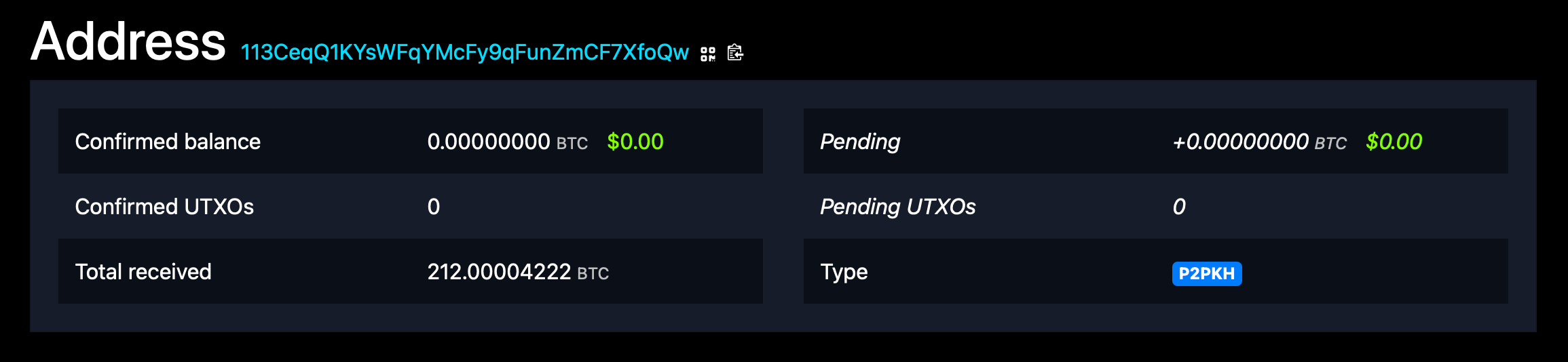
Image source: mempool.space.

On Tuesday, at the current price of $64,761 per $BTC at the time of writing, the value of this hoard was $13.72 million. Back then, a single coin cost just $11.07 per unit, meaning this stash was valued at $2,346. Thus, if sold today, the owner would realize a profit of 584,725%.

Coldcard Vulnerability Opened the Door

This month has seen a steady stream of spends from dormant bitcoins, with significant batches of old coins 'waking up' almost daily.

One highly likely catalyst is the Coldcard vulnerability, which led to the theft of almost 2,000 $BTC from owners of hardware wallets using Coldcard devices and firmware. The wallets that suddenly started moving do not necessarily belong to those affected by the theft, and the August wave of activity may not be entirely due to alarmed 'old-timers' rushing to secure their coins.

$13.7 Million in Bitcoin Remains Consolidated for Now

This particular batch of 212 $BTC was moved from an outdated P2PKH (Pay-to-Public-Key-Hash) wallet, first created on August 10, 2012. The coins were then redirected to an unmarked Bitcoin Bech32 wallet. Currently, the $BTC is at this new Bech32 address after arriving in several batches. No blockchain explorer, including Arkham Intelligence and others, has linked this address to any known entity.

Until these coins reach an exchange or are moved again, the transfer of 212 $BTC serves as yet another reminder that the oldest bitcoin wallets are suddenly becoming active again.

end-content

Trending Cryptos

Related Questions

QWhat significant Bitcoin transaction occurred on Tuesday, and how old was the originating address?

AOn Tuesday, a Bitcoin transaction involved moving 212 BTC (worth $13.72 million at the time) from an address that was created 14 years and 8 days ago (first used on August 10, 2012).

QWhat is the approximate percentage gain if the 212 BTC from 2012 were sold at the article's stated price?

AIf sold at the article's stated price of $64,761 per BTC, the holder would realize a profit of approximately 584,725% from the original purchase price.

QWhat recent event is suggested as a possible catalyst for the movement of dormant bitcoins?

AOne likely catalyst is a vulnerability in Coldcard hardware wallets, which led to the theft of nearly 2,000 BTC and may have prompted other long-term holders to secure their assets.

QWhat type of Bitcoin address did the 212 BTC originally come from, and where were they sent to?

AThe 212 BTC were originally stored in a legacy P2PKH (Pay-to-Public-Key-Hash) address and were then redirected to a new, unmarked Bech32 address.

QAccording to the article, have the moved 212 BTC been linked to any known entity or exchange?

ANo. Blockchain browsers, including Arkham Intelligence, have not linked the new Bech32 address receiving the 212 BTC to any known entity or exchange.

Related Reads

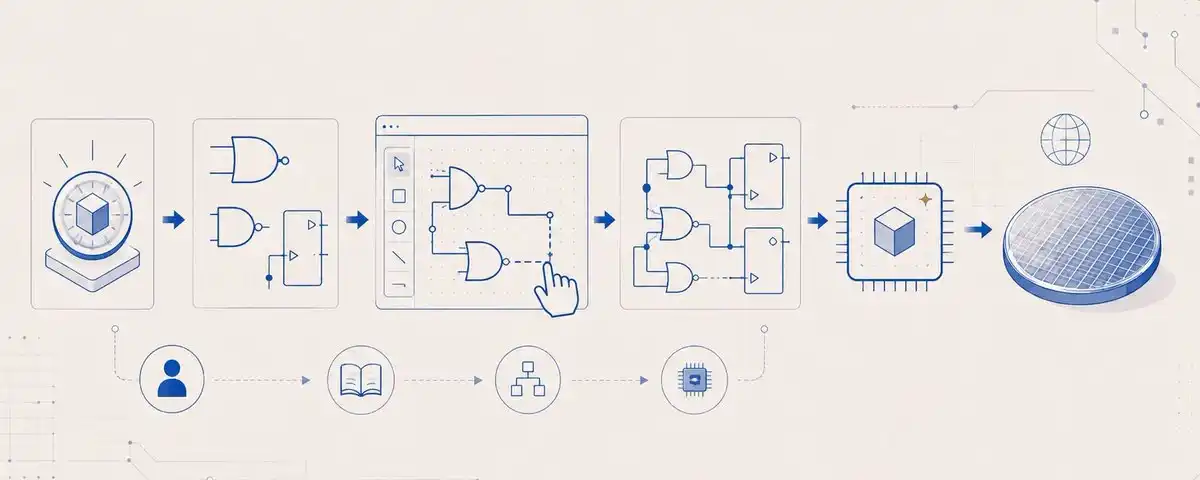
From Minting to Tape-Out: A First-Timer’s Guide to TapeOut

Title: From Mint to Tapeout: A First-Timer’s Guide to TapeOut **Summary:** This guide provides a risk-conscious, step-by-step introduction to TapeOut, a platform where users can mint logic components (NAND, LATCH) and use them to "tape out" on-chain circuits. It emphasizes a fundamental shift in mindset: instead of focusing first on prices or speculation, users should first understand how to use the platform's core functionality. The recommended path begins with preparation: use a separate, low-fund wallet on BNB Smart Chain for experimentation. The first step is to choose a "Processor"—the foundational unit for components and circuits—by examining its details (supply, mintage, creator) rather than chasing trends. If a Processor has remaining supply, users can mint a small number of components. The guide stresses that minting acquires specific components for a specific processor, not a generic asset. For sold-out Processors, trading occurs on an order book market. Users must carefully understand order prices, quantities, and the 1% fee, and always verify transactions on a block explorer. The core "play" experience is in the Canvas, where users can build and test logic circuits without a wallet. Before proceeding to tapeout—the irreversible, on-chain act of finalizing a circuit which consumes components—users must verify their design, component costs, and target processor. After taping out a circuit, the guide encourages users to interact with it, for example by calling its functions via BscScan's read contract feature, completing the "components -> circuit -> verification" loop. It concludes with critical safety checks to perform before any wallet signature, and cautions against misinterpreting demo pages (like the "on-chain BTC miner") as profit-generating services. The goal is to approach TapeOut as a hands-on lesson in on-chain logic, minimizing financial risk while learning its unique mechanics.

marsbit6m ago

From Minting to Tape-Out: A First-Timer’s Guide to TapeOut

marsbit6m ago

Wall Street Analyst Predicts SpaceX Stock Price Drop to $75

A Wall Street analyst from Phillip Securities, Glenn Tumm, has issued a "Sell" recommendation for SpaceX stock (SPCX), maintaining a 12-month price target of $75. This implies a potential 46.6% drop from the current price of $140.50. The bearish outlook is based on the company's significant capital expenditures, reliance on temporary cloud service contracts, and customer concentration in its AI services, suggesting a need for longer-term commitments to support its valuation. This stance contrasts sharply with the broader Wall Street consensus. An average of 31 analysts polled by TipRanks sets a 12-month price target of $232.35, implying 64% upside, with the highest forecast at $800 and the lowest at $75. The report follows SpaceX's impressive Q2 2026 results, where total revenue surged 92% year-over-year to $7.8 billion. Starlink subscriber count doubled to 12 million, driving communications revenue up 66% to $4.3 billion. AI-related revenue skyrocketed 247% to $2.6 billion, fueled by new cloud services and infrastructure deals. Despite the strong earnings, SPCX shares fell over 4% in the last 24 hours, reducing the company's market cap to $1.9 trillion. The stock had initially jumped over 17% post-earnings but faced resistance near $149. The analyst concludes that SpaceX's future trajectory hinges on securing more long-term contracts with its AI and Starlink customers. Success could validate Wall Street's bullish forecasts, while failure may render the recent stock rebound temporary.

cryptonews.ru53m ago

Wall Street Analyst Predicts SpaceX Stock Price Drop to $75

cryptonews.ru53m ago

Trading

Spot

Hot Articles

What is $BITCOIN

DIGITAL GOLD ($BITCOIN): A Comprehensive Analysis Introduction to DIGITAL GOLD ($BITCOIN) DIGITAL GOLD ($BITCOIN) is a blockchain-based project operating on the Solana network, which aims to combine the characteristics of traditional precious metals with the innovation of decentralized technologies. While it shares a name with Bitcoin, often referred to as “digital gold” due to its perception as a store of value, DIGITAL GOLD is a separate token designed to create a unique ecosystem within the Web3 landscape. Its goal is to position itself as a viable alternative digital asset, although specifics regarding its applications and functionalities are still developing. What is DIGITAL GOLD ($BITCOIN)? DIGITAL GOLD ($BITCOIN) is a cryptocurrency token explicitly designed for use on the Solana blockchain. In contrast to Bitcoin, which provides a widely recognized value storage role, this token appears to focus on broader applications and characteristics. Notable aspects include: Blockchain Infrastructure: The token is built on the Solana blockchain, known for its capacity to handle high-speed and low-cost transactions. Supply Dynamics: DIGITAL GOLD has a maximum supply capped at 100 quadrillion tokens (100P $BITCOIN), although details regarding its circulating supply are currently undisclosed. Utility: While precise functionalities are not explicitly outlined, there are indications that the token could be utilized for various applications, potentially involving decentralized applications (dApps) or asset tokenization strategies. Who is the Creator of DIGITAL GOLD ($BITCOIN)? At present, the identity of the creators and development team behind DIGITAL GOLD ($BITCOIN) remains unknown. This situation is typical among many innovative projects within the blockchain space, particularly those aligning with decentralized finance and meme coin phenomena. While such anonymity may foster a community-driven culture, it intensifies concerns about governance and accountability. Who are the Investors of DIGITAL GOLD ($BITCOIN)? The available information indicates that DIGITAL GOLD ($BITCOIN) does not have any known institutional backers or prominent venture capital investments. The project seems to operate on a peer-to-peer model focused on community support and adoption rather than traditional funding routes. Its activity and liquidity are primarily situated on decentralized exchanges (DEXs), such as PumpSwap, rather than established centralized trading platforms, further highlighting its grassroots approach. How DIGITAL GOLD ($BITCOIN) Works The operational mechanics of DIGITAL GOLD ($BITCOIN) can be elaborated on based on its blockchain design and network attributes: Consensus Mechanism: By leveraging Solana’s unique proof-of-history (PoH) combined with a proof-of-stake (PoS) model, the project ensures efficient transaction validation contributing to the network's high performance. Tokenomics: While specific deflationary mechanisms have not been extensively detailed, the vast maximum token supply implies that it may cater to microtransactions or niche use cases that are still to be defined. Interoperability: There exists the potential for integration with Solana’s broader ecosystem, including various decentralized finance (DeFi) platforms. However, the details regarding specific integrations remain unspecified. Timeline of Key Events Here is a timeline that highlights significant milestones concerning DIGITAL GOLD ($BITCOIN): 2023: The initial deployment of the token occurs on the Solana blockchain, marked by its contract address. 2024: DIGITAL GOLD gains visibility as it becomes available for trading on decentralized exchanges like PumpSwap, allowing users to trade it against SOL. 2025: The project witnesses sporadic trading activity and potential interest in community-led engagements, although no noteworthy partnerships or technical advancements have been documented as of yet. Critical Analysis Strengths Scalability: The underlying Solana infrastructure supports high transaction volumes, which could enhance the utility of $BITCOIN in various transaction scenarios. Accessibility: The potential low trading price per token could attract retail investors, facilitating wider participation due to fractional ownership opportunities. Risks Lack of Transparency: The absence of publicly known backers, developers, or an audit process may yield skepticism regarding the project's sustainability and trustworthiness. Market Volatility: The trading activity is heavily reliant on speculative behavior, which can result in significant price volatility and uncertainty for investors. Conclusion DIGITAL GOLD ($BITCOIN) emerges as an intriguing yet ambiguous project within the rapidly evolving Solana ecosystem. While it attempts to leverage the “digital gold” narrative, its departure from Bitcoin's established role as a store of value underscores the need for a clearer differentiation of its intended utility and governance structure. Future acceptance and adoption will likely depend on addressing the current opacity and defining its operational and economic strategies more explicitly. Note: This report encompasses synthesised information available as of October 2023, and developments may have transpired beyond the research period.

1.9k Total ViewsPublished 2025.05.13Updated 2025.05.13

What is $BITCOIN

Discussions

Welcome to the HTX Community. Here, you can stay informed about the latest platform developments and gain access to professional market insights. Users' opinions on the price of BTC (BTC) are presented below.

活动图片