Bitcoin Short-Term Bullish Structure Validated, HYPE Low-Entry Window Opens | Guest Analysis

Odaily星球日报Published on 2026-06-15Last updated on 2026-06-15

Abstract

**Market Analysis Summary (Week of June 2026)** **Overall Market Context:** The market environment is exceptionally complex, with the unexpected US-Iran agreement and the reopening of the Strait of Hormuz triggering a global asset repricing and significant volatility. This heightened noise underscores the importance of a structured analytical framework. **Bitcoin (BTC) Analysis & Strategy:** * **Current Status:** The price has climbed above $65,000, currently in a rebound phase (segment 38-39) following a complex 12-segment correction from the May high of $82,850. * **Key Levels:** * **Primary Resistance:** $69,500–$70,500. A successful breakout above $65,000 targets this zone. * **Primary Support:** $65,000 (immediate), followed by $59,000–$60,000 and $55,000. * **Weekly Outlook & Strategy:** The focus is on the confirmation of the $65,000 level. * **Bullish Scenario (Hold $65K):** A move toward the $69.5K–$70.5K resistance zone is anticipated, which is a potential area for initiating medium-term short positions. * **Bearish Scenario (Break below $65K):** A retest of the $60,000–$62,000 support range is likely. * **Medium-Term Strategy:** Currently neutral. Plan to establish short positions (up to 60% allocation) either in the $69.5K–$70.5K resistance zone upon signs of rejection, or on a confirmed breakdown below $65,000 and further below $59K–$60K. * **Short-Term Strategy:** Utilize 30% capital for scalping opportunities based on...

This week's market environment is exceptionally complex—the unexpected conclusion of the US-Iran agreement and the reopening of the Strait of Hormuz have triggered a massive global asset repricing. Moments of intense market sentiment volatility are precisely when structural analysis proves most valuable. The greater the noise, the more critical the framework.

This week, we focus on two main narratives: How will Bitcoin's subsequent direction be determined following its pullback after breaching $65,000? And, will HYPE's test of the $62.5~$64.57 resistance zone, after completing a four-stage correction, present new short-term opportunities?

For the complete structural analysis, market forecasts, and operational strategies, please refer to the main text.

Summary of This Week's Core Trading Views:

• BTC hourly chart structural analysis. (Details in Part 1)

• BTC weekly market forecast and mid- to short-term operational strategies. (Details in Part 2)

• HYPE hourly chart structural analysis. (Details in Part 3)

• HYPE weekly market forecast and short-term operational strategy. (Details in Part 4)

Last Week's Trading Strategy and Core View Market Validation:

• HYPE Short-Term Trade Performance: Completed one short-term long position trade (1x leverage) last week, achieving a gain of approximately 11.88%. (Details in Table 1)

• BTC Market Forecast Validation: In last week's article, we pointed out: After briefly dipping below the $60,000 threshold, the price found support and would initiate a short-term rebound to confirm the validity of the break below that key level. The current market movement validates our previous forecast.

• HYPE Market Forecast Validation: In last week's article, we pointed out: When HYPE price retested the key support zone of $55-57 showing signs of stabilizing, coupled with bottom signals triggered by our two models, a light long position could be considered. Current market movements are highly consistent with our forecast.

Part 1: In-Depth Analysis of Bitcoin's Hourly Chart Structure

Bitcoin _ 4-Hour K-Line Chart
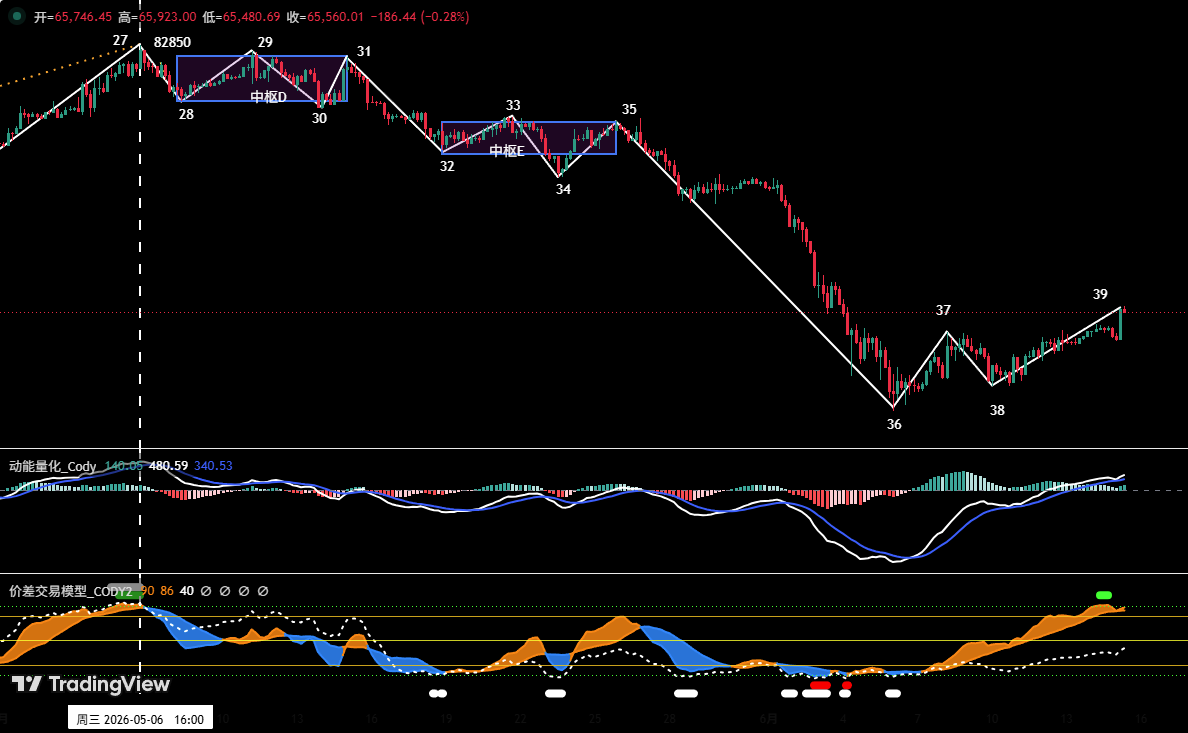
Figure 1

1. As shown in (Figure 1), since the correction began from the high of $82,850 on May 6th, a detailed 12-stage correction structure can be identified on the 4-hour chart. It includes two descending price consolidation zones: Zone D and Zone E. The overall structure is clear, presenting a typical complex correction pattern.

2. From the 4-hour structural perspective, the market is currently in the 38-39 stage rebound. The price has now surpassed $65,000. If a subsequent effective breakout is confirmed, the next significant resistance for the rebound lies in the $69,500~$70,500 region.

Part 2: Bitcoin Weekly Market Forecast and Operational Strategy

1. BTC Weekly Market Movement Forecast:

This week's core view: Focus on the result of the pullback confirmation after the price broke above $65,000.

• If the pullback fails and the level is lost, the market may test the $60,000~$62,000 core support zone again.

• If it holds firmly above, it will challenge the $69,500~$70,500 core resistance zone. This area will be a key region for us to plan mid-term short position entries.

2. Core Resistance Levels:

• First Resistance Zone: $69,500~$70,500 region (previous high-volume trading zone)

• Second Resistance Zone: $72,500~$74,500 region (previous high-volume trading zone)

3. Core Support Levels:

• First Support Level: Around $65,000

• Second Support Level: $59,000~$60,000 region (previous important support)

• Third Support Level: Around $55,000 (previous important support)

4. This Week's Operational Strategy (Excluding Impact of Unexpected News)

1. Mid-Term Strategy:

Bitcoin _ Daily K-Line Chart: (Position Monitoring Model)
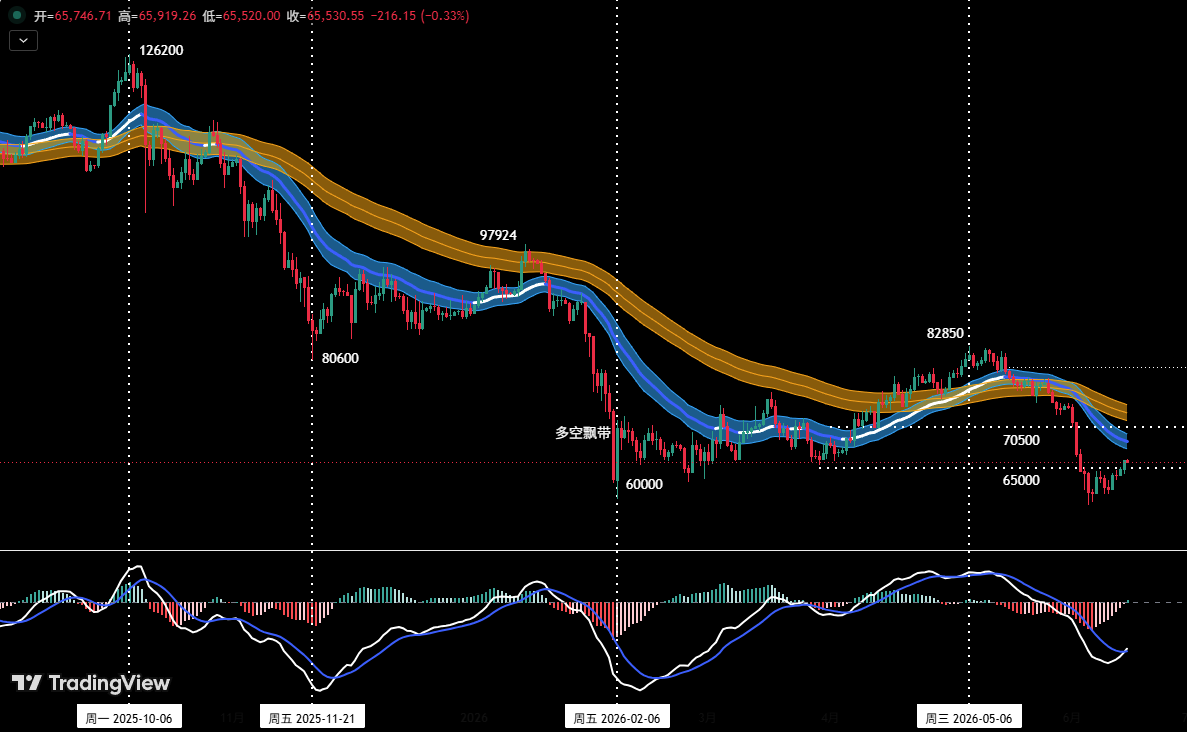
Figure 2

Position Monitoring Model: As shown in (Figure 2), the current price has effectively broken below the "Bull-Bear Channel," with the technical pattern shifting to a bear-dominated structure. Last week's market did not meet our pre-set conditions for initiating a (short) position, so the mid-term position remains empty for now.

This week, based on the outcome of the battle for $65,000 between bulls and bears, mid-term short positions can be gradually built according to the following three-tiered strategy:

Add Position at Strong Resistance: If the price successfully holds above the $65,000 region and subsequently rebounds to the $69,500~$70,500 zone showing clear resistance signs, consider establishing a mid-term (short) position, with total exposure controlled below 60%.

• Short on Support Break (Follow-through): If the price loses the $65,000 support and shows signals of a confirmed breakdown, you can initially establish a 30% mid-term short position.

Short on Further Break (Momentum): If the price loses the $65,000 support and effectively breaks below the $59,000~$60,000 support zone, you can add to the short position, with total exposure controlled below 60%.

2. Short-Term Strategy: Utilize 30% of capital, set stop-loss points, and seek "spread" opportunities based on support and resistance levels. (Use 30-minute/60-minute as the operational timeframe).

3. For short-term operations, to dynamically adapt to complex market developments, we have prepared A/B two specific operational plans in advance.

Plan A: Enter Position at Strong Resistance.

• Entry: If the price successfully holds above the $65,000 region and subsequently rebounds to around $69,500~$70,500 showing signs of stalling, combined with top signals from the quantitative model, you can initiate a short position below 30%.

• Risk Control: Set initial stop-loss.

• Exit: Gradually close the position to take profits when the price adjusts near important support levels, combined with model signals.

Plan B: Short on Effective Support Break (Follow-through).

• Entry: If the price loses the $65,000 support and shows signals of a confirmed breakdown, you can initiate a short position below 30%.

• Risk Control: Set initial stop-loss.

• Exit: Gradually close the position to take profits when the price falls to important support levels, combined with model signals.

Part 3: HYPE Hourly Chart Structural Analysis

HYPE_4-Hour K-Line Chart
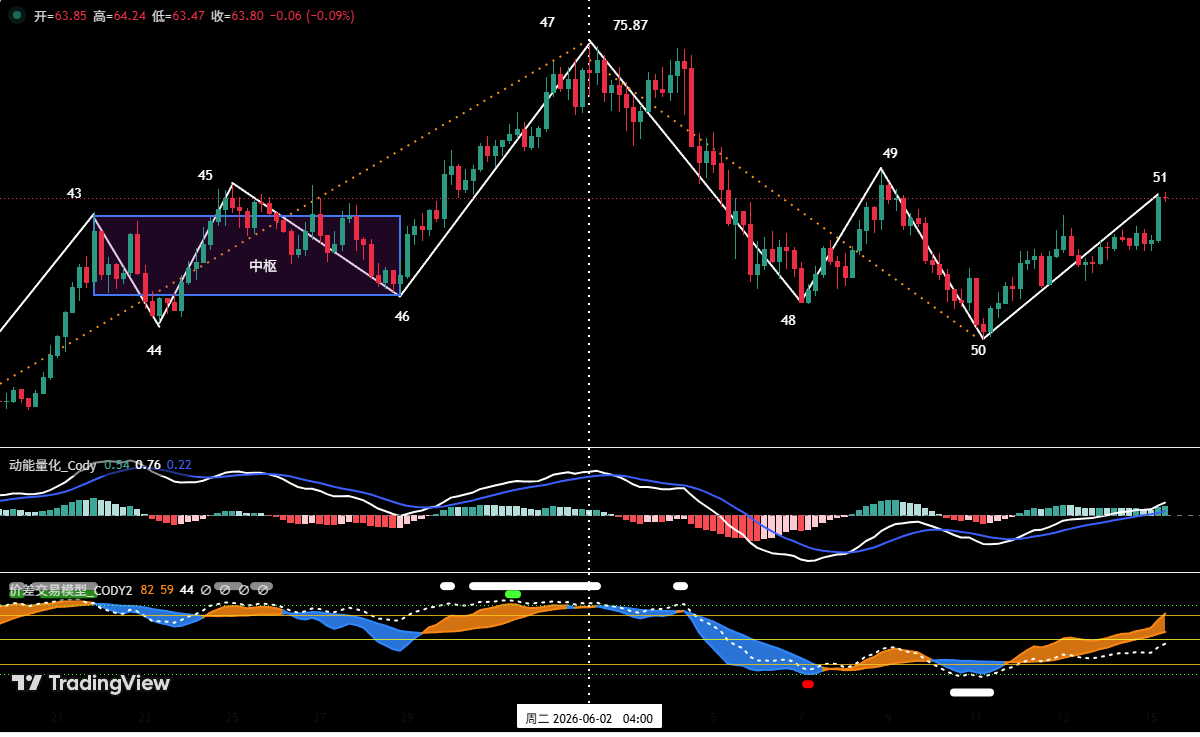
Figure 3

1. As shown in (Figure 3), on the 4-hour timeframe, HYPE's correction since the June 2nd high of $75.87 can be subdivided into a four-stage structure: (47-48), (48-49), (49-50), (50-51).

2. Currently, HYPE price has stabilized and rebounded from the support area around $52 and is in the (50-51 segment) rebound process. The overhead resistance lies in the $62.5 to $64.57 region. If (endpoint 51) forms a high point in this area (there is a high probability the overall trend will construct a "descending consolidation zone" here), the price will likely continue downward to seek stronger support.

Part 4: HYPE Weekly Market Forecast and Short-Term Operational Strategy

1. HYPE Weekly Market Movement Forecast:

1. Core Resistance Levels:

• First Resistance Level: $62.5-64.57 region;

• Second Resistance Level: $68-70 region;

2. Core Support Levels:

• First Support Level: $52-55.5 region;

• Second Support Level: $47-49 region;

This Week's Core View on HYPE:

• Observe the resistance effect in the $62.5-64.57 region and the position where "endpoint 51" forms its price high.

2. HYPE Short-Term Operational Strategy This Week: (Buy on Support)

This week's HYPE short-term trading should adhere to the strategy of "buying on dips, avoiding chasing rallies."

Short-Term Strategy: Test Long on Support Zone Stabilization

When HYPE price retests the key support zones of $52-54.5 or the deeper $47-49 and shows signs of stabilizing, combined with bottom signals triggered by our two models, consider testing a light long position. Position size must be controlled below 30%, and strict stop-loss discipline must be maintained.

Part 5: HYPE Operation Review

1. Short-Term Operation Review: (See Table 1)

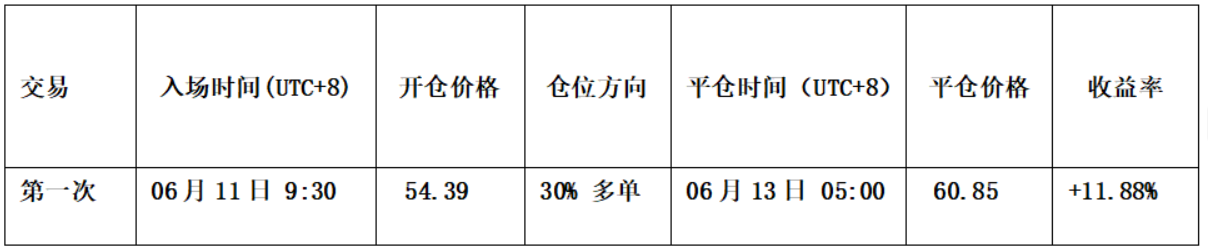
We strictly followed the operational plan and, based on trading signals from our self-built "Spread Trading Model" and "Momentum Quantitative Model," completed one short-term (long) operation last week, achieving a trading profit of 11.88%.

2. HYPE Short-Term Trade Details Summary: (Leverage*1x)
3. Short-Term Trade Review: (See Figure 4)

1. Entry Strategy:

• A relatively complete downward correction structure had been completed beforehand;

• Our self-built "Spread Trading Model" had already issued strong bottom warning signals in advance (red and white points in the chart);

• Our self-built "Momentum Quantitative Model" had issued a momentum bottom divergence signal;

Based on the above three points, we entered a 30% long position around $54.39.

2. Exit Strategy:

• When the price rose to around $62.5, it showed signs of encountering resistance;

• Our self-built "Spread Trading Model" had already issued a top warning signal in advance (white point in the chart);

• Our self-built "Momentum Quantitative Model" had issued a momentum top divergence signal;

Therefore, we closed the entire position around $60.85.

3. Summary: This trade successfully achieved a profit of approximately 11.88%.

HYPE_30-Minute K-Line Chart: (Momentum Quantitative Model + Spread Trading Model)
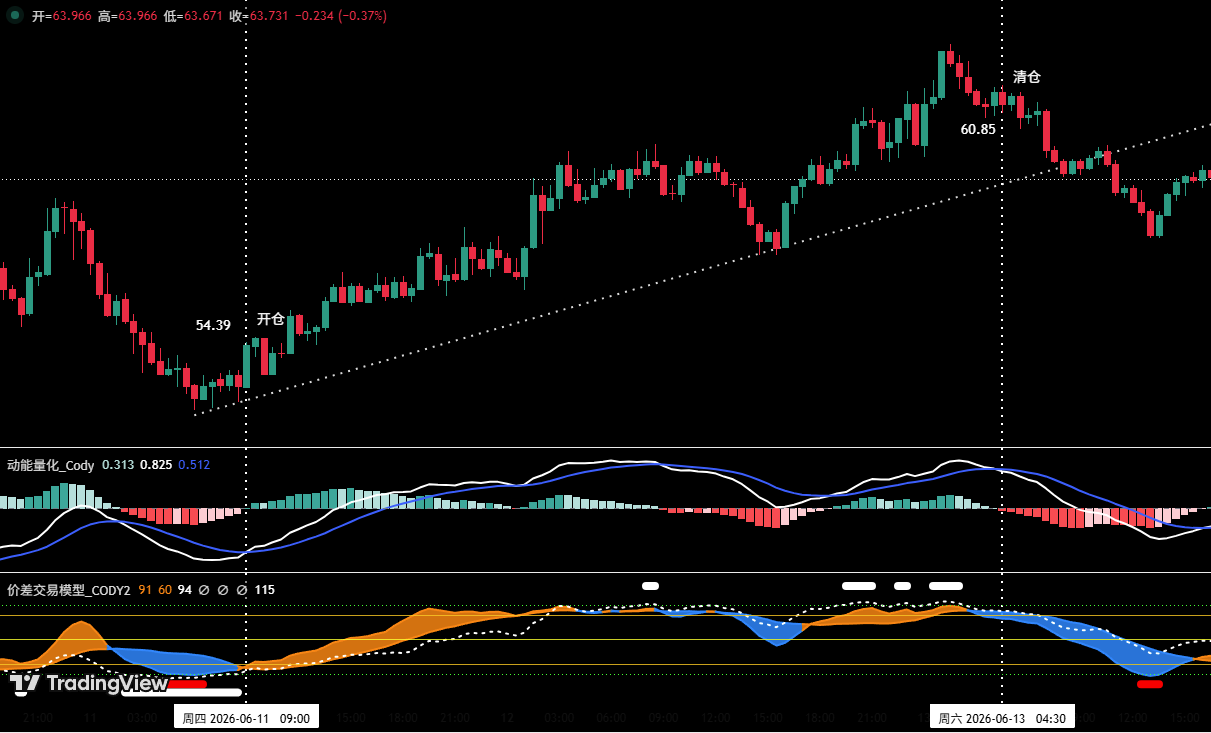
Figure 4 (Short-Term Trade Illustration)

Part 6: Special Notes:​​

1. Upon Entry: Immediately set an initial stop-loss.

2. When Profit Reaches 1%: Move the stop-loss to the entry price (break-even point) to ensure capital safety.

3. When Profit Reaches 2%​​: Move the stop-loss to the 1% profit level.

4. Continuous Tracking: Thereafter, for every additional 1% profit, move the stop-loss up by 1% accordingly, dynamically protecting and locking in gains.

Financial markets change rapidly. All market analysis and trading strategies require dynamic adjustment. All views, analytical models, and operational strategies mentioned in this article are derived from personal technical analysis, intended solely for personal trading log purposes. They do not constitute any investment advice or operational basis. Markets involve risks, investment requires caution. Please do not make decisions based on this content.


Related Questions

QWhat are the key conditions for initiating a medium-term short position on BTC according to the article's strategy?

AThe key conditions are: 1) If the price successfully holds above the $65,000 area and subsequently rebounds to the $69,500~$70,500 resistance area showing clear signs of pressure, a medium-term short position can be considered. 2) If the price loses support at $65,000 and shows effective breakdown signals, a preliminary medium-term short position can be established. 3) If the price breaks down the $59,000~$60,000 support interval after losing $65,000, additional short positions can be added.

QWhat is the core short-term trading strategy for HYPE this week, and what are the key support levels to watch for entry?

AThe core short-term strategy for HYPE is 'buying on dips and avoiding chasing rallies.' Specifically, when the price retests the key support zones of $52-54.5 or the deeper $47-49 and shows signs of stopping declines and stabilizing, combined with bottom signals from the two proprietary models, one can consider a light long position. Positions must be controlled below 30% with strict stop-loss discipline.

QWhat was the result of the previous week's HYPE short-term trade mentioned in the article, and what models were used for the decision?

AThe previous week's HYPE short-term long position (with 1x leverage) achieved a profit of approximately 11.88%. The decision was based on signals from two proprietary models: the 'Price Difference Trading Model' which issued a strong bottom warning signal, and the 'Dynamic Quantitative Model' which issued a momentum bottom divergence signal.

QAccording to the Bitcoin 4-hour chart analysis, what is the next important resistance level if the breakout above $65,000 is confirmed effective?

AIf the breakout above $65,000 is confirmed effective, the next important resistance level is located in the $69,500~$70,500 region.

QWhat is the article's overall market outlook for Bitcoin this week, and what is the pivotal level for determining the short-term direction?

AThe article's core view for Bitcoin this week is to focus on the result of the price's pullback confirmation after breaking above $65,000. This level is pivotal. If the pullback holds, the price may challenge the $69,500~$70,500 core resistance area. If it fails and the support is lost, the market may test the core support interval of $60,000~$62,000 again.

Related Reads

An AI Version of the 'Subprime Crisis'? A Hidden Debt of $1.8 Trillion is Accumulating in the Shadows Amid the Frenzy

Amidst the AI infrastructure construction boom, a massive debt expansion is forming, with the most dangerous portion remaining off-balance sheets. Morgan Stanley research reveals approximately $1.8 trillion in off-balance-sheet exposures, including nearly $1 trillion in purchase commitments and over $800 billion in non-active lease contracts. These future cash outflows are not recorded as liabilities. The leverage of hyperscale cloud companies has surged from 0.9x to 1.8x in just two quarters. Private credit firms like Apollo and Blackstone are shifting leverage into the supply chain through complex, opaque SPV (Special Purpose Vehicle) financing structures. Global AI-related bond issuance has skyrocketed, with annual volume projected to exceed $570 billion. However, capital expenditure growth is outpacing revenue and free cash flow. Major cloud providers may see free cash flow approach zero or turn negative in 2026. A significant 'depreciation cliff' looms as vast amounts of current capital spending, recorded as 'construction in progress,' have yet to begin depreciating, artificially inflating current profit margins. Future depreciation could severely pressure earnings. The core risk is identified as a series of timing mismatches, not an immediate solvency crisis. Investment is racing ahead of monetization, leverage is being obscured, and accounting classifications hinder comparability. The entire financing structure faces a fundamental stress test if AI commercialization lags or enterprise clients shift to cheaper alternatives, potentially triggering chain reactions within the highly interconnected funding ecosystem.

marsbit8m ago

An AI Version of the 'Subprime Crisis'? A Hidden Debt of $1.8 Trillion is Accumulating in the Shadows Amid the Frenzy

marsbit8m ago

SemiAnalysis Dissects Huawei's Kirin 9030: Process Technology Halted, So They Folded the Chip

SemiAnalysis has published a detailed teardown report on the HiSilicon Kirin 9030 Pro chipset found in Huawei's Mate 80 Pro. Fabricated using SMIC's most advanced N+3 node without EUV lithography, the analysis reveals significant technical achievements and strategic shifts. The report indicates SMIC's N+3 has achieved transistor density comparable to TSMC's N6 (113.4 vs 107.7 MTr/mm²), primarily through aggressive use of Self-Aligned Quadruple Patterning (SAQP) for its metal layers. This results in a notably small 32.5nm M0 metal pitch. However, SemiAnalysis notes this achievement comes with significantly higher process complexity, cost, and potential yield challenges compared to competitors using more advanced tools. The Kirin 9030 design maximizes this constrained density. While its GPU performance has improved ~70% and matches Qualcomm's 2022 flagship level, the CPU core's IPC lags behind current top-tier designs from Apple and Qualcomm, a gap attributed to the underlying manufacturing technology rather than design capability. Facing long-term restrictions on advanced tools, Huawei is charting a new path. The report highlights the company's "LogicFolding" roadmap, a 3D stacking technique aimed at shortening signal paths to boost performance and efficiency. The goal is to reach 5GHz frequency and a projected density of 295 MTr/mm² by 2031. SemiAnalysis concludes that export controls have not halted China's chip progress but have fundamentally altered its trajectory, making it more expensive and complex. This has spurred innovation in alternative areas like 3D stacking and domestic EDA tool development, with Huawei's supply chain also beginning to integrate Chinese memory from CXMT.

marsbit54m ago

SemiAnalysis Dissects Huawei's Kirin 9030: Process Technology Halted, So They Folded the Chip

marsbit54m ago

How Will the Price Move Before SpaceX's Next Share Unlock?

TL;DR Investors buying SPCX after SpaceX's IPO are not simply investing in a typical tech stock. It’s a high-valuation asset driven by Musk's narrative, Starlink, and space transport potential, but with a key twist: a very small initial float of ~4% has led to significant post-listing price appreciation. The current price action reflects a timing gap. Before the first lock-up expiration (estimated around August, subject to official confirmation), scarcity and high demand could continue to push prices up. Short-term bulls focus on low float, FOMO, and potential index inclusion. However, bears point to the supply dynamics that will change post-lockup. Existing shareholders still hold over 95% of shares, which will be released in stages starting from the first unlock window. This introduces future selling pressure from low-cost holders. The upcoming Q2 earnings report is a critical catalyst before the unlock. It will test whether the company's fundamentals can justify the current ~$2.1T valuation. Strong results could support the pre-unlock momentum, while weak figures could amplify concerns about future supply. The trading thesis is shifting from immediate scarcity ("can't buy enough") to evaluating future absorption capacity ("who will buy when more supply hits"). The path ahead hinges on the specifics of the unlock schedule, Q2 earnings performance, and whether anticipated passive index buying materializes.

marsbit1h ago

How Will the Price Move Before SpaceX's Next Share Unlock?

marsbit1h ago

Trading

Spot
Futures

Hot Articles

What is $BITCOIN

DIGITAL GOLD ($BITCOIN): A Comprehensive Analysis Introduction to DIGITAL GOLD ($BITCOIN) DIGITAL GOLD ($BITCOIN) is a blockchain-based project operating on the Solana network, which aims to combine the characteristics of traditional precious metals with the innovation of decentralized technologies. While it shares a name with Bitcoin, often referred to as “digital gold” due to its perception as a store of value, DIGITAL GOLD is a separate token designed to create a unique ecosystem within the Web3 landscape. Its goal is to position itself as a viable alternative digital asset, although specifics regarding its applications and functionalities are still developing. What is DIGITAL GOLD ($BITCOIN)? DIGITAL GOLD ($BITCOIN) is a cryptocurrency token explicitly designed for use on the Solana blockchain. In contrast to Bitcoin, which provides a widely recognized value storage role, this token appears to focus on broader applications and characteristics. Notable aspects include: Blockchain Infrastructure: The token is built on the Solana blockchain, known for its capacity to handle high-speed and low-cost transactions. Supply Dynamics: DIGITAL GOLD has a maximum supply capped at 100 quadrillion tokens (100P $BITCOIN), although details regarding its circulating supply are currently undisclosed. Utility: While precise functionalities are not explicitly outlined, there are indications that the token could be utilized for various applications, potentially involving decentralized applications (dApps) or asset tokenization strategies. Who is the Creator of DIGITAL GOLD ($BITCOIN)? At present, the identity of the creators and development team behind DIGITAL GOLD ($BITCOIN) remains unknown. This situation is typical among many innovative projects within the blockchain space, particularly those aligning with decentralized finance and meme coin phenomena. While such anonymity may foster a community-driven culture, it intensifies concerns about governance and accountability. Who are the Investors of DIGITAL GOLD ($BITCOIN)? The available information indicates that DIGITAL GOLD ($BITCOIN) does not have any known institutional backers or prominent venture capital investments. The project seems to operate on a peer-to-peer model focused on community support and adoption rather than traditional funding routes. Its activity and liquidity are primarily situated on decentralized exchanges (DEXs), such as PumpSwap, rather than established centralized trading platforms, further highlighting its grassroots approach. How DIGITAL GOLD ($BITCOIN) Works The operational mechanics of DIGITAL GOLD ($BITCOIN) can be elaborated on based on its blockchain design and network attributes: Consensus Mechanism: By leveraging Solana’s unique proof-of-history (PoH) combined with a proof-of-stake (PoS) model, the project ensures efficient transaction validation contributing to the network's high performance. Tokenomics: While specific deflationary mechanisms have not been extensively detailed, the vast maximum token supply implies that it may cater to microtransactions or niche use cases that are still to be defined. Interoperability: There exists the potential for integration with Solana’s broader ecosystem, including various decentralized finance (DeFi) platforms. However, the details regarding specific integrations remain unspecified. Timeline of Key Events Here is a timeline that highlights significant milestones concerning DIGITAL GOLD ($BITCOIN): 2023: The initial deployment of the token occurs on the Solana blockchain, marked by its contract address. 2024: DIGITAL GOLD gains visibility as it becomes available for trading on decentralized exchanges like PumpSwap, allowing users to trade it against SOL. 2025: The project witnesses sporadic trading activity and potential interest in community-led engagements, although no noteworthy partnerships or technical advancements have been documented as of yet. Critical Analysis Strengths Scalability: The underlying Solana infrastructure supports high transaction volumes, which could enhance the utility of $BITCOIN in various transaction scenarios. Accessibility: The potential low trading price per token could attract retail investors, facilitating wider participation due to fractional ownership opportunities. Risks Lack of Transparency: The absence of publicly known backers, developers, or an audit process may yield skepticism regarding the project's sustainability and trustworthiness. Market Volatility: The trading activity is heavily reliant on speculative behavior, which can result in significant price volatility and uncertainty for investors. Conclusion DIGITAL GOLD ($BITCOIN) emerges as an intriguing yet ambiguous project within the rapidly evolving Solana ecosystem. While it attempts to leverage the “digital gold” narrative, its departure from Bitcoin's established role as a store of value underscores the need for a clearer differentiation of its intended utility and governance structure. Future acceptance and adoption will likely depend on addressing the current opacity and defining its operational and economic strategies more explicitly. Note: This report encompasses synthesised information available as of October 2023, and developments may have transpired beyond the research period.

363 Total ViewsPublished 2025.05.13Updated 2025.05.13

What is $BITCOIN

Discussions

Welcome to the HTX Community. Here, you can stay informed about the latest platform developments and gain access to professional market insights. Users' opinions on the price of BTC (BTC) are presented below.

活动图片