Bitcoin reacts to $6.8B Fed liquidity – Is a 2026 bull run taking shape?

ambcryptoPublished on 2025-12-22Last updated on 2025-12-22

Abstract

Recent Federal Reserve actions, including a $6.8 billion liquidity injection, are fueling speculation of a potential Bitcoin bull run by 2026, reminiscent of the 2020–21 rally. However, the current environment remains volatile due to mixed global liquidity conditions—Japan is tightening while China's money supply data is pending. Despite four consecutive bullish daily candles for BTC, several risks persist: negative ETF flows, cautious U.S. investors, and upcoming key macro data on inflation, GDP, and employment. This combination suggests the current uptick may be a bull trap rather than a sustained breakout, with Bitcoin likely to test key support levels amid ongoing market uncertainty.

It looks like the liquidity base for a 2026 bull run is already taking shape.

In Q4, the Federal Reserve added sizable liquidity through Treasury purchases, rate cuts, and repo operations. Building on that, the recent $6.8 billion liquidity injection is now flowing through the system.

Historically, similar liquidity moves have supported Bitcoin [BTC] rallies.

Flashback to 2020–21, aggressive Fed easing coincided with BTC’s rally, with price moving from $5k in late-2020 to $68k by the end of Q1 2021.

However, that rally wasn’t driven by the Fed alone.

At the same time, liquidity easing across Japan, the EU, and China also helped lift global risk appetite. In fact, during the 2020 crisis, roughly $8 trillion was added collectively to these economies’ balance sheets.

In this context, the current week is critical for Bitcoin.

On the one hand, Japan is seeing liquidity tightening. On the other, markets are awaiting China’s M2 money supply data, making this another key liquidity window for BTC.

Given this setup, it’s not surprising to see BTC chop sideways, even after the $6.8 billion injection. Ultimately, the question is whether this setup sets the stage for a 2026 run or pushes BTC deeper into a volatility loop.

Bitcoin reacts to liquidity, but the setup stays risky

Notably, this liquidity injection is landing at a volatile moment for markets.

From a macro standpoint, volatility isn’t going away anytime soon. Bitcoin is heading into a data-heavy week, with inflation, jobs, and GDP all in focus. Still, BTC’s technical structure offers some support.

Zooming in, the daily chart started to lean bullish. BTC has posted four back-to-back green candles, each closing at a higher high.

In short, price action suggested the market was beginning to respond to the liquidity boost.

From a trader’s perspective, going fully long here can make sense.

However, with sentiment stuck in fear, key macro data set to pressure BTC levels, ETF flows still negative, and U.S. investors largely on the sidelines, this setup starts to feel more like a bull trap than a clean breakout.

In that light, the recent liquidity boost isn’t playing out the usual Bitcoin playbook. Instead, with speculative positioning building against weak risk appetite, BTC could retest, or break, key support levels this week.


Final Thoughts

  • Recent Fed injections and global liquidity measures support BTC, yet data releases, tightening in Japan, and cautious investor sentiment keep markets volatile.
  • BTC shows bullish signs on the daily chart, but macro pressure suggests the setup could be a bull trap rather than a clean breakout.


Related Questions

QWhat recent Federal Reserve action is mentioned as a potential catalyst for Bitcoin market movement?

AThe recent $6.8 billion liquidity injection by the Federal Reserve through Treasury purchases, rate cuts, and repo operations.

QAccording to the article, what historical precedent is given for liquidity moves supporting a Bitcoin rally?

AThe aggressive Fed easing in 2020-21, which coincided with BTC's price moving from $5k to $68k, supported by an additional $8 trillion in liquidity from Japan, the EU, and China.

QWhy does the article suggest the current setup for Bitcoin might be a 'bull trap' rather than a clean breakout?

ABecause sentiment is stuck in fear, key macro data is set to pressure BTC levels, ETF flows are still negative, and U.S. investors are largely on the sidelines.

QWhat technical evidence on the daily chart suggests a bullish lean for Bitcoin?

ABTC has posted four back-to-back green candles, each closing at a higher high.

QWhat two key global economic factors are highlighted as critical for Bitcoin's liquidity this week?

ALiquidity tightening in Japan and the upcoming release of China’s M2 money supply data.

Related Reads

Breaking: OpenAI Undergoes Major Reorganization, President Brockman Assumes Command

OpenAI has announced a major internal reorganization just months before its anticipated IPO. The company is merging its three flagship product lines—ChatGPT, Codex, and the API platform—into a single, unified product organization. The most significant leadership change involves co-founder and President Greg Brockman moving from a background technical role to take full, permanent control over all product strategy. This follows the indefinite medical leave of AGI Deployment CEO Fidji Simo. Additionally, ChatGPT's longtime lead, Nick Turley, has been reassigned to enterprise products, with former Instagram executive Ashley Alexander taking over consumer offerings. The consolidation, internally framed as a strategic move towards an "Agentic Future," aims to break down internal silos and create a cohesive "Super App." This planned desktop application would integrate ChatGPT's conversational abilities, Codex's coding power, and a rumored internal web browser named "Atlas" to autonomously perform complex user tasks. The reorganization occurs amid significant internal and external pressures. OpenAI has recently seen a wave of high-profile departures, including Sora co-lead Bill Peebles and other senior technical leaders, leading to concerns about a thinning executive bench. Externally, rival Anthropic recently secured funding at a staggering $900 billion valuation, surpassing OpenAI's own. Google's upcoming I/O developer conference also poses a competitive threat. Analysts suggest the dramatic restructure is a pre-IPO move to present a clearer, more focused narrative to Wall Street—streamlining operations and demonstrating decisive leadership under Brockman to counter internal turbulence and intense market competition.

marsbit2h ago

Breaking: OpenAI Undergoes Major Reorganization, President Brockman Assumes Command

marsbit2h ago

Two Survival Structures of Market Makers and Arbitrageurs

Market makers and arbitrageurs represent two distinct survival structures in high-frequency trading. Market makers primarily use limit orders (makers) to profit from the bid-ask spread, enjoying high capital efficiency (nominally 100%) but bearing inventory risk. This "inventory risk" arises from passive, fragmented, and discontinuous order fills in the limit order book (LOB). This risk, while a potential cost, can also contribute to excess profit if managed within control boundaries, allowing for mean reversion. Market makers essentially sell "time" (uncertainty over execution timing) to the market for price control and low fees. In contrast, cross-exchange arbitrageurs typically use market orders (takers) to exploit price differences or funding rates, resulting in lower nominal capital efficiency (requiring capital on both exchanges) and higher transaction costs. Their risk exposure stems from asymmetries in exchange rules (e.g., minimum order sizes), execution latency, and infrastructure risks (e.g., ADL, oracle drift). These exposures are active, exogenous gaps that primarily erode profits rather than contribute to them. Arbitrageurs essentially sell "space" (capital sunk across venues) for localized, immediate certainty. Both strategies engage in a trade-off between execution friction and residual risk. Optimal systems allow for temporary, controlled risk exposure rather than enforcing zero exposure at all costs. Their evolution converges towards hybrid models: arbitrageurs may use maker orders to reduce costs, while market makers may use taker orders or hedges for risk management. Ultimately, both use different forms of risk exposure—market makers exposing inventory, arbitrageurs immobilizing capital—to extract marginal, hard-won certainty from the market.

链捕手2h ago

Two Survival Structures of Market Makers and Arbitrageurs

链捕手2h ago

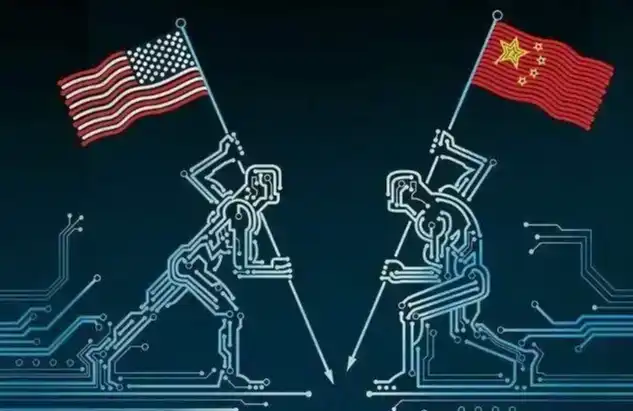
Who Will Define the Rules of the AI Era? Anthropic Discusses the 2028 US-China AI Landscape

This article, based on Anthropic's analysis, outlines the intensifying systemic competition between the U.S./allies and China for AI leadership by 2028. It argues that access to advanced computing power ("compute") is the critical bottleneck, where the U.S. currently holds a significant advantage through chip export controls and allied innovation. However, China's AI labs remain competitive by exploiting policy loopholes—via chip smuggling, overseas data center access, and "model distillation" attacks to copy U.S. model capabilities—keeping them close to the frontier. The piece presents two contrasting scenarios for 2028. In the first, decisive U.S. action to tighten compute controls and curb distillation locks in a 12-24 month AI capability lead, cementing democratic influence over global AI norms, security, and economic infrastructure. In the second, policy inaction allows China to achieve near-parity through continued access to U.S. technology, enabling Beijing to promote its AI stack globally and integrate advanced AI into its military and governance systems, altering the strategic balance. Anthropic contends that maintaining a decisive U.S. lead is essential for shaping safe AI development and governance. The core recommendation is for U.S. policymakers to urgently close compute and model access loopholes while promoting global adoption of the U.S. AI technology stack to secure a lasting strategic advantage.

marsbit4h ago

Who Will Define the Rules of the AI Era? Anthropic Discusses the 2028 US-China AI Landscape

marsbit4h ago

Trading

Spot
Futures

Hot Articles

What is GENIUS

I. Project Introduction1. What Is Genius?Genius (GENIUS) is positioned as the “ultimate on-chain terminal,” a decentralized trading platform focused on privacy and speed. By integrating top-tier privacy technology, it aims to build a next-generation privacy trading infrastructure across networks such as BNB Chain, enabling users to interact on-chain with a seamless experience comparable to centralized exchanges.2. How Does Genius Work?Genius's core technical architecture is structured as follows:(1) Chain-invisible: Users do not need to manually handle multi-step approvals for cross-chain operations, asset wrapping, or complex gas management.(2) Signatureless Trading: Through integrations such as Turnkey, Genius enables instant trading without pop-up confirmations or per-transaction authorization.(3) Aggregator of Aggregators: Genius is powered by a best-in-class aggregation stack integrated with more than 150 DEXs, claiming superior quote efficiency compared with competing products.(4) Account Management: The platform adopts a non-custodial architecture and leverages Turnkey and Lit Protocol for key management, allowing users to securely access their accounts through passkeys.3. Who Created Genius?According to its official Terms of Service, Genius was developed by Shuttle Labs, Inc. Based on the project’s official X account, Ryan Myher is one of the key contributors driving product iteration, including developments such as the rollout of the Ghost protocol, as well as broader community engagement.Binance founder CZ has officially joined the project as an advisor, with the goal of helping the team build a faster and more privacy-preserving on-chain trading experience.In addition, the project has received strong backing from YZi Labs, which has invested in Genius and works alongside the Genius Foundation, responsible for maintaining the core Genius Bridge Protocol (GBP).4. Genius TokenomicsGENIUS is the native token of the Genius ecosystem. As of now, the project has not released a full tokenomics document.Based on the latest official disclosures, Genius incorporates a deflationary mechanism, and 4.6% of the total token supply had already been burned during the early launch phase.Genius Points (GP) System:(1) Trade-to-Earn: The platform has established a reward pool of 200 million Genius Points, and users earn GP for every trade executed through the terminal.(2) Tiering and Badges: Genius features a progression-based badge system ranging from Smart to God, with higher levels unlocking additional perks and benefits.(3) Native Yield: Users holding designated assets such as usdGG in the dashboard can earn native yield directly without going through complex staking.(4) Referral Incentives: Referrers can earn fee rebates of over 45% paid in USDC, along with additional GP.5. Timeline & Key MilestonesMarch 2020: The project’s official X account was created, marking the beginning of its early preparation phase.January 13, 2026: Genius announced a multi-million-dollar investment from YZi Labs and simultaneously confirmed CZ as an advisor to accelerate the buildout of its privacy trading infrastructure.April 18, 2026: The project announced that the Ghost privacy protocol would be launching soon.April 29, 2026: The Ghost protocol officially opened to its first 50 testers, marking the beginning of a new era for privacy trading on BNB Chain. At the same time, the team confirmed 4.6% of tokens have been burnt.​II. Token Information1) Basic InformationToken name: GENIUS (Genius)III. Related LinksWebsite:https://www.tradegenius.com/homeExplorers:https://bscscan.com/address/0x1f12b85aac097e43aa1555b2881e98a51090e9a6Socials:https://x.com/GeniusTerminalNote: The project introduction comes from the materials published or provided by the official project team, which is for reference only and does not constitute investment advice. HTX does not take responsibility for any resulting direct or indirect losses.

1.2k Total ViewsPublished 2026.04.29Updated 2026.05.11

What is GENIUS

How to Buy GENIUS

Welcome to HTX.com! We've made purchasing Genius (GENIUS) simple and convenient. Follow our step-by-step guide to embark on your crypto journey.Step 1: Create Your HTX AccountUse your email or phone number to sign up for a free account on HTX. Experience a hassle-free registration journey and unlock all features.Get My AccountStep 2: Go to Buy Crypto and Choose Your Payment MethodCredit/Debit Card: Use your Visa or Mastercard to buy Genius (GENIUS) instantly.Balance: Use funds from your HTX account balance to trade seamlessly.Third Parties: We've added popular payment methods such as Google Pay and Apple Pay to enhance convenience.P2P: Trade directly with other users on HTX.Over-the-Counter (OTC): We offer tailor-made services and competitive exchange rates for traders.Step 3: Store Your Genius (GENIUS)After purchasing your Genius (GENIUS), store it in your HTX account. Alternatively, you can send it elsewhere via blockchain transfer or use it to trade other cryptocurrencies.Step 4: Trade Genius (GENIUS)Easily trade Genius (GENIUS) on HTX's spot market. Simply access your account, select your trading pair, execute your trades, and monitor in real-time. We offer a user-friendly experience for both beginners and seasoned traders.

2.4k Total ViewsPublished 2026.04.29Updated 2026.05.11

How to Buy GENIUS

Discussions

Welcome to the HTX Community. Here, you can stay informed about the latest platform developments and gain access to professional market insights. Users' opinions on the price of A (A) are presented below.

活动图片