Bitcoin buyers need to only ‘survive this phase’ for more gains – Analyst

ambcryptoPublished on 2026-06-25Last updated on 2026-06-25

Abstract

Bitcoin's price recently dipped below $60,000 for the first time since October 2024, attributed to increased selling pressure from large holders. Wallets holding 10-10,000 BTC sold over 45,000 BTC in eight days, increasing market supply. Analyst Kaelo warns a break below the critical $60,000 support could trigger panic selling, but suggests a potential market bottom may form within 3-4 months, offering solid entry opportunities for those who endure. Historical patterns indicate the major bottom could occur 70-110 days after a capitulation event, potentially extending pressure until October or November. Glassnode's analysis notes preliminary signs of bottom formation, but the market remains fragile, with investors facing significant daily losses and traders hedging against further downside.

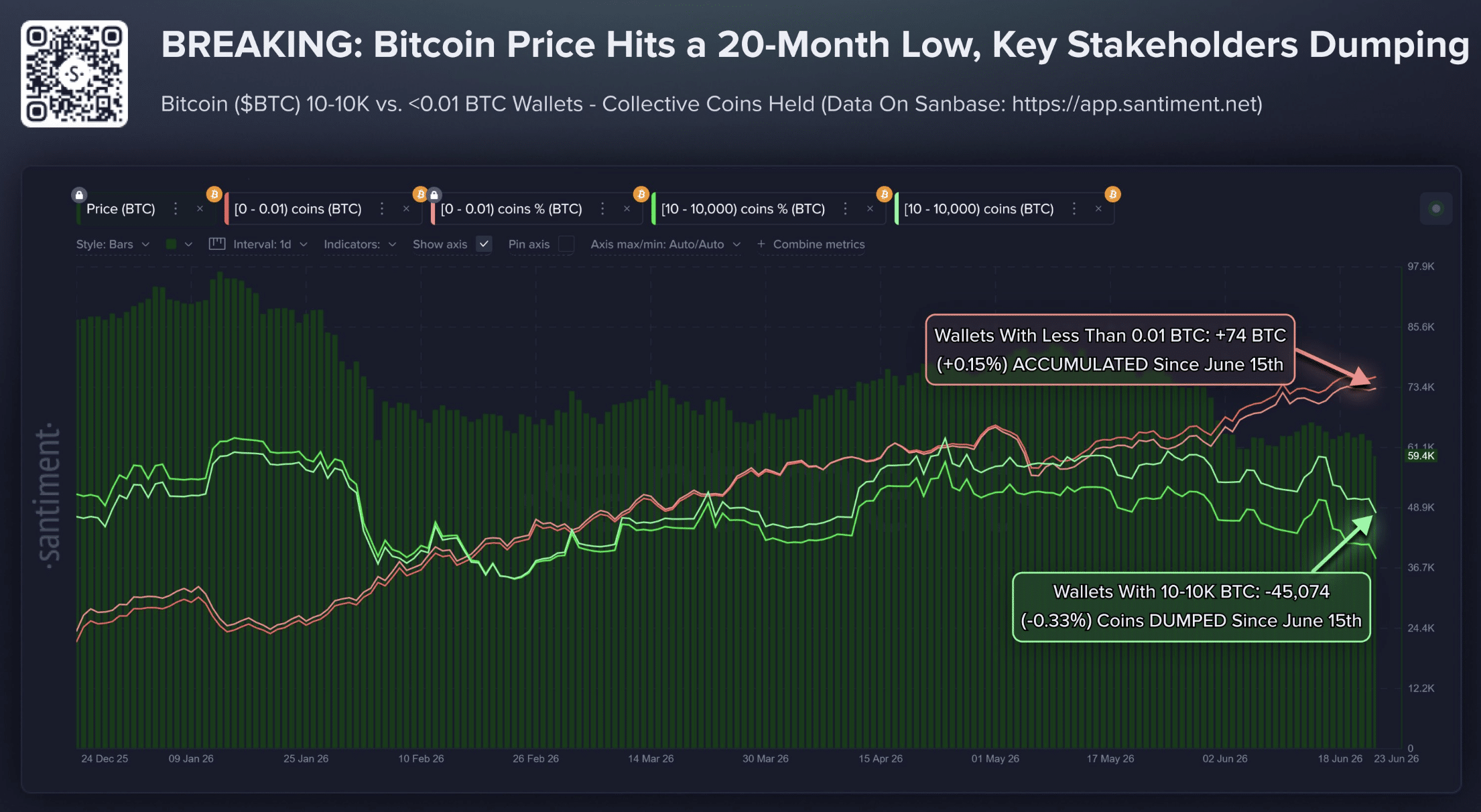
The price of Bitcoin [BTC] had dropped to $59,280 on the 24th of June. However, Bitcoin was trading at $61,682.01 at the time of writing. Santiment noted that this dip below the $60,000 mark happened for the first time since the 10th of October 2024.

This indicated that selling pressure has increased and that big holders are largely to blame for the drop. Wallets with 10–10,000 bitcoin have sold 45,074 bitcoin in the last eight days.

Due to these whales’ massive sales, the market now has billions of dollars’ worth of Bitcoin, which will raise supply and affect prices if demand cannot keep up with it.
Source: Santiment

Although this distribution by key stakeholders might be the result of portfolio rebalancing, a change in the market outlook, or profit-taking, it also indicates short-term declines in confidence.

‘Solid entry opportunities’ ahead for Bitcoin?

According to analyst Kaelo, Bitcoin will also likely experience a steep drop if it breaks below the critical $60,000 support, which could lead to panic selling and liquidations.

Nonetheless, he thinks that the bear market will probably bottom out in three to four months, offering investors who stick with it excellent accumulation opportunities. In this perspective, even though the upcoming months might be unstable and difficult, he stated,

People who manage to survive this phase have the opportunity to position themselves to be the leaders of the next bull market. Should be a lot of really solid entry opportunities across the board soon enough.

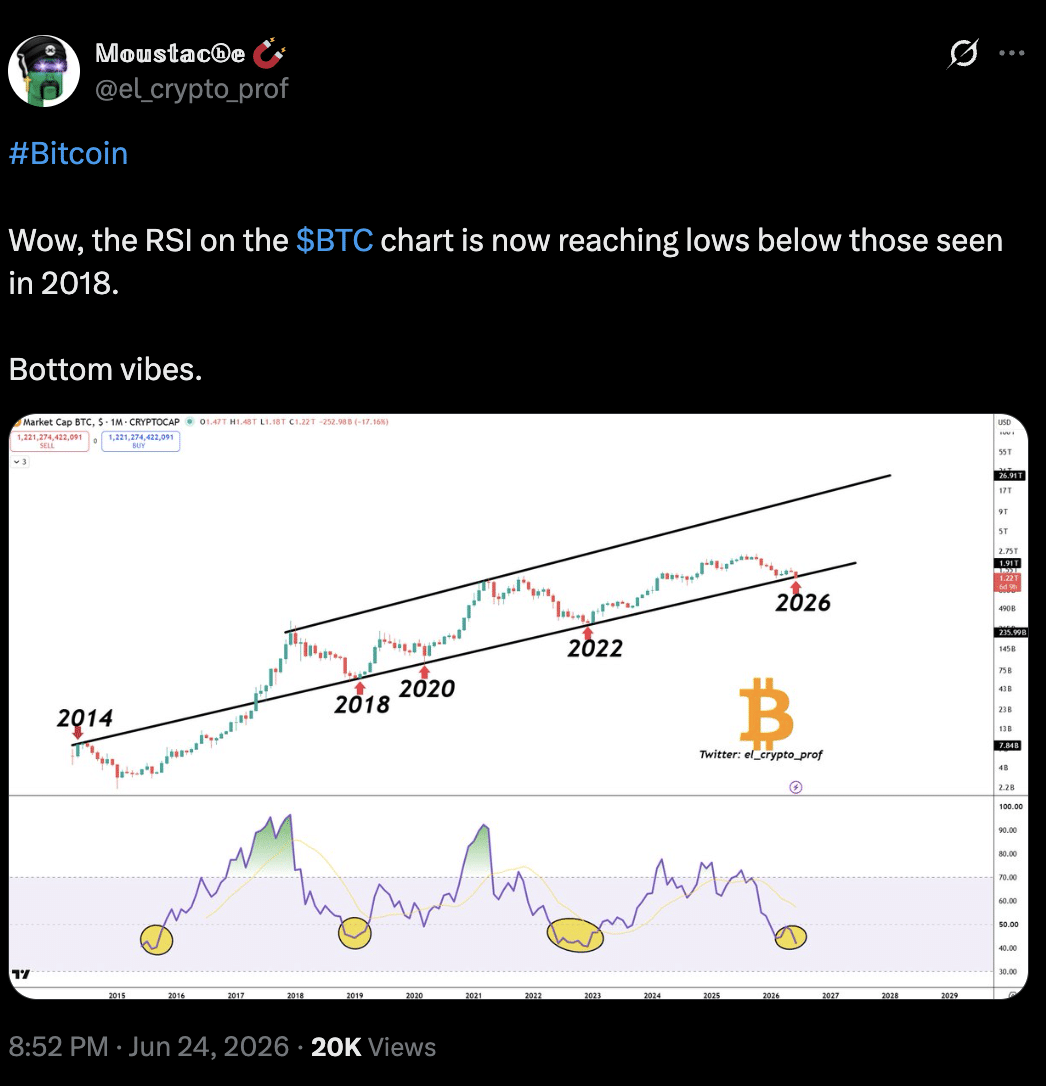
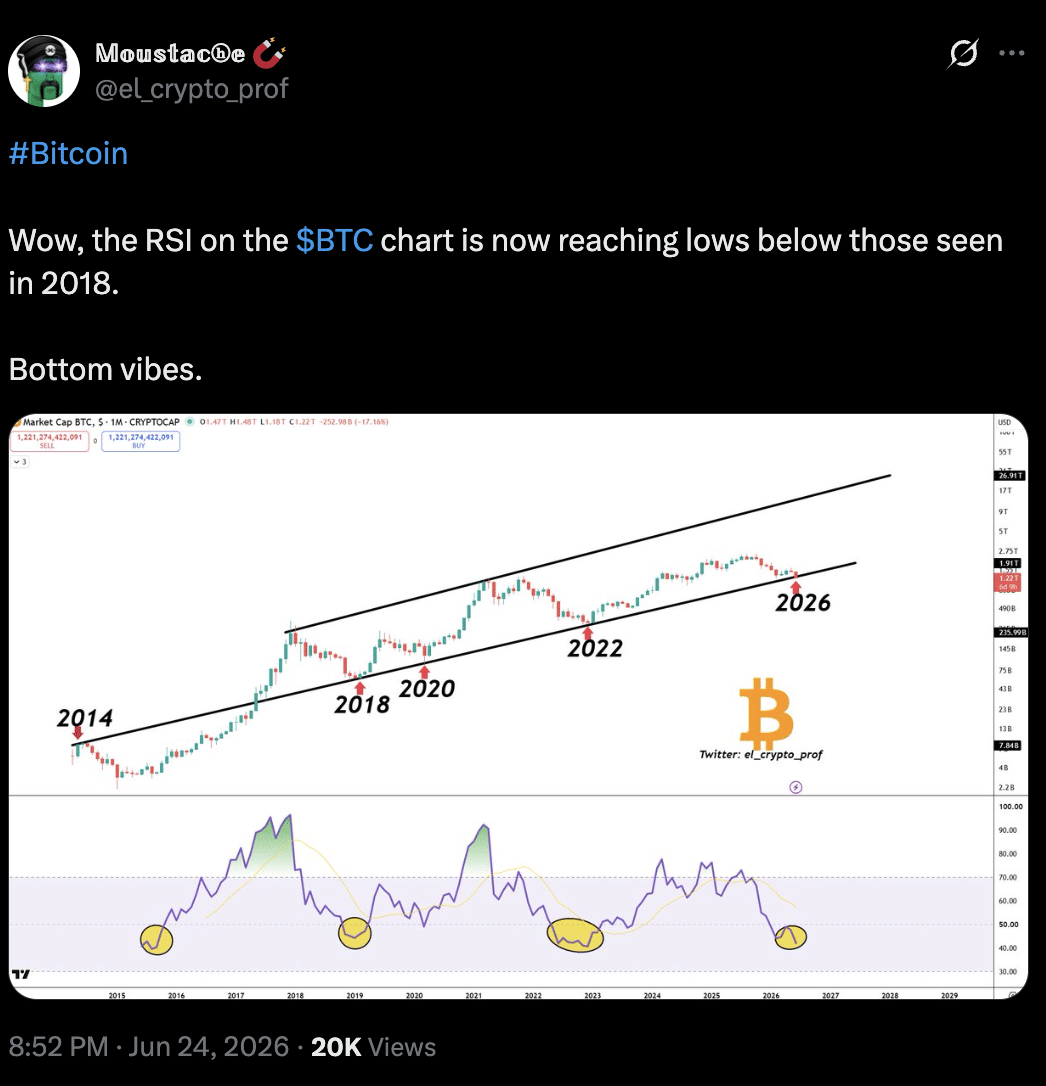
Echoing similar sentiments, another analyst added,
Source: X

All in all, the decline of Bitcoin might not be over, according to another historical signal. Prior cycles showed that the major bottom formed 70–110 days after the final bear market capitulation, which took place approximately 826 days after each halving.

AMBCrypto previously reported that BTC might continue to be under pressure until October or November if the pattern recurs.

Why BTC is still in waiting

Glassnode offered an analysis in a report titled “Waiting for Buyers,” in which they reported that although Bitcoin is still under pressure, there are preliminary indications that the market may be forming a bottom.

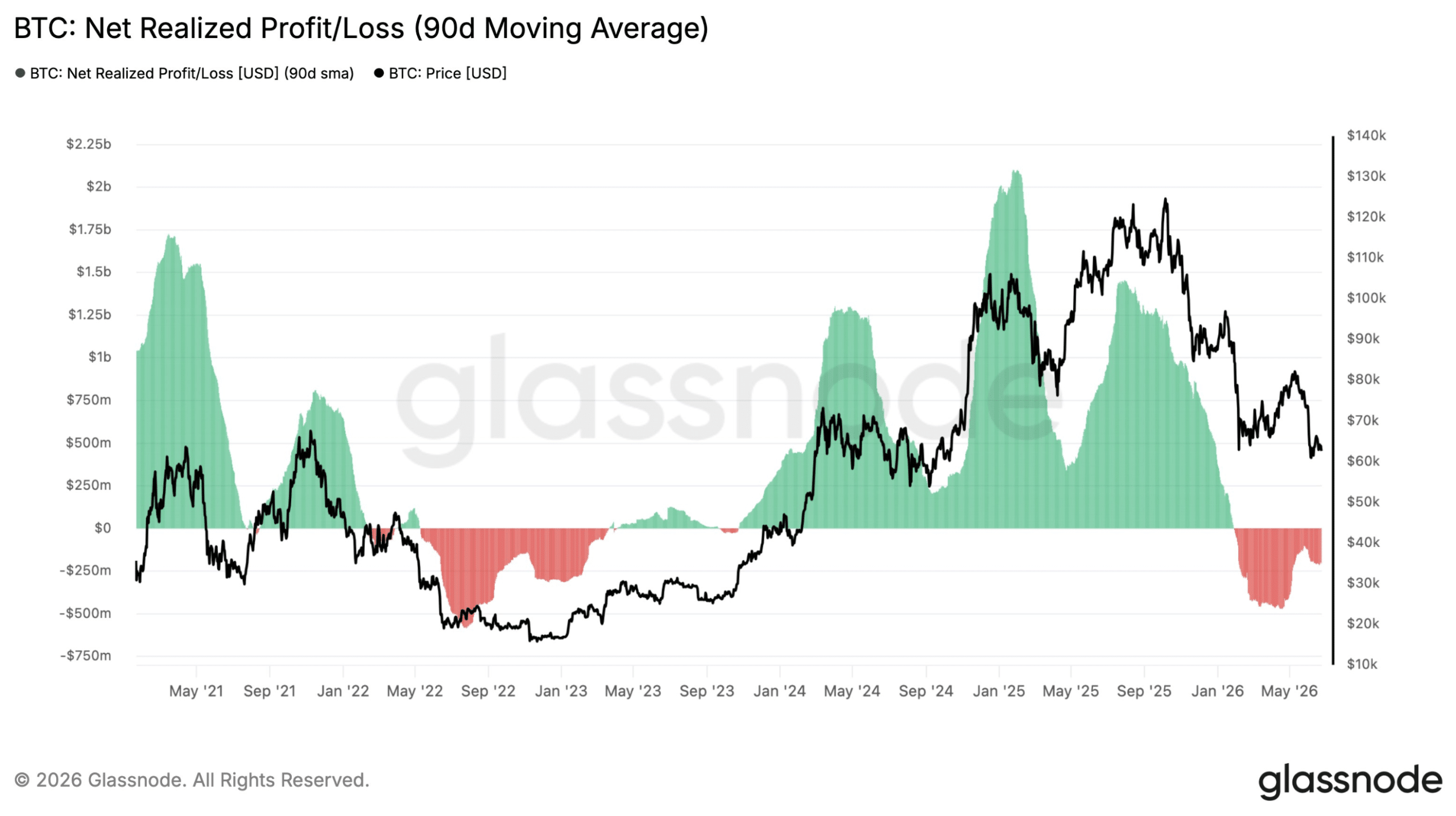
According to the analysis, investors are still suffering large losses, as evidenced by the 90-day Net Realized Profit and Loss, which averages -$205 million per day.
Source: Glassnode

While market makers’ long gamma positioning between $60,000 and $64,000 is keeping price swings largely contained around current levels. Additionally, Options market data also indicates that traders are hedging more against further downside.

Although Bitcoin may be approaching the beginning of a bottoming process rather than a new phase of capitulation, the market is still brittle overall.


Final Summary

  • Besides the price drop, whales with 10–10,000 bitcoin have sold 45,074 bitcoin in the last eight days.
  • Investors are also suffering large losses, as evidenced by the 90-day Net Realized Profit and Loss, which averages -$205 million per day.


Trending Cryptos

Related Questions

QAccording to the analyst Kaelo, what could happen if Bitcoin breaks below the critical $60,000 support level?

AIf Bitcoin breaks below the critical $60,000 support level, it could lead to panic selling and liquidations, likely resulting in a steep drop in price.

QWhat is one reason mentioned for the recent selling pressure from Bitcoin whales (holders of 10-10,000 BTC)?

AThe selling pressure from Bitcoin whales could be the result of portfolio rebalancing, a change in market outlook, or profit-taking, which also indicates short-term declines in confidence.

QBased on historical signals mentioned in the article, when might the major bottom for Bitcoin form after the final bear market capitulation?

ABased on historical cycles, the major bottom forms 70–110 days after the final bear market capitulation, which typically occurs approximately 826 days after each Bitcoin halving event.

QWhat does Glassnode's analysis titled 'Waiting for Buyers' suggest about the current Bitcoin market state?

AGlassnode's analysis suggests that while Bitcoin is still under pressure, there are preliminary indications that the market may be forming a bottom, but it remains brittle overall.

QWhat key metric indicates that Bitcoin investors are currently suffering large daily losses?

AThe 90-day Net Realized Profit and Loss metric, which averages -$205 million per day, indicates that Bitcoin investors are currently suffering large daily losses.

Related Reads

Tokenized SpaceX Stock Liquidations Show Crypto Leverage Reaching Private Markets

Tokenized SpaceX stock positions recently experienced significant liquidations, illustrating the growing risk as crypto-style leverage enters private-market equity products. This episode highlights a key tension in the tokenized asset narrative: while these products aim to democratize access to high-demand, late-stage private companies like SpaceX, pairing them with leverage transforms them into high-volatility instruments more akin to crypto derivatives than traditional equity investments. The demand for tokenized SpaceX exposure stems from its brand power, scarcity, and investor interest. However, this access does not eliminate inherent risks, including jurisdictional limits, complex redemption terms, liquidity constraints, and differences in investor rights compared to direct ownership. The incident serves as a broader warning for the tokenized real-world asset (RWA) market. For sustainable growth, platforms must establish clear rules around custody, pricing, leverage, and disclosures. Regulators are likely to scrutinize whether such products are marketed as equity access while functioning as leveraged derivatives. This story underscores ongoing market themes: increasing regulatory specificity, the integration of crypto products with traditional finance rails, and heightened sensitivity to liquidity conditions. It reinforces the need to view developments through the lens of evolving market structure, leverage, and institutional participation rather than as isolated price catalysts.

bitcoinist14m ago

Tokenized SpaceX Stock Liquidations Show Crypto Leverage Reaching Private Markets

bitcoinist14m ago

Trading

Spot
Futures

Hot Articles

What is $BITCOIN

DIGITAL GOLD ($BITCOIN): A Comprehensive Analysis Introduction to DIGITAL GOLD ($BITCOIN) DIGITAL GOLD ($BITCOIN) is a blockchain-based project operating on the Solana network, which aims to combine the characteristics of traditional precious metals with the innovation of decentralized technologies. While it shares a name with Bitcoin, often referred to as “digital gold” due to its perception as a store of value, DIGITAL GOLD is a separate token designed to create a unique ecosystem within the Web3 landscape. Its goal is to position itself as a viable alternative digital asset, although specifics regarding its applications and functionalities are still developing. What is DIGITAL GOLD ($BITCOIN)? DIGITAL GOLD ($BITCOIN) is a cryptocurrency token explicitly designed for use on the Solana blockchain. In contrast to Bitcoin, which provides a widely recognized value storage role, this token appears to focus on broader applications and characteristics. Notable aspects include: Blockchain Infrastructure: The token is built on the Solana blockchain, known for its capacity to handle high-speed and low-cost transactions. Supply Dynamics: DIGITAL GOLD has a maximum supply capped at 100 quadrillion tokens (100P $BITCOIN), although details regarding its circulating supply are currently undisclosed. Utility: While precise functionalities are not explicitly outlined, there are indications that the token could be utilized for various applications, potentially involving decentralized applications (dApps) or asset tokenization strategies. Who is the Creator of DIGITAL GOLD ($BITCOIN)? At present, the identity of the creators and development team behind DIGITAL GOLD ($BITCOIN) remains unknown. This situation is typical among many innovative projects within the blockchain space, particularly those aligning with decentralized finance and meme coin phenomena. While such anonymity may foster a community-driven culture, it intensifies concerns about governance and accountability. Who are the Investors of DIGITAL GOLD ($BITCOIN)? The available information indicates that DIGITAL GOLD ($BITCOIN) does not have any known institutional backers or prominent venture capital investments. The project seems to operate on a peer-to-peer model focused on community support and adoption rather than traditional funding routes. Its activity and liquidity are primarily situated on decentralized exchanges (DEXs), such as PumpSwap, rather than established centralized trading platforms, further highlighting its grassroots approach. How DIGITAL GOLD ($BITCOIN) Works The operational mechanics of DIGITAL GOLD ($BITCOIN) can be elaborated on based on its blockchain design and network attributes: Consensus Mechanism: By leveraging Solana’s unique proof-of-history (PoH) combined with a proof-of-stake (PoS) model, the project ensures efficient transaction validation contributing to the network's high performance. Tokenomics: While specific deflationary mechanisms have not been extensively detailed, the vast maximum token supply implies that it may cater to microtransactions or niche use cases that are still to be defined. Interoperability: There exists the potential for integration with Solana’s broader ecosystem, including various decentralized finance (DeFi) platforms. However, the details regarding specific integrations remain unspecified. Timeline of Key Events Here is a timeline that highlights significant milestones concerning DIGITAL GOLD ($BITCOIN): 2023: The initial deployment of the token occurs on the Solana blockchain, marked by its contract address. 2024: DIGITAL GOLD gains visibility as it becomes available for trading on decentralized exchanges like PumpSwap, allowing users to trade it against SOL. 2025: The project witnesses sporadic trading activity and potential interest in community-led engagements, although no noteworthy partnerships or technical advancements have been documented as of yet. Critical Analysis Strengths Scalability: The underlying Solana infrastructure supports high transaction volumes, which could enhance the utility of $BITCOIN in various transaction scenarios. Accessibility: The potential low trading price per token could attract retail investors, facilitating wider participation due to fractional ownership opportunities. Risks Lack of Transparency: The absence of publicly known backers, developers, or an audit process may yield skepticism regarding the project's sustainability and trustworthiness. Market Volatility: The trading activity is heavily reliant on speculative behavior, which can result in significant price volatility and uncertainty for investors. Conclusion DIGITAL GOLD ($BITCOIN) emerges as an intriguing yet ambiguous project within the rapidly evolving Solana ecosystem. While it attempts to leverage the “digital gold” narrative, its departure from Bitcoin's established role as a store of value underscores the need for a clearer differentiation of its intended utility and governance structure. Future acceptance and adoption will likely depend on addressing the current opacity and defining its operational and economic strategies more explicitly. Note: This report encompasses synthesised information available as of October 2023, and developments may have transpired beyond the research period.

451 Total ViewsPublished 2025.05.13Updated 2025.05.13

What is $BITCOIN

Discussions

Welcome to the HTX Community. Here, you can stay informed about the latest platform developments and gain access to professional market insights. Users' opinions on the price of BTC (BTC) are presented below.

活动图片