Solstice and Tensorx to Buy $1 Billion in AI Infrastructure to Support EU Sovereign AI Demand

TheNewsCryptoPublished on 2026-06-25Last updated on 2026-06-25

Abstract

Solstice and TensorX have announced a partnership to finance up to $1 billion in European sovereign AI infrastructure, including AI hardware and data-center build-out to meet EU demand for localized compute. TensorX operates a fleet of NVIDIA GPUs in EU data centers with strict data residency. Solstice, an onchain settlement protocol, will provide the financing and launch a new yield-bearing asset called aiUSX. This asset allows companies to deploy capital earmarked for future AI inference costs into infrastructure lending, generating yield while keeping funds liquid. Initially capped at $5 million, aiUSX aims to help companies offset rising AI expenses. Both companies are part of the Deus X Capital ecosystem.

London, United Arab Emirates, June 25th, 2026, Chainwire

Solstice to launch aiUSX, a yield-bearing asset that lets companies help finance the buildout with the capital they already hold for AI.

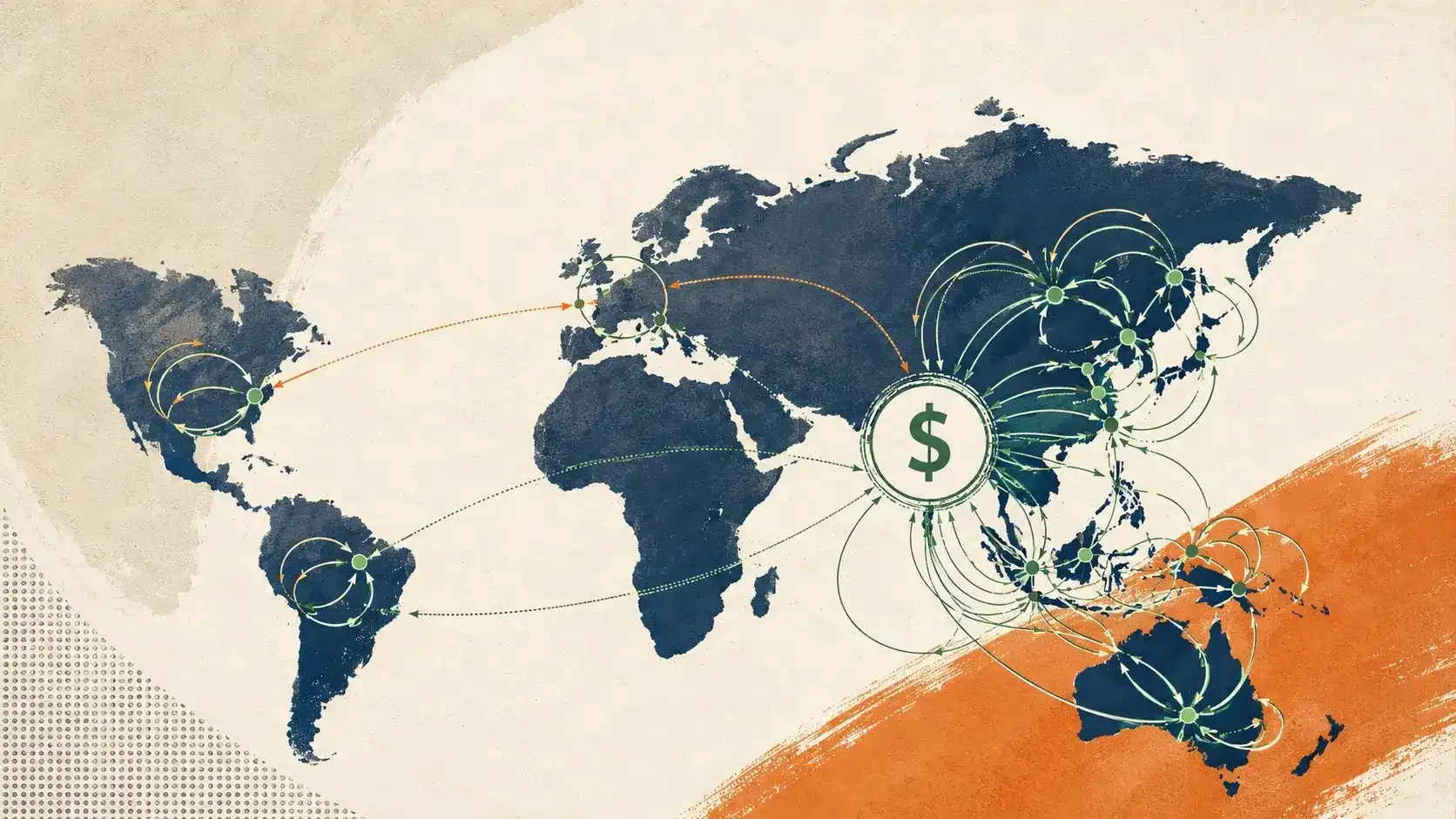
TensorX and Solstice today announced a partnership to finance European sovereign AI infrastructure. TensorX and Solstice will work together to create a facility with up to $1 billion in capacity to finance AI hardware and data-center build-out to meet rising demand for sovereign compute across the EU. Solstice will provide the onchain financing for that buildout and will launch aiUSX, a potential yield asset that opens the same infrastructure lending to companies holding capital for AI.

TensorX owns and operates a fleet of NVIDIA GPUs and delivers AI models in EU data centres with zero data retention, predictable pricing with best-in-class performance. The company works with AI startups and enterprises across the EU block with plans to expand into other global jurisdictions.

“Europe wants AI that can run on its own terms, on its own soil, without handing its data to someone else’s cloud on the world stage,” said Tim Grant, Executive Chairman of TensorX. “Meeting that accelerating demand takes hardware, and a lot of it. The billion dollars going into GPUs and data center capacity is the first step, and we expect to keep buying as demand grows. Solstice gives us a financing partner that can keep pace with this incredibly fast moving market.”

aiUSX: Financing the AI Buildout With Capital Companies Already Hold

Companies hold growing piles of cash and stable assets for their AI spend while inference bills climb. These two pools sit apart, and the cash earns nothing while it waits. aiUSX closes that gap. The capital a company sets aside for AI goes into aiUSX, which opens access to the AI-infrastructure lending Solstice finances, the same deals large institutions fund. The company takes the position of an infrastructure lender without becoming one or underwriting anything itself; for example, USD.ai has brought capital to AI hardware across the wider buildout. At launch, aiUSX will be capped at $5 million, with yield generated by the lending it gives access to. The capital stays liquid and redeemable, and what it earns goes toward the cost of inference later.

“Every company is turning into an AI company, and every one of them watches its inference bill climb,” said Ben Nadareski, CEO of Solstice. “aiUSX puts the money they set aside for AI to work in the meantime. They get access to the kind of AI-infrastructure lending that used to sit with large institutions, the capital stays liquid, and what it earns goes toward inference later. It is treasury management for the AI era.”

“Sovereign AI is one of the biggest infrastructure buildouts of this decade, and it runs on capital as much as it runs on chips,” said Stuart Connolly, CIO of Deus X Capital. “TensorX builds the compute, Solstice brings the financing, and aiUSX lets more companies take part in funding it. Both companies are in the Deus X Capital ecosystem, which is why we’re uniquely positioned to deliver this to the market.”

About Solstice

Solstice is an onchain settlement and yield protocol and part of the Deus X Capital ecosystem. Its dollar-denominated asset, USX, and its treasury products provide institutions and businesses with capital that remains liquid and productive. Solstice has a three-year audited track record and more than $500 million in total value locked.

https://solstice.finance/

About TensorX

TensorX is a sovereign AI infrastructure company based in Dublin. It buys and operates AI hardware and data-center capacity across the EU, connects clients to private compute, and keeps prompts and data on European infrastructure with full data residency and zero retention.

https://tensorx.ai/

Contact

Laura
Conquista Ventures
laura@conquista.co

Related Questions

QWhat is the main purpose of the partnership between TensorX and Solstice announced in the article?

AThe main purpose of the partnership is to finance European sovereign AI infrastructure. They will create a facility with up to $1 billion in capacity to finance AI hardware and data-center build-out to meet rising demand for sovereign compute across the EU.

QWhat is aiUSX, and how does it benefit companies with AI budgets?

AaiUSX is a yield-bearing asset launched by Solstice. It allows companies to use the capital they are already holding for future AI spend to finance AI infrastructure lending, earning a yield on that capital while keeping it liquid. The yield earned can later be used to offset the cost of AI inference.

QAccording to the article, what is one of the key advantages TensorX offers its clients in the EU?

AA key advantage TensorX offers is providing AI models in EU data centres with zero data retention and full data residency, ensuring that prompts and data remain on European infrastructure and are not handed over to other cloud providers.

QHow does Stuart Connolly, CIO of Deus X Capital, describe the significance of sovereign AI in the article?

AStuart Connolly describes sovereign AI as "one of the biggest infrastructure buildouts of this decade," emphasizing that it "runs on capital as much as it runs on chips."

QWhat is the initial launch cap for the aiUSX asset mentioned in the article?

AAt launch, aiUSX will be capped at $5 million.

Related Reads

$2 Trillion: Countdown to AI's Largest IPO in History

The countdown for the largest IPO in AI history, a potential $2 trillion listing for Anthropic, is underway for October. The staggering valuation, reportedly projected by several investors, contrasts with the company's own internal restraint on setting a public target. Founded five years ago by former OpenAI core members, Anthropic's growth has been meteoric. Annual recurring revenue (ARR) surged from ~$9B in late 2025 to $47B by May 2026, with Q2 2026 revenue of $11.5B marking a 14x year-over-year increase. Bank valuations are even based on internal 2028 revenue forecasts of $190-200B. A key growth driver is Claude Code, its AI coding assistant. Its ARR quintupled in five months to $2.5B by February 2026, now constituting nearly 20% of total revenue. Surveys indicate Anthropic commands roughly 40% of enterprise LLM spending, doubling OpenAI's share in programming-specific use. However, alongside this explosive growth, reports detail significant internal cultural strife. Critics describe a divisive "priesthood" of PhD executives, led by CEO Dario Amodei, who promote a "save humanity" narrative that some employees find cult-like and alienating. This has reportedly created a demoralized workforce and a covert "underground network" of dissent among engineers torn between lucrative pre-IPO equity and a toxic work environment. Anthropic now faces a pivotal paradox: pursuing its mission of "safe" AI requires immense capital for compute, yet that capital demands relentless commercial growth. As it approaches its historic IPO, the company must navigate intense regulatory scrutiny, soaring operational costs, and internal tensions—any of which could destabilize its post-listing trajectory, much like SpaceX's significant post-IPO stock drop. The stage is set for a defining moment in tech history.

marsbit2h ago

$2 Trillion: Countdown to AI's Largest IPO in History

marsbit2h ago

AI Boosting Efficiency and Cutting Costs Makes VC Increasingly Expensive

"AI for Cost Reduction Makes VC Funding More Expensive" Despite the "cost-reduction and efficiency" narrative of AI, venture capital (VC) investment in the AI sector is becoming increasingly costly. While AI tools lower the initial costs for many startups—with team sizes shrinking across funding stages—the market is polarizing. For top-tier AI teams, especially those from leading companies like Google and OpenAI, funding rounds are now larger and valuations are higher than ever at the seed and early stages. For example, new ventures by prominent researchers are securing billions in funding with valuations reaching tens of billions before having a mature product. This creates a "barbell" market: lightweight startups need less capital, while elite AI firms attract massive investments early on. This dynamic raises the cost for VCs to acquire and maintain meaningful ownership stakes. As valuations soar early, securing the same equity percentage requires significantly larger capital commitments. VCs must now invest more upfront and reserve substantial funds for follow-on rounds to avoid dilution, prompting large firms like Accel and a16z to raise massive new funds. Consequently, capital is concentrating intensely in a few perceived winners like OpenAI and Anthropic, widening the gap between large and small VC funds. While high valuations bake in future growth expectations, they also compress potential returns, demanding that portfolio companies achieve unprecedented scale. For major VCs, the core strategy is clear: secure early positions in potential winners and maintain the capital to keep investing as valuations rapidly escalate.

marsbit3h ago

AI Boosting Efficiency and Cutting Costs Makes VC Increasingly Expensive

marsbit3h ago

Trading

Spot
活动图片