Back at the AI Table, Zuckerberg's First Move Is Layoffs?

Odaily星球日报Published on 2026-04-18Last updated on 2026-04-18

Abstract

Meta is reportedly planning significant layoffs, with the first round set for May 20, potentially cutting around 8,000 jobs (10% of its workforce), according to sources. Further layoffs may follow later in the year, with adjustments based on AI developments. This comes just 10 days after Meta’s AI team, led by Alexandr Wang, launched its most powerful AI model yet, Muse Spark—a multimodal reasoning tool seen as key to Meta’s re-entry into the AI race. Despite strong financials, Meta is pushing for a leaner, AI-driven structure, aiming for 65% of engineers to have AI generate over 75% of their code by mid-2026. The company has also tied AI usage to performance reviews and promotions. This trend isn’t isolated: Amazon, Block, and Snap have also cited AI efficiency gains to justify layoffs, though Block later rehired some employees, highlighting potential implementation risks.

Original | Odaily Planet Daily (@OdailyChina)

Author | Azuma (@azuma_eth)

An exclusive report from Reuters on April 18 stated that three informed sources revealed that Zuckerberg's Meta plans to initiate the first round of large-scale layoffs this year on May 20, with subsequent layoffs to follow.

One source indicated that Meta will cut about 10% of its global workforce (total employees about 79,000), roughly 8,000 people, in the first round of layoffs. Another source said Meta also plans further layoffs in the second half of the year, but the specific details and scale have not been finalized. As Meta continues to observe developments in AI capabilities, senior management may adjust the plans.

In another Reuters report last month, informed sources had also revealed that Meta was considering layoffs of 20% or more.

As of publication, Meta declined to comment on the timing and scale of the layoffs.

Just 10 Days Ago, Meta Finally Caught Up with the AI Mainstream

Just 10 days ago, Meta's AI development team, the "Meta Superintelligence Labs" (MSL), led by the highly recruited Chinese-American prodigy Alexandr Wang, released its first self-developed AI model, Muse Spark.

Alexandr Wang disclosed that over the past nine months, MSL rebuilt the entire AI technology stack from scratch. Muse Spark is a native multimodal reasoning model supporting tool calling, visual chain of thought, and multi-Agent orchestration. This is the most powerful model Meta has released to date. During training, MSL observed predictable scaling improvements in the model during pre-training, reinforcement learning, and test-time reasoning phases.

Muse Spark also supports a "Contemplating Mode," which orchestrates multiple Agents reasoning in parallel, specifically designed to handle complex scientific problems and reasoning tasks. In testing, MSL found its performance competitive with top-tier reasoning models like Gemini Deep Think and GPT Pro.
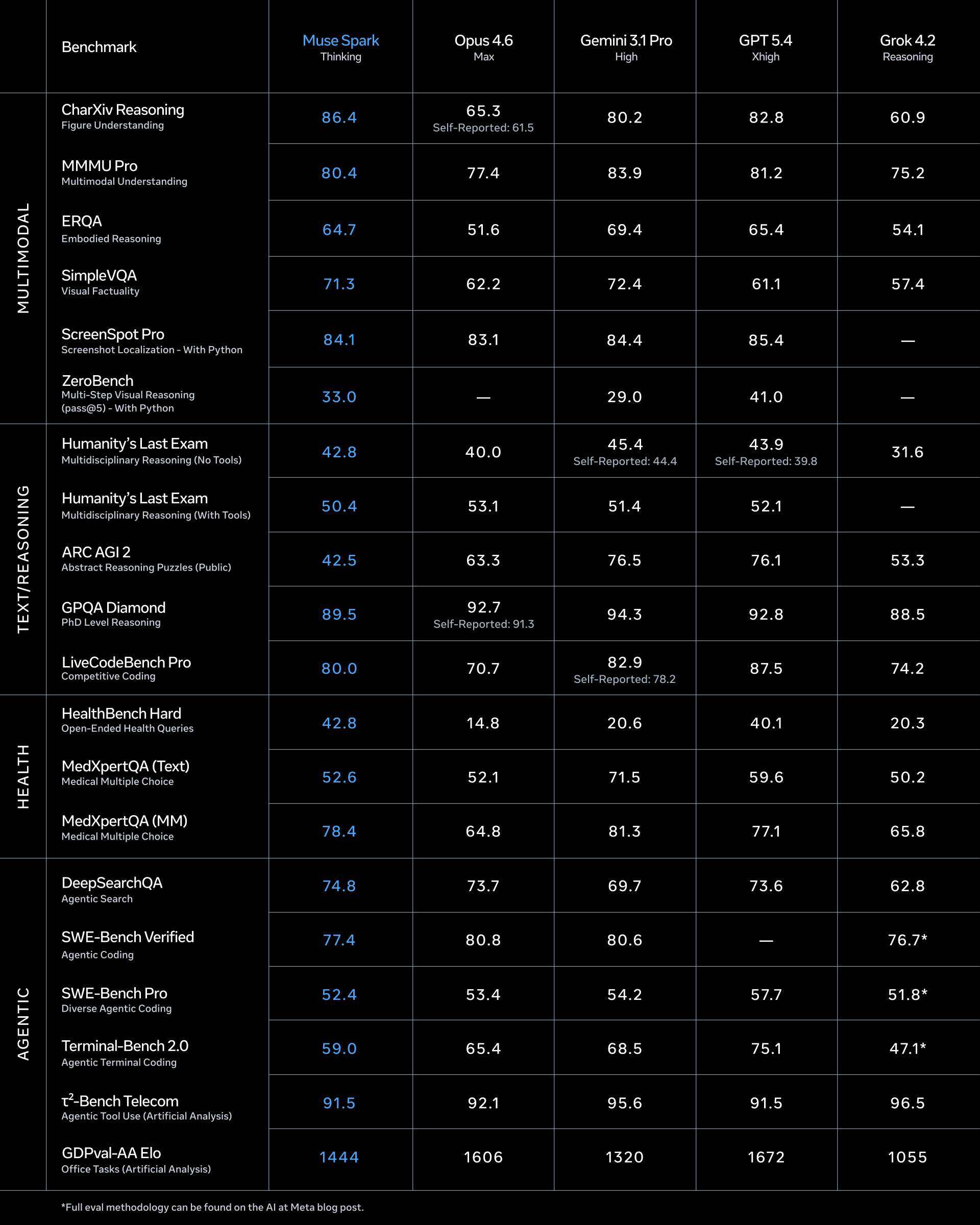
As the first substantive product following Meta's heavy bet on AI and shift to a closed-source model, Muse Spark is widely regarded by the market as the beginning of Meta's pursuit of AI front-runners like Anthropic, OpenAI, and Google. Although Meta also admits that the model's capabilities in some areas are not yet on par with the flagship models of the top three companies, for Zuckerberg, who had long lagged in the AI race due to the failure of the Llama strategy, Muse Spark and subsequent models in the series are sufficient as his stake to return to the AI table.

The market also gave positive feedback on Muse Spark. Meta's closing price that day was $612.42, up 6.5%, and it has continued to rise over the past 10 days (though also influenced by the overall market uptrend), reaching a closing price of $688.55 yesterday.

The AI Blade Falls First on Employees

From late 2022 to early 2023, Meta initiated the controversial "year of efficiency" plan, conducting the largest layoff in the company's history, cutting about 21,000 positions. This time, it could become Meta's largest round of layoffs since the "year of efficiency."

Compared to the "year of efficiency" period, when Meta faced significant stock price declines and adjustment pressures after excessive growth during the pandemic, Meta's financial situation is clearly more stable now. However, the future envisioned by executives is an organizational structure with fewer management layers and higher efficiency brought by AI-assisted employees.

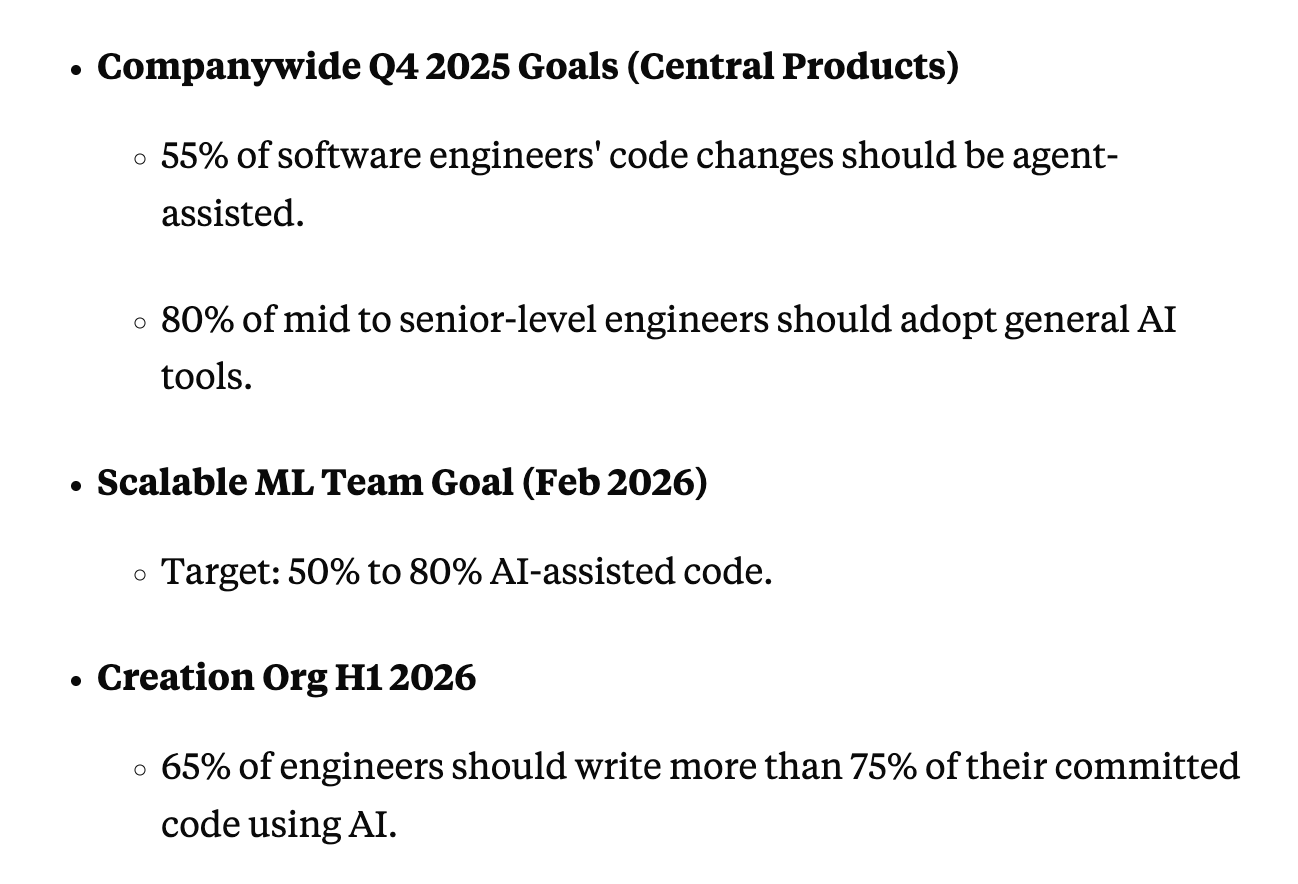
Last month, Business Insider reported that, based on leaked internal documents from Meta, Meta is internally pushing employees to use AI tools more actively, with a target set — by mid-2026, 65% of engineers must have over 75% of their code written with AI participation.
According to disclosures by the自媒体 Official Layoff (@LayoffAI) on X (no guarantee of their source's accuracy): "Starting this year, Meta has incorporated 'AI-driven impact' into the performance evaluations of all employees, making it a core metric. Without using AI, promotion is impossible. Meta has become the first large tech company to formally link AI usage to promotions."

AI Replacing White-Collar Workers Is Already Not an Isolated Case

Using "AI iterating on productivity" as a reason for layoffs is already not an isolated case.

Last October, Amazon cut up to 30,000 jobs, affecting logistics, payments, video games, and cloud computing departments. The company's CEO, Andy Jassy, had hinted at these layoffs earlier: "As the company increasingly uses AI to perform tasks originally done by humans, Amazon's workforce may shrink."

At the end of February this year, Jack Dorsey (also the founder of Twitter)'s fintech company Block announced 4,000 job cuts, reducing total employees from over 10,000 to under 6,000, to promote a leaner, flatter, and AI-centric organizational structure. Block's CFO and COO, Amrita Ahuja, revealed that after the company announced the cuts, many enterprise leaders proactively contacted Block, seeking to replicate this 'playbook'.

  • Odaily Note: See "Jack Dorsey's Company: 4,000 White-Collar Workers Are Being Replaced by AI".

Earlier this week, Snap, a direct competitor of Meta's core product Instagram, also cut about 1,000 jobs. Its CEO, Evan Spiegel, stated: "AI will allow our team to reduce repetitive work, improve efficiency, and better support our community, partners, and advertisers."

Now, the same wind has blown to Menlo Park, California, and Zuckerberg has raised his sword.

Oh, and one more thing worth mentioning. Although Jack Dorsey loudly proclaimed at the time of the layoffs that "the rapid development of AI is iterating on traditional productivity growth paradigms," not long after Block's layoffs, many laid-off employees received invitations to return to their positions (see "The First Batch of Big Tech Employees Laid Off by AI Have Returned")......

AI iterating on white-collar workers may eventually become a reality, but hastily cutting 40% of the workforce in one go, like Block did, can easily "stride too far and tear something."


Related Questions

QWhat is the main reason behind Meta's reported plan to lay off employees in May 2024, according to the article?

AThe article suggests that Meta's planned layoffs are part of a strategic shift towards a more efficient, AI-driven organizational structure, aiming for fewer management layers and AI-assisted employees to achieve higher productivity.

QWhat is the name of Meta's new AI model and what are some of its key features?

AMeta's new AI model is called Muse Spark. Its key features include being a native multimodal reasoning model that supports tool calling, visual chain of thought, multi-agent orchestration, and a 'Contemplating Mode' for complex scientific and reasoning tasks.

QWhat specific internal goal has Meta set for its engineers regarding the use of AI tools by 2026?

AMeta's internal goal is for 65% of its engineers to have more than 75% of their code written with the assistance of AI by mid-2026.

QBesides Meta, which other major tech companies are mentioned as having conducted layoffs linked to AI-driven efficiency?

AThe article mentions Amazon, which cut up to 30,000 jobs, and Jack Dorsey's Block, which cut 4,000 jobs, as examples of other companies that have conducted layoffs linked to adopting AI for greater efficiency.

QWhat ironic outcome is noted regarding the layoffs at the company Block?

AThe article notes the ironic outcome that shortly after Block's large-scale layoffs, many of the employees who were let go began receiving invitations to return to their jobs.

Related Reads

Dialogue with Morgan Stanley Executive: Wall Street Isn't Rejecting Bitcoin, It's Just Waiting for the Right Time

In a podcast interview, Amy Oldenburg, Head of Digital Asset Strategy at Morgan Stanley, discusses Wall Street's evolving stance on Bitcoin, explaining the bank's measured approach and the road ahead. Oldenburg, with 26 years at Morgan Stanley, traces her perspective to witnessing transformative tech cycles and her experience in emerging markets, where she observed the need for alternative financial systems like mobile money (e.g., M-Pesa). This background informs her view of Bitcoin's value proposition. She clarifies that Morgan Stanley is "client-driven." Regulatory hurdles, particularly as a bank holding company under Federal Reserve oversight, initially slowed their entry. While the firm couldn't act as quickly as independent asset managers, persistent client demand and a changing regulatory environment led to offerings like their low-fee Bitcoin ETP (MSBT). They are now gradually rolling out spot Bitcoin trading on their E*Trade platform. Regarding advisor adoption, Oldenburg cites a "lack of education" as the primary barrier. Morgan Stanley recommends a 0-2% allocation for more conservative portfolios and 2-4% for aggressive ones, but price volatility and confusion about its place in asset allocation persist. She notes competition for investor attention from AI and commodities. Addressing Bitcoin's price stagnation despite institutional buying, Oldenburg points to a confluence of factors: competing investment narratives (AI, quantum computing) and the complex financial landscape. She suggests a catalyst for Bitcoin as a neutral reserve asset might require a "slow-burn crisis" that exposes fragility in traditional systems. For wider bank adoption, including holding Bitcoin on balance sheets, she identifies the need for regulatory clarity to reduce punitive capital treatment and for the asset to be usable as collateral within financial ecosystems. Looking ahead, Oldenburg predicts steady, moderate adoption growth through 2030 rather than an explosive "J-curve." She emphasizes the importance of differentiating Bitcoin from other crypto assets and expresses concern that the core cypherpunk ethos of self-custody is being diluted as traditional finance enters the space. She concludes that the digital asset field remains in its early stages with significant innovation, like AI agents and micropayments, still to come.

marsbit18m ago

Dialogue with Morgan Stanley Executive: Wall Street Isn't Rejecting Bitcoin, It's Just Waiting for the Right Time

marsbit18m ago

10% Position Limit Proposed: UK Retail Authorized Funds to Gain Indirect Exposure to Crypto Assets

The UK Financial Conduct Authority (FCA) is consulting on a proposal (CP26/17) that would allow retail funds, including UCITS and most Non-UCITS Retail Schemes (NURS), to invest up to 10% of their total assets in cryptoasset exchange-traded notes (crypto ETNs). This would enable indirect exposure to cryptoassets for mainstream investors through regulated funds. The rule maintains the existing prohibition on funds holding underlying cryptocurrencies like Bitcoin or Ethereum directly. The proposal introduces a strict 10% cap, positioning crypto ETNs as a potential satellite holding within diversified portfolios. Funds must ensure these investments align with their stated objectives and risk profiles. Notably, the cap does not apply to Qualified Investor Schemes (QIS) for professional clients, while Long-Term Asset Funds (LTAFs) would be prohibited from holding crypto ETNs. This move builds on the FCA's 2025 decision to permit retail trading of crypto ETNs on UK regulated exchanges. However, significant compliance burdens fall on fund managers, who must conduct thorough due diligence, assess liquidity, and provide clear risk disclosures to investors. The FCA emphasizes that even a small allocation can significantly impact a fund's risk profile. The policy's practical impact remains uncertain. Widespread adoption depends on whether asset managers deem the potential benefits worth the operational costs, disclosure requirements, and reputational risks. The consultation is open for feedback until July 13, 2026. Ultimately, the proposal represents a cautious, incremental step toward integrating cryptoassets into the regulated fund landscape, rather than a broad opening.

Foresight News47m ago

10% Position Limit Proposed: UK Retail Authorized Funds to Gain Indirect Exposure to Crypto Assets

Foresight News47m ago

Public Version of Mythos Officially Launched: Analyzing the Advantages and Limitations of AI Smart Contract Auditing

Publicly available Mythos, Anthropic's AI model, has officially launched, demonstrating both significant potential and limitations in smart contract security auditing. The article analyzes its capabilities through real-world cases. AI excels in identifying subtle, low-level vulnerabilities through pattern recognition and large-scale code screening. A key example is detecting a storage slot collision between a custom rewards mapping and a third-party library's ReentrancyGuard, a vulnerability easily missed in manual audits. In the recent Zcash incident, AI also rapidly discovered a critical soundness bug that had remained hidden for years. However, AI currently struggles with complex, interconnected scenarios. When tested on the Curve LlamaLend sDOLA exploit, which involved manipulating prices across multiple protocols (Curve pools, lending markets) to trigger liquidations, Fable 5 failed to identify the core cross-protocol attack vector. These scenarios require a deep understanding of DeFi economic models and multi-contract interactions. In conclusion, while AI tools like Mythos significantly boost efficiency in finding standardized, syntactic vulnerabilities, they cannot yet replace expert analysis for complex, business-logic, and cross-protocol attacks. An effective audit workflow combines AI's speed for initial screening with human expertise for in-depth, holistic analysis.

marsbit52m ago

Public Version of Mythos Officially Launched: Analyzing the Advantages and Limitations of AI Smart Contract Auditing

marsbit52m ago

Trade.xyz's Rebase Refusal Sparks Controversy, On-Chain Pre-IPO Market Faces Major Pricing Test

The debate surrounding Trade.xyz's refusal to adjust its SPCX (SpaceX pre-IPO) perpetual contract pricing amid updated share count revelations highlights a key challenge for on-chain pre-IPO markets. While several centralized exchanges (CEXs) paused and repriced their contracts after SpaceX's filing showed a ~10% increase in total shares, Trade.xyz maintained its market-driven pricing logic, which tracks expected per-share price sentiment rather than fundamental valuation metrics like market cap. This discrepancy triggered cross-platform arbitrage and caused leveraged long positions on Trade.xyz to suffer significant losses, as the platform's HIP-3 architecture lacks a native "Rebase" mechanism to neutrally adjust all user positions following such corporate actions. The incident underscores the difficulty for decentralized perpetual exchanges (Perp DEXs) to implement Rebase—a process CEXs handle by centrally pausing markets and adjusting ledger data. On-chain, this requires complex smart contract modifications, increasing gas costs, complexity, and potential attack surfaces. While some DEXs have managed similar adjustments, Trade.xyz's current design does not natively support it, though the team is reportedly exploring solutions for future events like stock splits. Ultimately, the controversy serves as a critical case study for the nascent on-chain pre-IPO sector, raising questions about price discovery reliability, transparent rule disclosure, and the readiness of DeFi infrastructures to handle traditional corporate actions as real-world assets (RWAs) gain traction.

marsbit59m ago

Trade.xyz's Rebase Refusal Sparks Controversy, On-Chain Pre-IPO Market Faces Major Pricing Test

marsbit59m ago

Trading

Spot
Futures

Hot Articles

Discussions

Welcome to the HTX Community. Here, you can stay informed about the latest platform developments and gain access to professional market insights. Users' opinions on the price of S (S) are presented below.

活动图片