Analyzing how Bitcoin’s short-term holders and $64K-level can unlock market bulls

ambcryptoPublished on 2026-04-08Last updated on 2026-04-08

Abstract

Bitcoin's price is struggling amid bearish sentiment, but key shifts among short-term holders (STHs) could signal a potential bullish turn. STHs, who purchased BTC in the last month at an average cost basis of $85,450, are currently at a 19% unrealized loss. Historically, a 25% or greater loss often marks a market bottom, suggesting Bitcoin may need to decline another 6% to around $64,000 to trigger a rebound. At this level, STH selling typically subsides, reducing supply pressure. Meanwhile, approximately 300,000 BTC (worth ~$27 billion) have recently moved from STHs to long-term holders (LTHs), who are less likely to sell during downturns, thereby supporting price stability. Additionally, exchange reserves have slightly declined from 2.46 million to 2.45 million BTC, indicating a tightening supply. A sustained reduction in reserves could further limit downside risk and lay the foundation for a potential rally.

Bitcoin’s price has lately struggled to generate sufficient demand to push itself higher. Especially since bearish sentiment has continued to dominate.

However, shifting dynamics among short-term holders may be emerging. These could influence Bitcoin’s [BTC] trajectory, particularly if a near-term bullish scenario unfolds.

Bitcoin to $64,000 may trigger bulls

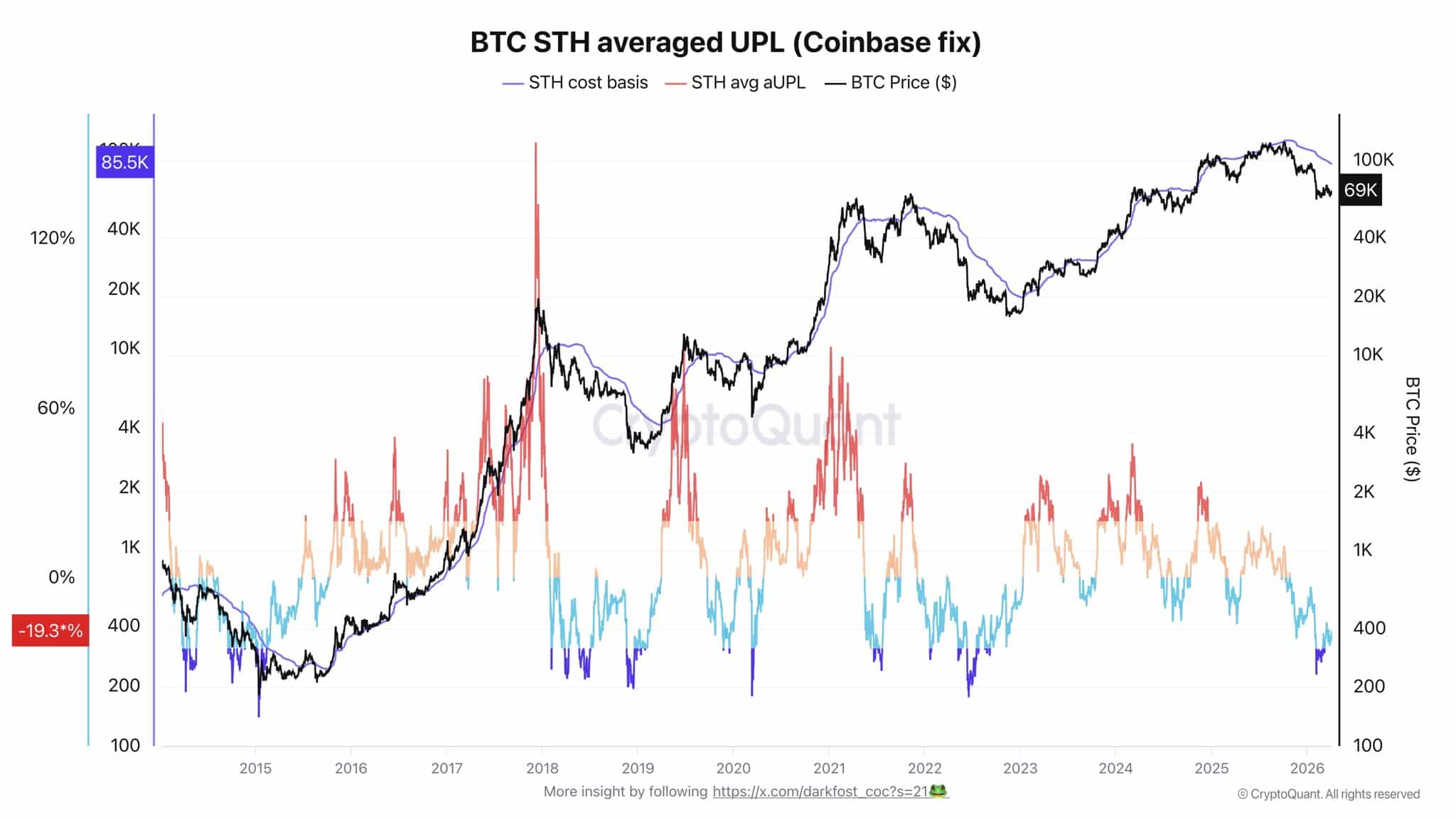
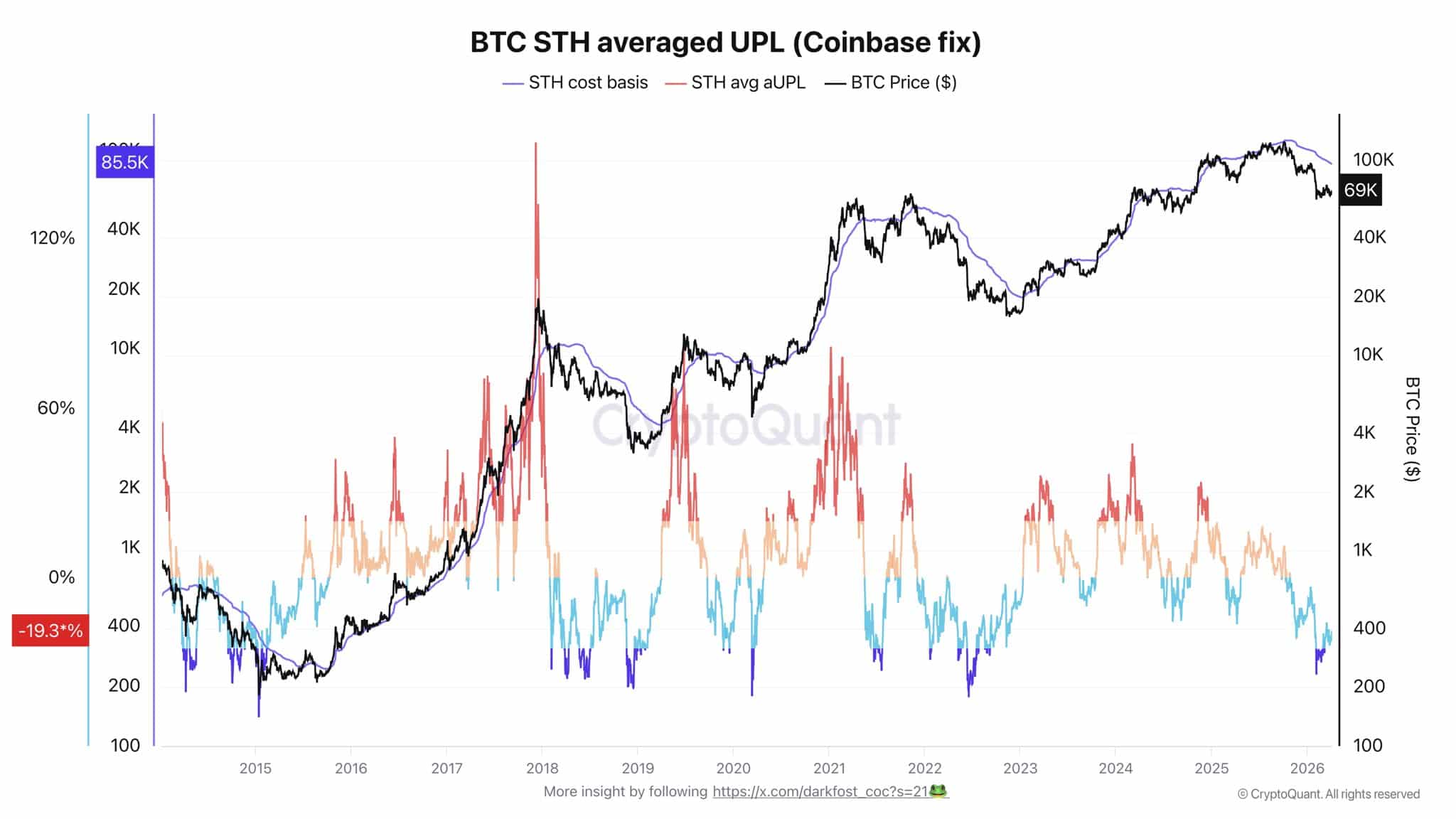
Data from CryptoQuant highlighted the cost basis of short-term holders—the average price at which they purchased Bitcoin—revealing a potential market pattern.

STHs who bought within the last month have an average cost basis of approximately $85,450. At Bitcoin’s press time price, this puts them at a 19% unrealized loss – A significant drawdown.
Source: CryptoQuant

Historically, when the STH cost basis drops to 25% or lower, it often marks a market bottom. At a 19% loss, Bitcoin would need an additional 6% decline—bringing it to roughly $64,000—before conditions for a rebound may emerge.

At these levels, two behaviors typically occur – Some STHs hold longer, while others sell, unable to bear further losses. For Bitcoin to reach a historical low and potentially repeat past fractal patterns, the selling from the latter group is usually required.

Foundations for a rally

Signs of a foundational shift may be forming too. In fact, some short-term holders are already taking actions that could tighten Bitcoin’s supply dynamics.

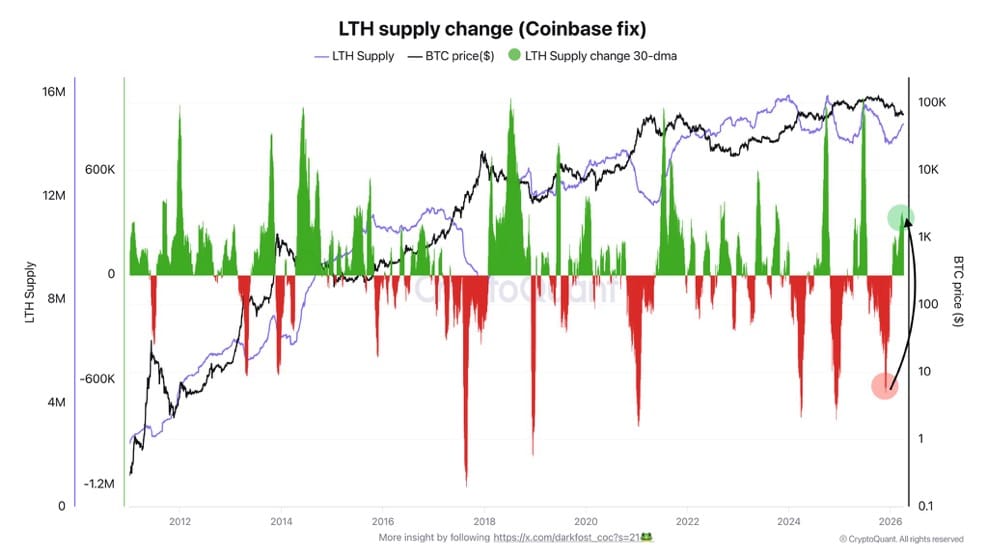
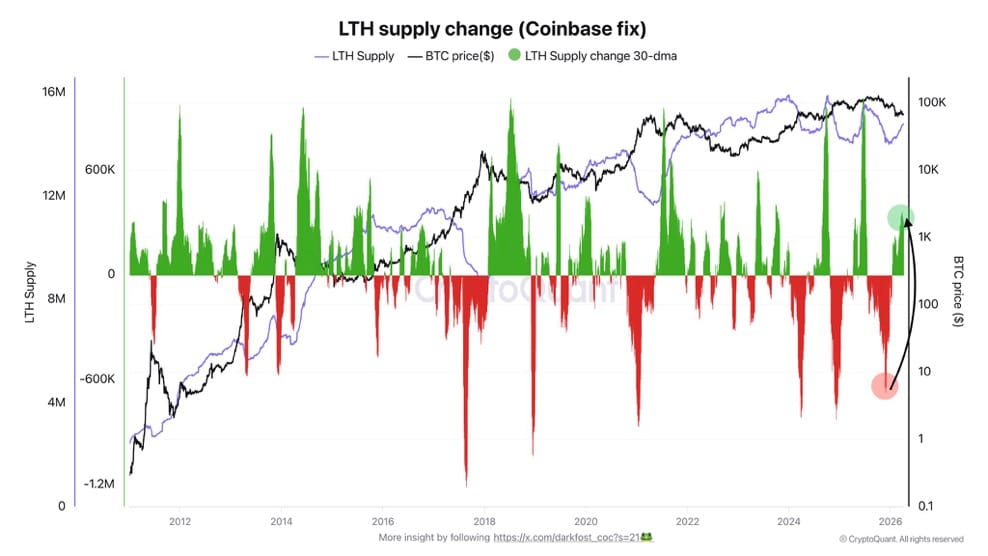
At the time of writing, reports from CryptoQuant hinted at an ongoing transition from STHs to LTHs – Generally positive for Bitcoin. Long-term holders, investors who have held Bitcoin for at least six months, tend to reduce the likelihood of sudden sell-offs.
Source: CryptoQuant

In fact, approximately 300,000 BTC have recently moved from STHs to LTHs, representing around $27 billion removed from the liquid market.

This reduced supply can support price stability, especially during downtrends, as LTHs are less likely to sell under pressure.

Exchange reserve dynamics

Another critical metric is the availability of Bitcoin on exchanges, reflected in the exchange reserves. High reserves can increase selling pressure as more Bitcoin is readily available for trading.

At the time of writing, exchange reserves stood at 2.45 million BTC, declining slightly from a high of 2.46 million on 02 April.

A sustained decline in exchange reserves would indicate tightening supply, which could reduce the risk of major price drops. Nevertheless, exchange flow dynamics will remain crucial for any rebound to levels historically associated with market bottoms.


Final Summary

  • Short-term holders are at a 19% unrealized loss and a further 6% decline could push Bitcoin towards levels historically associated with market bottoms.
  • Over 300,000 BTC previously held by STHs have not yet transitioned to long-term holders.

Related Questions

QWhat is the current unrealized loss percentage for short-term holders (STHs) who bought Bitcoin in the last month, and what price level might trigger a potential market bottom?

AShort-term holders who bought Bitcoin in the last month are at a 19% unrealized loss. A further 6% decline, bringing Bitcoin to roughly $64,000, could trigger conditions historically associated with a market bottom.

QAccording to the article, what are the typical behaviors of short-term holders when their cost basis drops to 25% or lower?

AWhen the short-term holder cost basis drops to 25% or lower, some STHs hold their Bitcoin for longer, while others sell because they cannot bear further losses. The selling from the latter group is usually required to reach a historical market bottom.

QHow has the movement of Bitcoin from short-term to long-term holders (LTHs) impacted the market, according to the data?

AApproximately 300,000 BTC (worth around $27 billion) have recently moved from short-term holders to long-term holders. This transition removes liquid supply from the market, which can support price stability as LTHs are less likely to sell under pressure.

QWhat is the significance of declining exchange reserves for Bitcoin's price stability?

ADeclining exchange reserves indicate a reduction in the Bitcoin available for immediate trading, which tightens supply. This can reduce selling pressure and the risk of major price drops, supporting price stability, especially during downtrends.

QWhat two key points are summarized as the foundation for a potential Bitcoin rally?

AThe two key points are: 1) Short-term holders are at a 19% unrealized loss, and a further 6% decline could push Bitcoin to levels historically associated with market bottoms. 2) Over 300,000 BTC previously held by STHs have transitioned to long-term holders, reducing liquid supply.

Related Reads

Bitcoin's 'Rally Ends,' Officially Entering the Later Stage of a Bear Market?

Bitcoin prices declined 13% this week, reversing the recent rebound and signaling a likely transition into the later stages of a bear market. Key on-chain metrics deteriorated, with the short-term holder cost basis falling below the Realized Price—a pattern last seen in early 2022, characteristic of bear market maturity. The rally to ~$82k proved to be a bear market bounce, as evidenced by the 90-day realized profit/loss ratio failing to sustain above the bullish threshold of 2. Daily realized losses surged to $1.35B, including significant selling from long-term holders who accumulated near cycle tops, indicating ongoing supply redistribution. Price was rejected almost precisely at the aggregate US spot ETF cost basis of ~$83k, turning that level into resistance and leaving the average ETF investor underwater again. Spot market selling pressure intensified, with the 7-day volume delta turning significantly negative to its weakest level since February. While a major long liquidation event cleared over $400M in leverage, spot demand has not yet stepped in to absorb the resulting supply. Options markets continue pricing in higher future volatility (elevated volatility risk premium) and maintain a skew toward put options, reflecting persistent demand for downside protection, though not yet panic. Overall, market structure remains fragile. Sustained recovery likely requires a reclaim of the ETF cost basis, a shift back to positive spot demand, and a slowdown in realized loss-taking. Until then, the market risks further downside or extended consolidation within the broader bear trend.

Foresight News1h ago

Bitcoin's 'Rally Ends,' Officially Entering the Later Stage of a Bear Market?

Foresight News1h ago

How Risky is the "Death Spiral" of MSTR and STRC?

Summary: This article explores the perceived "death spiral" risk between MicroStrategy (MSTR), its Bitcoin holdings, and its perpetual preferred stock (STRC), drawing comparisons to the LUNA-UST collapse. While both systems feature price anchors, high yields for holders, and potential feedback loops, their core mechanisms differ fundamentally. The MSTR-STRC structure relies on continuous financing to sustain its high dividend payouts, primarily through stock ATM offerings. A negative feedback cycle could occur: falling MSTR stock price makes raising equity capital harder, increasing pressure to sell Bitcoin, which undermines STRC confidence and further depresses MSTR. However, unlike LUNA-UST's automated, direct linkage, the MSTR-STRC loop is weaker and has brakes: STRC dividends can be deferred or rates lowered, and STRC holders have a $100/share liquidation preference in bankruptcy, providing a price floor. The company's sustainability hinges on its ability to continue financing. Its current ~$900 million USD reserves cover only about 6.3 months of its ~$1.71 billion annual interest/dividend burden. The next six months are critical, aligning with both the potential bottom in Bitcoin's four-year cycle and the depletion timeline of its reserves. While a LUNA-style catastrophic collapse is deemed highly unlikely due to structural differences, the key question is whether MicroStrategy can navigate this period through healthy deleveraging to restart its capital engine.

Foresight News1h ago

How Risky is the "Death Spiral" of MSTR and STRC?

Foresight News1h ago

Trading

Spot
Futures

Hot Articles

Discussions

Welcome to the HTX Community. Here, you can stay informed about the latest platform developments and gain access to professional market insights. Users' opinions on the price of S (S) are presented below.

活动图片