A Hidden Financial War? Iran Collects Strait Passage Fees with Stablecoins

marsbitPublished on 2026-04-07Last updated on 2026-04-07

Abstract

Iran has officially institutionalized a mandatory toll system for all large tankers passing through the Strait of Hormuz, rejecting dollar-denominated payments. Instead, fees must be paid either via yuan-denominated wire transfers or in USD-pegged stablecoins via decentralized networks. The move is designed to bypass U.S. financial sanctions and traditional banking channels like SWIFT system. The Islamic Revolutionary Guard Corps (IRGC) is implementing a tiered pricing model based on geopolitical alignment: allies like China and Russia pay the lowest rates, while U.S. allies and Israel are barred entirely. Vessels must display approved flags and are escorted through the strait after payment. This marks the first time a nation has integrated cryptocurrency into strategic-level payment infrastructure at commercial scale. The mechanism could channel over $20 billion annually in stablecoins through Iranian-controlled wallets, creating a grey liquidity pool shielded by sovereign power. However, risks remain. Compliance with sanctions from the EU and UK may void insurance coverage for vessels paying the IRGC, forcing shipowners to choose between longer routes or potential financial penalties. Russia is considering a similar model for the Northern Sea Route, signaling a broader shift toward using geographic chokepoints as financial leverage in a reordered global trade system.

On April 2, Iranian Deputy Foreign Minister Gharibabadi publicly confirmed at a routine press conference in Tehran that all very large crude carriers (VLCCs) passing through the Strait of Hormuz must pay a passage fee to the Islamic Revolutionary Guard Corps (IRGC), explicitly excluding the U.S. dollar as a settlement channel. This statement formalizes rumors previously circulating in shipping circles—Iran is no longer satisfied with traditional tools of geopolitical games but is transforming its control of the strait into a financial experiment targeting dollar hegemony.

The implementation speed of the fee mechanism has exceeded market expectations.

Citing internal documents from the IRGC Navy, Bloomberg reported that the system had completed technical deployment by the end of March. This time, Iran has chosen only two methods to receive passage fees: RMB wire transfers or settlements via decentralized networks using dollar-denominated stablecoins.
The Iranian customs department has set up a dedicated cryptocurrency exchange window on Qeshm Island to ensure funds are quickly converted into rials or transferred to overseas accounts after receipt.

This arrangement is meticulously designed.

Traditional international shipping settlements rely on the SWIFT network and correspondent banking system; any transaction involving Iran would trigger secondary sanctions from the U.S. Treasury. The combination of the RMB Cross-Border Payment System and public blockchain networks, however, constructs a parallel channel bypassing dollar surveillance.

According to statistics from London-based shipping brokerage Braemar, at least two VLCCs flying unspecified flags of convenience completed RMB payments and safely passed through the strait in late March. The Hormuz Strait Passage Management Act, passed by the Iranian Parliament's National Security Committee on March 30, further provides domestic legal backing for this mechanism.

It is worth noting that Iran has also implemented differentiated fee pricing for vessels based on their geopolitical affiliations.

Citing insider information, Bloomberg reported the oil fee standards for the Strait of Hormuz, starting at $0.5 per barrel, categorized into five tiers based on relationships with different countries.

The first tier is ally preferential rates: China and Russia, $0.5-$0.7 per barrel, with dedicated green channels; regular reporting allows free passage.

The second tier is friendly partners: countries like India and Pakistan, $0.8-$0.9 per barrel.

The third tier is neutral countries: African nations, Southeast Asia, Latin America, $1 per barrel, requiring declaration and inspection to ensure no hostile assets before release.

The fourth tier is high-risk countries: those with close ties to the U.S. but no hostile actions against Iran, such as Japan, South Korea, and many EU countries, $1.2-$1.5 per barrel, subject to full monitoring by Iran and potentially long approval queues.

The fifth tier is the U.S., Israel, and their allies: prohibited from passage.

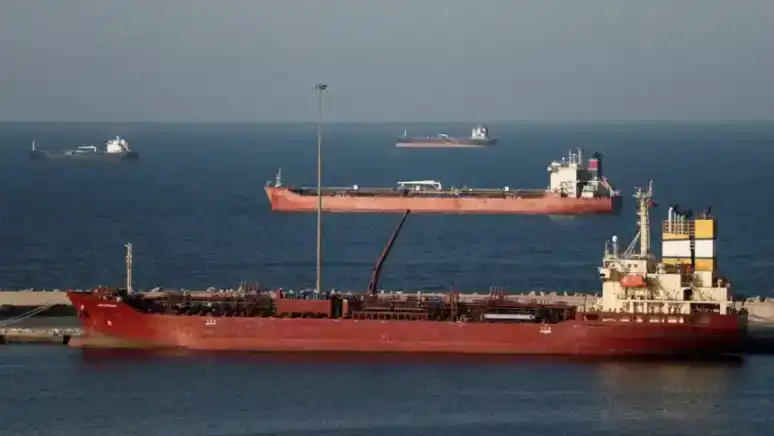
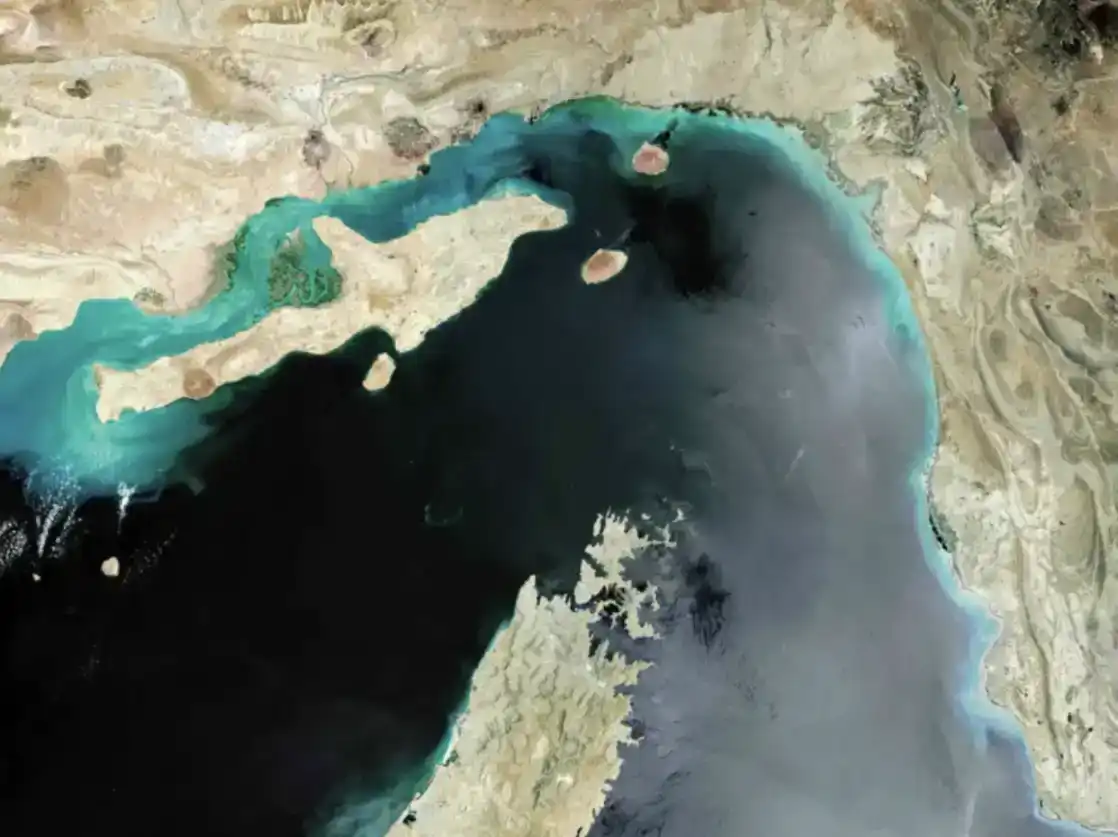
Once a VLCC pays the toll, the IRGC issues a license code and route instructions. The vessel must fly the flag of a country that has a negotiated passage agreement; in some cases, it must also formally change its registration to that country. As the vessel approaches the Strait of Hormuz, it must broadcast its passage code via VHF radio. A patrol boat will then escort it, navigating close to the coastline through a group of islands now referred to by industry insiders as the "Iranian toll station," to ensure safe passage through the strait.

This is the first time a sovereign state has incorporated stablecoins into strategic-level payment infrastructure.

Unlike El Salvador's symbolic move to adopt Bitcoin as legal tender, Iran's choice involves mandatory commercial scale. The strait handles 21% of global seaborne crude oil traffic, with dozens of vessels passing through daily.

If this mechanism continues to operate, it is estimated that over $20 billion in stablecoins will flow through Iran-controlled digital wallets annually, forming a grey liquidity pool protected by sovereign power.
The deeper impact lies in the chain reaction for shipping insurance and trade finance. The International Group of P&I Clubs (IG) has issued an internal warning, noting that payments to the IRGC may trigger compliance risks under EU and UK sanctions, potentially voiding insurance policies. This forces shipowners into a brutal trade-off between shipping economics and legal risks: diverting via the Cape of Good Hope adds 15 days of voyage and tens of thousands in fuel costs, while paying the cryptocurrency toll risks account freezes. Some commodity traders have begun attempting to reroute through Pakistani intermediaries. Islamabad recently announced permission for 20 international tankers to fly the Pakistani flag, essentially providing an offshore outsourcing channel for Iran's system.

Iran is not the only country doing this. Russia previously announced a similar fee policy for the Northern Sea Route and has publicly considered accepting cryptocurrency settlements. This digital financial logic of turning geographical hubs into 'nodes' is reshaping the payment infrastructure of global energy trade.

When merchant ships complete USDT settlements via on-chain protocols in the anchorage of Qeshm Island, it is not merely the payment of a toll but a systematic dismantling of the remnants of the Bretton Woods system.

The fragility of this experiment is equally evident. Since USDT/USDC are essentially dollar-pegged and subject to OFAC tracking, how the shadow public entity established by the IRGC can 'decentralize' and convert large-scale funds into physical assets or fiat currency (rials) is a risk point. However, as long as Iran maintains its geographical monopoly over the Strait of Hormuz, this financial war mediated by cryptocurrency will continue to rewrite the rulebook of global trade.


Related Questions

QWhat are the two payment methods Iran accepts for the Strait of Hormuz transit fee?

AIran accepts payment via RMB wire transfer or in USD stablecoins through a decentralized network.

QHow does Iran categorize countries for its tiered pricing system for the transit fee?

AIran uses a five-tier system: Tier 1 (allies like China and Russia), Tier 2 (friendly partners like India and Pakistan), Tier 3 (neutral countries), Tier 4 (high-risk countries with close US ties), and Tier 5 (US, Israel, and allies, which are banned).

QWhat is the estimated annual value of stablecoins that could flow through Iran's system if the mechanism continues?

AIt is estimated that over $20 billion worth of stablecoins could flow through Iran-controlled digital wallets annually.

QWhat major risk do shipowners face when paying the fee in cryptocurrency according to the International Group of P&I Clubs?

AThe International Group of P&I Clubs warned that paying the fee to the IRGC could trigger EU and UK sanctions compliance risks, potentially leading to the invalidation of their insurance policies.

QBesides Iran, which other country has announced a similar toll system for a strategic waterway and considered crypto payments?

ARussia has announced a similar toll system for the Northern Sea Route and has publicly considered accepting cryptocurrency payments.

Related Reads

Is AI Creating a New Class of 'Information Poor'?

AI is generating a new kind of "information poverty." The core issue isn't that AI denies answers to the poor; it's that it provides abundant, cheap, and plausible-sounding answers to everyone. This availability shifts the true scarcity from obtaining answers to possessing the **judgment to evaluate them** and the access to turn them into real-world opportunities. New information poverty thus describes those who have AI tools and outputs, but lack the complementary skills, authorization, and contextual experience to critically assess and act on them. Research reveals a multi-layered divide: access to AI is stratified by income and platform design (e.g., premium vs. free, embedded tools). In workplaces, usage heavily favors higher-paid, more experienced, or formally trained employees, with AI often automating entry-level tasks that were traditional stepping stones. Crucially, the heaviest users are often mid-career professionals whose existing expertise allows them to effectively judge and leverage AI outputs, while novices risk over-relying on them without building judgment. While controlled experiments show AI can significantly boost low-skilled workers' performance, real-world adoption and benefit are constrained by unequal social and organizational structures. Historically, general-purpose technologies first reward those with existing complementary capital. AI, by affecting judgment-based work, may accelerate and deepen this initial inequality gap, even if it narrows over decades. The danger lies in the illusion of competence it creates, potentially stunting the very critical thinking needed in an era where judgment is paramount.

marsbit21m ago

Is AI Creating a New Class of 'Information Poor'?

marsbit21m ago

Jensen Huang 'Saves' South Korean Stock Market: Locks In SK Hynix Memory, Chip Shortage to Continue

On June 5th, South Korea's stock market experienced a sharp decline, with major chipmakers like Samsung and SK Hynix dropping nearly 10%. Amidst the turmoil, NVIDIA CEO Jensen Huang's visit to Seoul played a dramatic role in boosting market sentiment. Following a dinner meeting with SK Group Chairman Chey Tae-won and SK Hynix CEO Kwak Noh-Jung, Huang confirmed that NVIDIA's new Vera CPU will utilize SK Hynix DRAM. The companies announced a multi-year technical partnership to co-develop next-generation memory for NVIDIA's AI infrastructure, covering products from data centers to personal AI and robotics. This collaboration extends beyond memory supply. SK Hynix is integrating NVIDIA's AI and Omniverse platform into its own semiconductor design and manufacturing processes, including computational lithography and creating digital twins of its fabrication plants for autonomous operation. While strengthening ties with SK Hynix, NVIDIA is diversifying its supply chain for the upcoming HBM4 memory, with Samsung, SK Hynix, and Micron all certified as suppliers for its Vera Rubin platform. Despite this, Huang warned that the global chip shortage, driven by relentless demand from AI factory construction, is expected to persist for several years across the entire supply chain. His visit underscores NVIDIA's systematic effort to deepen integration with South Korea's broader tech industry.

marsbit1h ago

Jensen Huang 'Saves' South Korean Stock Market: Locks In SK Hynix Memory, Chip Shortage to Continue

marsbit1h ago

Nasdaq Plunges 4.2% in a Single Day: Does "Black Friday" Burst the U.S. Stock Market Bubble?

The Nasdaq plunged 4.18% on June 5, 2026, its worst single-day drop in over a year, as a much stronger-than-expected US jobs report triggered fears of economic overheating and delayed Federal Reserve interest rate cuts. The selloff, centered on high-valuation tech and AI stocks like Nvidia and Broadcom, spread across major indices. The article examines whether this signals a market top. The strong May non-farm payrolls data, nearly double expectations, pushed bond yields higher, directly hurting rate-sensitive tech stocks. This exposed vulnerabilities in the crowded AI trade, where valuations had soared on narratives of infinite growth, despite emerging signs of slowing order momentum and corporate AI monetization challenges. Prior to the drop, market indicators flashed warning signs: historically high valuations (e.g., Shiller CAPE ratio near 39.5), extreme bullish sentiment, and high levels of leverage. Technical charts showed key support levels being breached. Wall Street is divided on the outlook. Bears, citing risks of "stagflation" and AI bubble comparisons to the dot-com era, warn of a potential significant correction. Bulls view the drop as a healthy correction within a bull market, underpinned by a strong economy and expected corporate earnings growth of around 7% in 2026. The immediate future hinges on upcoming key events: the May CPI inflation data and the mid-June FOMC meeting. Their outcomes will critically shape market expectations for the Fed's rate path. The article concludes that conditions for a major market top are aligning, marking a fragile transition from narrative-driven gains to a phase demanding validation from macroeconomic data and corporate fundamentals. Caution is advised.

marsbit1h ago

Nasdaq Plunges 4.2% in a Single Day: Does "Black Friday" Burst the U.S. Stock Market Bubble?

marsbit1h ago

Nasdaq Plunges 4.2% in a Single Day, Did 'Black Friday' Pop the U.S. Stock Bubble?

The Nasdaq Composite plummeted 4.18% on June 5, its biggest single-day drop since April 2025, triggering widespread debate over whether the U.S. stock market has peaked. The sell-off was sparked by a stronger-than-expected U.S. non-farm payrolls report, which fueled fears of economic overheating and pushed back market expectations for Federal Reserve rate cuts, leading to a sharp rise in Treasury yields. The AI sector, the primary driver of the recent bull market, suffered severe losses, with the Philadelphia Semiconductor Index crashing over 10%. Stocks like Nvidia, Broadcom, and Micron led the decline. Concerns are mounting about the sustainability of AI capital expenditures and high valuations, with signs of order cuts for next-generation chips emerging. Analyses point to several warning signs: historically high market valuations (e.g., elevated Shiller CAPE ratio, Buffett Indicator), extreme bullish sentiment indicators, and significant insider selling. The sell-off also caused a key technical breakdown, with the S&P 500 breaking below its short-term moving average and testing its 200-day moving average. Wall Street is divided on the outlook. Bears warn this could be the start of a bubble deflation or a "stagflation" scenario, while bulls view it as a healthy, overdue correction within a bull market driven by solid corporate earnings growth. A more moderate view suggests the easy liquidity-driven rally is over, and markets are entering a phase of fundamental stock-picking with potential for consolidation. The immediate future hinges on key upcoming events: the May CPI report and the mid-June FOMC meeting. Their outcomes will be critical in determining whether this is a temporary pullback or the beginning of a more significant trend reversal. The consensus is that the era of one-directional market gains may be ending, requiring increased investor caution.

Odaily星球日报1h ago

Nasdaq Plunges 4.2% in a Single Day, Did 'Black Friday' Pop the U.S. Stock Bubble?

Odaily星球日报1h ago

The First Case on AI Agents: What Was Adjudicated?

"The First 'Agent' Ruling: What Was Decided?" On April 30, the Guangzhou Internet Court issued a ruling—China's first behavior preservation order in the intelligent agent (AI agent) field. The defendant, an open-source AI agent software, was ordered to stop downloads, cease actions that bypassed a platform's technical protection measures, and delete related tutorials and data. The core issue: the software used the operating system's "accessibility service" permissions to automate user interactions within other apps without those platforms' authorization. This mirrors a recent US case where Amazon sued Perplexity for similar reasons—bypassing Amazon's API to directly scrape and interact with its pages—and won a preliminary injunction. Both rulings establish a crucial legal boundary for the AI agent era: agents cannot operate unchecked. The article argues the fundamental legal principle emerging is one of **dual authorization**. An AI agent requires both **user consent** AND **platform consent** to operate legitimately within that platform's ecosystem. Bypassing platform rules through system-level permissions, even with user permission, undermines platform responsibilities for content moderation, data security, and user privacy, creating liability issues. The piece uses the evolution of "Doubao Phone" (an AI-integrated smartphone) as a case study. Its initial, aggressive version that bypassed platform controls faced roadblocks. Its upcoming 2.0 version is reportedly pivoting to negotiate API access and authorization deals with major platforms (like Alibaba's ecosystem), seen as a strategic adaptation to the new regulatory reality. A global trend is identified: the era of unregulated, "wild west" growth for AI agents is ending, replaced by a **compliance race**. This raises barriers to entry, as securing platform authorizations becomes a new cost. Open-source status is also not a legal shield if the code facilitates bypassing technical protections. In conclusion, these first rulings target not the largest, but the most **aggressive and representative** cases. By setting precedent with them, regulators are efficiently steering the entire industry towards a new, more regulated operating paradigm defined by dual authorization and platform cooperation.

marsbit1h ago

The First Case on AI Agents: What Was Adjudicated?

marsbit1h ago

Trading

Spot
Futures

Hot Articles

How to Buy WAR

Welcome to HTX.com! We've made purchasing WAR (WAR) simple and convenient. Follow our step-by-step guide to embark on your crypto journey.Step 1: Create Your HTX AccountUse your email or phone number to sign up for a free account on HTX. Experience a hassle-free registration journey and unlock all features.Get My AccountStep 2: Go to Buy Crypto and Choose Your Payment MethodCredit/Debit Card: Use your Visa or Mastercard to buy WAR (WAR) instantly.Balance: Use funds from your HTX account balance to trade seamlessly.Third Parties: We've added popular payment methods such as Google Pay and Apple Pay to enhance convenience.P2P: Trade directly with other users on HTX.Over-the-Counter (OTC): We offer tailor-made services and competitive exchange rates for traders.Step 3: Store Your WAR (WAR)After purchasing your WAR (WAR), store it in your HTX account. Alternatively, you can send it elsewhere via blockchain transfer or use it to trade other cryptocurrencies.Step 4: Trade WAR (WAR)Easily trade WAR (WAR) on HTX's spot market. Simply access your account, select your trading pair, execute your trades, and monitor in real-time. We offer a user-friendly experience for both beginners and seasoned traders.

2.1k Total ViewsPublished 2024.03.29Updated 2026.06.02

How to Buy WAR

Discussions

Welcome to the HTX Community. Here, you can stay informed about the latest platform developments and gain access to professional market insights. Users' opinions on the price of WAR (WAR) are presented below.

活动图片