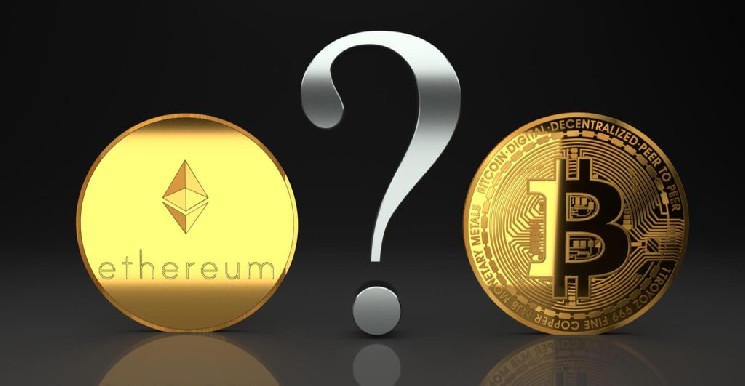
While the leading cryptocurrency Bitcoin struggles to hold above the $60,000 mark, its rate of adoption continues to grow.
At this point, one analyst claims that the pace of $BTC adoption will remain stable, and that this growth is being driven by three main factors.
Grayscale's Head of Research, Zach Pandl, published a report stating that despite recent price pressure on Bitcoin, he believes Bitcoin adoption is growing and will continue to grow in the medium and long term for three reasons.
Firstly, it is the unsustainable growth of the US national debt. This increases the risks of inflation and currency depreciation, which may push various investors to seek scarce assets and stores of value.
Secondly, stablecoins and tokenization were considered. According to Pandl, stablecoins will drive the widespread adoption of blockchain technology in the financial services sector. And as the technology spreads, more intermediaries will have the necessary infrastructure and regulatory conditions to store and trade Bitcoin.
Thirdly, younger investors are showing significantly greater interest in digital assets, and alternative investments have become a standard component of investment portfolios. In this case, institutional investors, asset management platforms, and individuals will continue to incorporate Bitcoin into diversified portfolios through instruments such as the currently available ETFs.
Is the Bitcoin Bear Market Ending?
Pandl also stated that the Bitcoin bear market has not changed our expectations regarding the growth of its adoption over time, adding that the $BTC bear market may be nearing its end.
The analyst believes the recent bear market may be nearing its end as $BTC prices begin to stabilize. According to Pandl, while Bitcoin's short-term price fluctuations are volatile, the base of medium and long-term investors continues to expand. This indicates that the current market weakness has not changed the sentiment of long-term Bitcoin investors.
At this stage, Pandl believes that considering only the classic four-year halving cycle is insufficient to understand Bitcoin's future. From this perspective, the analyst views the current period not as a time when Bitcoin must automatically undergo a deeper decline due to the four-year cycle, but rather as a consolidation phase defined by macroeconomic conditions.
Thus, Pandl notes that his assessment does not signal the definitive start of a new uptrend in Bitcoin, but the stabilization of prices and the continued expansion of the long-term investor base strengthen his expectation that the current bear market may be entering its final stages.
*This is not investment advice.
end-content