If we turn back the clock to 2020, most AI practitioners were still debating just how powerful GPT-3 really was.
Back then, generative AI had not yet become a global focus, ChatGPT was still two years away from its debut, and large models had not yet triggered the investment frenzy that is sweeping the world today. Yet, that very year, a top AI researcher at Google lost her job after a fierce conflict with the company over an unpublished paper.
At the time, many believed it was just another controversy about workplace management, academic publishing, and corporate culture in Silicon Valley. Looking back now, however, people realize the warnings in that paper have almost all materialized in the real world.
And the fired researcher was none other than Timnit Gebru, one of the most influential figures in the field of AI ethics research.
A "Firing Incident" That Shook the AI Community
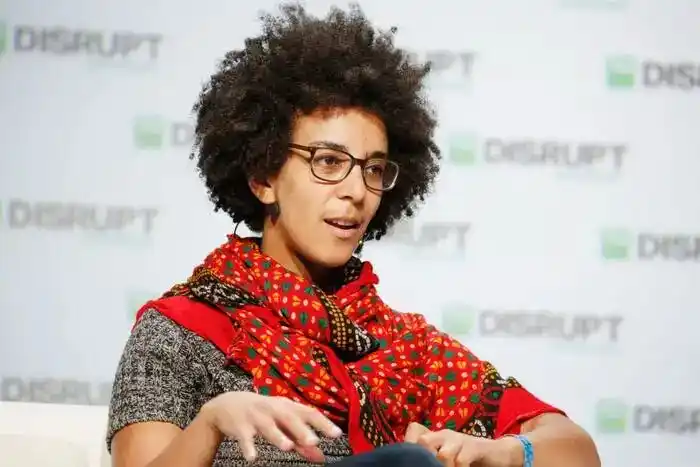
In December 2020, Timnit Gebru posted on social media that she had been fired by Google.
The news quickly exploded across the AI research community. Because Gebru was not an ordinary researcher at the time; she was the co-lead of Google's Ethical AI Team and one of the well-known scholars in the global field of AI fairness and algorithmic bias research.
Born in Ethiopia, Gebru has long focused on racial bias, gender discrimination, and social equity issues in AI. Before joining Google, she conducted research at Stanford University. In 2018, a study on algorithmic bias she co-authored was considered by many a significant turning point in AI fairness research. That same year, Google recruited her, publicly showcasing the company's emphasis on 'Responsible AI.'
Yet, just two years later, the two sides came to a rupture.
At the time, Google's official statement was that Gebru had resigned, but Gebru herself gave a completely different version: she stated that she received an email from the company during her vacation, informing her that her departure was effective immediately, with all internal system and email access revoked simultaneously.
In her view, this was unequivocally a firing.
Subsequently, over 4,000 Google employees and industry insiders signed an open letter, questioning the company's handling and demanding Gebru's reinstatement — and the fuse for all this was a mere 14-page academic paper.
A 14-Page Paper Sparked the Controversy
This paper, titled "On the Dangers of Stochastic Parrots," was authored by Timnit Gebru, University of Washington linguistics professor Emily Bender, and two other researchers. It has now been cited over 14,000 times.
Later, the term "stochastic parrot" also became widely known. (Paper address: https://s10251.pcdn.co/pdf/2021-bender-parrots.pdf)
The paper pointed out that large language models are essentially reproducing language patterns based on statistical regularities: they can generate fluent, natural, and even seemingly logical text, but do not truly understand the meaning of language — like a parrot that has learned to mimic human speech, appearing clever, while in reality this mimicry is built on vast amounts of internet text. And the internet itself is filled with bias, discrimination, and hateful content. Therefore, large models are highly likely to learn these problems along the way and continue to amplify them in their generated content.
Consider this: It was 2020, GPT-3 had just been released, ChatGPT was yet to be born, and the large model boom was far from arriving. Yet, this paper had already predicted one of the biggest headaches facing the entire industry today.
After the paper was submitted to a top AI ethics conference, Google management demanded: withdraw the paper, or remove the names of Google researchers. Gebru refused. She asked the company to provide specific reasons and hoped for further discussion.
At the same time, she also sent a strongly worded email to an internal Google employee group.
In the email, Gebru criticized Google for lacking concrete action in promoting minority hiring and addressing internal inequality. She wrote: "When you start advocating for marginalized groups, your situation gets worse and worse. You make other leadership uncomfortable." She also stated: If the company could not explain why the paper needed to be withdrawn, she would choose to resign at an appropriate time.
Things developed far beyond her expectations. Gebru stated that Google subsequently replied that it would not meet her demands and directly accepted her 'resignation,' immediately revoking all her access.
At the time, the incident quickly evolved into one of the most controversial topics in the global AI field.
What Seemed Radical Then Has Become Reality Now
What has kept this incident discussed to this day is not the firing itself, but the content of that paper — because looking back now, almost every concern raised within it has become a real-world problem the AI industry is facing.
(1) The First Warning: Models Will 'Make Stuff Up'
In 2020, GPT-3 had just been released. People were amazed by the model's text generation capabilities, but few seriously discussed its reliability.
Gebru and Bender pointed out: as models scale up, people will increasingly mistake fluent expression for genuine understanding. The model appears to be thinking, but is actually just predicting the next most likely word. Therefore, they will inevitably generate information that seems plausible but is completely false.
Today, this problem has a name familiar to everyone: AI Hallucination. Whether it's ChatGPT, Gemini, Claude, or other advanced models, the hallucination problem remains unsolved to this day.
In a sense, this paper accurately foresaw it before 'hallucination' became an industry buzzword.
(2) The Second Warning: Bias Won't Disappear; It Will Be Amplified
The paper also noted that the internet itself is not a neutral data source; training data naturally contains various racial, gender, cultural, and geographic biases. Models will not only learn these biases but may further reinforce them due to optimization mechanisms.
Later, various real-world problems validated this concern:
Amazon once tried using AI to screen job resumes, only to find the system automatically downgraded resumes containing keywords like 'women.'
A medical risk assessment system used by several major US hospitals was found to chronically underestimate the medical needs of Black patients.
Apple Card also drew regulatory attention because women received significantly lower credit limits than men.
These cases illustrate that algorithms do not automatically achieve fairness; on the contrary, they can solidify real-world inequalities in more insidious ways.
(3) The Third Warning: AI's Energy Consumption Will Become a New Problem
In 2020, computing power costs were not the focus they are today, but that paper had already begun discussing the environmental impact of training超大模型. Researchers estimated that the carbon emissions from training one large language model were equivalent to the lifetime emissions of five cars — at the time, this claim was considered overly pessimistic by many.
However, as AI infrastructure construction entered an arms race, the problem quickly became apparent: according to Google's public disclosures, the company's greenhouse gas emissions in 2024 increased by 48% compared to 2019; Microsoft saw an increase of about 29% over the same period. Both companies explicitly stated that AI data centers and computing infrastructure were significant contributing factors.
Somewhat ironically, these tech giants were touting carbon neutrality goals just a few years earlier.
(4) The Fourth Warning: No One Truly Knows What's in the Training Data
In the eyes of many, training data seemed like just an engineering problem. But Gebru believed that as data scales up, fully auditing training data would become almost impossible.
Her view was validated again: in 2023, researchers found that the widely used image generation training dataset LAION-5B contained a large number of child sexual abuse images. Mainstream models, including Stable Diffusion, had used this dataset.
Unsurprisingly, many developers were previously unaware of this content's existence. That is to say, even the model developers themselves may not truly know what the model 'consumed' — and this was precisely one of the problems the paper first raised.
(5) The Fifth Warning: The Internet Will Gradually Be Filled with AI Content
In Google's view, this might have been the most sensitive part of the entire paper. Gebru and Bender argued that the development of large models would ultimately concentrate linguistic and cultural discourse power into the hands of a very few tech giants. The reason is simple: training超大模型 requires massive capital, computing power, and data resources, leaving only a handful of companies truly capable of competing.
Over time, the mainstream voices on the internet would gradually evolve into: statistical averages produced by a few companies, then disseminated to the world as 'neutral assistants.' Meanwhile, languages and cultures with lower representation in the training data would be further marginalized.
More seriously, when AI-generated content re-enters the internet and becomes the next round of training data, the problem would continuously self-reinforce — this is what researchers now call: 'Model Collapse.'
A 2024 study found that about 57% of new English internet content is already AI-generated or AI-assisted. Research on low-resource languages found that as training data increasingly comes from AI-generated content, translation quality for some languages has noticeably degraded.
In other words, this paper not only predicted the 'model collapse' phenomenon but even pointed out its formation mechanism before the concept was formally coined.
After Leaving Google, She Chose to Continue Research
After the incident, many later portrayed Gebru as an 'anti-AI' figure. That's not accurate; she never advocated stopping AI development. From start to finish, she questioned something else:
Who is deciding the direction of AI development?
In her view, the researchers and management pushing large model development often share similar backgrounds, serve similar commercial goals, and are driven by the same competitive pressures. Under such incentive structures, releasing products faster, scaling user bases faster, and winning market competition faster often take higher priority than safety, fairness, and ethical issues.
And anyone trying to slow this process might be seen as an obstructionist. Ironically, Gebru raised this very point inside Google, and Google, by firing her, provided the most dramatic real-world footnote to this view.
Even more lamentable is that shortly after the incident, the other co-lead of the Ethical AI Team, Margaret Mitchell, was also fired — within just 90 days, Google's once-proud Ethical AI Team was largely dismantled.
After leaving Google, in 2021 Gebru founded the Distributed AI Research Institute (DAIR). Unlike large tech companies, this institution aims to conduct AI research outside commercial interests, with a direct goal: to study problems that tech giants might not be willing to face. Over the past few years, DAIR has continued to focus on issues like data provenance, algorithmic fairness, linguistic diversity, and the concentration of power in the AI industry.
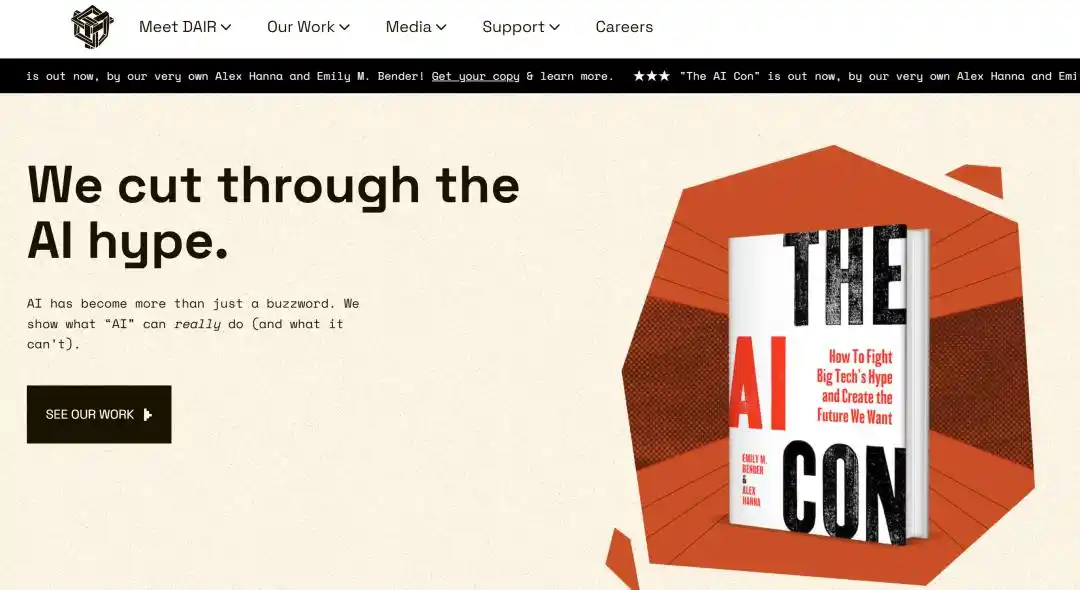
And with the explosive development of generative AI, more and more researchers have begun revisiting that "Stochastic Parrots" paper: because they find that problems deemed excessive worries in the paper back then have now become realities discussed daily in the industry.
Perhaps, She Just Saw the Problems Earlier Than Others
Six years later, the outside world may never get an answer everyone agrees on regarding the rights and wrongs between Timnit Gebru and Google.
Google views it as a normal case of academic review and departure; Gebru believes she was suppressed for insisting on publishing her research. But one thing is becoming increasingly difficult to deny:
The paper that led to her leaving Google has not lost its significance with the end of the controversy.
On the contrary, the issues it discussed — hallucinations, bias, data pollution, environmental costs, model collapse, and power concentration — have now become unavoidable topics for the entire AI industry.
Sometimes, history offers its evaluation in unexpected ways.
In 2020, many thought Timnit Gebru was too pessimistic;
In 2026, people are beginning to realize she might have just seen the problems earlier than others.
Reference link: https://www.tumblr.com/dreaminginthedeepsouth/817865966907228160/darren-oconnor-timnit-gebru-was-fired-from
This article is from the WeChat public account "CSDN," compiled by Zheng Liyuan.