Solana Upgrade Rumors Put Network Congestion Fixes Back In The Spotlight

bitcoinistPublished on 2026-07-15Last updated on 2026-07-15

Abstract

Rumors of an upcoming Solana network upgrade have shifted focus towards potential fixes for network congestion, specifically around transaction scheduling. This highlights a broader market trend moving beyond token prices to scrutinize infrastructure, security, and practical utility. The report advises cautious interpretation, noting that while the rumor provides a concrete data point, its impact depends on actual implementation, adoption, and follow-up signals from developers, exchanges, and users. The story serves as a signal of the crypto market's increasing professionalism and focus on operational details, rather than a guarantee of immediate outcomes or a final verdict on Solana's trajectory.

Solana Upgrade Rumors Put Network Congestion Fixes Back In The Spotlight is a useful reminder that crypto coverage is not only about token prices. Sometimes the more important story is the infrastructure, regulation, security, or product layer sitting underneath the market noise.

The immediate point is straightforward: reports point to rumors of an upcoming Solana network upgrade. That gives readers something concrete to work with, rather than another vague sentiment update.

TL;DR

  • Reports point to rumors of an upcoming Solana network upgrade.
  • The expected focus is transaction scheduling and congestion relief.
  • The story should be framed cautiously until an official release lands.

Why This Matters Now

The timing matters because Solana is already part of a wider conversation across the market. Traders want to know whether the development changes liquidity or risk. Builders want to know whether it changes what can be deployed. Compliance teams want to know whether it changes how platforms operate.

In that sense, the story is bigger than one headline. It sits inside the ongoing shift from speculative crypto cycles toward more practical questions: who can use these systems, how safe are they, and whether the underlying incentives actually work.

The best way to read it is with discipline. It is not a guarantee of immediate upside, and it should not be treated as one. But it does add a fresh data point to the way the market is thinking about Solana.

The Solana Angle

For Solana, the important part is the specific mechanism. If this is a security issue, the risk sits in dependencies and user protection. If it is a listing or product launch, the question is access and liquidity. If it is a governance or research proposal, the question is whether the idea can survive implementation.

That is where this update becomes useful. It is not just a label attached to a trend. It gives readers a way to understand what might actually change if the development gains traction.

Crypto has a habit of turning every announcement into a broad market claim. This one deserves a narrower read. The value is in seeing how it affects the users, developers, institutions, or traders closest to the issue.

The Risk Side

There is also a caution attached. Source material can confirm that a development exists, but it cannot prove that adoption will follow. A proposal still needs support. A product still needs users. A chart still needs confirmation. A compliance tool still needs integration.

That is why the responsible reading is not to oversell the story. The stronger takeaway is that this adds to a pattern. The crypto market is steadily becoming more professional, more technical, and more sensitive to real operational details.

Readers should also watch for follow-up signals. That could mean developer feedback, exchange support, regulatory response, wallet adoption, liquidity data, or simply whether market participants continue reacting after the first headline fades.

What Comes Next

The next stage will decide whether this remains a narrow update or becomes part of a larger market theme. In crypto, that difference matters. Plenty of stories look important for a few hours and then disappear. The ones that last usually show up again through usage, liquidity, enforcement, governance, or developer adoption.

For now, this gives the market another piece of information to weigh. It is specific enough to be useful, but still early enough that readers should keep the caveats in view.

That makes it worth covering without pretending it settles anything. The story is a signal, not a final verdict.

The key is not to confuse coverage with certainty. Solana stories can move quickly, especially when they touch security, regulation, listings, infrastructure, or price levels. The useful approach is to track the next confirming detail rather than assume the first update carries the whole market story. That is how traders avoid chasing noise and how readers separate a genuine development from another passing headline.

This report is based on information from cryptoslate.com.

This article was written by the News Desk and edited by Samuel Rae.

Trending Cryptos

Related Questions

QWhat is the main subject of the rumors discussed in the article, according to the TL;DR section?

AThe main subject is rumors of an upcoming Solana network upgrade, with an expected focus on transaction scheduling and congestion relief.

QWhy does the article suggest the timing of this rumor is significant for the Solana ecosystem?

AThe timing is significant because Solana is part of a wider market conversation, and stakeholders like traders, builders, and compliance teams are interested in how potential changes might affect liquidity, deployability, and platform operations.

QAccording to the article, how should readers approach or interpret this rumor about a Solana upgrade?

AReaders should approach it with discipline and caution, treating it as a fresh data point or signal rather than a guarantee of immediate upside or a final verdict. It should not be oversold.

QWhat is the key risk or caution highlighted when reading about such developments in the crypto market?

AThe key caution is that while source material can confirm a development exists, it cannot prove that adoption will follow. A proposal needs support, a product needs users, and a chart needs confirmation.

QWhat does the article say will determine if this rumor becomes a lasting market theme or just a passing headline?

AIt will be determined by whether it shows up again through real-world indicators like usage, liquidity, enforcement actions, governance decisions, or developer adoption in the follow-up stages.

Related Reads

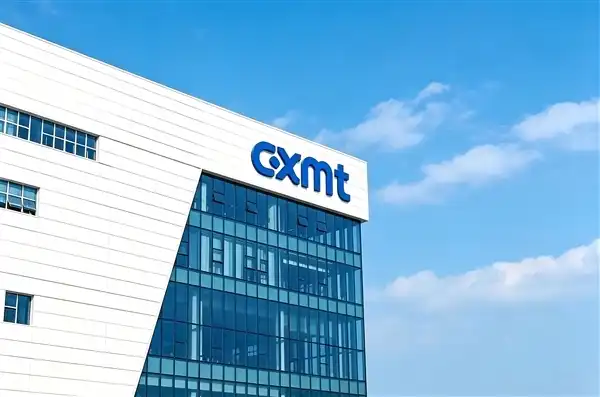
Hyperliquid Pre-IPO Contract Priced CXMT at $7.2, Foreign Capital Engaging with China's Storage Narrative via DeFi

Hyperliquid, a blockchain-based perpetual contracts platform, has launched a pre-IPO contract for Chinese memory chipmaker Changxin Technology (CXMT) ahead of its STAR Market debut. Priced at 7.2 USDC (approx. $7.2) per share, the contract implies a market cap of about $500 billion, exceeding the official IPO valuation of roughly $80 billion and sitting at the upper end of analyst estimates. This marks the first time such a crypto derivative has targeted a STAR Market listing. It provides global investors, particularly those unable to meet China's 500,000 yuan ($69,000) investment threshold for the STAR Market, a direct avenue to gain exposure to the "China storage substitution" narrative. The 24/7 tradable, leveraged contract also fills a gap for those seeking to hedge or speculate around the A-share listing, which operates under T+1 settlement and restricts short-selling. Changxin Technology, the world's fourth-largest DRAM supplier, is raising nearly $8 billion in one of Asia's largest IPOs this year, buoyed by a DRAM super-cycle and strategic shifts by major competitors. While the Hyperliquid contract offers a novel parallel pricing mechanism, the lack of direct arbitrage with the underlying A-shares may lead to persistent price divergence. Nevertheless, its emergence underscores significant international interest in China's key semiconductor players.

marsbit13m ago

Hyperliquid Pre-IPO Contract Priced CXMT at $7.2, Foreign Capital Engaging with China's Storage Narrative via DeFi

marsbit13m ago

The 'Great Divergence' of the Crypto Market in 2026: BTC Bear Market, but BlackRock, Franklin Templeton, and JPMorgan Are Simultaneously Doing One Thing

"2026 Crypto Market 'Great Divergence': BTC Bearish, But BlackRock, Franklin, JPMorgan Are Simultaneously Building Infrastructure." In July 2026, amidst BTC struggling at $62K, seven key events signal a profound shift: the 'Great Divergence' between price action and underlying infrastructure development. Franklin Templeton's CIO notes a "big disconnect" between price and fundamentals. Meanwhile, major institutions are advancing real-world blockchain adoption: BlackRock, Goldman Sachs, and JPMorgan join a UK government-backed tokenization taskforce targeting repo and gilts; Hyundai pilotes USDT for cross-border trade settlement; Bolivia considers integrating USDT into its national payment system; and Robinhood's new blockchain sees rapid adoption. This activity represents a quiet infrastructure bull market, driven by institutional strategy and long-term regulatory roadmaps, not short-term crypto price cycles. The core narrative is shifting from speculative price action to foundational utility. Infrastructure development—focused on upgrading traditional finance, enabling real-world payments, and tokenizing assets—is now decoupled from BTC's volatility. Historical parallels (e.g., dot-com bust/AWS birth, 2018 crypto winter/DeFi Summer) show that infrastructure built during downturns often becomes the next cycle's "toll booth." The critical question is no longer "Will BTC drop further?" but "Who will own the tolls when this new infrastructure is complete?" While BTC remains a key liquidity anchor, the valuation logic for crypto's real-world utility is increasingly separate from its most traded asset's price.

marsbit31m ago

The 'Great Divergence' of the Crypto Market in 2026: BTC Bear Market, but BlackRock, Franklin Templeton, and JPMorgan Are Simultaneously Doing One Thing

marsbit31m ago

Scaling Law a One-Size-Fits-All Solution? First Crystal Structure Manipulation Benchmark Shows Top Large Models Falling Short

Scaling Law Hits a Wall: New Benchmark Reveals AI's Struggles with Atomic-Level Material Manipulation A new benchmark called AtomWorld, developed by researchers, reveals a significant limitation in current large language models (LLMs). While powerful at understanding textual scientific knowledge, they perform poorly when tasked with physically manipulating atomic structures based on natural language instructions. The benchmark tests core atomic operations like replacing atoms, rotating structures, and expanding supercells. Results show that simply scaling up model size (Scaling Law) yields only modest and unstable improvements, particularly for tasks requiring strong 3D spatial reasoning and geometric planning. For instance, complex tasks like "rotating around a specific atom" see very low success rates even in top models like Claude Opus. This highlights a critical gap: textual knowledge does not automatically translate to reliable action in a physically constrained 3D space. The study argues that for AI in Science to progress, the focus must shift from just scaling language data (Language Scaling) to also scaling actionable capabilities (Action Scaling). This involves building training loops around "action-feedback-correction" cycles within simulated or real scientific environments. Ultimately, AtomWorld underscores that to become true lab assistants, AI models need to evolve beyond explaining knowledge to reliably executing precise, verifiable scientific actions.

marsbit43m ago

Scaling Law a One-Size-Fits-All Solution? First Crystal Structure Manipulation Benchmark Shows Top Large Models Falling Short

marsbit43m ago

Trading

Spot

Hot Articles

Discussions

Welcome to the HTX Community. Here, you can stay informed about the latest platform developments and gain access to professional market insights. Users' opinions on the price of SOL (SOL) are presented below.

活动图片