All about Solana’s 4.7M milestone and SOL’s attempt to clear $75-level

ambcryptoPublished on 2026-07-02Last updated on 2026-07-02

Abstract

Solana recently reached a significant milestone with active addresses surging to 4.7 million, indicating a substantial increase in network activity and user engagement. This growth in on-chain interactions could boost market confidence and demand for SOL. The token's price is currently testing a critical technical resistance level near the $75 mark, represented by a key Exponential Moving Average. A successful breakout above this level could signal a shift in market structure and potentially lead to a broader recovery, with the next target around $83. On-chain data reveals ongoing token accumulation by holders and a reduction in circulating supply, suggesting a potential supply-demand imbalance that could drive prices higher in the near term. Fundamental analysis adds to the bullish case, as Solana's Price-to-Sales ratio stands around 2, which some investors interpret as a sign the token may be undervalued at its current trading price. While this metric is not a short-term trading signal, it provides supportive context for ongoing accumulation. Together, the improving network fundamentals, holder behavior, and valuation metrics appear to be aligning to support a potential price breakout for SOL.

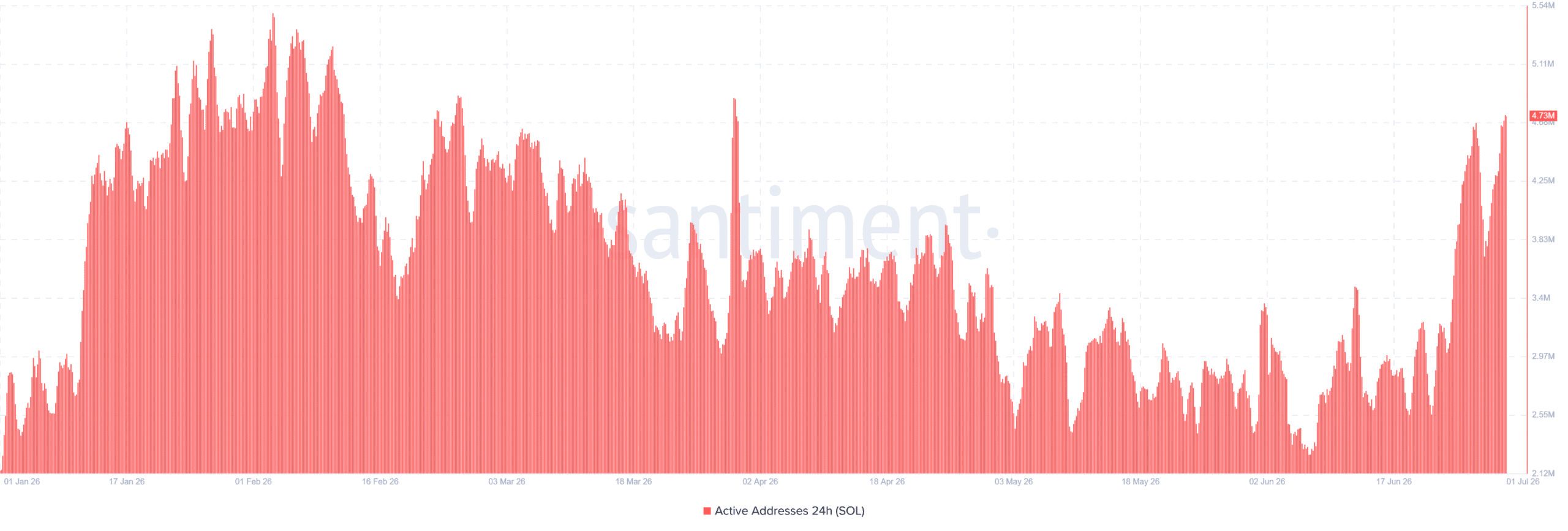
Solana is in the news after its active addresses surged significantly to 4.7 million over the past week. The hike in user interactions across the Solana network could translate into greater demand and eventually feed into investors’ market confidence.

However, will other on-chain and technical developments help sustain the improving market activity?
Source: Santiment

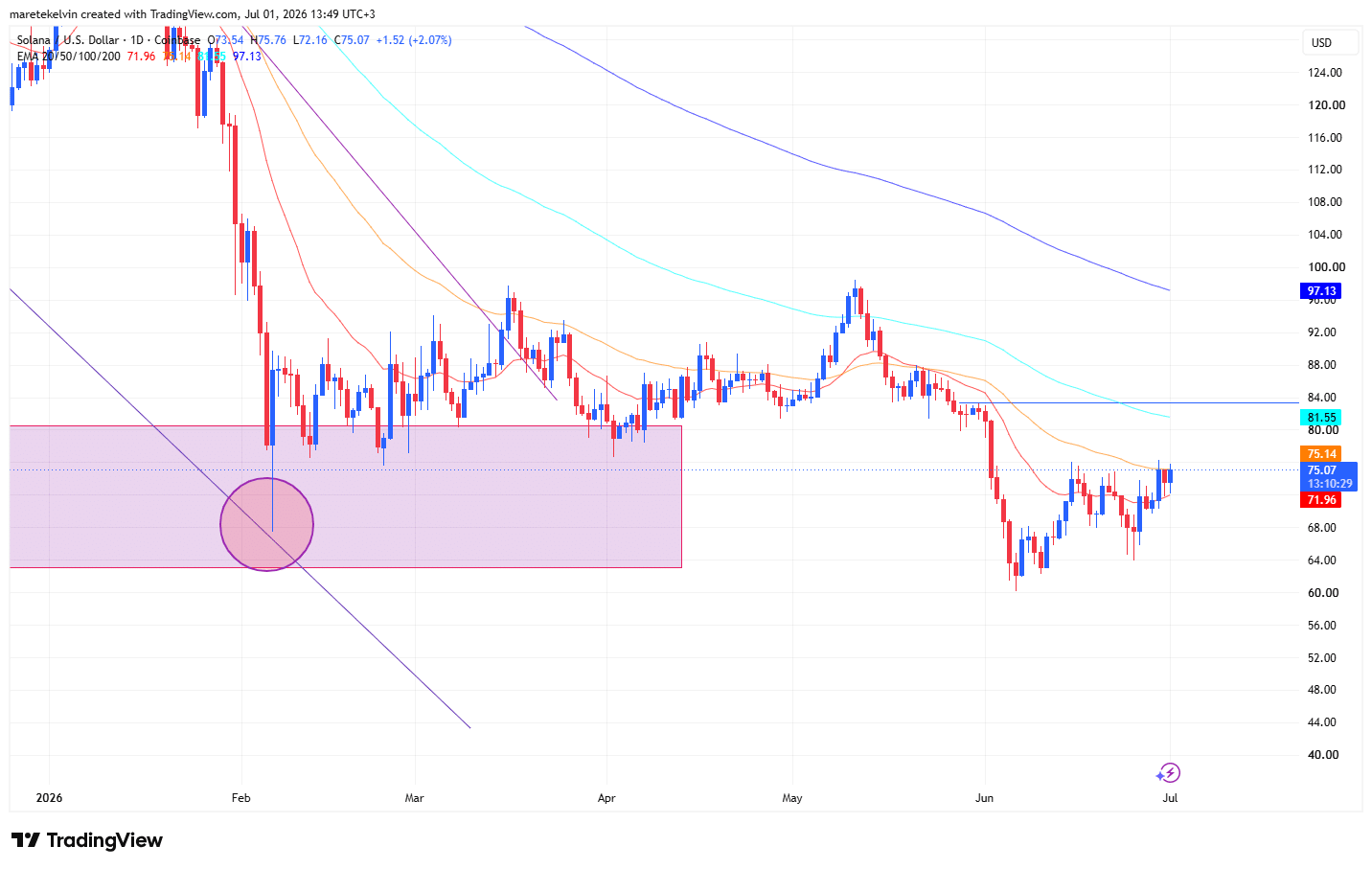
On the daily chart, Solana seemeed to be approaching a key turning point at press time.

Its price action struggled for weeks below key resistance levels since it bounced back from its trading price of $59. Lately though, the token has been testing a major Exponential Moving Average(EMA) resistance at $75.

A successful move above that level could mark a shift in market structure and strengthen the case for a broader recovery. Here, the timing matters too. Especially since the altcoin’s improving fundamentals could add to and accelerate its improving network activity.
Source: TradingView

Are long-term holders playing along?

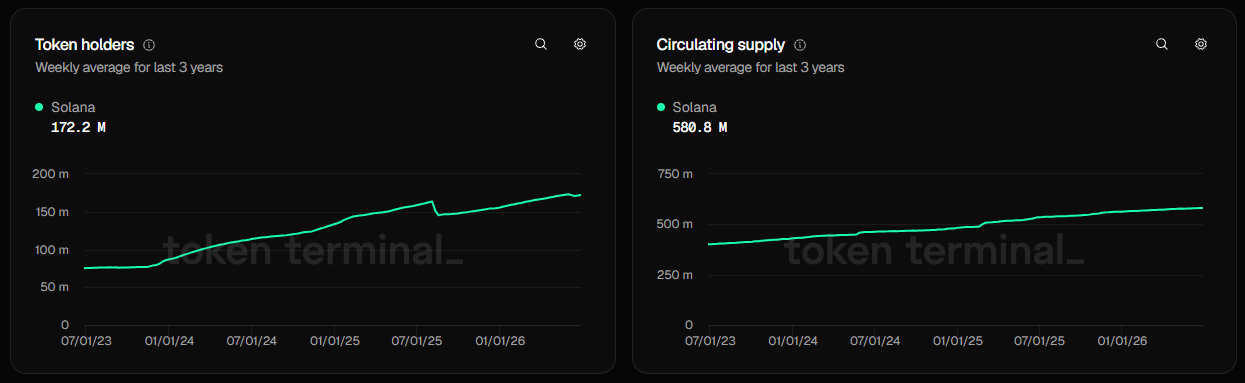
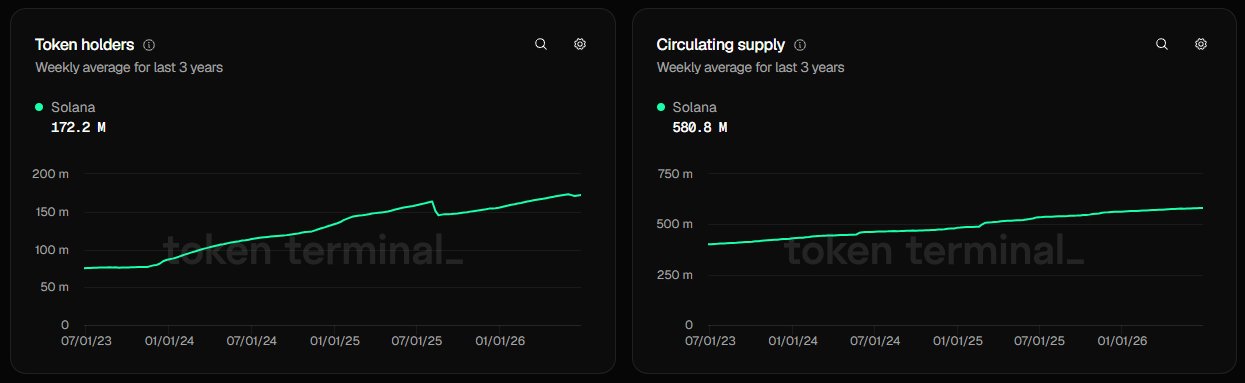
Accumulation of tokens on the network has been on the surge as well. In fact, holder balances have increased as a result of more investments being made on the platform in this period of consolidation.

However, there has been a drop in the supply too – Meaning that there are fewer tokens being returned to circulation.

The divergence could cause a demand shoot as not enough tokens may be available for circulation. As a result, the token’s price could push higher in the near future.
Source: Token Terminal

Is it undervalued?

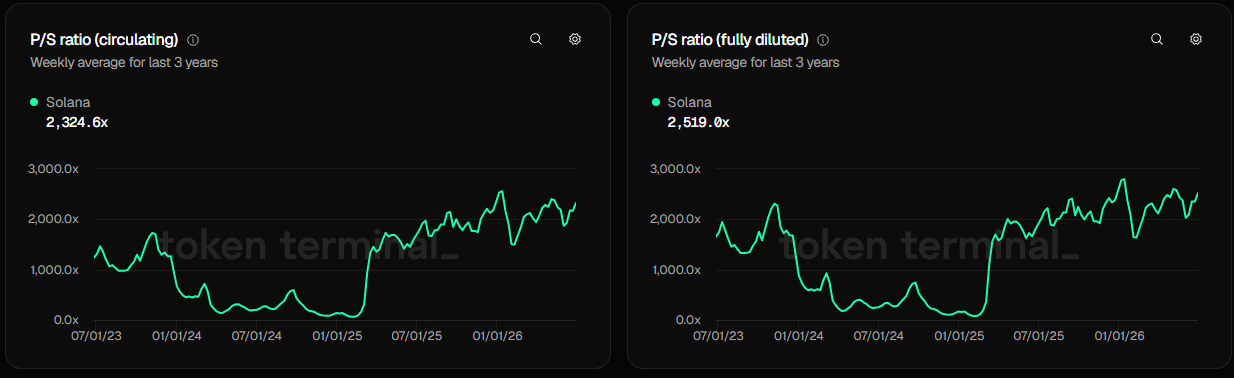
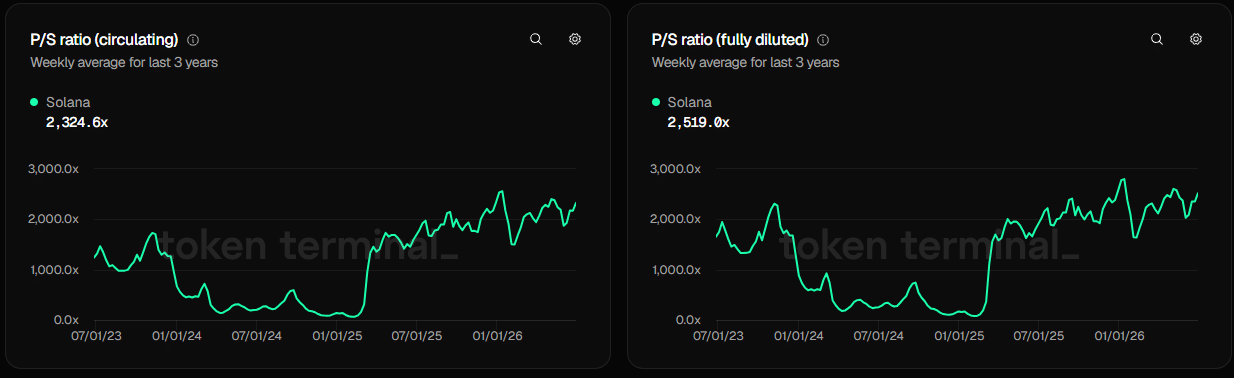
Fundamental metrics seemed to be relaying a similar story. At the time of writing, Solana’s Price-to-Sales ratio was around 2 – A level that suggested the token may be undervalued at its trading price.

While valuation metrics are rarely used as short-term trading signals, they can provide useful context when assessing whether an asset is becoming stretched or remains relatively undervalued.

For some investors, the current ratio may strengthen the case for ongoing accumulation, which will turn out as another positive gain for SOL.
Source: Token Terminal

Can buyers clear the next hurdle?

The market now faces a clear test. A decisive move above the EMA resistance near $75 would strengthen the bullish structure that has been developing over recent sessions.

Beyond that level, the next major area of interest sits around $83, where previous selling pressure emerged.

At press time, the altcoin’s price action was catching up with its fundamentals. Especially since network activity has been growing and holders have continued to accumulate on the back of supportive valuation metrics. Together, they all appeared to be in support of the anticipated breakout.


Final Summary

  • Solana’s active addresses surged to 4.7 million, signaling renewed activity across the network.
  • Holder accumulation and a P/S ratio of 2 seemed to support SOL’s attempts to truly reclaim the key $75-resistance level.


Trending Cryptos

Related Questions

QWhat is the significant milestone reached by Solana's network activity mentioned in the article?

ASolana's active addresses surged significantly to 4.7 million over the past week.

QAccording to the article, what key price level is Solana (SOL) attempting to break through?

ASolana is testing a major Exponential Moving Average (EMA) resistance at the $75 level.

QWhat does the article suggest about Solana's token supply and its potential impact on price?

AThere has been a drop in the token supply, meaning fewer tokens are being returned to circulation. This divergence could cause a demand surge and potentially push the price higher.

QWhat valuation metric is mentioned as a potential indicator that Solana (SOL) may be undervalued?

ASolana's Price-to-Sales (P/S) ratio was around 2, which the article suggests may indicate the token is undervalued at its current trading price.

QWhat is identified as the next major area of interest for SOL's price if it successfully breaks above $75?

ABeyond the $75 level, the next major area of interest sits around $83, where previous selling pressure emerged.

Related Reads

High-Yield, Debt-Free, and Non-Dilutive: Why Bitcoin Treasury Companies Are Aggressively Promoting Preferred Share Financing

Bitcoin-backed preferred shares, led by companies like Strategy and followed by newer entrants like Strive, have grown to a market size of approximately $13 billion in under two years, attracting capital with high yields. A 2026 report from BitcoinTreasuries.net and Apyx projects this segment could grow from nearly 1% to 3-5% of the global $1.3 trillion preferred share market by 2030, with long-term potential reaching 10%. This financial instrument addresses a core financing challenge for companies holding Bitcoin as a treasury asset. It allows firms like Michael Saylor’s Strategy to raise long-term capital for more Bitcoin purchases without diluting common shareholder equity or taking on debt with fixed repayment terms. Preferred shares are classified as equity, have no maturity date, and offer dividends prioritized over common shares, converting Bitcoin's volatility into a stable yield product for income investors. Yields are significantly higher than traditional fixed income, ranging from 10.8% to 15.2% for top issuers. Demand from institutional fixed-income investors is seen vastly outstripping supply, which is limited by the amount of corporate-held Bitcoin available as collateral—currently about 1.26 million BTC ($83 billion), with Strategy holding 67%. A key safety feature is the high collateral coverage ratio of 3.8x to 4.5x, meaning each dollar of preferred equity is backed by $3.8-$4.5 in Bitcoin. Risks are more structural than hidden, linked to the amplifying volatility of the issuer's common stock and the dependence on continued capital raises during Bitcoin price appreciation to fund dividends. Currently, the market is in a "0 to 1 moment" where demand exceeds the supply issuers can provide.

Foresight News42m ago

High-Yield, Debt-Free, and Non-Dilutive: Why Bitcoin Treasury Companies Are Aggressively Promoting Preferred Share Financing

Foresight News42m ago

Trading

Spot

Hot Articles

Discussions

Welcome to the HTX Community. Here, you can stay informed about the latest platform developments and gain access to professional market insights. Users' opinions on the price of S (S) are presented below.

活动图片