Pyth Network’s TradFi push gains steam as PYTH nears $0.05

ambcryptoPublished on 2026-07-17Last updated on 2026-07-17

Abstract

Pyth Network is expanding beyond crypto into traditional finance, with its native token PYTH approaching $0.05. The network has integrated institutional bond-market data from providers like Fenics Market Data, OpenYield, and Tradeweb, covering areas such as U.S. Treasuries and corporate bonds. This move aims to create a unified market data standard alongside its existing equities and futures data. Concurrently, Pyth is growing its presence in Asia, adding coverage for major Hong Kong stocks and a dedicated Seoul price feed. This expansion addresses regional demand for timely market data, as highlighted by recent volatility in South Korean markets, and can be packaged into paid products. The market has responded positively. The PYTH token has risen from its June lows, trading near $0.049 with its RSI at 67, indicating strong buying interest but nearing overbought conditions. A break above $0.05 could target $0.055, while rejection might pull the price back toward $0.045.

Pyth Network [PYTH] is moving beyond crypto and into traditional finance; its bond data and Asia expansion could bring more paid data services.

The native token too, is responding positively.

Institutional bond pricing into one data network

Pyth Network is adding institutional bond-market data to its platform.

Fenics Market Data, OpenYield and Tradeweb will now provide pricing through Pyth Pro and the Pyth Data Marketplace. Together, they cover dealer quotes, U.S. Treasuries, corporate bonds, municipal bonds and benchmark prices used by large financial institutions.

About the same, Mike Cahill, CEO of Douro Labs and Contributor to Pyth Network, said,

Fixed income pricing underpins global financial markets.

He added,

Making it available through the same infrastructure that already distributes equities, futures... is a structural step toward a unified, modern market data standard.

The effect can be immense. Bond pricing is often spread across dealers, private transactions, and separate trading venues. By bringing these sources into one network, Pyth is making fixed-income data easier for developers and financial applications to access alongside other major asset classes.

The Asia push for high-demand market data

That same strategy is also playing out in Asia. A recent South Korean market sell-off reportedly pushed more than 1.2 million leveraged accounts toward margin calls. The recent South Korean market sell-off highlights the value of timely regional market data, an area where Pyth has continued expanding its coverage.
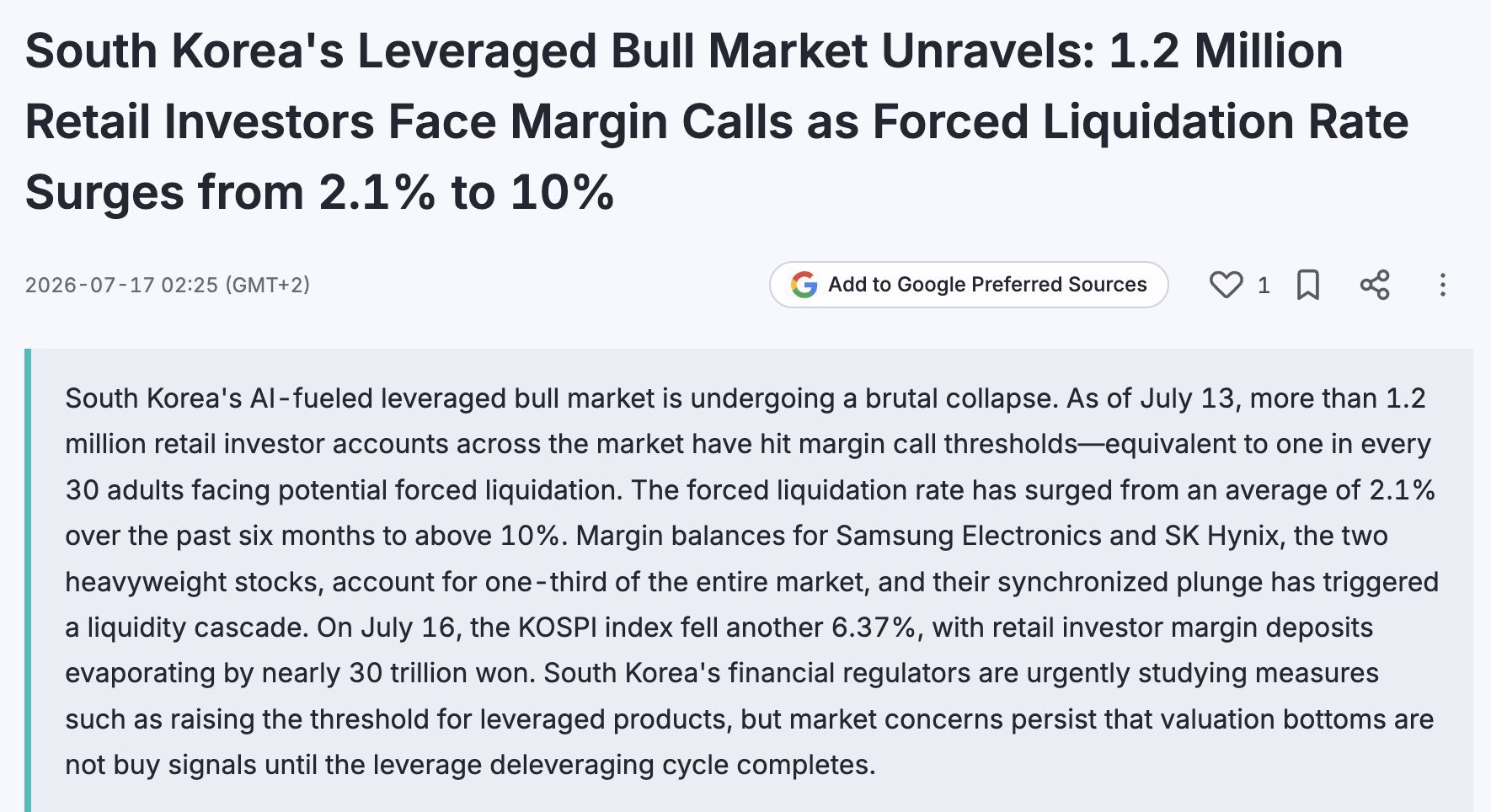
Source: X

Interestingly, Pyth has already expanded its coverage across Asia, including major Hong Kong stocks and a dedicated Seoul price feed for SK Hynix. Through Pyth Pro and its Data Marketplace, this coverage can be packaged into paid products for trading firms and financial apps.

Broader regional coverage could increase demand for Pyth’s data products and support network revenue over time.

Market responds to Pyth’s data push

Native token PYTH has gone up from its June lows. At the time of writing, it traded near $0.049. That puts the $0.05 level in focus.
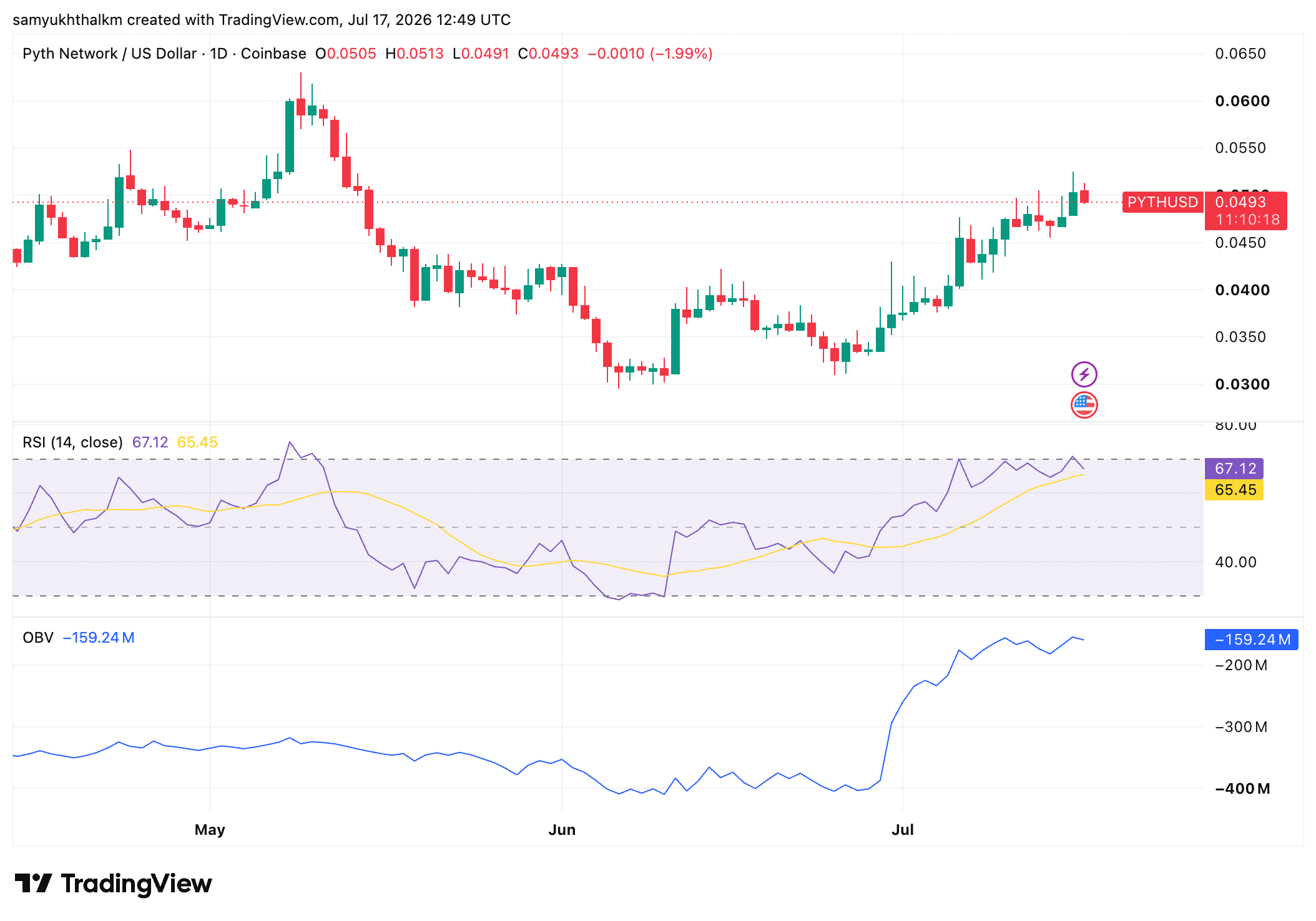
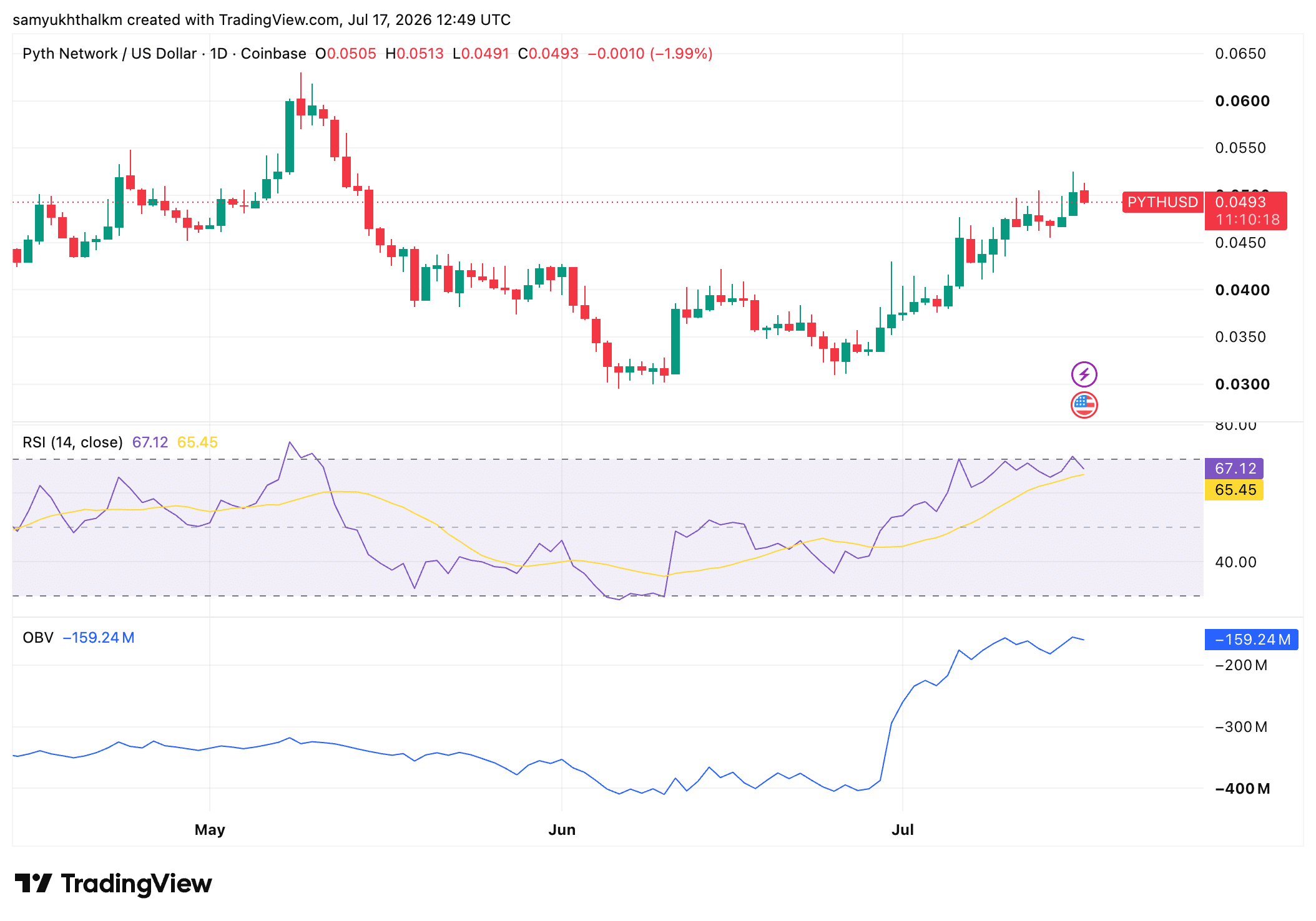
Source: TradingView

RSI was at 67, so the token is getting close to overbought territory. At the same time, OBV has also improved since late June, so there’s good buying interest.

A good move above $0.05 could open the door toward $0.055. However, rejection at this level may pull PYTH back toward $0.045.


Final Summary

  • Pyth Network expanded its institutional market data offering with new bond-market pricing partnerships and continued growing its presence across Asia.
    PYTH has recovered toward the key $0.05 resistance level as improving momentum accompanies the network’s latest expansion.


Trending Cryptos

Related Questions

QWhat is the main focus of Pyth Network's recent expansion according to the article?

AThe main focus is expanding beyond the crypto space into traditional finance (TradFi) by adding institutional bond-market data to its platform and expanding its data coverage in Asia.

QWhich specific new data providers are mentioned as joining the Pyth Network?

AFenics Market Data, OpenYield, and Tradeweb are the new providers joining to supply bond pricing data through Pyth Pro and the Pyth Data Marketplace.

QWhat is the significance of Pyth adding bond-market data, as highlighted by Mike Cahill?

AMike Cahill stated that making fixed income pricing available through the same infrastructure that distributes other assets is a structural step toward a unified, modern market data standard, as this data underpins global financial markets.

QWhat potential effect does the article suggest Pyth's Asian expansion could have?

AThe article suggests that broader regional coverage in Asia, including dedicated price feeds for major stocks, could increase demand for Pyth's paid data products and support network revenue over time.

QWhat is the key price level for the PYTH token mentioned in the article, and what are the potential price targets discussed?

AThe key resistance level is $0.05. A move above it could open the door toward $0.055, while a rejection at this level may pull the price back toward $0.045.

Related Reads

From Somersaults to Working 24/7: We Saw the ‘Working-Class’ Aura in Robots at WAIC

From performing acrobatics to working 24/7: Robots at WAIC are getting down to business. This year's World Artificial Intelligence Conference (WAIC) in Shanghai showcased a significant shift in the robotics industry. While "show-off" robots that dance, play music, or compete in sports are still present, the dominant trend is now practical, task-oriented machines. Hundreds of wheeled and humanoid robots were deployed as guides, baristas, factory workers, and even traffic controllers, moving beyond mere demonstrations to highlight real-world "work capabilities." The focus has pivoted from showcasing technical parameters to pursuing mass production and industrial落地 (landing/implementation). This transition presents major challenges. First, deploying powerful AI models onto robots requires overcoming hardware limitations in computing power and latency. Second, robots demand complex, integrated systems for real-time perception and control. Third, achieving reliable mass production necessitates unprecedented industry-wide collaboration on standards and supply chains. A key bottleneck identified by industry leaders is the robot's "brain"—its AI and cognitive capabilities. While hardware and basic movement ("little brain") have advanced rapidly, the higher-level intelligence for understanding complex instructions and adapting to unstructured environments is progressing more slowly. Companies are investing heavily in developing more advanced "brain" systems, but fully autonomous operation in dynamic settings remains a work in progress. Cost is another critical hurdle. While some consumer-oriented humanoid robots are now priced under $15,000, capable industrial models often cost $50,000 or more. The industry consensus is that bringing robots into unstructured home environments for tasks like comprehensive cleaning is still at least five years away due to technical, safety, and cost barriers. Therefore, 2026 is being called the "first year of mass production," but primarily for industrial and specific commercial applications. WAIC 2026 served less as a stage for spectacular tricks and more as a serious examination of robots' commercial viability, marking their transition from laboratory prototypes to real-world products that must prove their value through stable, repetitive work.

marsbit4h ago

From Somersaults to Working 24/7: We Saw the ‘Working-Class’ Aura in Robots at WAIC

marsbit4h ago

Trading

Spot

Hot Articles

Discussions

Welcome to the HTX Community. Here, you can stay informed about the latest platform developments and gain access to professional market insights. Users' opinions on the price of S (S) are presented below.

活动图片