Author: Claude, Shenchao TechFlow
Shenchao Guide: Starting Wednesday, Metaplanet, Asia's largest Bitcoin treasury company, transferred 5,014 bitcoins (approximately $322 million) within 24 hours. Once the on-chain data emerged, speculation of "they're going to sell" immediately swirled. CEO Simon Gerovich personally doused the flames on Thursday: it was just a transfer between custody addresses, not a single coin was sold. It was a false alarm, but the reason the market overreacted is because treasury giants like Strategy and MARA have indeed been selling this year.
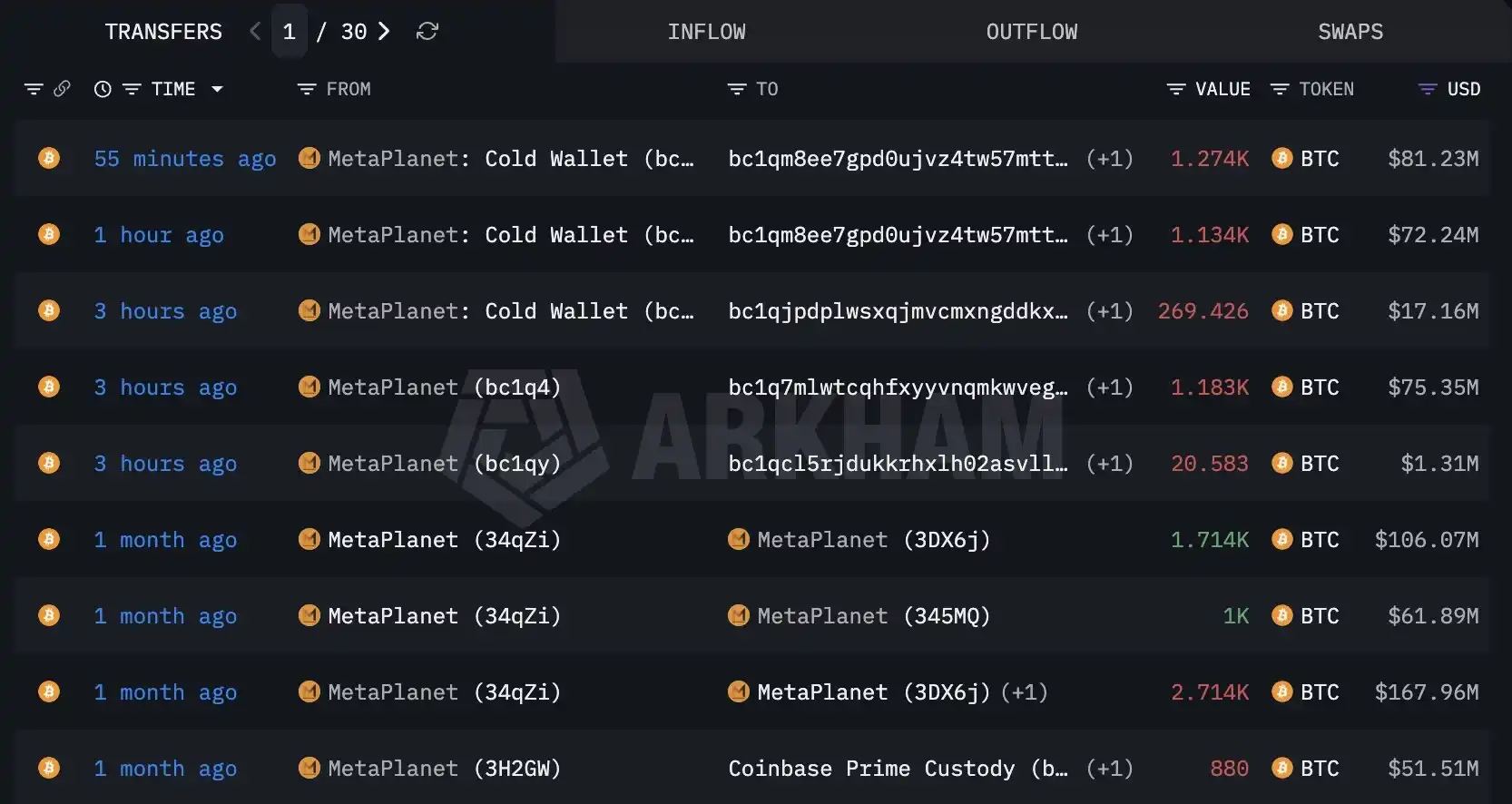
On Wednesday, on-chain data platform Lookonchain detected Metaplanet's wallet transferring 3,881 bitcoins (approximately $247 million) over three hours. Following The Block's report, speculation that "Metaplanet is going to sell" quickly intensified. On Thursday, CEO Simon Gerovich responded directly on X: "This was a routine custody operation. No Bitcoin was sold, our holdings remain 43,000."
$8 Fee Moves $320 Million: CEO Shows Data to Prove 'Not a Single Coin Sold'
According to Cointelegraph, within 24 hours starting Wednesday, Metaplanet transferred a total of 5,014 bitcoins, worth approximately $322 million, all to the company's own custody addresses, with total network fees of about $8. Gerovich also emphasized that all the company's addresses are public, and the transfer process is real-time verifiable on-chain.
This detail precisely illustrates why the "sell-off theory" doesn't hold water. If the intent was to liquidate, the typical path would be to transfer coins to an exchange's hot wallet, not move them between custody addresses under one's own control. On-chain data shows the originating wallet still holds 36,000 of the 43,000 total holdings, and the fund flow is consistent with the interpretation of a "custody arrangement change."
Why the Market Overreacts: Strategy and MARA Really Are Selling This Year
A routine internal transfer can trigger panic not because of Metaplanet, but due to the credit environment of the entire treasury sector. Just this week, we reported Strategy has sold Bitcoin multiple times this year. This former largest treasury company, which once proclaimed it would "never sell," has shifted to "dynamic treasury management," even selling at prices below cost to replenish cash. Mining firm MARA Digital sold a total of 23,093 coins in the first half of the year, reversing its previous HODL-only policy; Hut8 also withdrew 493 coins from its treasury, and has yet to clarify if it's an internal transfer or a prelude to a sale.
In this atmosphere, a large transfer by the world's third-largest listed treasury company being priced by the market as a "prelude to selling" was almost a conditioned reflex.
'Didn't Sell' Doesn't Equal 'All's Well': Metaplanet's Real Ledger
The panic was a false alarm, but Metaplanet's situation is not easy. The company holds 43,000 bitcoins with an average cost of approximately $96,000. With Bitcoin's current price around $64,000, the overall unrealized loss is about $1.4 billion, exceeding 30%. Its stock price has fallen over 43% this year, hovering around 221 yen, near historic lows.
More crucially, momentum is faltering. The company has not increased its holdings since buying 2,823 coins in early July; after issuing $50 million in bonds to major investor EVO Fund in April, there have been no new financing announcements. Current cash reserves are approximately $280 million, with liabilities around $400 million. At this pace, the year-end target of holding 100,000 coins is essentially hopeless: the shortfall is 57,000 coins, requiring about $3.6 billion in new funds at current prices. The engine of the treasury model is "raise funds to buy coins, coin price rises, raise more funds"—now both wheels are slowing down.
A Framework for Holders: How to Distinguish 'Moving House' from 'Selling Out'
This false alarm is actually a practical lesson for ordinary holders. Next time you see a push notification about "a large institutional transfer," you can judge in three steps. First, look at the destination: transfers between one's own custody addresses are usually internal management; transfers to exchange addresses are closer to a sell signal. Second, look at disclosure: Companies like Metaplanet that fully publicize addresses and whose CEO promptly presents data that day have verifiable operational transparency; those that don't respond or disclose are worth being wary of. Third, monitor the aftermath: Track entity holding snapshots on platforms like Arkham; a real sale will leave a trace in the holding count.
Returning to the incident itself, the CEO using on-chain data to immediately douse the flames is a textbook move for treasury company sentiment management. But conversely, the market's hypersensitivity itself is a signal: when "large institutional transfer" is default-interpreted as "they're about to run," it indicates the treasury narrative has already shifted from "buy forever" to "when will they sell." From Strategy admitting to selling and MARA reversing policy, to Trump Media scrapping its CRO treasury plan, the faith in "listed companies buying Bitcoin equals good news" from the 2025 cycle is receding layer by layer.