This Week's Core: Bitcoin's daily structure weakens; can the short-term rebound effectively break above the upper rail of the descending channel? Has HYPE's seven-segment rally reached its endpoint? The following analysis systematically reviews the current market structure from multiple timeframes and outlines mid- and short-term trading strategies for this week, for reference.
Summary of This Week's Core Trading Views:
• BTC multi-timeframe trend structure analysis. (Details in Part 1)
• BTC price outlook and mid-/short-term trading strategies for this week. (Details in Part 2)
• HYPE hourly timeframe trend structure analysis. (Details in Part 3)
• HYPE price outlook and short-term trading strategies for this week. (Details in Part 4)
Market Validation of Last Week's Trading Strategies and Core Views:
• BTC short-term trading performance: Bitcoin completed one short-term short trade (1x leverage) last week, successfully achieving a return of approximately 5.07%. (Details in Table 1)
• Market validation of BTC price trend prediction: Last week's article indicated that Bitcoin would continue its consolidation and downward adjustment pattern, with the short-term strategy primarily focused on 'selling on rallies'. The current market movement validates our previous prediction.
I. Bitcoin Multi-Timeframe Trend Structure Analysis
1. BTC Daily Timeframe Trend Structure Analysis
Bitcoin _ Daily K-Line Chart:
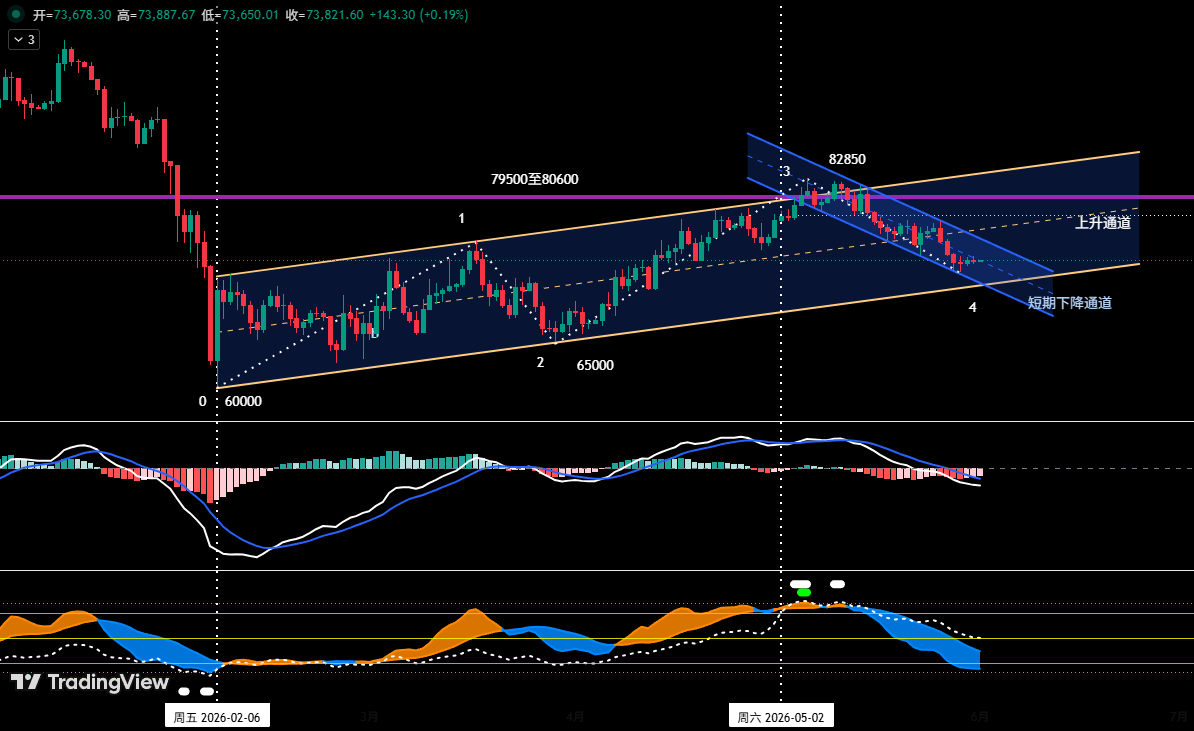
Figure 1
• Ascending Channel (Yellow): As shown in (Figure 1), since the low on February 6, 2026, Bitcoin has maintained a consolidation uptrend within an ascending channel. (Lower rail: line connecting the lows of February 6 and March 29; Upper rail: a line parallel to the lower rail drawn through the high of March 17)
• Short-term Descending Channel (Blue): Since touching the high of $82,850 on May 6, Bitcoin has entered and is operating within a short-term descending channel. (Upper rail: line connecting the rally highs of May 14 and May 26; Lower rail: line connecting the correction lows of May 7 and May 23)
• Based on the Ascending Channel (Yellow) analysis, the price has broken below the channel's midline and is seeking stronger support towards the lower rail.
• Based on the Short-term Descending Channel (Blue) analysis, the price found brief support upon reaching the channel's lower rail (approximately $72,500) and is currently in a period of weak rebound towards the channel's upper rail.
Comprehensive Judgment: From a technical structure perspective, Bitcoin is facing the dual influence of long and short-term channels. The current rebound is primarily a correction for short-term oversold conditions, targeting the upper rail of the short-term descending channel (Blue). However, as the price has broken below the midline of the ascending channel (Yellow), the overall technical structure has weakened. It is expected that after the rebound concludes, the price will most likely revert to the previous downtrend and further test the support strength of the ascending channel's lower rail.
2. In-depth Analysis of BTC Hourly Timeframe Trend Structure: (Using the 4-hour chart as the analysis timeframe)
Bitcoin _ 4-hour K-Line Chart
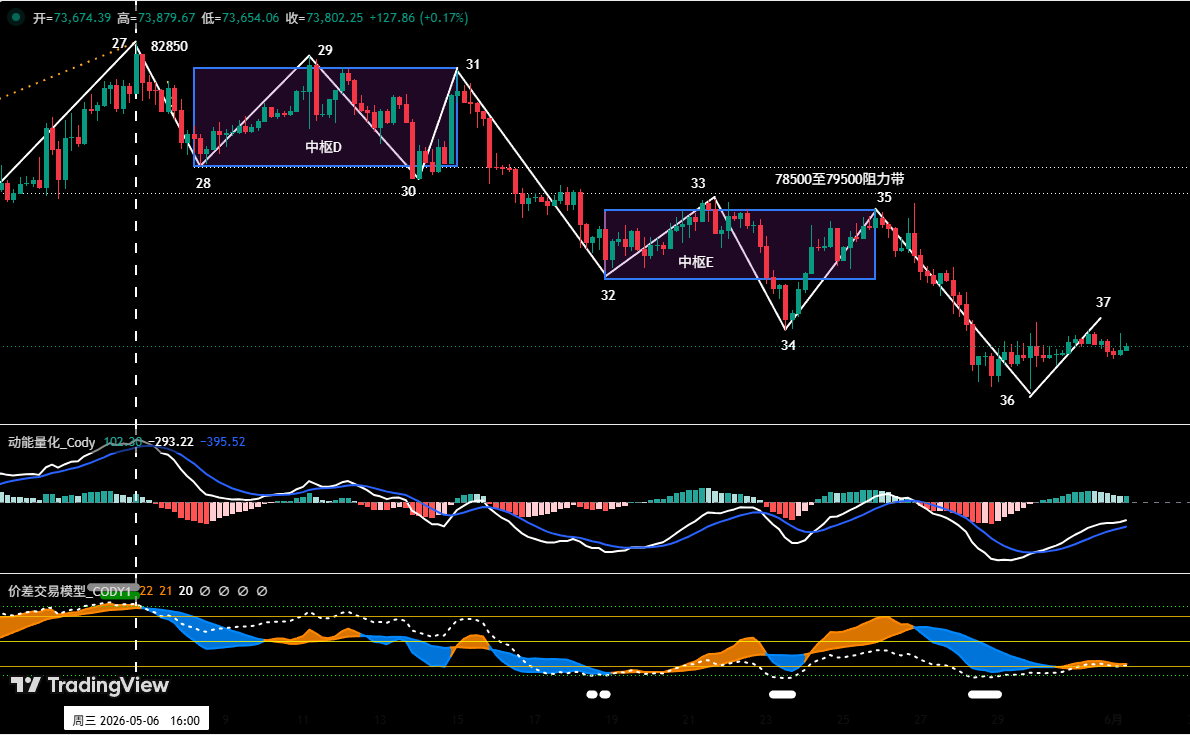
Figure 2
1. As shown in (Figure 2), from the high of $82,850 on May 6 to the ongoing adjustment, the 4-hour chart reveals a detailed subdivision into a total of 10 segments of adjustment structure: from "Segment 27-28" to "Segment 36-37". This includes two descending pivots (zhongshu):
• Pivot D: Formed by the overlapping of segments 28-29, 29-30, and 30-31.
• Pivot E: Formed by the overlapping of segments 32-33, 33-34, and 34-35.
2. From the 4-hour trend structure perspective, the market is currently undergoing the rebound of segment 36-37. If the price faces resistance and falls back after rebounding to the $75,000~$76,000 area, failing to form an effective breakout, the market is highly likely to continue its previous pattern of consolidation and decline, testing the support strength around $69,500~$70,500.
II. Bitcoin Price Outlook and Trading Strategies for This Week
1. BTC Price Trend Outlook for This Week:
This week's core view: Focus on the test results of the resistance area at $75,000~$76,000 and the support area at $69,500~$70,500 by both bulls and bears.
2. Core Resistance Levels:
• First Resistance Area: $75,000~$76,000 region (near the lower rail of Pivot E)
• Second Resistance Area: $78,500~$79,500 region (near the upper/lower rails of the two pivots)
3. Core Support Levels:
• First Support Level: $69,500~$70,500 region (previous important support level)
• Second Support Level: Around $65,000 (previous important support level)
4. Trading Strategies for This Week (Excluding Impact of Unexpected News)
1. Mid-term Strategy:
Bitcoin _ Daily K-Line Chart: (Position Monitoring Model)
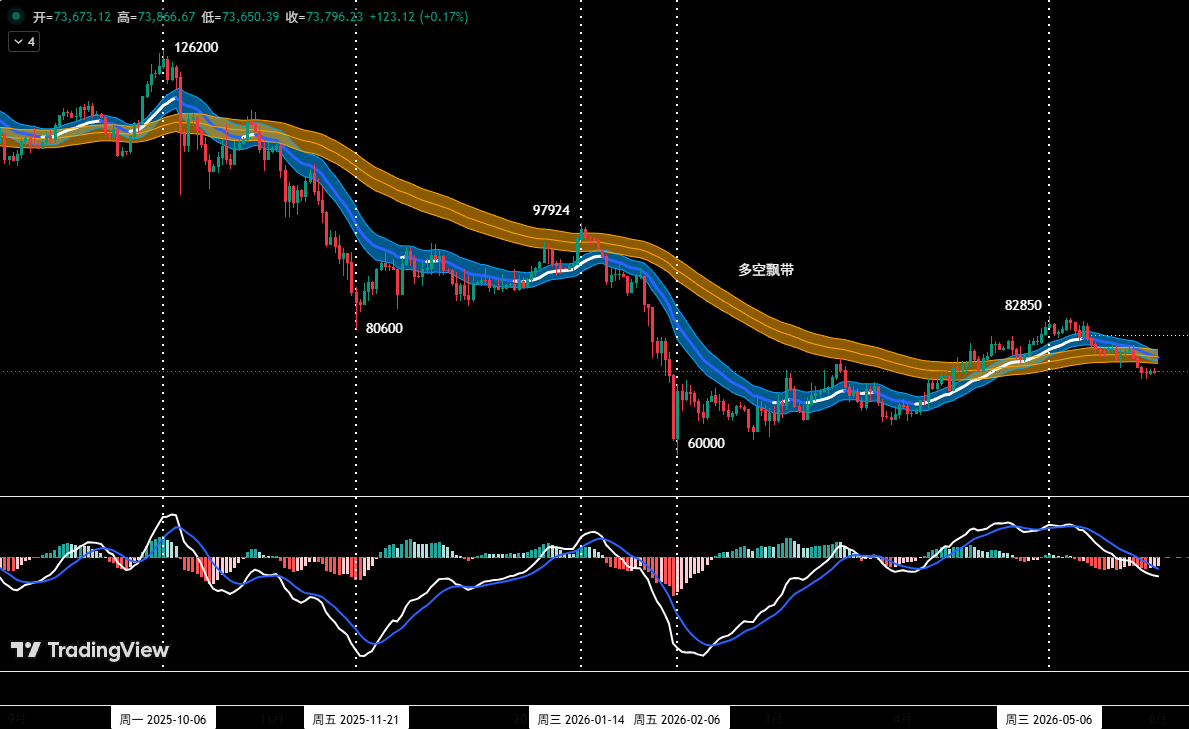
Figure 3
Position Monitoring Model: As shown in (Figure 3), the price has fallen below the "Bull-Bear Channel", entering a technically weak area. This week, focus on its retest of the Bull-Bear Channel (approximately the $75,000~$76,000 region). If the price shows signs of stalling, encountering resistance, and falling back after rebounding to this level, initiating a mid-term short position layout will begin. To control risk, the initial position can be set below 30% of the total capital; subsequently, after the price breaks below the lower rail of the ascending channel (Yellow), the mid-term position can be increased to around 60%.
2. Short-term Strategy: Utilize 30% of capital, set stop-loss points, and look for 'spread' trading opportunities based on support and resistance levels. (Use the 30-minute/60-minute chart as the operational timeframe).
3. In short-term trading, to dynamically respond to the complex evolution of the market, we have pre-formulated two specific operational plans: Plan A/B.
• Plan A: Rebound Meets Resistance, Sell High.
• Entry: When the price rebounds to the $75,000~$76,000 area and encounters resistance, combined with a top signal from the quantitative model, a short position of less than 30% can be established.
• Risk Control: Initial stop-loss set above $77,000.
• Exit: Gradually close the position to take profits when the price adjusts near important support levels combined with model signals.
• Plan B: Effectively Breaks Support, Follow the Trend Short.
• Entry: When the price effectively breaks below the support area of $69,500~$70,500 combined with a model top signal, a short position of less than 30% can be established.
• Risk Control: Initial stop-loss set above $72,000.
• Exit: Gradually close the position to take profits when the price falls to important support levels combined with model signals.
III. HYPE Hourly Timeframe Trend Structure Analysis:
HYPE_4-hour K-Line Chart
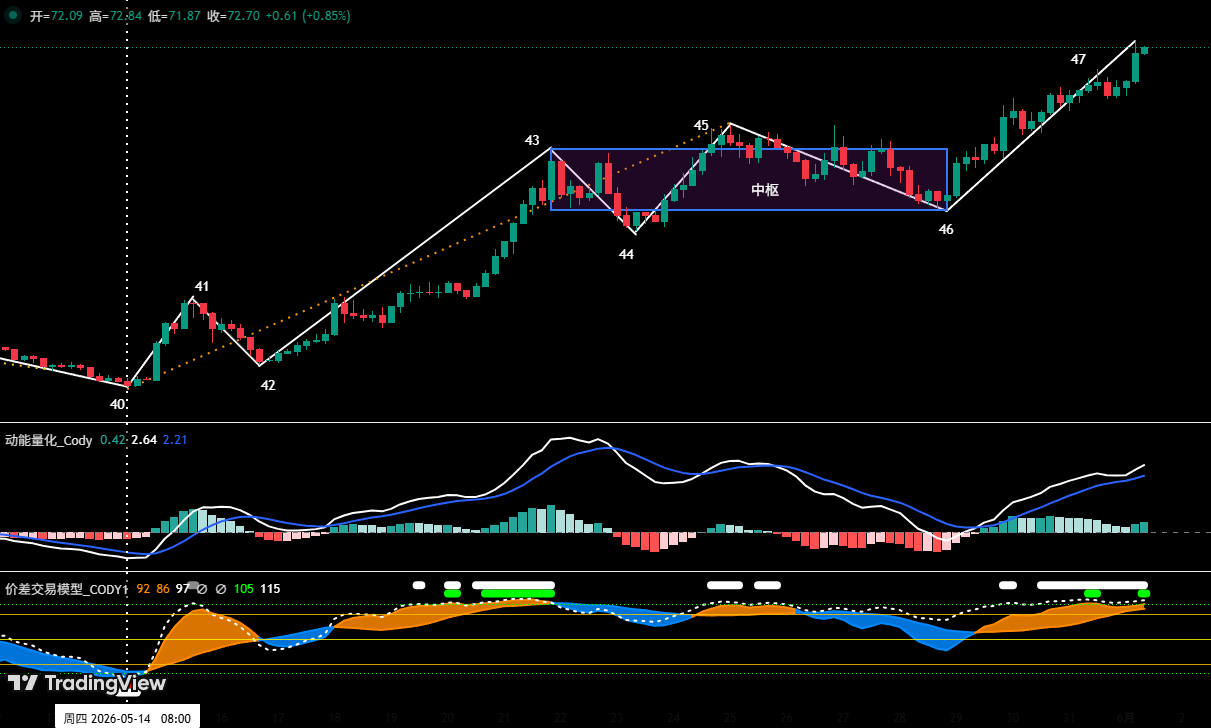
Figure 4
1. As shown in (Figure 4), on the 4-hour timeframe, since the low of $38.14 on May 14, HYPE has clearly constructed a seven-segment structure (i.e., 40-41 to 46-47) including a "rising pivot". Segments 43-44, 44-45, and 45-46 overlap with each other, forming the "rising pivot".
2. Last week's review warned: Due to the momentum top divergence state at "Endpoint 45", coupled with the top warning signal from the "Spread Trading Model", a resonance formed. Therefore, the probability of forming a short-term high here was significant. Market movement confirmed this judgment: the price adjusted from "Endpoint 45" ($64.75) to "Endpoint 46" ($56.30), with a maximum decline of 13.05%.
3. Currently, comparing the pivot exit segment (46-47) with the entry segment (42-43), its upward momentum appears weak, constituting a high probability of potential "momentum divergence".
4. Analysis based on our self-built "Spread Trading Model" shows that "Endpoint 47" has triggered a strong top warning signal (red dot + white dot).
5. In summary, if the price forms a topping signal at "Endpoint 47" while the "momentum divergence" signal remains valid, the probability of this point becoming the phase endpoint of the rally since "Endpoint 40" will significantly increase. Subsequent price action needs to focus on the test results of the key area between $62.5 and $64.57.
IV. HYPE Price Outlook and Short-term Trading Strategies for This Week
1. HYPE Price Trend Outlook for This Week:
This week's core HYPE view:
• Observe whether "momentum divergence" is established when "Endpoint 47" issues a clear topping signal.
• If this phenomenon occurs and the subsequent price effectively breaks below the support area of $62.5 to $64.57, it can be considered that "Endpoint 47" has become the endpoint of the uptrend since the low on May 14.
2. HYPE Short-term Trading Strategies for This Week: (Buy on Support)
This week's HYPE short-term trading should follow the strategy of "buying on dips, avoiding chasing rallies". The core is to observe the test results of the price retracement on the $62.5 to $64.75 area:
Strategy One: Test Long on Support Area Stabilization
If the price retraces to this area, shows signs of stopping the decline and stabilizing, and is combined with bottom signals triggered by both major models, consider a light long position test. The position must be controlled below 30%, with strict stop-loss discipline.
Strategy Two: Support Fails, Transitioning to a Larger Correction
If the price effectively breaks below this area, the short-term correction will upgrade to a larger-scale (e.g., daily timeframe) adjustment, extending its duration and space. The downward target initially looks at the $54 to $56.3 area.
V. Bitcoin Trade Review
1. Short-term Trade Review: (See Table 1)
We strictly followed the operational plan, based on trading signals issued by our self-built "Spread Trading Model" and "Momentum Quantitative Model", and completed one short-term (short) trade last week, achieving a profit of 5.07%.
1. Bitcoin Short-term Trade Details Summary: (Leverage*1x)
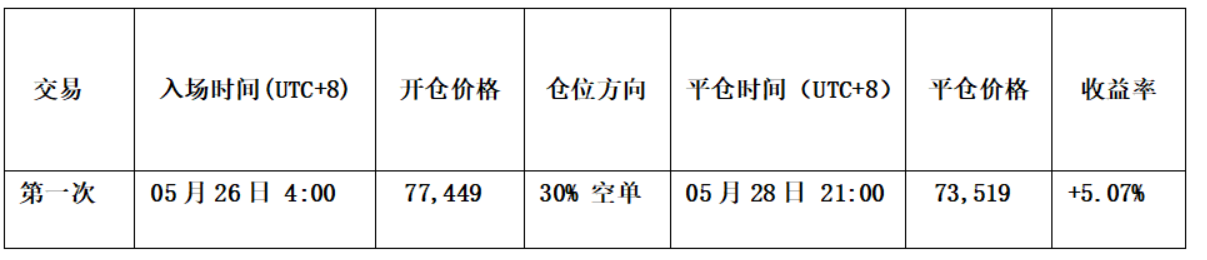
Table 1
2. Short-term Trade Review: (See Figure 5)
• Entry Strategy:
a. When the price rebounded near $78,000 and showed resistance signals, the K-line formed a 'top reversal' bearish pattern;
b. The "Spread Trading Model" triggered a top warning signal (white dot);
c. The "Momentum Quantitative Model" issued a momentum top divergence signal.
Therefore, we established a 30% short position at $77,449.
• Exit Strategy:
a. When the price fell near $73,000 and issued a stopping decline signal, the K-line formed a 'bottom reversal' pattern;
b. The "Spread Trading Model" triggered a strong bottom warning signal (red dot + white dot), forming a bottom resonance signal with the "Momentum Quantitative Model".
Therefore, we closed all positions near $73,519.
• Summary: This trade successfully achieved a profit of approximately 5.07%.
BTC_60-minute K-Line Chart: (Momentum Quantitative Model + Spread Trading Model)
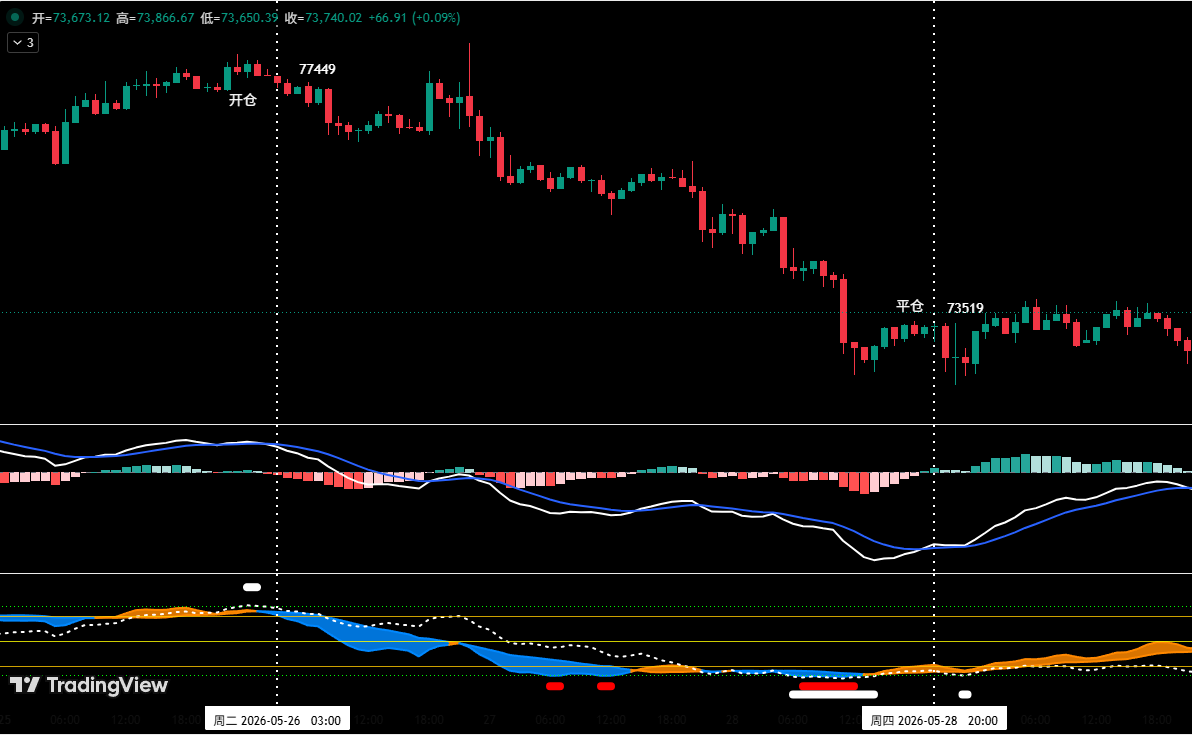
Figure 5 (Short-term Trade Illustration)
VI. Special Notes:
1. When opening a position: Immediately set the initial stop-loss level.
2. When profit reaches 1%: Move the stop-loss to the entry cost price (breakeven point) to ensure capital safety.
3. When profit reaches 2%: Move the stop-loss to the 1% profit level.
4. Continuous tracking: Thereafter, for every additional 1% profit the price makes, move the stop-loss up by 1% accordingly, dynamically protecting and locking in profits.
Financial markets change rapidly; all market analysis and trading strategies require dynamic adjustment. All views, analytical models, and operational strategies mentioned in this article are derived from personal technical analysis, intended solely for personal trading log purposes, and do not constitute any investment advice or operational basis. The market involves risks; investment requires caution. Please do not make decisions based on this.