Assessing Bitcoin’s sideways drift as dormant $290M BTC whale reloads

ambcryptoPublished on 2026-07-19Last updated on 2026-07-19

Abstract

Bitcoin continued trading sideways between $63,000 and $64,000, with trading volume declining 46%. A dormant whale, inactive for a year, returned to acquire 1,001 BTC worth $64 million, suggesting renewed confidence. However, broader whale activity remains subdued, as indicated by the sideways Exchange Whale Ratio around 0.3. Spot Netflow stayed negative for four days, showing net outflows from exchanges, which may reduce immediate selling pressure but doesn't confirm accumulation. Technical indicators like the ADX and -DI point to stronger downward pressure, with downside risk elevated. If whale demand stays weak, BTC could retest support near $62,697. To avoid further decline, it must hold above $63,906 and break through $64,000.

Bitcoin continued trading sideways between $63,000 and $64,000. At press time, BTC traded around $63,923 after gaining 1.82% over 24 hours.

However, Trading Volume fell 46%, reflecting weaker market participation.

Why did this Bitcoin whale return?

As Bitcoin [BTC] traded sideways, one long-term holder returned to the market after a year of inactivity.

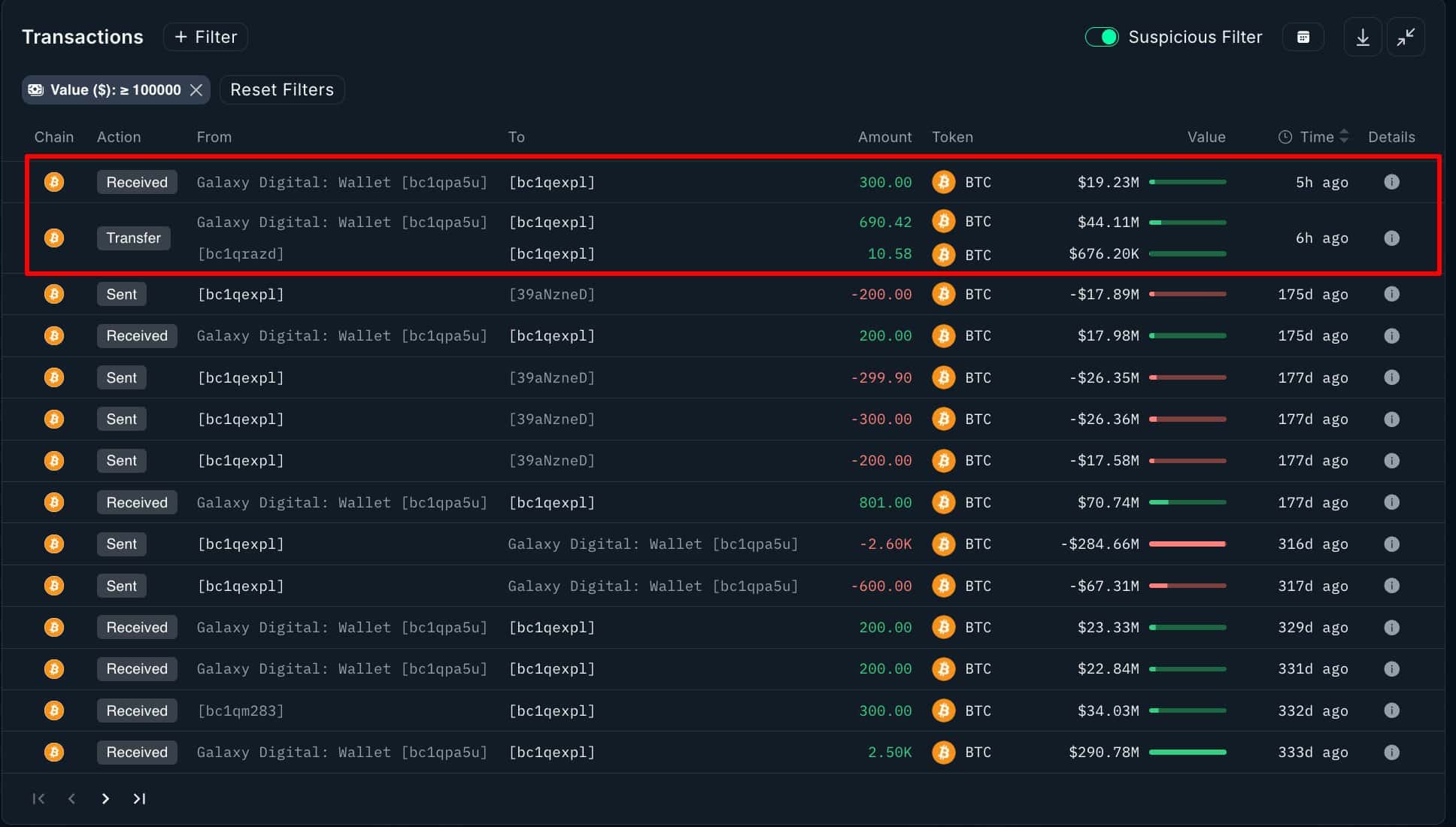
According to Onchain Lens, the whale wallet received another 1,001 BTC worth approximately $64 million. A year earlier, the whale acquired $290 million worth of Bitcoin through Galaxy Digital.

Its return during weaker market conditions suggested renewed confidence, although the transfer alone did not confirm broader whale demand.
Source: Onchain Lens

Are other whales buying BTC?

Interestingly, even though this whale returned, other whales have scaled back significantly and are now sitting on the sidelines.

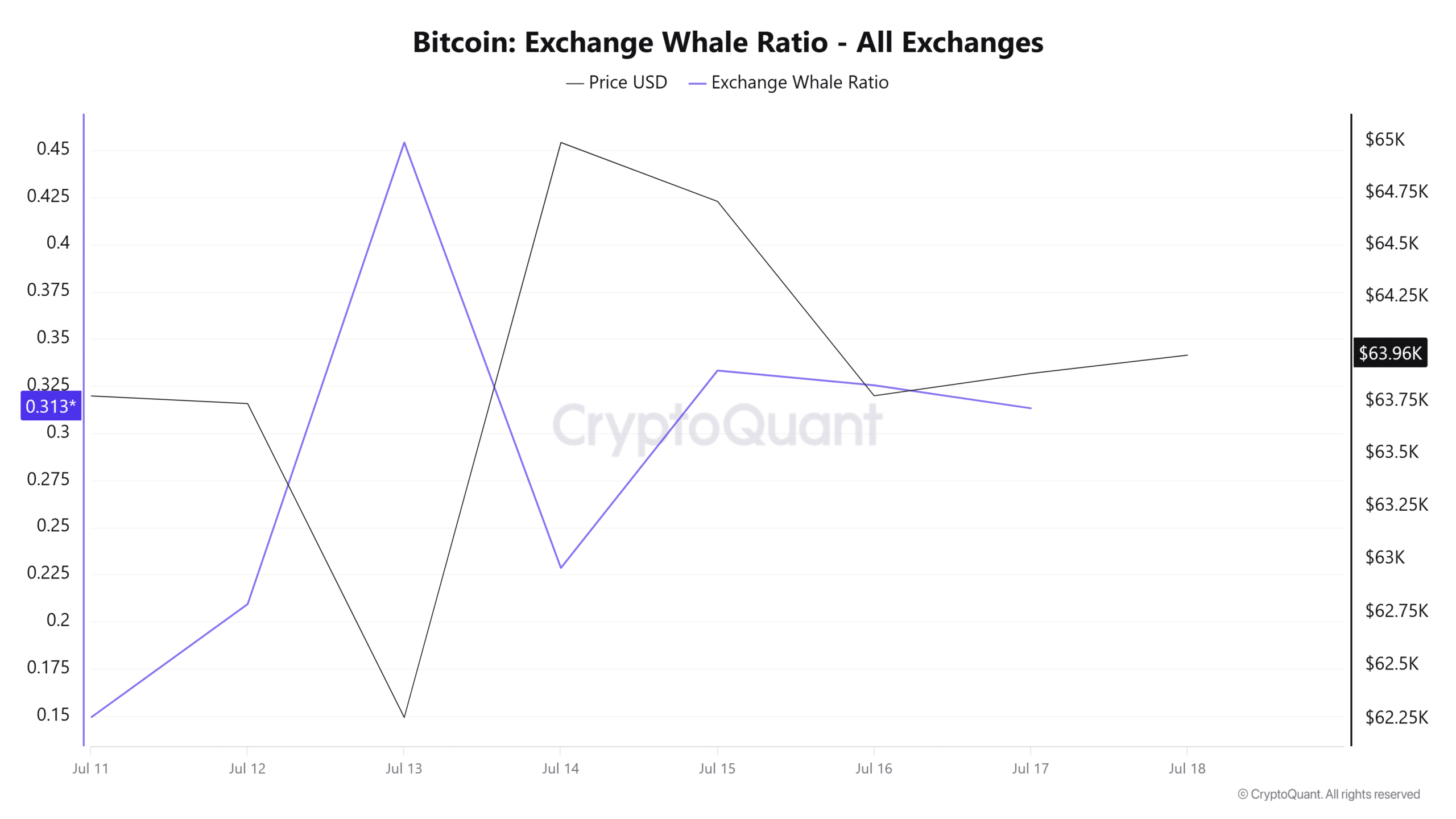
Looking at the Exchange Whale Ratio, this metric has continued to move sideways, holding around 0.3 over the past three days. In the short term, this metric indicates that whales have reduced buying and selling.
Source: CryptoQuant

The ratio slipped from 0.33 to 0.31. This meant the largest inflows accounted for a slightly smaller share of total deposits.

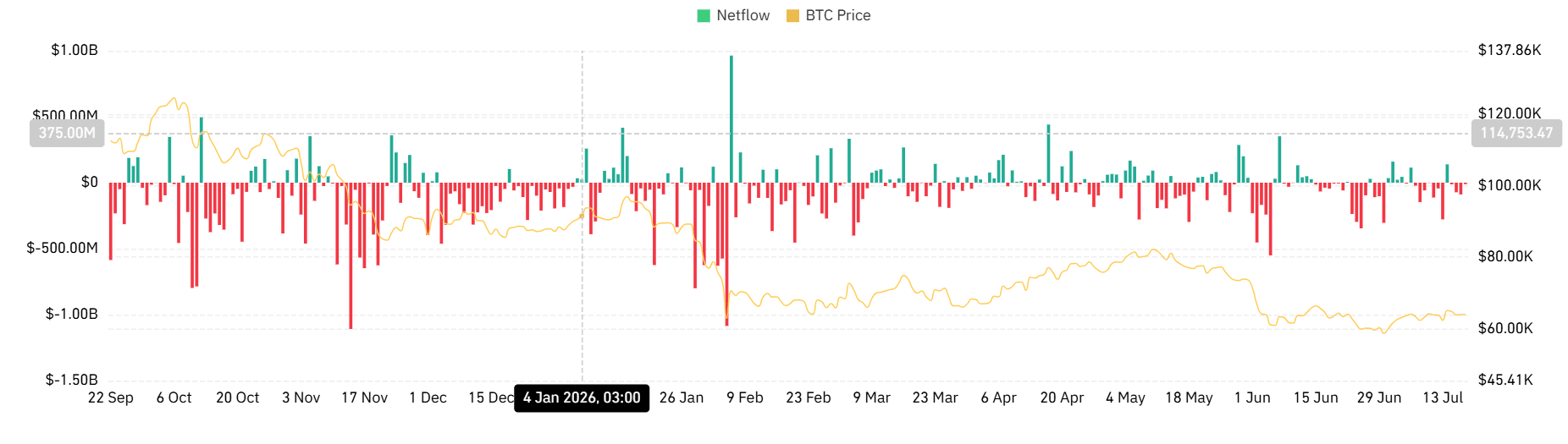
By contrast, Spot Netflow remained negative for four consecutive days, showing that overall exchange outflows exceeded inflows.
Source: CoinGlass

Spot Netflow stood near -$10.86 million at press time. Continued outflows could reduce immediate selling pressure, but they did not confirm whale accumulation.

What’s next for BTC?

Although some whales still remain active in the market, demand remains weak. The group’s buying activity currently remains below par.

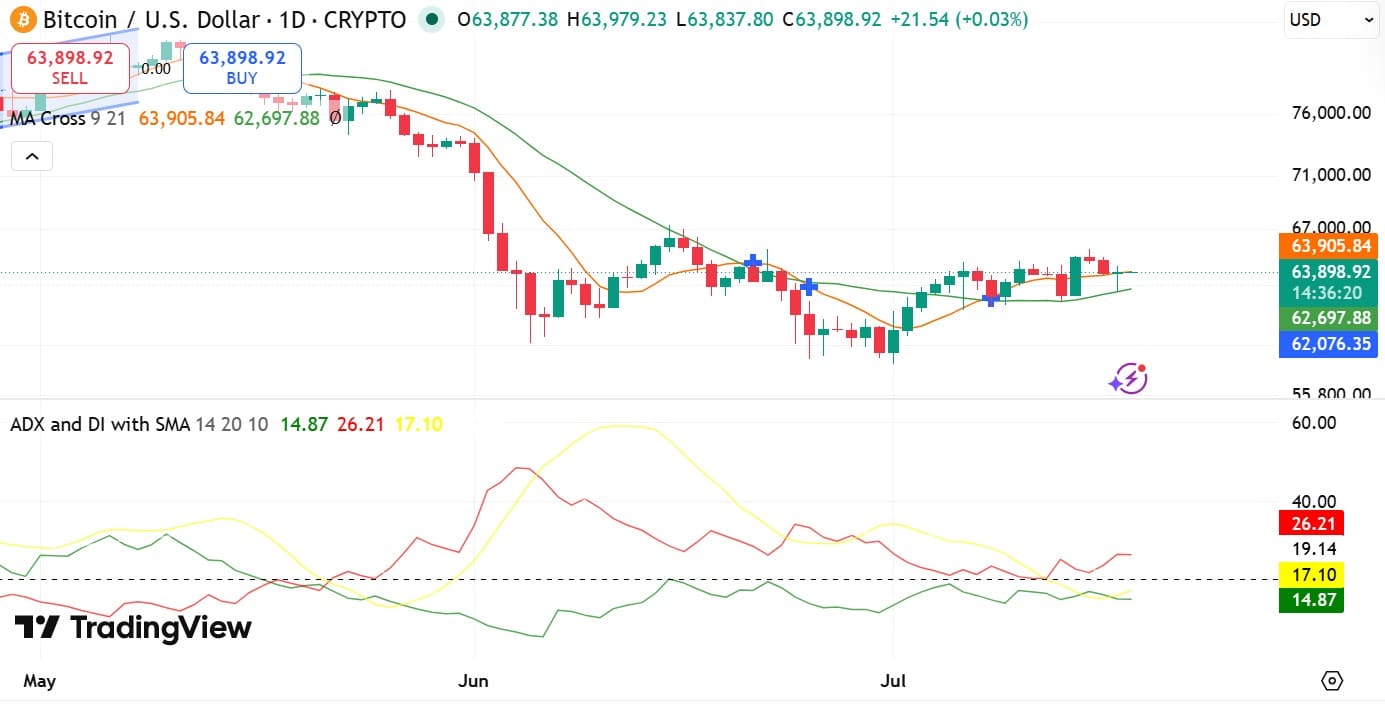
As a result, the downside risk remains elevated. A look at the ADX with the SMA indicator shows the positive index has continued to drop. The +DI fell to 14, while the negative index rose to 26 and the ADX rose to 17.
Source: TradingView

ADX and -DI rising together suggested that the downward pressure is stronger. Thus, Bitcoin is most likely to see some losses on the price charts.

If whale demand remains weak, as it currently is, BTC is likely to drop below $63k again, towards $62,697, where the Long MA currently sits. To avoid further slippage, BTC must hold above $ 63,906 and flip $64k.


Final Summary

  • A dormant whale received 1,001 BTC worth $64 million after one year of inactivity.
  • Negative Spot Netflow reduced immediate supply, but broader demand and price momentum remained weak.


Trending Cryptos

Related Questions

QWhat recent action did a dormant Bitcoin whale take, and what does it suggest?

AA dormant whale wallet received 1,001 BTC (worth approximately $64 million) after a year of inactivity. This return during weaker market conditions suggests renewed confidence from that specific holder, although it does not confirm broader whale demand in the market.

QAccording to the Exchange Whale Ratio, what is the current behavior of whales in the market?

AThe Exchange Whale Ratio has been moving sideways around 0.3 over the past three days, indicating that whales have significantly scaled back their activity and are currently reducing both buying and selling, sitting on the sidelines.

QWhat does the negative Spot Netflow indicate about Bitcoin exchange activity?

ASpot Netflow remained negative for four consecutive days, standing near -$10.86 million at press time. This indicates that overall exchange outflows (withdrawals) exceeded inflows (deposits), which could reduce immediate selling pressure but does not confirm active whale accumulation.

QBased on the ADX and DI indicators, what is the current market momentum for Bitcoin?

AThe rising ADX (to 17) and rising negative index (-DI to 26), coupled with a falling positive index (+DI to 14), suggest that downward price pressure is stronger. This indicates an increased likelihood of Bitcoin seeing losses on the price charts.

QWhat are the potential price levels mentioned for Bitcoin's near-term movement?

AIf whale demand remains weak, BTC is likely to drop below $63k again, potentially towards the Long MA level at $62,697. To avoid further slippage, BTC must hold above $63,906 and flip the $64,000 resistance level.

Related Reads

Intern, Earning 120,000 Monthly

An article titled "Intern, Monthly Income of 120,000 RMB" discusses the intense competition for top AI talent in China, highlighted by a viral social media post. A Tsinghua University student from the prestigious Yao Class reportedly received a staggering internship offer from the AI company DeepSeek with a daily salary of 5,500 RMB (pre-tax), translating to over 120,000 RMB per month. This case exemplifies the fierce "talent war" raging among major tech firms. Companies like DeepSeek, Huawei, Tencent, and ByteDance are aggressively recruiting interns and fresh graduates with unprecedented compensation packages, high conversion rates to full-time positions, and even company stock options for top performers like those in Moonshot AI's "Time Travel Plan." The trend shows recruitment starting earlier, even targeting high school students. The driving force is the belief that a few exceptional individuals can be pivotal in the AI race. Salaries for elite AI researchers have skyrocketed from around one million RMB annually to tens of millions. Young, highly-educated talents from top schools, seen as adaptable "AI Natives," are being placed at the forefront of core projects. Examples include Tencent appointing a 27-year-old former OpenAI researcher as its Chief AI Scientist. In essence, the competition is shifting from just models and computing power to a battle for talent density. A new generation of young experts is rapidly rising to central roles, poised to reshape the future AI landscape.

marsbit4h ago

Intern, Earning 120,000 Monthly

marsbit4h ago

Trading

Spot

Hot Articles

Discussions

Welcome to the HTX Community. Here, you can stay informed about the latest platform developments and gain access to professional market insights. Users' opinions on the price of S (S) are presented below.

活动图片