Arthur Hayes:孤立主义兴起,东西方世界与文明正在加速分裂

Arthur HayesPublished on 2023-01-09Last updated on 2023-01-09

Abstract

这篇文章我将探讨在西方金融例外主义的另一个案例:SBF/FTX,对世界其他地区的抢劫之后,世界对西方的看法可能开始转变。

注:SBF 回应这篇文章,表示:“我显然强烈反对这里的许多与 FTX 相关的特定表达,但是我在很大程度上同意你更高层次的观点。这是我一次又一次听到的东西的变体。我想你可能会对我的观点感到有点惊讶”。

很明显,世界正在分裂成两大阵营:西方和欧亚大陆。西方是美国、西欧和他们的联盟。欧亚大陆是中国和俄罗斯的混合体,中国是主要伙伴,俄罗斯是次要伙伴。乌克兰战争是这种竞争的实际表现,因为它已迅速成为西方与欧亚大陆之间的代理人战争。美国和中国之间的半导体芯片/贸易战是这场战争非致命/经济方面的另一个例子。

在西方和欧亚大陆中间,有一些不结盟国家,它们拥有双方都需要的东西。这些国家有年轻的生产性工人,他们能以负担得起的工资生产东西。这些国家拥有碳氢化合物、钴、锂、镍、铜等关键资源。这些材料将为人类下一阶段的经济和技术进步提供动力。这些国家可以选择与谁进行贸易。这种选择是基于情绪(即他们感觉自己在双边贸易关系中受到的待遇)和实际的经济贸易条件。经济贸易条件既包括支付的金额,也包括接受的货币(如美元、人民币、黄金等)。

这篇文章我将探讨在西方金融例外主义的另一个案例:SBF/FTX,在西方金融和媒体机构的帮助和不知不觉的教唆下,对世界其他地区(ROW)的抢劫之后,世界对西方的看法可能开始转变。我说 ROW 是因为大多数受影响的个人和实体既不是美国人也不是西欧人。全球的东方和南方才是被这种欺诈行为伤害最深的地方。我认为,这些国家之所以再次让狐狸进入鸡舍,是由于几个世纪以来的社会条件造成的错位的信任,这在历史上导致像 SBF 这样的小 “白人” 男孩在众所周知的桌子上自动获得了一个席位,没有任何问题。

这一点很重要,因为如果我们要驾驭未来几十年的金融市场,我们就必须分析,就投资者的回报而言,是消费东西的西方国家,还是生产东西的非西方国家,将取得胜利。我和其他许多人认为,西方国家以牺牲西方国家的不公平贸易为代价,尽情地大吃大喝的长期趋势将慢慢逆转。世界其他地区挑战西方的信心不断增强,其动力来自于对不公平待遇(包括认为的和实际的)的历史感。我相信 FTX 事件是一个完美的例子,说明世界其他地区对这种行为感到不满,这可能会促使他们进一步站出来反对西方。这意味着,当生产者选择将贸易条件调整为对其有利时,将资金分配给各种工具和企业的投资者将获得高于平均水平的回报。

西方和欧亚的博弈

欧亚大陆上的人口占世界人口的 70%,直到最近,它还是人类文明的火车头。

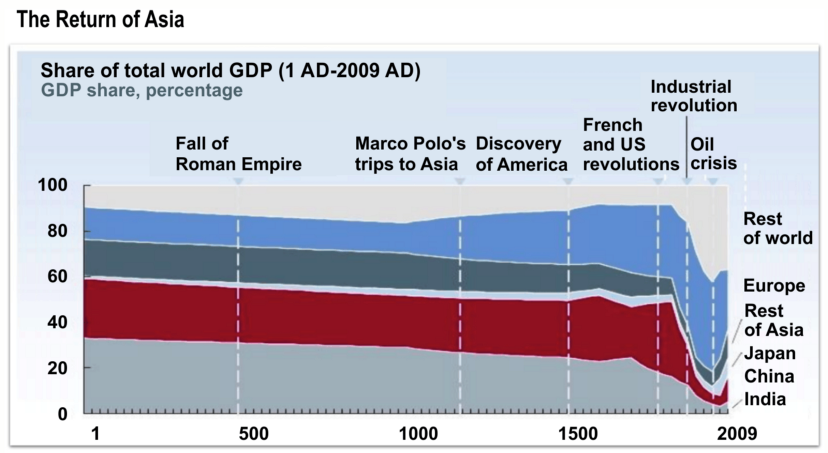
直到最近,印度和中国占了世界 GDP 的 50% 至 60%。直到 16 世纪,西欧人(随后是美国人)才开始取代他们主要是亚洲的竞争对手,并创造了可敬的帝国,如大英帝国和美洲帝国。

这些"白人"数量不多,但他们用强大的政治组织和技术进步来弥补。在过去的几个世纪里,西方战胜东方的原因错综复杂,是历史学家们热议的话题,每个人都有一套理论。但是,不管你对西方如何运用其优势从其常年处于劣势的地位上升的具体看法如何,无可争议的是,西方在其人类主体(即其使用者)的数量和它带给世界的自然资源方面一直是不足的。(欧亚大陆包含了世界上大部分的人力和关键的自然资源,最重要的是,它的碳氢化合物)。

为了克服本土劳动力和资源的缺乏,西方诉诸于奴隶制和对其他有色人种世界的殖民征服。

成千上万的军队,乘船远离他们的家园,能够征服以亿计的人口。一开始,压倒性的技术力量发挥了作用。但随着基础科学技术的信息与教育一起传播,用纯粹的力量来制服当地人变得更加困难。意识到他们的铁腕统治正在下滑,西方国家适应了这种情况,合成了一种社会等级制度,通过购买当地有色人种精英的忠诚来代表他们。

确保你的人民努力工作,却得到远低于他们作为帝国公民所能得到的工资。保护你的集团和外国实业家的财产权,他们拥有所有的农田、工厂和自然资源。向西方廉价出口所有必需的矿物和食品,反过来进口更昂贵的制成品。如果你的国家因为颠倒的贸易条件(例如,你的进口大于出口)而发现自己处于经常账户赤字中,那么你可以用帝国的储备货币从西方银行借款。当你无法偿还外债而不可避免地发生金融危机时,你不敢违约。相反,把更多的国家生产资源卖给外国人,以“偿还”贷款。

现在你可以沐浴在西方的崇拜和荣耀中,成为一个开明的富家绅士,在帝国的富裕文化热点地区闲逛,炫耀你从你的国家人民身上获得的财富。

当你们中的一些人接受了一点教育并抗议这种不平衡的经济协议时,给他们贴上各种标签。你和那些在你的长统靴下辛苦工作的工人们在上述秩序的建设中都没有发言权,也没有从“自由”民主的西方社会中获益。你只是碰巧有“正确”的姓氏,或者属于“正确”的宗教派别,因此你继承了你不劳而获的权力。

这个公式运作得非常好,使西方国家在很大程度上富裕起来,以至于精英们忘记了宇宙是不断变化的。由于二战后的傲慢和(或)无能,西方政治精英犯了两个巨大的错误,在这位空谈历史学家看来,这让欧亚大陆在过去 80 年里获得了重组和恢复实力所需的喘息空间。

他们把分歧放在一边,集中精力打败日本帝国。战后,他们又开始了彼此之间的战斗。

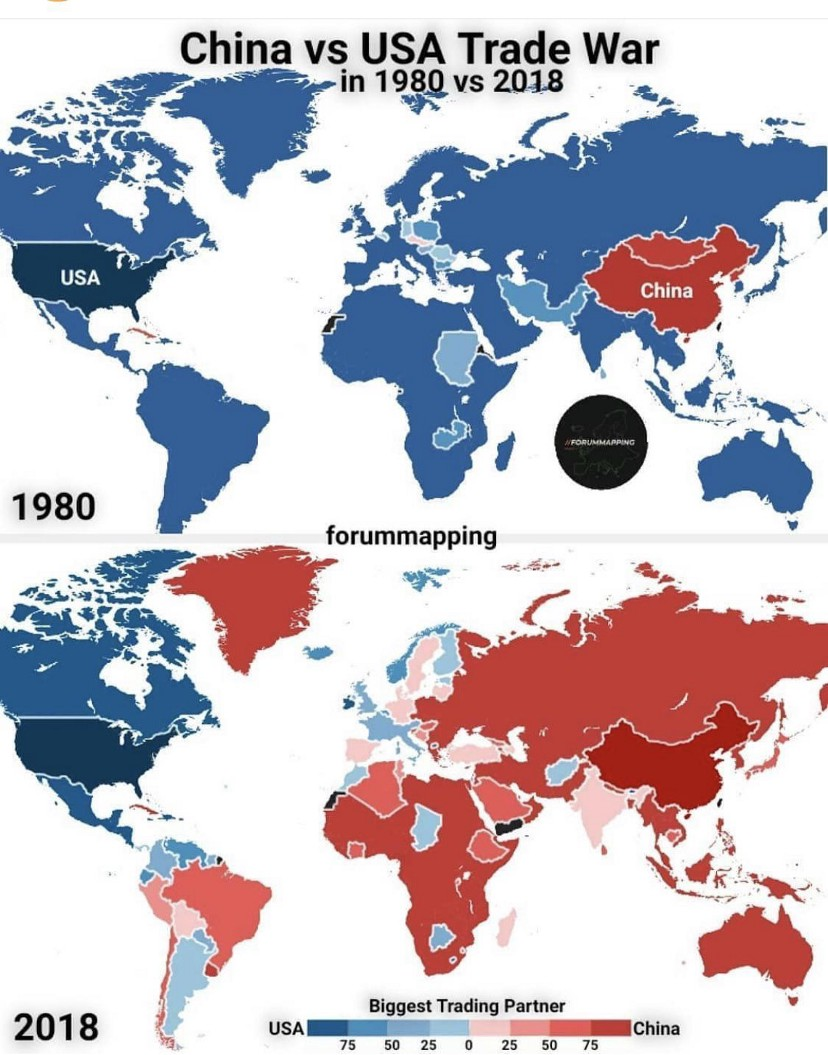
下图显示了中国是如何在创纪录的时间内成功地取代美国成为世界上最大的贸易伙伴。

第二个重大错误是,在 20 世纪 90 年代初苏联解体后,俄罗斯未能融入西方世界。无论是傲慢还是代表美国精英政治家的另一轮孤立主义,一个重大机会再次被浪费了。相反,西方允许一帮俄罗斯机会主义者以极低的价格控制生产性国有资产,并将所有财富没收给骑士桥。

然后,他出现了,致力于纠正他所认为的历史错误,重建昔日强大的俄罗斯母亲。这是一种观点——我相信许多读者认为他只是一个嗜血的自大狂。但你对他的看法并不重要。在他看来,他关心的是俄罗斯的进步。现在,他已经将俄罗斯卷入了与西方在乌克兰的最新代理人战争,俄罗斯唯一可以转向的方向就是东南部。西方没收了俄罗斯在西方金融机构中的主权财富,并拒绝与俄罗斯进行任何交易。

由于 20 世纪 90 年代开始西方对俄罗斯的疏远,俄罗斯现在是中国坚定的经济盟友。鉴于最近北溪管道遭到破坏,俄罗斯将尽一切努力建设管道基础设施,将俄罗斯的能源与中国的制造业基地连接起来。欧亚大陆现在将拥有全球最便宜的能源,为全球最大的制造商提供动力。德国和日本应该为他们的太空靴而颤抖。

帝国代理人

在资源共享方面,世界货币体系极其重要。货币只是把地球的势能转化成一种可以交易的形式。每一种形式的货币都代表着对能源的主张。如果你控制了货币体系,你就控制了能源。如果你控制了能源,你就控制了人类文明的进程。

西方金融体系支撑着世界储备货币——美元。全球大部分能源和商品贸易都是以美元计价的。这意味着西方可以随意印刷能源。显然,如果他们滥用这种特权,一种新的货币和金融体系将会出现,以挑战腐败的旧制度。比特币和加密货币是对以美元为基础的西方金融体系肆意挥霍的自然反应。

TradFi 系统以信任为基础。你信任一些集中化的西方金融机构来处理交易,履行合同,并总体上保持系统的正常运行。作为回报,我们人民允许他们从钱中赚钱。银行家不做实际的有形工作就发财了。我不是在诋毁我以前做过的金融家的职业,但这就是残酷的事实——我们不赚钱。

人类的政治组织,也被称为政府,是复杂的适应系统,随着时间的推移而进化。几个世纪前的某个会议上,一群老家伙制定了西方如何在全球投射并保持其金融实力的剧本。它只是随着时间的推移而自然地演变成一个从自我保护的角度来看有意义的系统。

因此,同样的,如果你是一个复杂的政治有机体,面临着一种叫做比特币(有史以来最硬核、最纯粹的能源货币形式)的反动技术货币的威胁,你难道不想让你自己的一个人站在采用比特币的前沿,把它纳入你的影响范围吗?

现在,我想快速后退一步,澄清一下,我不支持一些阴谋论,这些阴谋论认为西方金融光明会把 SBF 作为一个工厂来掌权,试图控制加密资本市场。我想说的是,TradFi 系统将无意识地试图迎合它认为将继续支持法权主导的金融秩序霸权的个人和公司。

SBF 非常清楚地表明,经营中心化加密业务是在最短时间内赚最多钱的最佳方式,这样他就可以为了人类的改善而把所有钱都捐出去。SBF 将自己商业成功的战利品托付给的组织是有效利他主义(EA)。我有朋友现在或曾经在那儿工作,他们都是好人。但是,我很难相信,作为一个有资金可以分配给慈善事业的人,我应该把所有的代理权交给一群来自西方精英大学的受过高等教育的人。它们并不代表全人类的利益——没有任何组织能代表全人类的利益。但他们傲慢地认为,只有他们才能预知保护和拯救人类的必要方法,这令人作呕。

用 SBF 自己的话说就是:

如果你真的想要最大化你的影响力,那么在什么时候你的边际回报会开始下降?好吧,说到做好事,没有这样的说法:越多的善就是越多的善。这并不是说你做了什么好事,所以好不好已经不重要了……这意味着你应该对你正在做的事情非常积极,真正努力去打出本垒打,而不仅仅是产生一些影响,因为好处绝对是巨大的。

举一个轻率的例子,以有效利他主义提出的想法为例,即我们应该如何改变我们的饮食,尽量减少我们吃的动物蛋白的数量,以减少我们的碳足迹。他们凭什么决定地球上每个人的最佳饮食?如果你想吃虫子,那就去吃吧。如果他们愿意,每个人都应该能够体验到那种崇高的快乐,我凭什么告诉他们不这样呢?如果你认为只有你(或你所属的组织)知道什么是对社会最好的,并且应该有唯一的权利来指导贫穷的未洗群众的正确行为,Fxxk。

当某些 TradFi 的人通过小道消息听说 SBF 对加密精神没有真正的兴趣,只是想支持有效利他主义,一个坚定地延续人类当前权力金字塔现状的组织,他们知道 SBF 是他们的伙伴。他是一个在麻省理工学院接受教育的年轻白人男孩,这一点也有帮助。他检查了所有标准的西方金融机构。如果 SBF 应该领导一个新的技术驱动的货币和金融系统的发展,那么它符合流行的叙述,他应该是一个年轻的白人男性,去了“正确的”西方 STEM 重点大学。如果他是高盛某个过时的前董事总经理,全球许多人都会对这个人除了延续西方金融资本主义主导地位之外的任何暗示翻白眼。

西方 TradFi 系统的每一个触手都支持 SBF 在全球扩张。这样做符合他们的利益。对 SBF 究竟如何经营业务提出太多问题不符合他们的利益。保留似是而非的推诿是可取的做法。因此,该系统的走狗没有彻底审查 SBF,这对他们是不利的。支持我们现在所知的人类历史上最大的金融砸抢诈骗案之一,不符合西方金融体系的利益。

习惯于信任 TradFi 系统代理的平民正在经历一个“操蛋”时刻。TradFi 系统编造了一系列刻板印象,欺骗他们的大脑,让他们认为 SBF 和 FTX 是可信的。作为西方 TradFi 系统的守门人,恰当地审查那些被他们吹捧为公会持证成员的人是建制派的工作。这些人从小就被告知要拥抱变化和新技术。他们把自己的信托和资金投入到 FTX,一个被认为是西方金融体系的支柱,建立了一个新的金融体系,然后噗的一声,这个小男孩拿走了他们的钱,这样他就可以弥补他女朋友经营的对冲基金的损失,他的女朋友承认她不擅长数学。所以,人们的自然反应一直是一个普遍的:“搞什么鬼?!”

现在,我们人民将在西方的所在地纽约的联邦法庭上观看对 SBF 的公开审判。无论结果如何,这项试验不会影响恢复失去的 FTX 客户资金。忽略这些枝节,专注于如何调整你的投资组合以适应未来。未来属于欧亚大陆,过去属于西方的特殊主义。让我们来看看我的理论,这意味着什么,接下来会发生什么。

交易合作伙伴的变换

任何主权国家使用美元来为其出口产品定价并购买你的进口产品,这一事实本身就意味着他们在其境内固有地拥有西方金融体系。许多国家愿意这样做是可以理解的——当全世界在全球贸易中使用一种货币时,在商品交换的成本和速度方面是有好处的。然而,当支持全球储备货币的体系向行业领袖抛出骗子,并说“相信他们,没关系”时,人们对上述金融基础设施的信任往往会减弱。

今天,欧亚大陆(由中国领导)有一个他们希望提供给世界不结盟国家的替代金融体系。由于全球南方受害国的不结盟贸易伙伴可以求助于另一个现成的系统,这一事件有可能对这些国家的贸易方式和贸易对象产生相当大的影响。不结盟国家不在西方轨道上,也不在欧亚大陆轨道上。这些国家将与双方进行贸易,取决于哪一方提供更好的交易。极其重要的不结盟国家有印度、印度尼西亚和刚果民主共和国。这些国家之所以重要,是因为它们拥有数量庞大且不断增长的年轻生产力劳动者,以及(或)未来“绿色”经济所需的关键自然资源。印度是世界上最大的国家,受过教育的年轻人口不断增长。印尼是全球第四大人口大国,受过教育的年轻人口也在不断增长。印尼还拥有大量铝土矿等关键资源。刚果民主共和国是世界上最大的钴生产国,钴是各种先进技术所需的关键矿物。这样的例子不胜枚举。

美国前总统特朗普可能会给这些国家和其他不结盟国家贴上“粪坑国家”的标签,但请放心——这些粪坑里埋的是技术进步的种子,而不是人类粪便。现在,这些不结盟国家可以选择他们的劳动力和商品所使用的货币,以及谁能得到什么。全球缺乏价格合理的年轻生产性工人和自然资源。(题外话:这就是为什么通胀将继续存在,不管央行官员们希望什么是真的。)

问题是,这些不结盟国家是否会像它们的前辈那样,出口原材料,进口昂贵的制成品,从而损害自己的经济利益?或者,他们会试图通过要求贸易伙伴对他们进行投资来提高水平,从而允许他们在国内生产中间产品和制成品,并以更高的价格将这些制成品出口到世界市场?我的预测是后者——从2023年开始,印尼将禁止许多关键资源的出口,并要求企业投资建设设施,以出口这些资源的中级高价值版本。我预计其他国家也会采取类似的政策。

这些国家最大的贸易对手是使用人民币的中国,它们还会继续用美元进行贸易定价吗?这些国家会继续给予西方金融机构优惠地位吗?当这些机构和运营它们的人一次又一次地搞砸它们时,就像刚刚发生的 SBF 和 FTX 一样?(为此,《纽约杂志》发表了一篇非常悲伤和辛酸的文章,讲述了尼日利亚普通民众如何将他们微薄的储蓄托付给 SBF 的骗局。)

西方金融体系以同样的方式提供同样的东西,但中国有不同的信息。中国不提供“你支持我们还是反对我们”的外交政策。相反,中国希望参与他们所认为的公平的资金资源交易,而不涉及政治问题。不管你是否相信这些言论,这与西方帝国主义者在枪口下强制执行贸易条件的各种历史例子形成了鲜明对比——他们的暴力胁迫反过来确保了某些西方货币继续被用于国际出口定价。非洲金融共同体法郎就是一个例子,它由法国发行和管理,被许多西非国家使用。

在不久的将来,我们就会知道我的理论和观点是否正确。然而,那些沉迷于绝对正确的人,却错过了相对正确所能带来的经济回报。欧亚大陆——以及全球南部地区——的起点都是历史上较低的(见上面第一张图表,描述了每个地区在全球 GDP 中所占的历史份额)。美国在全球 GDP 中所占份额的下降仅仅几个百分点就可能意味着某些“粪坑”国家所占份额的翻倍或更多。作为投资者,我们希望能在低基数上经历快速上涨,而不是在标普 500 指数近期表现弱于新兴市场和通胀的情况下,通过做多标普 500 指数而死。

正如我前面提到的,一个资源丰富的国家决定与西方或中国进行更多贸易的程度,是积极或消极情绪的结合,以及谁愿意支付适当的价格。在今天的形势下,随着不结盟国家获得更多的贸易机会,情感这块比以往任何时候都更加重要。如果一个国家在历史上认为他们在西方世界经济的殖民主义和新殖民主义结构中受到了不公平的待遇,并且受到了西方媒体和金融机构的支持刚刚以一些新奇的科技东西为幌子偷了你们人民的钱,你可能会被激怒到涉足一个以人民币为基础的金融体系,这个金融体系实际上有商品(俄罗斯)、黄金(俄罗斯和中国拥有全球最大的黄金储备)、制成品(中国),而且没有殖民历史。

这并不是说美元将在未来 12 个月内消亡。但就边际而言,这个由中俄坚如磐石的联盟推动的欧亚新贵的相对重要性,可能会轻而易举地在经济上加分。作为投资者,我们总是乐于按下“简单”按钮。

未来

让我们快速浏览一些图表内容,说明全球南方有机会从目前的低基数中胜出。

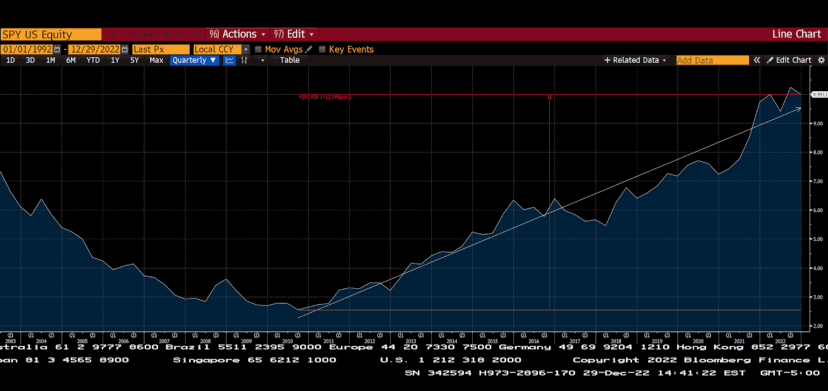
SPY美国(标普500ETF)/EEM美国(MSCI新兴市场)的比率

上图显示了 SPY/EEM ETF 的比例。正如你所看到的,在过去十年里,美国股市的表现比新兴市场高出近 300%。过去十年是金融化、印钞票的高峰期,也是发达市场通货膨胀的低谷期。这种组合在未来几十年内不会再出现。

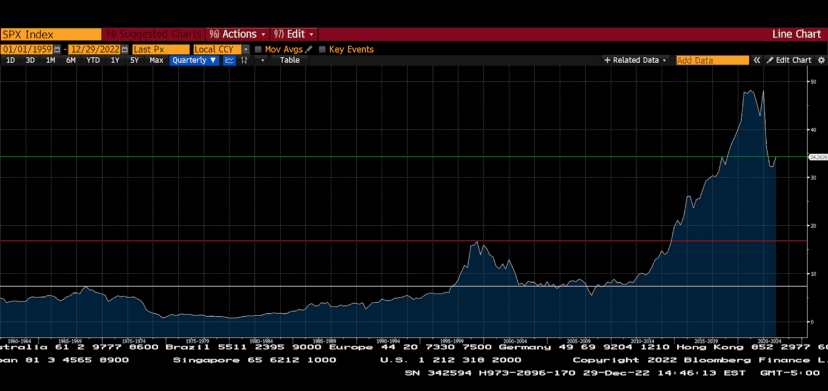
标准普尔 500 指数/Bloomberg 商品指数的比率

上图清楚地表明,在过去十年里,西方是如何以彭博商品指数历史上最大的幅度跑赢大宗商品的。回归长期趋势线意味着,与拥有年轻工人和关键自然资源投入的全球东部和南部地区相比,金融化的西方国家的表现将大幅落后。

从广义指数来看,我不希望与标准普尔 500 指数有任何关系,可能也不希望与纳斯达克 100 指数有任何关系。当然,个股可能表现不错,但作为一个代表西方所能提供的最佳公司的指数,我认为它们未来的表现将严重逊于大宗商品和新兴市场。由于西方许多以前的坚定盟友的抵制,这一点尤其正确(参见沙特阿拉伯最近在美国总统拜登的要求下拒绝这样做)。类似的情况也会发生在为西方经济巨人提供廉价关键投入的其他要求方面。某种特定商品总是有足够的、足够高的价格,但以目前过度负债的形式,西方无法支付太高的价格来推动其当前规模的经济。

投资大宗商品并不像从股票经纪人那里挑选一只 ETF 然后按下买入按钮那么简单。你必须理解期货溢价和现货溢价,你必须理解一家公司在某一特定商品从生产到销售的过程中处于什么上游或下游。简而言之,被动地说“我想投资大宗商品”是不够的。真正的工作是需要的。因此,我预计在未来几个月,市场将会寻找一种更简单的方式来表达和交易这一观点,在我的情况下,我将寻求一种理论,即商品 Zhu-per 周期的上涨如何与比特币和其他加密货币价值的上涨或下跌联系在一起。

这将是今年许多文章的主题。在我提出自己的猜测之前,我目前的目标是更好地理解几个潜在结果的理论上的相互作用。在我努力实现这一目标时,我有几个问题:

● 如果通货膨胀在西方粘性很大,因为全球东方和南方拒绝以极低的价格而出售其皇冠上的珠宝,并要求获得其公平的经济份额,那该怎么办?

● 如果通货膨胀持续存在,西方央行是否继续加息以冷却经济并压制需求?或者,中央银行是否印钞票以维持经济增长和充分就业,而不是通过加息来降低通货膨胀?

● 西方的政治家们是否只是向穷人和中产阶级发放优惠券,以便西方的选民不会感受到工资和商品通胀的真正影响,从而导致政府大量借贷以资助这一举措?

● 如果西方政客走这条路,中央银行是印制差额以保持政府债券收益率低,还是坚守岗位,让利率与政府赤字膨胀一起上升?

所有这些子问题导致了两个最重要的问题:

● 名义利率是高而下降,还是低而上升?

● 比特币在名义利率方面的表现是线性的,还是比特币与名义利率的关系是非线性的和古怪的?(也就是说,当美国短期国债利率从 0% 上升到 5% 时,比特币可能会下跌,但如果短期利率从 5% 上升到 10% 时,比特币会上升)。

目前,我们不可能知道这些问题的答案--但我们可以进行思想实验,了解在这些情况下会发生什么,以及政治家、中央银行家和资本分配者可能做出的反应。通过这些思想实验,我们可以构建一个由政府债券、比特币/加密货币和大宗商品组成的投资组合,希望在所有情况下都能实现增长,这是我在 2023 年为自己设定的任务。


Related Reads

Claude Requires ID Verification and Facial Recognition? The Facial Recognition Requirement is an Old Story from Two Months Ago, and "Sharing Data with Police" is a Misinterpretation

Anthropic's updated privacy policy, effective July 8th, has sparked misinterpretations in Chinese social media, primarily concerning new identity verification and data sharing with law enforcement. A detailed comparison reveals these claims are largely unfounded. First, identity verification (including submitting government ID and a live selfie via third-party provider Persona) is not a new July policy. This mechanism was actually implemented in mid-April 2026 for certain high-use or flagged accounts, particularly Claude Max subscribers. The July update merely formally documents this existing practice in the policy text under a new "Verification Data" section. Second, the widespread claim that the new policy lowers the threshold for sharing user data with law enforcement is incorrect. Comparing the new text with the old version (dated September 28, 2025) shows no substantive tightening. While the new policy more clearly structures the conditions for disclosure—including having a "good-faith belief" it's necessary for legal compliance, preventing harm, fraud detection, or enforcing terms—the old policy already allowed Anthropic to disclose data based on its judgment for similar reasons (e.g., protecting safety, preventing fraud, or complying with law). The term "good-faith belief" acts as a limiting standard, not a lowered barrier. A 2025 court case where Anthropic resisted disclosing user data in a copyright lawsuit further demonstrates the complexity of such standards. The policy's actual substantial changes address data flows for Claude's Agent capabilities. New clauses clarify that when users connect third-party services or instruct Claude to perform multi-step tasks (reading files, sending messages), their inputs, outputs, and instructions are shared with those third parties, governed by the third parties' own policies. This update fills a compliance gap for Claude's evolving functionality beyond simple Q&A. Other additions include a "Research Participation Data" section and refined marketing legal bases. Anthropic reaffirms core commitments: not selling user data, keeping Claude ad-free, and allowing users to control if chats are used for model training. Overall, this update is primarily a compliance catch-up to existing product features, not a significant new privacy tightening. The heightened concern stems from conflating April's verification rollout, standard legal clauses, and the genuine new provisions regarding Agent tasks.

marsbit9m ago

Claude Requires ID Verification and Facial Recognition? The Facial Recognition Requirement is an Old Story from Two Months Ago, and "Sharing Data with Police" is a Misinterpretation

marsbit9m ago

The World Cup Has Only Just Begun, But AI Predictions Already Have Models Hailed as 'Godly' and Others Flipping Over

After only a few days of the World Cup, AI models are being widely used for match predictions, with mixed early results. These models analyze details like scores, upsets, red cards, and key players, offering users in prediction markets an extra layer of analysis beyond odds and news. Qwen gained early attention for its remarkably accurate calls on the opening day, correctly predicting Mexico's 2-0 win over South Africa and Korea's 2-1 victory over the Czech Republic, while also highlighting red card risks and match flow. Copilot had its own highlights, accurately forecasting the Mexico 2-0 result, the Korea 2-1 win, and a surprising 1-1 draw between Brazil and Morocco. However, it also misjudged several matches, like predicting a Swiss win that ended in a draw with Qatar and missing Australia's upset over Turkey. ChatGPT provided detailed pre-match analysis and correctly called the Mexico 2-0 score, explaining factors like home-field advantage. Yet, it struggled to anticipate upsets, often siding with the stronger team on paper, as seen in its missed calls for the Australia-Turkey and Japan-Netherlands matches. Social media tests pitted models like Gemini, Grok, and Claude against each other for the same games, revealing different predictive "scripts" even for the same fixture. Overall, while AI models like Qwen and Copilot have shown promising, high-profile successes in early matches, their consistency and ability to predict genuine upsets remain in question. As the tournament progresses, more data will be needed to determine which models offer the most reliable insights for prediction markets.

Odaily星球日报13m ago

The World Cup Has Only Just Begun, But AI Predictions Already Have Models Hailed as 'Godly' and Others Flipping Over

Odaily星球日报13m ago

The Unfinished Tale of Jueying, DaXiao Robotics Swiftly "Raises Funds"

Following a major fundraising round involving several prominent investment institutions, DaXiao Robotics, a company backed by SenseTime, has secured hundreds of millions of US dollars in financing for the first half of 2026. This move signals SenseTime's renewed and substantial bet on "Physical AI" through embodied intelligence, following the relative underperformance of its autonomous driving unit, Jueying. While Jueying achieved mass production partnerships in the smart vehicle sector, it failed to become a pivotal player in the high-level autonomous driving landscape, leading to its gradual independence from SenseTime's core financials. DaXiao Robotics now emerges as SenseTime's next major venture into the physical world. The new funding will focus on developing a "world model" and integrated hardware-software solutions for commercial applications like retail, security, and hospitality. This ambition is significantly more complex and capital-intensive than previous projects. A world model requires understanding spatial relationships, physics, and causality to guide robots in long-term tasks, demanding immense computational resources, data, and engineering. The article highlights several challenges. First, the massive funding, while substantial, may still be strained by the high costs of R&D, data collection, and commercial deployment. Second, SenseTime itself, despite narrowing losses, continues its high-investment growth model and cannot solely bankroll this new, expensive endeavor. Third, DaXiao Robotics, led by SenseTime co-founder Wang Xiaogang, carries the technical heritage and resources of its parent company but also potentially its organizational inertia. It operates in a field increasingly dominated by agile, young technical founders. Ultimately, DaXiao Robotics represents SenseTime's attempt to secure a leading industrial position in embodied intelligence—a goal its Jueying unit did not fully achieve in autonomous driving. The new venture starts with strong capital backing, but faces the critical task of rapidly transitioning from technological narrative to sustainable commercial delivery in an early-stage, costly, and highly competitive arena.

marsbit23m ago

The Unfinished Tale of Jueying, DaXiao Robotics Swiftly "Raises Funds"

marsbit23m ago

Crypto 2029: The Ultimate Forecast for the Four-Year Cycle of the Cryptocurrency Industry

Title: Crypto 2029: The Ultimate Four-Year Cycle Prediction for the Encryption Industry This article outlines a detailed, stage-by-stage prediction for the crypto industry from the present to 2029, focusing on tangible shifts rather than abstract theory. Key predictions include: **2026 Mid-Year:** The market shifts focus from traditional tokens to synthetic perpetual contracts for private company shares (e.g., SpaceX on Hyperliquid), which become primary price discovery tools for pre-IPO assets. Most altcoins languish as the market seeks assets with real underlying value. **2026 Year-End:** The "AI + crypto" narrative fades as the AI industry itself does not require crypto infrastructure, except for prediction markets betting on model performance. Concurrently, a quiet institutional adoption of asset tokenization (e.g., money market funds) begins under new regulations like the CLARITY Act, creating a dual economy. **2027:** Major public blockchain foundations pivot decisively to serve institutional clients with compliance tools and enterprise sales, while quietly building infrastructure for a future wave of accredited retail investors. Three sectors hit growth ceilings: private perpetual contracts (due to legal restrictions on marketing), stablecoins (due to political uncertainty ahead of the 2028 US election), and tokenized assets (due to cautious institutional scaling). **2028:** Speculative trading diminishes as market efficiency drains liquidity. A major liquidation cascade in synthetic perpetual contracts exposes the flaw of lacking a legally enforceable underlying asset. In response, regulations are revised to allow marketing of private security secondary sales to accredited investors. This creates a legal, direct market for private company equity, absorbing much of the demand previously met by synthetic derivatives. **2029:** A new bull market emerges, driven not by tokens but by tradable equity in innovative private companies (biotech, robotics, AI). Tokens without legally enforceable claims to real assets lose all liquidity. Successful blockchains become invisible settlement infrastructure. Stablecoins grow steadily at a policy-capped rate. Speculation becomes a niche. Core Questions Answered: 1. **Token Value:** Determined solely by legally enforceable claims to real-world assets. 2. **Tech Adoption:** Achieved through blockchain-based primary/secondary markets for private equity, not through forcing tokens onto tech firms. 3. **Crypto as Infrastructure:** The transition happens silently; the technology becomes a mundane, unseen utility like traditional settlement systems. The entire thesis hinges on one testable variable: by late 2028, whether accredited retail investors gain legal, direct access to private asset markets. If not, the core premise—that legal frameworks, not technology, are the main bottleneck—fails.

Foresight News31m ago

Crypto 2029: The Ultimate Forecast for the Four-Year Cycle of the Cryptocurrency Industry

Foresight News31m ago

Trading

Spot
Futures

Hot Articles

What is $BITCOIN

DIGITAL GOLD ($BITCOIN): A Comprehensive Analysis Introduction to DIGITAL GOLD ($BITCOIN) DIGITAL GOLD ($BITCOIN) is a blockchain-based project operating on the Solana network, which aims to combine the characteristics of traditional precious metals with the innovation of decentralized technologies. While it shares a name with Bitcoin, often referred to as “digital gold” due to its perception as a store of value, DIGITAL GOLD is a separate token designed to create a unique ecosystem within the Web3 landscape. Its goal is to position itself as a viable alternative digital asset, although specifics regarding its applications and functionalities are still developing. What is DIGITAL GOLD ($BITCOIN)? DIGITAL GOLD ($BITCOIN) is a cryptocurrency token explicitly designed for use on the Solana blockchain. In contrast to Bitcoin, which provides a widely recognized value storage role, this token appears to focus on broader applications and characteristics. Notable aspects include: Blockchain Infrastructure: The token is built on the Solana blockchain, known for its capacity to handle high-speed and low-cost transactions. Supply Dynamics: DIGITAL GOLD has a maximum supply capped at 100 quadrillion tokens (100P $BITCOIN), although details regarding its circulating supply are currently undisclosed. Utility: While precise functionalities are not explicitly outlined, there are indications that the token could be utilized for various applications, potentially involving decentralized applications (dApps) or asset tokenization strategies. Who is the Creator of DIGITAL GOLD ($BITCOIN)? At present, the identity of the creators and development team behind DIGITAL GOLD ($BITCOIN) remains unknown. This situation is typical among many innovative projects within the blockchain space, particularly those aligning with decentralized finance and meme coin phenomena. While such anonymity may foster a community-driven culture, it intensifies concerns about governance and accountability. Who are the Investors of DIGITAL GOLD ($BITCOIN)? The available information indicates that DIGITAL GOLD ($BITCOIN) does not have any known institutional backers or prominent venture capital investments. The project seems to operate on a peer-to-peer model focused on community support and adoption rather than traditional funding routes. Its activity and liquidity are primarily situated on decentralized exchanges (DEXs), such as PumpSwap, rather than established centralized trading platforms, further highlighting its grassroots approach. How DIGITAL GOLD ($BITCOIN) Works The operational mechanics of DIGITAL GOLD ($BITCOIN) can be elaborated on based on its blockchain design and network attributes: Consensus Mechanism: By leveraging Solana’s unique proof-of-history (PoH) combined with a proof-of-stake (PoS) model, the project ensures efficient transaction validation contributing to the network's high performance. Tokenomics: While specific deflationary mechanisms have not been extensively detailed, the vast maximum token supply implies that it may cater to microtransactions or niche use cases that are still to be defined. Interoperability: There exists the potential for integration with Solana’s broader ecosystem, including various decentralized finance (DeFi) platforms. However, the details regarding specific integrations remain unspecified. Timeline of Key Events Here is a timeline that highlights significant milestones concerning DIGITAL GOLD ($BITCOIN): 2023: The initial deployment of the token occurs on the Solana blockchain, marked by its contract address. 2024: DIGITAL GOLD gains visibility as it becomes available for trading on decentralized exchanges like PumpSwap, allowing users to trade it against SOL. 2025: The project witnesses sporadic trading activity and potential interest in community-led engagements, although no noteworthy partnerships or technical advancements have been documented as of yet. Critical Analysis Strengths Scalability: The underlying Solana infrastructure supports high transaction volumes, which could enhance the utility of $BITCOIN in various transaction scenarios. Accessibility: The potential low trading price per token could attract retail investors, facilitating wider participation due to fractional ownership opportunities. Risks Lack of Transparency: The absence of publicly known backers, developers, or an audit process may yield skepticism regarding the project's sustainability and trustworthiness. Market Volatility: The trading activity is heavily reliant on speculative behavior, which can result in significant price volatility and uncertainty for investors. Conclusion DIGITAL GOLD ($BITCOIN) emerges as an intriguing yet ambiguous project within the rapidly evolving Solana ecosystem. While it attempts to leverage the “digital gold” narrative, its departure from Bitcoin's established role as a store of value underscores the need for a clearer differentiation of its intended utility and governance structure. Future acceptance and adoption will likely depend on addressing the current opacity and defining its operational and economic strategies more explicitly. Note: This report encompasses synthesised information available as of October 2023, and developments may have transpired beyond the research period.

363 Total ViewsPublished 2025.05.13Updated 2025.05.13

What is $BITCOIN

Discussions

Welcome to the HTX Community. Here, you can stay informed about the latest platform developments and gain access to professional market insights. Users' opinions on the price of BTC (BTC) are presented below.

活动图片