FTX crisis could extend crypto winter to the end of 2023: Report

CointelegraphPublished on 2022-11-16Last updated on 2022-11-16

Abstract

The crypto market might see “second-order effects” from counterparties that may have lent or interacted with either FTX or Alameda.

The FTX crisis has deterred investor confidence and created a liquidity crisis in the crypto market, which could very well extend the crypto winter until the end of 2023, according to a new report.

A research report from Coinbase analyzing the fallout in the crypto ecosystem in the wake of the FTX collapse noted that the implosion of the world’s third-largest crypto exchange has created a liquidity crisis that may contribute to an extended crypto winter.

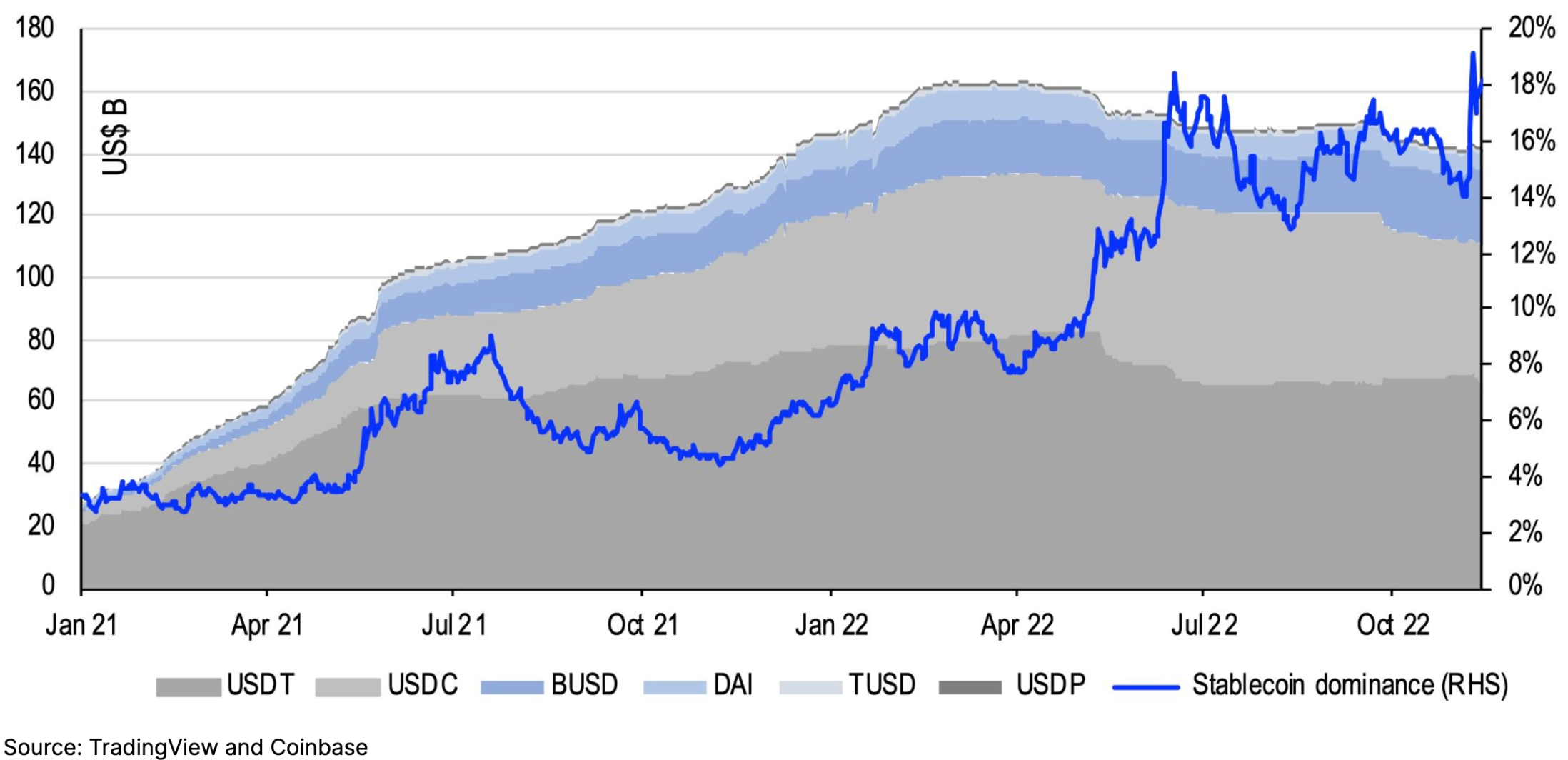
Many institutional investors in FTX had their investments stuck on the platform after it filed for bankruptcy on Nov. 11. The FTX implosion has also deterred investors and large buyers away from the crypto ecosystem. Coinbase highlighted that the stablecoin dominance has reached a new high of 18%, indicating that the liquidity crisis might extend at least until the end of the year.

Stablecoin dominance evaluates the relative dominance of stablecoins within the crypto ecosystem as compared to the total market cap. As stablecoin dominance rises, it suggests that market participants are exiting out of crypto assets and into dollar-pegged stablecoins.

The report predicted that even though the possibility of a crypto contagion is limited now, as the exchange has filed for bankruptcy, the crypto market might see “second-order effects” from counterparties that may have lent or interacted with either FTX or Alameda. An excerpt from the report reads:

“The unfortunate events surrounding FTX have undoubtedly damaged investor confidence in the digital asset class. Remediation will take time, and very likely this could extend crypto winter by several more months, perhaps through the end of 2023 in our view.”

The FTX collapse has come to bite the crypto market hard, especially at a time when traditional financial markets have registered a significant bounce back in the wake of lower-than-expected consumer inflation data. Many believed, if not for the self-inflected ongoing crisis, the crypto market would have seen a similar market uptick.


Trending Cryptos

Related Reads

Behind the 67,000 Semiconductor Talent Shortage: U.S. Industrial Policy Game and Implications for China

The U.S. push to reshore semiconductor manufacturing faces a core challenge: a significant talent shortage. While over $770 billion in investments are planned across 160 projects, a key hurdle is finding enough people to run the new fabs. According to industry projections, the U.S. could face a shortage of approximately 67,000 technicians, engineers, and computer scientists by 2030. This shortage is multi-faceted. It includes not only high-level chip design engineers requiring advanced degrees but also a substantial need for technicians to operate and maintain fab equipment. Technician roles, while often requiring less formal education, are hard to fill due to factors like shift work, factory locations, and local community infrastructure. Conversely, for high-end engineers, the issue is less about salary—which is already competitive—and more about intense competition for specialized skills from other tech sectors and the long lead time to develop such expertise. The geographic dispersion of new investments complicates recruitment, as fabs need large numbers of local, stable employees. In response, U.S. policy emphasizes building workforce development as critical infrastructure. Strategies include expanding community college programs for technician training, fostering industry-education partnerships, and pursuing immigration reforms for high-skilled talent, aiming to balance immediate needs with long-term domestic pipeline development. For China, the key takeaway is the need to integrate talent supply planning with factory construction from the outset. This involves requiring companies to submit workforce plans, strengthening vocational education aligned with industry needs, and building supportive local ecosystems to retain talent. Ultimately, a sustainable semiconductor industry depends not just on building fabs, but on cultivating a continuous, local talent pipeline capable of keeping them running and advancing.

marsbit32m ago

Behind the 67,000 Semiconductor Talent Shortage: U.S. Industrial Policy Game and Implications for China

marsbit32m ago

Trading

Spot

Hot Articles

Discussions

Welcome to the HTX Community. Here, you can stay informed about the latest platform developments and gain access to professional market insights. Users' opinions on the price of ETH (ETH) are presented below.

活动图片