一文详解 DID:Web3 进入下一阶段的中间件

FPublished on 2022-11-04Last updated on 2022-11-04

Abstract

上一轮 Defi summer 已经验证了这个问题,大部分参与者都是「加密土著」,虽然有大量资金涌入,但是主要都来自于基金和巨头,不是普遍的 C 端用户。

In 1807, after the defeat of the Danish Navy in Copenhagen, 90,000 oak trees were planted in order to rebuild the Navy and make up for the losses.

In 2007, the Danish Nature Agency, the successor to the Royal Forestry Commissioner of Denmark, informed the Danish Ministry of Defense that 90,000 oak trees were ready for the rebuilding of the Navy.

The world is always changing faster than we expect.

1807 年,丹麦海军在哥本哈根战败之后,为了重建海军,补充损失,种了 9 万颗橡树。

2007 年,皇家林业局的继任部门丹麦自然局通知丹麦国防部,为了重建海军种的 9 万颗橡树已经准备就绪。

世界的变化总比我们预计的要快速。

上一轮 DeFi summer 的时候,随着流动性挖矿的投机热潮,Defi 十分火热,在高峰期甚至有人提出「DeFi 协议如何承受数百万的用户涌入?」

事后看来,这个问题想的过于简单和幼稚。根本的原因在于,金融始终属于底层设施,世界上真正关心和参与的属于少数,也许只有几万人。

上一轮 Defi summer 已经验证了这个问题,大部分参与者都是「加密土著」,虽然有大量资金涌入,但是主要都来自于基金和巨头,不是普遍的 C 端用户。

总的来说,DeFi 属于基础设施,即使考虑到投机因素,对其感兴趣的人也绝不可能是大多数,这代表着,以 DeFi 为生态核心去扩大区块链边界,总有一天会到达极限。

DeFi 还是有门槛的,未来并不会直接面向用户的,因为我们从 2018 年开始就链上活动依然完全依赖于“发烧友”。但普通用户在未来更有可能通过移动钱包作为基础设施与 DeFi 进行交互,而不是直接交互。

DeFi 会继续发光发热,但是会处作为一个基础建设,作为这棵大树的「根」,未来真正抽枝发芽的还得靠应用,靠社交和娱乐,扩大 Web3 玩家,征服世界。

这种猜想的假设下,DID 作为社交和娱乐的必备组件,也必将成为大规模应用的一个中间件,有点像上阶段 Chainlink 之于 Defi.

本文只说两件事,目前 DID 发展的现状和未来发展的猜想。

目前 DID 现状(原始短 ID)

宏观的 DID 的概念很广:包括所有链上行的集合所形成的显式标签,未来甚至包含链下身份验证上链,形成链上身份的等。

目前我们将长的公钥缩小为一个人类可读的地址名称,也是 DID 最表层的东西,但却承载着 DID 入口的东西;门槛很低但是生态卡位很重要:

ETH 生态有 ENS,注册量 200 万左右;

Solana 生态有 Bonfida,注册量 20 万左右;

Avalanche 有 Avvy Domains ,注册量 1 万左右;

Polkadot 有 Polkadot Name System(PNS),注册量 1 万 5 千左右;

ICP 有 ICNS 和 IC Naming;

BSC 有 SPACE ID;

FLOW 有 flowns:

Cosmos 有 EVNS,cosmos 系公链可能都会用这个域名系统。

跨链 DID 域名项目还有:

.bit,除了 ETH 以外,支持 polygon、TRON、BSC 等;

Unipass,项目更新很明显很老,还在要支持 Terra 的路上。

这类项目同质化很严重,本质上是做了短域名和公钥之间的账本体系,没什么技术含量但是生态卡位很重要。

SpruceID

辅助域名的扩充,比如帮 web3 用户直接用链上身份登陆 web2 网站的 SpruceID,这个项目是 a16z 领投,当时 ENS 联合 ETH 基金会做了一个招标说统一用 ENS 地址登陆 web2 的网站,定了一个协议标准,就是 Spruce 中标,和 ENS 关系很好,一起起草 ETH DID 协议。

Ceramic

DID 还有一个关键组件叫做数据层。

我们之前讲过 web3, 最重要的一个特质之一就是协议层不拥有数据,数据都在用户这里汇集和融合,DID 甚至可以说是各个协议层之间的信息桥梁。

从 BTC 资产自己所有之后所带来的 Defi 可组合性,来理解 当 数据自拥有之后 数据可组合性。

DeFi 相对于传统金融 无需许可 没有准入门槛,资产可以在多个平台之间同时流转,平台并不触碰用户资产,用户资产可在不同平台之间流转, 比如存款凭证可以拿去再质押。

形成了胖的资产层 薄的平台层,平台层之间就可以相互组合 网络效应。

那么 DID 在这里形成的网络效应的粘合剂需要有一个承载的地方就是 Ceramic, 在 Ceramic 将各个应用过来的数据进行标准化。

所以 Ceramic 可以说是一个专为 DID 而生的数据协议。

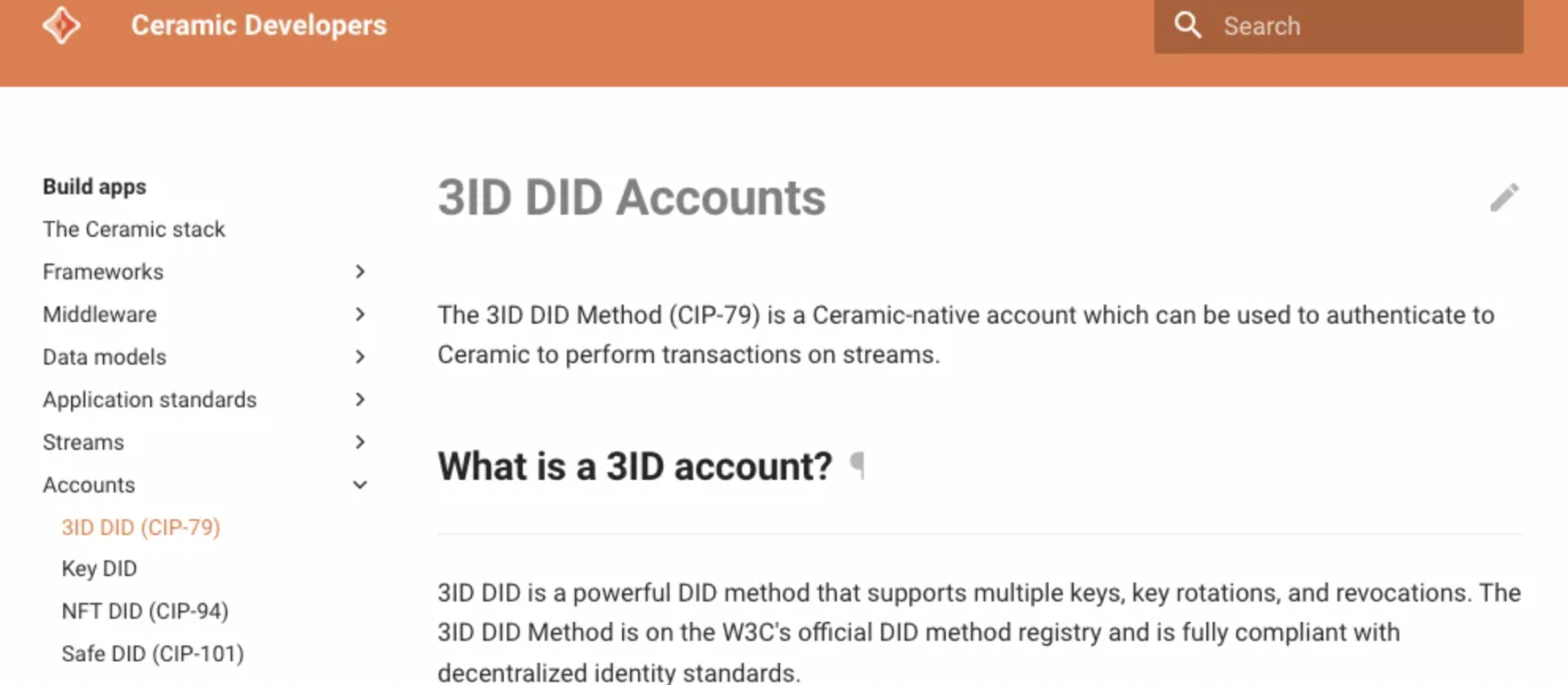
目前已经有很多 DID 以及 Web3.0 社交平台项目在 Ceramic 上开发,如 CyberConnect,Web3.0 Twitter 的 Orbis,即时通讯平台 The Convo Space 等。
标签式 DID

Project Galaxy(现在改名叫 GALXE)想做的事是将用户在链上的信息做一个信息锚点,例如 AAVE 借款超过一定额度就发放一个「徽章」,或者说打上标签;Uni 交易达到一定的交易额就发放一个「徽章」,打上标签。

这样走的好处就是,这个人被标签覆盖,很容易刻画形象,这样其他应用会给用户一个粗线条,空投至少比现在准。

我们能看到不同的基础设施都从各个方向上去解决用户身份画像的问题,在 GRT 为代表的数据全爬取(粗),然后让策展人制作数据集,然后给应用用,但是每个人都数据都交由策展人展现显然不现实。

Ceramic 为代表的将各个应用的数据做分类和模块化,有程序自动化(因为数据模式统一了)的做用户数据画像,方便不同应用之间调取。

Galxe 为代表应用则是用 NFT 给用户打标签, 画一个粗线条,让用户可以被简单的分类和粗糙的筛选。

DID 未来发展畅想——发展历程

笔者通过查看各个 DID 项目或是自称 DID 赛道项目的情况来看,DID 目前还处在探索阶段,还处在发展的早期,甚至 web3 形态下 DID 是表层入口还是底层基建,各家从构建逻辑上都各有不同。

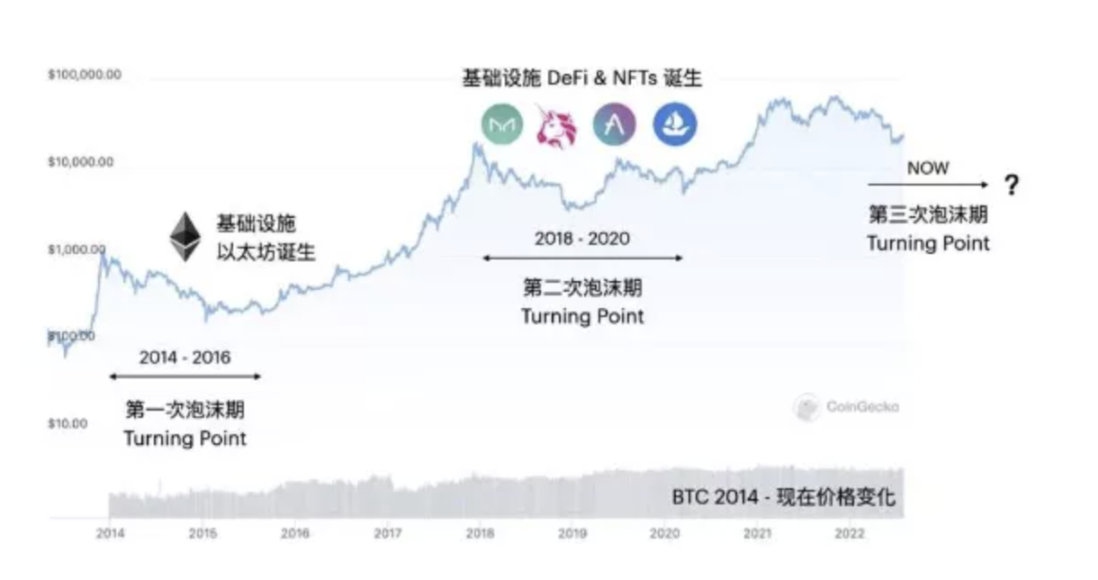
但有一点在研究中已经变得越发清晰,DID 极有可能作为 Web3 的入口组件,参考互联网发展的历史,是一个泡沫发生再挤破再存留的游戏,每一次周期之后还能幸存下来的,必定是最后的幸存者,市场自然会让流量集中化。

就像 Web2 时代的搜索引擎,DID 将成为 Web 3 入口级别的应用。
未来每个人将有一个 DID,可以通行整个 Web3 , 甚至随着 DID 的发展会出现 区域化 DID,例如针对游戏有游戏 DID,针对社交有社交 DID。

未来 DID 赛道则会出现一个比现在钱包强大的多的应用来管理自己的链上身份,链上活动,甚至链上资产。

该应用会与链上的所有基础设施都会产生联结,甚至成为 web2 到 Web3 的桥梁,有点像 Chainlink 至于 DeFi 。

我们先看看 Chainlink,他做的事情仅仅是一个预言机,但是却基于基础服务不断的延伸,触及目前区块链应用的多个板块。

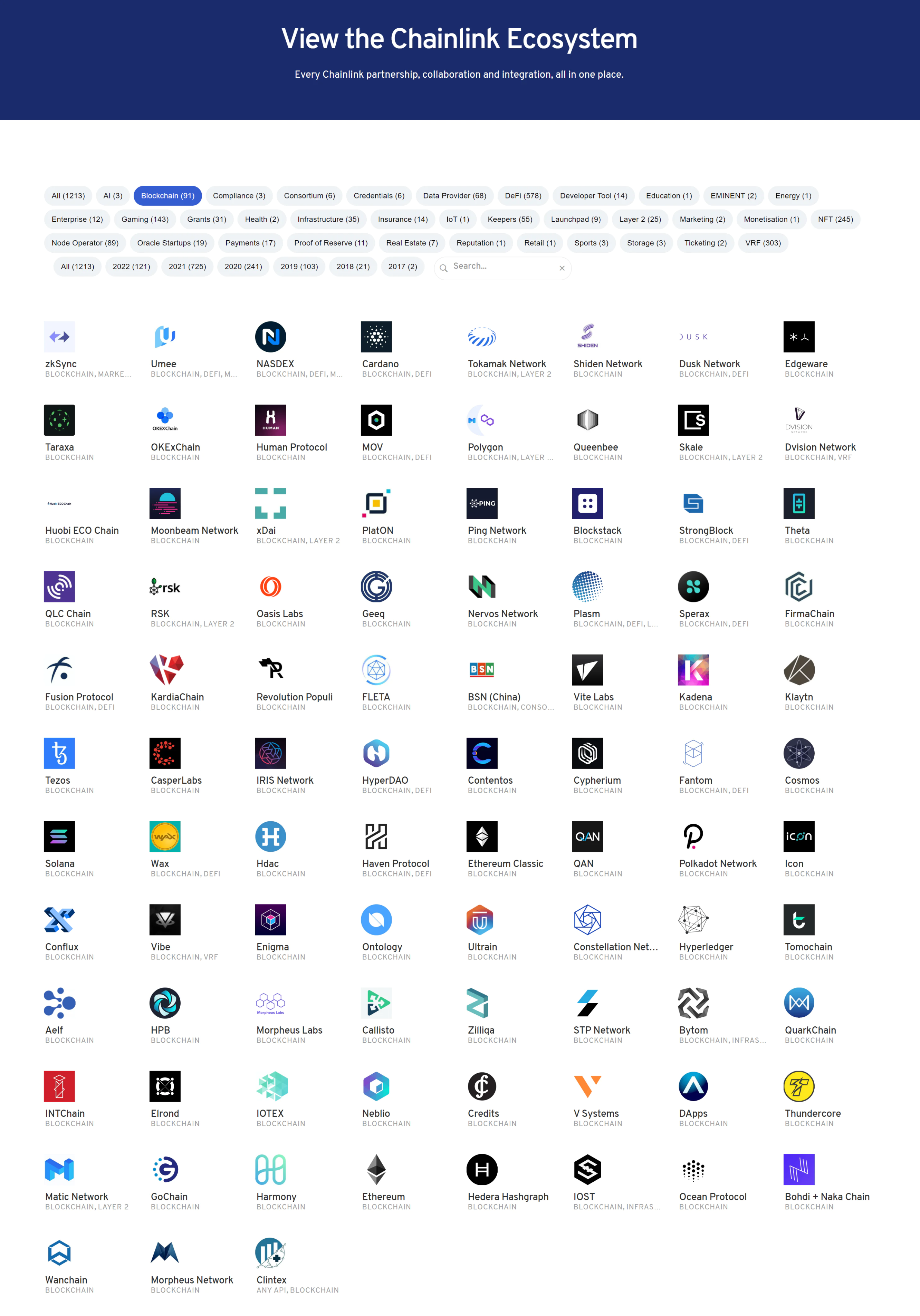
截至到目前,Chainlink 共为 1213 个项目提供服务,其中包括 578 个 DeFi 项目、143 个游戏项目和 91 个公链项目。
Chainlink 最初提供的服务也仅仅是帮助链上无法获取的数据,虽然智能合约允许在没有第三方的情况下进行可信交易,实现交易的可追踪且不可逆转,但是无法与区块链外的数据发生直接联系(如外部数据的获取与调用等),因此需要一个外部的图灵机将数据写入区块链或分布式账本中。

它在其中扮演着数据来源 API 接口之间桥梁的角色,从而实现区块链接口与外部数据 API 接口形成对接,而这个图灵机就是预言机(Oracle)。

随着这个区块链应用的扩大的繁荣,Chainlink 由最初的预言机服务,发展出多个服务,例如为游戏和 NFT 应用生成随机数;为 NFT 地板价提供报价;链下计算、公允排序,甚至还有跨链服务。

由于有大量智能合约用例都需要接入预言机,因此将 Chainlink 部署至新的区块链环境将为链上开发者提供开发应用所需的关键基础设施。

2021 年区块链还经历了 ETH 的溢出效应,多个公链开始发展自己的生态,这时候就需要一个基础设施可以提供链上安全数据源,从而吸引已经成熟的 Defi 协议,例如 Aave\xDollar 等在上面部署,Chainlink 就借助自己预言机龙头的地位在这一时期更是受尽追捧,对于预言机安全性和可靠性的要求,让 Chainlink 的「马太效应」不断扩大。

Chainlink 接入了众多顶尖的 L1 区块链和 L2 扩容方案,其中包括 Arbitrum、Avalanche、BNB Chain、Ethereum、Fantom、Harmony、Heco、Moonriver、Optimism、Polygon、Starkware 以及 xDai。

与数据密切相关的 DID 是否会复刻 Chainlink 的老路呢?看起来两者很相似,都是简单但是基础的链上数据服务,对于安全性和可靠性的要求很高,流量倾向于聚集在头部。

DID 虽然也是一种数据服务,但是它所解决路径和 Chainlink 完全不同,目前区块链的链上数据,基于区块链不可篡改的属性,链上数据是「无需凭证」的信任,比如,要证明钱包地址 A 确实向钱包地址 B 转过钱,只需查对应的链上信息即可,不需要某某应用或者机构开具证明。

但是这种无凭证的信任数据,对于身份信息来讲是有局限性的,身份信息的建立依赖发放身份的机构,例如“学历文聘”的信任依赖颁发学历证书的机构。

DID 基于对用户身份信息的管理和传递,是用户处理自己链上活动的必备组件,可以租略的分为 DID 用户信息汇集和 DID 用户身份分发。
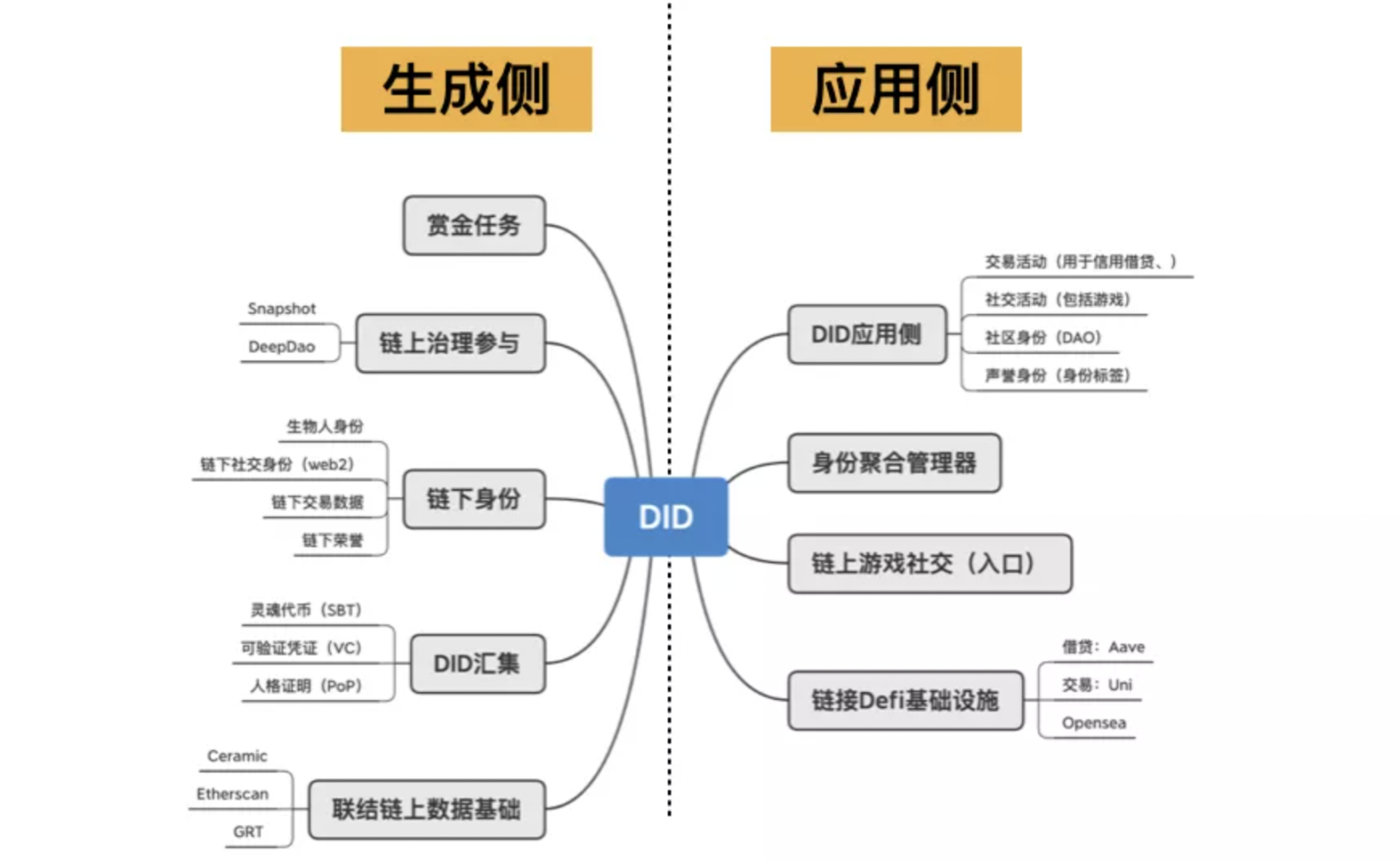
由于 DID 掌控了用户进入各个板块的钥匙,所以极易形成生态枢纽的超级应用,AA 技术及 L2 技术的普及意味着区块链的进化方向已经由侧重「基础设施」,慢慢步入寻找「超级应用」。

因为之前技术限制所捆绑的「超级应用」很有可能在下个阶段爆发,该应用内将继承多个身份管理协议,以及 DeFi 基础协议等,用户在这个应用内部就可以实现高频的链上操作,交易 token、交易 NFT,发布讯息动态,展现关系图谱和用户画像等等。

DID 极有可能以「智能合约账户」这一形态成为 web 3 的入口,当前我们把「Metamask」当作 web3 入口在需求性上是完全不够的,低门槛的大众涌入之后,需要一个尽可能全面的「入口」,这类似于 web2 时代的 Google。

但是 DID 目前依然有很多问题急需解决,例如 DID 如果汇聚了一个人所有的信息,那数据隐私和安全就显得尤为重要了,会不会出现大面积数据泄露和威胁;目前各个协议颁发的身份没有统一性,链上行为也没有统一性,很难做到规模化身份管理;当前链上的社交娱乐等应用投机性不断减弱,人员流失,代表着 DID 不断试错的土壤消失。

DID 虽然处在发展的早期,在 DeFi 之后,区块链应用出圈的需求强烈,社交娱乐成为一个突破口,DID 正处在爆发的前夜。

Trending Cryptos

Related Reads

Ethereum's Next Stop Glamsterdam: The Core Upgrades You Must Know

The Glamsterdam upgrade, scheduled for late 2026, is a major Ethereum hard fork combining the Amsterdam execution layer and Glasgow consensus layer updates. Its primary goal is not simply increasing throughput but restructuring Ethereum's block production, validation, and resource pricing to enable future scaling. Key technical changes include **EIP-7732 (ePBS)**, which formally enshrines proposer-builder separation into the protocol. This decouples consensus and execution tasks, extending the execution payload propagation window to ~9 seconds. This provides more time for node verification, allowing for safer increases in block capacity (Gas limit) in the future. Another core component is **EIP-7928 (Block-Level Access Lists - BAL)**. It mandates a list of all state accessed within a block, moving this feature from an optional transaction-level (EIP-2930) to a mandatory block-level requirement. This explicit access list enables client optimizations like parallel disk reads and state root computations, paving the way for parallel execution. To manage long-term state growth, **EIP-8037** increases the cost of creating new state (e.g., accounts, storage slots), separating the pricing of permanent database bloat from temporary computation. This allows execution capacity to scale more aggressively without causing state size to explode proportionally. The planned upgrade bundle includes around 10 EIPs categorized into: 1) Core protocol restructuring (ePBS, BAL), 2) Resource pricing adjustments (state costs, calldata costs), and 3) EVM/developer improvements. Several other EIPs, including those potentially improving staker exit liquidity (EIP-8061, EIP-8080), are under consideration. The technical development coincides with significant personnel changes within the Ethereum Foundation's Protocol team. The Foundation's official communications frame this as part of a broader shift towards a "coalition of organizations" working on the Ethereum roadmap, citing new entities like ethlabs and the Ethereum Economic Zone. In summary, Glamsterdam represents a foundational re-engineering of Ethereum's block pipeline and economic model—focusing on ePBS, BAL, and multi-dimensional resource pricing—to prepare the network for sustainable, high-throughput scaling in the years ahead.

Foresight News7m ago

Ethereum's Next Stop Glamsterdam: The Core Upgrades You Must Know

Foresight News7m ago

The Ethereum Foundation Has Split?! An In-depth Look at Ethlabs' "Bright Future"

"Ethereum Foundation Splits? Understanding Ethlabs and Its 'Bright Future'" Former Ethereum Foundation members Ansgar Dietrichs, Barnabé Monnot, Caspar Schwarz-Schilling, Josh Rudolf, and Julian Ma have announced the launch of Ethlabs, an independent non-profit research and development lab. Announced on June 22nd, the initiative comes amidst discussions about the need for new organizational structures within the Ethereum ecosystem, a point highlighted by Bankless founder David Hoffman. Ethlabs' mission is to establish Ethereum as the foundational settlement layer for the global economy. The organization positions itself as a bridge connecting frontline developers, applications, and user needs with the core protocol. It aims to translate real-world demands into protocol improvements, industry standards, and deployable products. The founding team brings significant expertise: Dietrichs and Monnot are highly cited researchers in areas like Proposer-Builder Separation (PBS) and MEV, while Schwarz-Schilling, Rudolf, and Ma contribute backgrounds in economic modeling, consensus research, and applied cryptography. Initial supporters include BitMine, a major corporate ETH treasury; Sharplink, another treasury firm; and Consensys founder Joe Lubin in a personal capacity. Community backers include figures like Uniswap's Hayden Adams and Base's Jesse Pollak. The timing coincides with internal Ethereum Foundation discussions about "spinout" projects. While Ethlabs and the Foundation share research interests like MEV mitigation, Ethlabs frames its role not as a competitor but as part of a shift from a "single-core coordination model" to a "multi-R&D entity collaboration model." It views Ethereum as a public project belonging to all builders, with Ethlabs as one node in a broader governance network. Ultimately, Ethlabs represents an organizational evolution within the maturing Ethereum ecosystem. The key question is whether multiple research bodies can collaborate effectively to advance Ethereum as a competitive global settlement infrastructure.

Odaily星球日报11m ago

The Ethereum Foundation Has Split?! An In-depth Look at Ethlabs' "Bright Future"

Odaily星球日报11m ago

'Bear' Doomsday Prophecy: AI 'Reaching Its Peak', U.S. Stocks to Top Out Fastest in Q3, Down 30-50%

"A Short Seller's Dire Prediction: AI Boom Fading, US Stocks to Peak by Q3 with 30-50% Decline" Prominent macro investors Jeffrey Gundlach and Felix Zulauf warn that the AI-driven market rally is nearing its end, forecasting a major US stock market correction of 30-50%, potentially beginning as early as Q3. Their analysis points to alarming parallels with historical market tops, citing extreme concentration in the top AI-related stocks within the S&P 500. Zulauf's bearish thesis hinges on unsustainable capital expenditure trends among major cloud companies, negative free cash flow emergence, and soaring semiconductor prices. Gundlach highlights dangerous parallels to the 1999 tech bubble peak. A key divergence from conventional wisdom is Gundlach's view that long-term Treasury yields will not fall meaningfully even during a recession, due to America's structurally out-of-control fiscal deficits and soaring interest costs. He warns this could force the government into yield curve control or even a sovereign debt restructuring. Both investors express severe concerns about the opaque private credit market, drawing parallels to the pre-2008 financial crisis environment. They allege widespread rating inflation, misrepresented credit quality, liquidity illusions, and fraudulent asset valuations within this sector. The analysis links the AI boom and private credit crisis through financing costs. They argue that as AI companies' cash flows weaken and they seek funding, a high and sticky long-term interest rate environment will severely stress lower-rated corporate borrowers, exposing cracks in credit markets. Finally, they predict a regime shift where the US dollar weakens and US equities underperform global markets, marking the end of their long dominance. The stage is set for a significant market reversal.

marsbit19m ago

'Bear' Doomsday Prophecy: AI 'Reaching Its Peak', U.S. Stocks to Top Out Fastest in Q3, Down 30-50%

marsbit19m ago

Why Does No One Buy DeFi Insurance?

**Title: Why Isn't DeFi Insurance Being Bought?** DeFi insurance, which promised automated, unbiased payouts via smart contracts, has failed to gain traction. The core issue is economic: high premiums severely erode the yields that attract users to DeFi in the first place. For example, insuring a USDC deposit on Aave V3 could cost 1.5–2.5% of the annual yield, leaving a net return barely above a savings account. For riskier platforms like Maple Finance or Ethena, premiums can even turn net yields negative. Consequently, users often forgo insurance, as it nullifies their profit motive. The market also suffers from structural flaws. First, DeFi risks are highly correlated (e.g., an oracle failure can impact multiple protocols simultaneously), unlike the independent risks in traditional insurance. This makes large-scale events potentially catastrophic for insurers. Second, the total capital in DeFi insurance pools (e.g., Nexus Mutual's ~$81.5M) is minuscule compared to the hundreds of billions in total value locked (TVL), creating a massive capacity gap. A single major hack could drain the entire industry's reserves. Furthermore, the governance model where tokenholders vote on claims creates a conflict of interest, incentivizing them to deny payouts to protect their own funds. As a result, the sector is shrinking. While pioneers like Nexus Mutual are pivoting to preventative measures (bug bounties) and seeking external capital via reinsurance, the fundamental problems remain. DeFi insurance represents a public good—its stability benefits the entire ecosystem—but without a mechanism to share costs, a "tragedy of the commons" ensues where no one is willing to pay, leaving the system vulnerable.

marsbit33m ago

Why Does No One Buy DeFi Insurance?

marsbit33m ago

Trading

Spot
Futures

Hot Articles

How to Buy NFT

Welcome to HTX.com! We've made purchasing AINFT (NFT) simple and convenient. Follow our step-by-step guide to embark on your crypto journey.Step 1: Create Your HTX AccountUse your email or phone number to sign up for a free account on HTX. Experience a hassle-free registration journey and unlock all features.Get My AccountStep 2: Go to Buy Crypto and Choose Your Payment MethodCredit/Debit Card: Use your Visa or Mastercard to buy AINFT (NFT) instantly.Balance: Use funds from your HTX account balance to trade seamlessly.Third Parties: We've added popular payment methods such as Google Pay and Apple Pay to enhance convenience.P2P: Trade directly with other users on HTX.Over-the-Counter (OTC): We offer tailor-made services and competitive exchange rates for traders.Step 3: Store Your AINFT (NFT)After purchasing your AINFT (NFT), store it in your HTX account. Alternatively, you can send it elsewhere via blockchain transfer or use it to trade other cryptocurrencies.Step 4: Trade AINFT (NFT)Easily trade AINFT (NFT) on HTX's spot market. Simply access your account, select your trading pair, execute your trades, and monitor in real-time. We offer a user-friendly experience for both beginners and seasoned traders.

7.1k Total ViewsPublished 2024.03.29Updated 2026.06.02

How to Buy NFT

What is Altura NFT?

Altura: Providing One-Stop NFT Solutions for Game Developers

56.0k Total ViewsPublished 2024.06.12Updated 2024.06.12

What is Altura NFT?

What is AINFT

EternaFi Agents and $AINFT: A Comprehensive Analysis of AI-Powered NFT Infrastructure in the Web3 Ecosystem The intersection of artificial intelligence (AI) and blockchain technology is rapidly evolving, establishing innovative platforms that redefine ownership models and economic participation. EternaFi Agents, along with its native token $AINFT, exemplifies a groundbreaking approach to the tokenization of AI infrastructures through the means of non-fungible tokens (NFTs). Launched in July 2025 by the development team at Nova Club, EternaFi merges the advancements of AI with the decentralized financial mechanisms of blockchain, presenting a unique investment opportunity for participants within the web3 ecosystem. This article aims to provide an in-depth assessment of EternaFi Agents, covering its core components, functionality, and significance within the crypto landscape. Introduction and Project Overview EternaFi Agents stands as a salient example of how blockchain technology can democratize access to advanced AI capabilities. The project endeavors to reshape the paradigm of AI ownership by diversifying economic participation, making sophisticated AI systems accessible to a larger pool of stakeholders. At its core, the project tokenizes a proprietary large language model (LLM) developed by Nova Club, allowing NFT holders to gain fractional exposure to the model's economic performance. By utilizing NFTs representing stakes in the LLM, EternaFi Agents fosters a model wherein stakeholders not only participate in AI service consumption but also enjoy sharing in the economic rewards generated by the platform. This transformative approach enables the development of sustainable revenue models for AI services, all the while promoting broad community engagement and facilitating transparent governance. What is EternaFi Agents? EternaFi Agents represents an AI-NFT infrastructure project that aims to blend the capabilities of AI with blockchain technology in a coherent ecosystem. The essential feature of this project is the creation of NFTs that serve as financial instruments, representing fractions of ownership in Nova Club's proprietary AI infrastructure. Each NFT symbolizes direct exposure to the economic performance of the underlying AI system, providing a lucrative opportunity for investors. The project operates on the Base blockchain, known for its scalability and efficiency, thus ensuring manageable transaction costs while facilitating a seamless operational experience. One of the notable features includes a revenue-sharing mechanism, wherein NFT holders can receive portions of subscription income generated by the AI services provided on the platform. This innovative approach establishes a connection between the success of the AI services and the economic dividends distributed among the holders, thus ensuring an alignment of interests across the community. Who is the Creator of EternaFi Agents? The creative force behind EternaFi Agents is Nova Club, a development team based in Singapore proficient in the amalgamation of AI and blockchain technology. Their prior experience in AI development and cryptocurrency analysis gives credence to the project, contributing a breadth of expertise to the creation of EternaFi Agents. Nova Club’s mission centers on democratizing access to cutting-edge AI technologies while building sustainable economic models that benefit users alongside developers. Their commitment to transparency, community governance, and innovation is reflected in the design and implementation of the EternaFi platform, aiming to establish a unique ecosystem that fosters positive engagement and long-term value creation. Who are the Investors of EternaFi Agents? The specific details concerning investors or investment organizations backing EternaFi Agents are not publicly available. However, EternaFi has adopted an inclusive approach to funding its development through the sale of NFTs to the public, allowing a wide array of participants to invest in the ecosystem. The project’s architecture ensures that core infrastructure is funded responsibly while allowing community members to partake in the ownership and economic returns generated from the AI services. This model emphasizes community engagement by aligning the interests of investors and project developers, creating a collaborative environment where long-term participation is incentivized. How Does EternaFi Agents Work? EternaFi Agents operates through a multifaceted ecosystem where NFTs serve as a primary means of ownership representation within the project. Each NFT holder is entitled to a share of the monthly subscription income produced by the underlying AI-powered platform, thereby positioning NFT ownership as a lucrative investment vehicle. Revenue Generation Mechanism The primary source of revenue generation for the EternaFi platform stems from subscription fees related to the AI services provided. Users can access various tiered services, ranging from basic market analysis tools to comprehensive AI-assisted trading solutions. These services are monetized and form the basis for the revenue-sharing framework, which distributes profits to NFT holders through automated smart contracts. An innovative feature of the EternaFi ecosystem is the revenue-sharing mechanism that operates transparently, ensuring that rewards are allocated based on verifiable metrics from the AI platform's operations. This creates a direct link between the performance of AI services and the returns available to community investors, establishing a sustainable economic model. Staking and Vesting Mechanisms Participants within EternaFi can engage in staking their NFTs to unlock additional economic benefits. The vesting schedule is designed to promote long-term commitment among participants, rewarding those who exhibit ongoing support for the project. This ensures a robust alignment of interests and fosters a sense of community engagement essential for achieving the project's long-term goals. Transparent Governance EternaFi Agents embraces decentralized governance, allowing NFT holders to play an active role in decision-making regarding the platform's development and future directions. The governing structure includes community voting mechanisms, providing NFT holders with the opportunity to influence significant decisions and contributing to a collaborative approach to project growth. Timeline of EternaFi Agents The development trajectory of EternaFi Agents showcases a systematic approach toward building a sustainable AI infrastructure while meeting the needs of community participants. Below is a timeline of important milestones in the project’s history: July 2025: Launch of EternaFi Agents, including the public sale of NFTs and deployment of the $AINFT token on the Base blockchain. Q4 2025: Establishment of market infrastructure including liquidity pools and launch of staking dashboards for NFT holders. 2026: Initiation of community engagement programs, expanding AI capabilities, and integration with cross-chain technologies. Q4 2026: Implementation of the dividend distribution system, allowing NFT holders to reap economic benefits from their investments. These milestones signify the focus on establishing a functional and participative ecosystem while ensuring continuous evolution to meet market demands. Technological Infrastructure and Blockchain Integration EternaFi Agents is anchored in an advanced technological framework combining AI systems with blockchain capabilities. Operating on the Base blockchain, the project leverages the advantages of scalability and low transaction costs. The underlying smart contract architecture governs the NFT ownership, revenue sharing, and community management features, ensuring efficiency and transparency. AI System Development The proprietary large language model underpinning EternaFi Agents has been independently developed and designed to cater to revenue-generating applications without reliance on proprietary external frameworks. This endeavor reflects a commitment to creating a versatile and adaptable AI infrastructure capable of delivering meaningful services to users, thus generating economic value for investors. Security Measures The robustness of EternaFi’s security infrastructure is paramount. Regular audits and stringent security measures ensure the integrity of the AI systems and blockchain mechanisms, safeguarding against potential vulnerabilities while fostering confidence among participants. Conclusion EternaFi Agents signifies a landmark innovation within the realm of artificial intelligence and blockchain technology, opening avenues for community ownership and economic participation in advanced AI capabilities. The project’s comprehensive strategy to tokenize AI infrastructure via NFTs establishes a precedent for future decentralized ecosystems. By harmonizing technical sophistication with user-centric economic models, EternaFi not only fosters engagement but also generates a sustainable revenue-sharing framework for community participants. The significance of EternaFi extends well beyond its operational success as it exemplifies how blockchain can democratize cutting-edge AI technologies, paving the way for future ventures in this intersectional space. The evolution of EternaFi Agents may herald a new era of AI development characterized by participant-driven governance, sustainable economic models, and transparent verification, ultimately contributing to the broader democratization of AI and technology accessibility across industries.

4.1k Total ViewsPublished 2025.08.14Updated 2025.08.14

What is AINFT

Discussions

Welcome to the HTX Community. Here, you can stay informed about the latest platform developments and gain access to professional market insights. Users' opinions on the price of NFT (NFT) are presented below.

活动图片