La société BSC confirme la date du hardfork Pasteur pour fin août

cryptonews.ruPublished on 2026-08-14Last updated on 2026-08-14

Abstract

La blockchain BNB Smart Chain (BSC) activera son hard fork nommé « Pasteur » sur son réseau principal le 25 août 2026 à 02h30 UTC. Pour éviter toute perturbation, les opérateurs de nœuds doivent impérativement mettre à jour leur client vers la version 1.7.7 avant cette date. Ce hard fork regroupe plusieurs propositions d'amélioration (BEP). Il inclut notamment le BEP-682, qui renforce la sécurité des transferts inter-chaînes en éliminant une vulnérabilité permettant à des validateurs de signer plusieurs fois une même transaction. Le BEP-695, quant à lui, sécurise les systèmes de staking et de gouvernance en invalidant définitivement les anciennes clés de consensus des validateurs après une rotation. Enfin, le BEP-675 vise à augmenter significativement le débit du réseau. Il permet à un constructeur de bloc de soumettre un bloc déjà exécuté, réduisant ainsi le temps de traitement des validateurs. Des tests ont montré une hausse du débit de près de 88%, pour atteindre environ 2 324 transactions par seconde, sans modifier la limite de gaz ou l'intervalle entre les blocs. La BNB Chain met à disposition une documentation détaillée pour guider les opérateurs dans cette mise à jour. Les développeurs souhaitant tirer parti du BEP-675 devront notamment exécuter un nœud complet.

$BNB Chain a annoncé qu'elle activera son hardfork Pasteur sur le réseau principal $BNB Smart Chain (BSC) à 02h30 UTC le 25 août 2026.

Le document précisait que chaque opérateur de nœud doit utiliser un client version 1.7.7 avant cette heure, sous peine de risque de déconnexion du réseau.

La société $BNB Chain a confirmé la date et les exigences du client dans un message de blog publié le 14 août.

Les propositions de $BNB Chain sont-elles regroupées dans une mise à jour générale unique ?

Le hardfork Pasteur est inclus dans la méta-proposition BEP-673. Cependant, il fusionne également trois autres propositions, BEP-682, BEP-695 et BEP-675, en une activation coordonnée unique.

BEP-682 et BEP-695 se concentrent sur des travaux de sécurité pour le pont, le staking et la gouvernance. BEP-675 est un projet visant à augmenter le débit, dont le fonctionnement ne nécessite techniquement pas de hardfork.

$BNB Chain a également choisi intentionnellement des noms pour ses hardforks. Ils rendaient hommage à des scientifiques, dont Pascal, Maxwell, Fermi et Mendel. Chaque hardfork apportait des changements progressifs à la blockchain.

Le hardfork Fermi a été lancé en janvier 2026 et a aidé à réduire le temps de génération des blocs sur le réseau BSC à 0,45 seconde. Depuis, le réseau s'est stabilisé à ce niveau et ne l'accélère plus.

Éliminer une vulnérabilité de vérification des doublons dans le pont

La norme BEP-682 vise à réviser la méthode de vérification des transferts inter-chaînes sur BSC.

Lorsque des actifs sont déplacés vers la blockchain, BSC ne fait pas confiance à la déclaration de la blockchain source seule. Au lieu de cela, il exécute une précompilation à l'adresse 0x67, qui compte les signatures des validateurs par rapport à un ensemble connu de validateurs. Le transfert n'est effectué qu'après qu'une supermajorité l'a signé.

Cependant, cette approche avait ses faiblesses, car il n'y avait aucun moyen de vérifier qu'un validateur n'apparaissait qu'une seule fois.

Un ensemble de validateurs spécialement conçu pouvait désigner le même signataire plusieurs fois, compter son droit de vote à chaque apparition et franchir le seuil avec moins de signatures authentiques que ne l'exige la règle.

BEP-682 élimine les doublons avant comptage, garantissant ainsi que des ensembles de données redondants ne dépasseront plus le seuil.

Comment s'assurer que les clés de validateurs obsolètes le sont vraiment

La norme BEP-695 est conçue pour éliminer une vulnérabilité dans les systèmes de staking et de gouvernance. Lorsque les validateurs changent leurs clés de consensus dans le cadre d'une maintenance technique planifiée, on suppose que la clé dépréciée cesse d'avoir toute autorité.

Ce n'était cependant pas tout à fait le cas auparavant. Trois correctifs ont maintenant été apportés à ce problème pour chaque chaîne $BNB Chain. Premièrement, l'ancienne clé remplacée perd désormais ses droits d'administrateur-validateur au lieu de les conserver.

Le second correctif garantit qu'un validateur ne peut plus éviter un renvoi imminent en effectuant une rotation. Il a également bloqué l'accès aux adresses de la liste noire pour voter sur la gouvernance basée sur les signatures.

Des blocs plus pleins sans gaz supplémentaire ni limites de temps d'exécution du bloc

Actuellement, dans BSC, les blocs sont exécutés deux fois. Lors de la première exécution, le constructeur exécute les transactions pour vérifier la validité du bloc, puis le validateur réexécute toutes ces transactions avant de signer.

Cependant, cette action prend à nouveau 450 millisecondes (ms), et le temps que le validateur passe à exécuter la deuxième requête est du temps perdu pour les assembleurs pour emballer le bloc suivant.

La norme BEP-675 permet au constructeur de transmettre un bloc qu'il a déjà exécuté.

Cette fois, le validateur le vérifie pour s'assurer qu'il respecte les règles de consensus, le signe, transmet les données, puis effectue une vérification complète.

Les données recueillies sur le réseau de test ont montré que le temps passé par les validateurs à exécuter des transactions est passé de 125 millisecondes à 15 millisecondes. De plus, le débit a augmenté de près de 88 % — de 1237 à 2324 transactions par seconde (TPS), la limite de gaz de 100 millions et l'intervalle de 450 ms restant inchangés.

Le volume moyen de gaz utilisé pour les blocs est passé de 46,35 millions à 84,15 millions. La latence de finalisation est restée inchangée. Cependant, $BNB Chain a souligné qu'il s'agissait de chiffres de charge contrôlée. Il lui faudra encore supporter la charge du réseau principal, en particulier lorsque plusieurs constructeurs se disputeront le même créneau.

Que doivent faire les opérateurs avant le 25 ?

Les opérateurs de nœuds sont ceux qui doivent planifier leur travail pour le projet Pasteur. $BNB Chain a fourni une documentation détaillée sur les étapes à suivre pour éviter les erreurs au lancement.

Les constructeurs souhaitant utiliser l'algorithme BEP-675 pourraient avoir à fournir un effort supplémentaire, car cela signifie exécuter un nœud complet plutôt qu'un nœud léger, puisque le constructeur produit désormais un bloc entièrement exécuté. Les schémas de mempool traditionnels continuent de fonctionner, simplement avec un temps d'empaquetage réduit.

end-content

Trending Cryptos

Related Questions

QQuand le hardfork Pasteur de la BNB Smart Chain sera-t-il activé ?

ALe hardfork Pasteur sera activé sur le réseau principal de la BNB Smart Chain (BSC) le 25 août 2026 à 02h30 UTC.

QQuelles sont les principales améliorations apportées par le hardfork Pasteur ?

ALe hardfork Pasteur regroupe plusieurs propositions d'amélioration (BEP) : BEP-682 (sécurité des ponts et vérification des doublons), BEP-695 (sécurité des clés de validation obsolètes) et BEP-675 (augmentation du débit et blocs « pleins » sans consommation de gaz supplémentaire).

QQuel problème spécifique le BEP-682 cherche-t-il à résoudre ?

ALe BEP-682 corrige une vulnérabilité dans le système de vérification des transferts inter-chaînes (bridge). Avant, il était possible qu'un ensemble de validateurs spécifique compte plusieurs fois la même signature pour atteindre frauduleusement le quorum. Le BEP-682 élimine les doublons avant le comptage.

QComment le BEP-675 améliore-t-il les performances du réseau BSC ?

ALe BEP-675 permet à un constructeur de bloc de soumettre un bloc déjà entièrement exécuté. Cela réduit considérablement le temps de traitement pour les validateurs (de 125 ms à 15 ms), augmentant le débit théorique de près de 88% (passant d'environ 1237 à 2324 transactions par seconde) sans modifier le plafond de gaz ou l'intervalle entre les blocs.

QQue doivent faire les opérateurs de nœuds avant l'activation du hardfork ?

APour éviter d'être déconnectés du réseau, tous les opérateurs de nœuds doivent mettre à jour leur client vers la version 1.7.7 avant le 25 août 2026 à 02h30 UTC. La BNB Chain a fourni une documentation détaillée à ce sujet.

Related Reads

Bitcoin Price Drops to $62,470 as Sellers Retest $63,000 Support Level

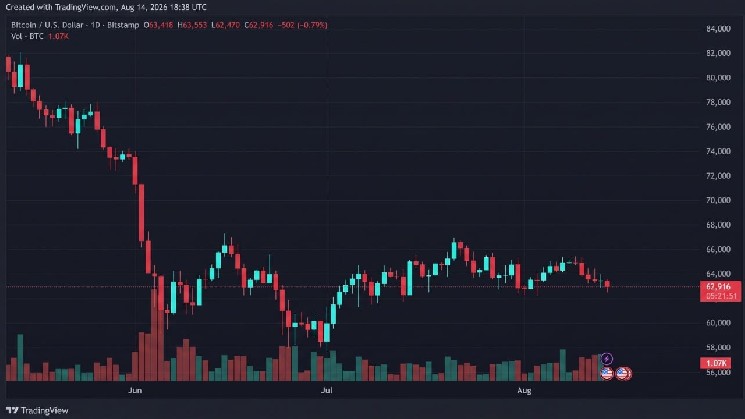
Bitcoin's price fell below $63,000 for a second consecutive day on Friday, hitting an intraday low of $62,470. The cryptocurrency later recovered to trade just above $63,000, leaving it nearly flat for the past 24 hours and for August overall, with a weekly loss of 2.6%. The volatility triggered significant liquidations, with $26 million of leveraged long Bitcoin positions liquidated over 24 hours. Market sentiment was further dampened by data showing over $131 million in outflows from spot Bitcoin ETFs for a second straight day, signaling a potential pullback by institutional investors. Adding to the negative pressure, index provider MSCI has proposed new criteria for "non-operating companies" in its global indexes, which could lead to the exclusion of firms holding significant digital assets like Bitcoin on their balance sheets. Companies such as Strategy and Metaplanet could be affected, potentially forcing index-tracking funds to sell their shares. Strategy publicly criticized the proposal, arguing digital assets are legitimate assets and index providers should not dictate what companies can own. Public consultations on MSCI's proposal end September 30, with a final decision expected by October 16. If approved, exclusions could begin in November, potentially triggering sustained institutional selling and damaging a key bridge for Bitcoin adoption in the corporate sector.

cryptonews.ru3h ago

Bitcoin Price Drops to $62,470 as Sellers Retest $63,000 Support Level

cryptonews.ru3h ago

Trading

Spot

Hot Articles

What is BNB WHALES

Understanding BNB Whales: A Deep Dive into the Cryptocurrency Landscape Introduction to BNB Whales In the vibrant world of cryptocurrencies, new projects regularly emerge, often promising innovative solutions and unique experiences. One such project is BNB Whales, launched in 2023 and built on the BNB Smart Chain (BEP20). BNB Whales sets out to establish a distinctive presence within the cryptocurrency ecosystem, focusing on creating an engaging platform that combines the benefits of blockchain technology with social and gaming interactions. This article aims to delve deeper into BNB Whales, exploring its core components, mechanics, and developmental trajectory. What are BNB Whales? BNB Whales is a cryptocurrency initiative that seeks to provide a diverse range of features and opportunities for its users in the burgeoning Web3 environment. Utilizing the BEP20 standard, the project operates with a total token supply of 100 trillion (100,000,000,000,000,000). Despite this significant figure, it is noteworthy that no tokens are currently in circulation, indicating that the project may still be in its early developmental stages. The primary goal of BNB Whales is to create a platform where users can participate in various interactive activities while benefiting from the security and transparency afforded by blockchain technology. By fostering a unique and engaging environment, BNB Whales aims to build a strong community of users who are invested in the project and its development. Who is the Creator of BNB Whales? The identity of the creator of BNB Whales remains undisclosed at this time, presenting a challenge for those looking to understand the project's founding principles and visionary insights. This absence of publicly available information regarding the project's leadership may raise questions among potential investors and users about its governance and accountability structure. Who are the Investors of BNB Whales? As BNB Whales continues to evolve, information concerning specific investors or support from investment foundations is currently unavailable. The project’s official documentation, including its whitepaper, does not disclose either individual or institutional financial backers. The lack of transparency in this regard can sometimes raise questions about the legitimacy and sustainability of new projects within the cryptocurrency ecosystem. How Does BNB Whales Work? BNB Whales operates on the BNB Smart Chain utilizing the BEP20 standard, which is known for its efficiency and low transaction fees, attracting a variety of developers and projects. The unique aspect of BNB Whales lies in its focus on creating a community-driven platform. While precise operational details are scarce, the project emphasizes interaction and engagement, potentially incorporating gamified elements into its offerings. The emphasis on community is pivotal, as it aligns with prevailing trends in the cryptocurrency space, where user input and participation often dictate a project's success. Further innovation may be anticipated, but at present, the specific mechanisms and features that differentiate BNB Whales from other crypto initiatives remain to be fully elucidated. Without detailed information regarding its functionality, it is challenging to evaluate the project's differentiators comprehensively. Timeline of BNB Whales The development of BNB Whales has unfolded across key milestones, marking its journey in the cryptocurrency landscape. Below is a timeline of significant events pertaining to the project: 2023: Launch of BNB Whales, marking the project's entry into the market. 2023: Publication of the project's whitepaper, which lays out the overarching goals and operational framework. Ongoing: BNB Whales continues to develop its features, aiming to build a robust user base and expand its offerings. Key Points About BNB Whales Platform: BNB Smart Chain (BEP20) Total Supply: 100 trillion tokens (100,000,000,000,000,000) Circulating Supply: 0 tokens (indicating a nascent stage) Project Goal: To foster an engaging cryptocurrency platform for interaction and community building. Creator: Unknown Investors: Not disclosed Operational Status: Active with ongoing development and expansion Conclusion As BNB Whales navigates the competitive cryptocurrency landscape, it offers a glimpse into the potential of community-driven projects built on the foundations of blockchain technology. By focusing on engagement and interaction, the initiative stands at the forefront of innovation in the Web3 space. However, the project's success ultimately hinges on the clarity of its operational mechanics, the disclosure of its governance, and the establishment of a solid user community. For potential users and investors alike, BNB Whales represents a case study in the evolving nature of cryptocurrency projects—one that illustrates both the exciting possibilities and the complexities associated with new initiatives. As the landscape continues to evolve, it will be essential to monitor BNB Whales' progress and its impact on the broader cryptocurrency ecosystem.

4.2k Total ViewsPublished 2024.04.01Updated 2024.12.03

What is BNB WHALES

What is PONKE BNB

Ponke BNB: A New Approach in the Cryptocurrency Space Introduction Ponke BNB, a newcomer in the cryptocurrency arena, was launched in 2024 and operates on the BNB Smart Chain (BEP20) platform. This innovative project seeks to build a distinctive and engaged community, focusing on sustainable reward generation. As the cryptocurrency landscape evolves, Ponke BNB aims to address critical issues surrounding reward sustainability, making it a project worth observing for enthusiasts and investors alike. What is Ponke BNB? At its core, Ponke BNB is a cryptocurrency designed specifically for the BNB Smart Chain ecosystem. Boasting an immense total supply of 370,000,000,000,000,000 tokens, it is worth noting that currently, there are no tokens in circulation. The guiding mission of Ponke BNB is to foster a sustainable reward system that mitigates the challenges associated with rewards depletion, a common pitfall in many cryptocurrencies today. The mechanics of Ponke BNB's functionality centre around encouraging user participation, while simultaneously providing rewards that can stand the test of time. The unique structure of its reward system is aimed at ensuring longevity and stability, addressing essential market concerns. Who is the Creator of Ponke BNB? Despite extensive exploration, the identity of Ponke BNB's creator remains unknown. There is a notable absence of publicly available information regarding the project’s founder or its development team. This anonymity, while not uncommon in the cryptocurrency space, raises some questions about transparency and accountability in project management. Who are the Investors of Ponke BNB? Similar to the lack of clarity surrounding its creator, there is no public information available regarding any investment foundations or organizations that support Ponke BNB. This absence of investor data can often breed uncertainty among prospective investors, who typically prefer a clear understanding of the backing behind cryptocurrencies they consider engaging with. How Does Ponke BNB Work? Ponke BNB stands out through its inventive two-layered sustainable reward generating system. This system is built to tackle the issue of rewards depletion effectively. By engaging users and creating a vibrant community, Ponke BNB seeks to provide a stable and enjoyable environment, which emphasizes user interaction and rewards. The operation framework of Ponke BNB encourages participation through various activities and challenges that are designed to incentivise users while ensuring that the reward system remains sustainable. It aims to stimulate the community and promote an engaging atmosphere where members can feel valued and appreciated. Timeline of Ponke BNB The evolution of Ponke BNB can be summarized through a few key milestones: 2024: The inception of Ponke BNB on the BNB Smart Chain (BEP20) platform marked a significant entry into the cryptocurrency market. 2024: The release of the project’s whitepaper and official website provided comprehensive insights into Ponke BNB’s goals and objectives, forming the foundation for its community-driven approach. Key Features of Ponke BNB Ponke BNB is built on several key features that set it apart from other cryptocurrency projects: Sustainable Reward System The two-layered reward system is designed to foster engagement, prevent depletion of rewards, and ensure the longevity of returns for participants in the Ponke BNB ecosystem. Community Engagement The project places a strong emphasis on active community engagement, driving participation through activities designed to create a social and collaborative environment. This community-centric approach empowers users to have a hand in shaping the project's future directions. BNB Smart Chain Integration Operating on the BEP20 platform, Ponke BNB is reinforced by the security and efficiency offered by the BNB Smart Chain. Users benefit from fast and cost-effective transactions, positioning Ponke BNB well within the broader cryptocurrency ecosystem. Conclusion In summary, Ponke BNB is an emergent cryptocurrency project aiming to carve a niche for itself in the growing digital currency landscape. With its focus on a sustainable reward system and community engagement, it presents a fresh outlook in an otherwise volatile sector. While uncertainties linger concerning the project's creators and investors, Ponke BNB continues to strive for transparency and innovation. As the cryptocurrency market continues to develop, Ponke BNB’s principles of sustainability and community-driven dynamics place it in a promising light for future observers and participants alike.

4.0k Total ViewsPublished 2024.04.01Updated 2024.12.03

What is PONKE BNB

What is BNB CARD

Understanding BNB Card: Revolutionizing Digital Identity in Web3 In the rapidly evolving landscape of blockchain technology and cryptocurrency, the BNB Card or $BNBCARD stands out as a noteworthy project. This community-driven utility meme token leverages the BNB Smart Chain (BSC), aiming to integrate meme culture with innovative digital identity solutions. As more users dive into the realms of decentralization, it is crucial to dissect what BNB Card offers, its operational nuances, and its potential market impact. What is BNB Card ($BNBCARD)? At its core, BNB Card represents a meme token with substantial utility. It is designed to empower users by enabling the creation of personalized digital identity cards that are both expressive and functional. The project encapsulates several key features: Customizable ID Cards: Users have the ability to design Binance-themed digital ID cards, providing them with a platform for self-expression and enhanced community interaction. Decentralized Framework: Developed on the BSC, BNB Card emphasizes key attributes such as security, transparency, and user sovereignty. The decentralized nature of the framework allows for transactions that are both efficient and secure. Community-Centric Model: The emphasis on grassroots participation rather than laboratory-driven financial models creates an engaging environment for its users. By leveraging the inherent virality of meme culture, BNB Card fosters a robust community movement. The primary goal of BNB Card is to democratize digital identity tools in Web3, offering accessible solutions that benefit the users without the encumbrances typically associated with traditional identity management systems. Creator and Investors When exploring the identity behind BNB Card, it is important to note that no singular creator is explicitly credited. Instead, the project appears to be community-driven, suggesting a collective effort inspired by the notion of Binance's “Early Builder Card.” This organic development approach is common among projects within the meme token spectrum, where development is often influenced by the community's passion rather than a central authority. In terms of investment, the absence of publicly disclosed institutional backers further highlights the project's grassroots foundation. It thrives on organic community support, reflecting a usual characteristic of meme-driven projects that often engage their audience through social channels rather than formal investment routes. How It Works BNB Card employs several mechanisms that delineate its functioning and innovative spirit: Token Utility: The BNBCARD token allows users access to a suite of ID creation tools while also providing a platform for community governance. The token serves as the linchpin that enables these functionalities. Blockchain Integration: By utilizing the BSC, BNB Card ensures compatibility with Ethereum Virtual Machine (EVM)-based applications. This integration provides users with the benefits of low transaction fees while enhancing accessibility. DIY Ecosystem: Central to BNB Card’s appeal is its do-it-yourself (DIY) approach to digital identity card generation. This participatory element encourages users to engage in creative expression, fostering an inclusive culture that thrives on contribution and collaboration. Timeline Chronology is vital to understanding BNB Card's trajectory. Important milestones in the project’s history include: March 18, 2025: BNB Card was listed on LBank, marking a significant step in its exchange journey and opening doors for liquidity and user accessibility. March 19, 2025: A pivotal moment occurred as the token experienced an astronomical surge of 26,000% within 24 hours, garnering attention for its potential and the community’s enthusiasm. Ongoing Developments: The project is continuously expanding its partnerships with decentralized exchanges (DEXs) like PancakeSwap, further enhancing liquidity and user engagement. Innovation and Differentiation Understanding what sets BNB Card apart involves deeper exploration into its innovative framework: Meme-Utility Hybrid: BNB Card successfully merges the playful allure of meme culture with practical applications in digital identity management. This niche approach effectively caters to a broad demographic, appealing to both tech-savvy users and those new to crypto. Decentralized Governance: Operating devoid of centralized control allows the project to harness community input directly. The collective decision-making process buoyed by community involvement empowers users, ensuring their voices contribute to the development and direction of the project. Scalability: BNB Card stands to benefit immensely from the 2025 roadmap upgrades to the BNB Chain, which include enhancements such as increased transaction speeds and the integration of artificial intelligence tools. These improvements position the project advantageously within a highly competitive environment. Conclusion BNB Card is emblematic of a new wave of digital identity solutions within the Web3 ecosystem. By blending fun, community engagement, and practical utility, it invites users to participate actively in shaping their digital personas. As the project navigates the dynamic cryptocurrency landscape, its success will likely hinge on maintaining strong community support while adapting to technological advancements and user needs. The integration of decentralization with meme culture serves not only as a means for user-driven engagement but also as a foundation for the evolving narrative surrounding digital identity in the age of blockchain. In summation, BNB Card not only exemplifies the convergence of creativity and utility within the crypto space but also underscores the importance of community in steering the future of decentralized technologies.

4.4k Total ViewsPublished 2025.03.26Updated 2025.03.26

What is BNB CARD

Discussions

Welcome to the HTX Community. Here, you can stay informed about the latest platform developments and gain access to professional market insights. Users' opinions on the price of BNB (BNB) are presented below.

活动图片