«Latam Insights»: Tokenized Cows in Brazil, the Reality of Remittances in El Salvador, and a Cryptocurrency Bill in Argentina

cryptonews.ruPublished on 2026-07-27Last updated on 2026-07-27

Abstract

In Brazil, a farm in Paraná secured a $100,000 loan using 10 tokenized cows as collateral, monitored via decentralized tech, allowing for higher valuations due to reduced lender risk. In El Salvador, crypto remittances accounted for only 0.7% ($35.4M) of the $5B+ received in H1 2026, though volume grew 39% year-over-year, with traditional channels dominating. Meanwhile, Argentina's new deregulation bill aims to integrate crypto and blockchain into capital markets by allowing investment funds to hold digital assets and permitting the tokenization of securities, potentially unlocking billions in demand.

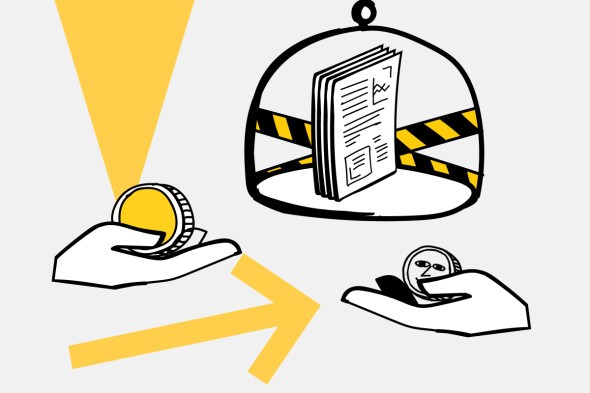
The Engendro Velho farm, located in the state of Paraná (Brazil), received a loan of nearly $20,000 using a herd of 10 cows as collateral, with decentralized technology used to digitize information about each cow.

The farmer received a financial agricultural bond (CPR-F) worth nearly $100,000 from BMP, a direct lending company, and the collateral assets (each cow) were transferred to Target FIDC – a fintech company that registered the transaction using data about each animal.

While such deals are not new, tokenization and monitoring of cows allow farmers to negotiate better terms, as lenders can check the herd's condition at any time, reducing the risks associated with such a loan.

Humberto Brenner, director of Target FIDC, emphasized that because of this factor, the price of a cow can reach a level 2.5 times higher than the price that would be set in similar agreements without monitoring. “Monitoring eliminates this uncertainty,” he stated.

5 Years After Bitcoin Law Adoption, Cryptocurrency Accounts for Only 0.7% of El Salvador's $5 Billion Remittance Market

Data released by the Central Bank of El Salvador showed that in the first half of 2026, only $35.4 million of the total external remittances to the country were sent through digital currency channels. This figure represents less than 1% of all funds sent to the country in 2026, the total of which exceeded $5 billion.

For comparison, the share of cash remittances, delivered in person when senders travel from another country to El Salvador to visit their relatives, grew to 3.8%. However, cryptocurrency remittance figures are significantly higher than in the first half of 2025, when their volume was $25.4 million, representing a growth of 39.1%.

The total volume of remittances during this period also grew from $4.84 billion to $5.06 billion, corresponding to an increase of $219.2 million (4.5%). Money transfer companies and banks are the preferred channels for Salvadorans sending money home, accounting for over 84% of the volume of funds coming from abroad.

Argentina Proposes Deregulation Bill to Modernize Capital Markets with Crypto and Blockchain

A preliminary deregulation bill, prepared by Minister of Deregulation Federico Sturzenegger, proposes significant changes aimed at incorporating digital assets and decentralized technologies into national financial markets, with the goal of opening new opportunities for investors interested in these assets.

Primarily, the bill proposes to allow investment funds to invest in digital assets if it aligns with the fund's investment policy. Preliminary estimates suggest this would create billions in demand for digital assets.

“Today, cryptoassets are investment assets; allowing funds to invest in them is a good thing, of course, provided they comply with regulatory requirements that the CNV must approve. It is not about just anyone going out to buy Bitcoin, and it's not about any cryptoasset whatsoever,” a source who wished to remain anonymous told Clarin.

Furthermore, the document allows for the tokenization of all negotiable securities, including the issuance, custody, transfer, and sale of these assets using decentralized technologies.

end-content
Trending Cryptos

Related Questions

QHow did the Brazilian farm Engendro Velho use decentralized technology to secure a loan, and what was the impact on the value of their collateral?

AThe farm used decentralized technology to tokenize and monitor a herd of 10 cows, which were used as collateral for a loan. This real-time monitoring allowed creditors to verify the herd's condition, reducing risk. Consequently, the monitored cows could be valued at up to 2.5 times the price they would have in similar agreements without monitoring.

QAccording to the Central Bank of El Salvador, what percentage of the $5 billion remittance market did cryptocurrency represent in the first half of 2026, and how does this compare to cash remittances delivered in person?

AIn the first half of 2026, cryptocurrency represented only 0.7% (or $35.4 million) of El Salvador's $5 billion remittance market. In comparison, cash remittances delivered in person by visitors accounted for 3.8% of the market.

QWhat is one of the key proposals in Argentina's draft deregulation bill regarding investment funds and digital assets?

AOne key proposal is to allow investment funds to invest in digital assets, provided it aligns with the fund's investment policy and complies with regulations to be approved by the CNV (National Securities Commission). This is expected to generate billions in demand for digital assets.

QWhat does Argentina's preliminary deregulation bill propose regarding the tokenization of securities?

AThe bill proposes to allow the tokenization of all negotiable securities, including their issuance, custody, transfer, and sale using decentralized technologies.

QDespite the low overall percentage, how did the volume of cryptocurrency remittances to El Salvador change from the first half of 2025 to the first half of 2026?

AThe volume of cryptocurrency remittances grew by 39.1%, increasing from $25.4 million in the first half of 2025 to $35.4 million in the first half of 2026.

Related Reads

From Computing to Storage: The Two-Dimensional Semiconductor Industry Chain is Taking Shape

The article "From Computing to Storage: The 2D Semiconductor Industry Chain is Taking Shape" discusses the rise of two-dimensional (2D) semiconductors as a pivotal material in the post-Moore era. As silicon-based chips approach physical limits, 2D semiconductors like molybdenum disulfide (MoS2), offer atomic-layer thinness and superior electrical properties, making them a promising non-silicon alternative for advanced nodes beyond 1nm. Globally, industry leaders like TSMC, Intel, and Samsung, along with research institutes like IMEC, are actively investing in this field. Domestically in China, significant progress is being made across the entire supply chain, from material production and equipment R&D to chip integration and ecosystem development. **Key highlights include:** * **Material & Equipment Breakthroughs:** Chinese research teams and companies like Jimo Xin Technology have achieved mass production of 6-inch and 8-inch 2D semiconductor single-crystal wafers using domestically developed equipment like Oxy-MOCVD. This addresses the critical challenge of large-area, high-quality material growth. Breakthroughs have also been made in p-type 2D materials (e.g., MoSi2N4) and wafer-scale ferroelectric thin films, essential for building complementary circuits and low-power transistors. * **Engineering Ecosystem Formation:** A landmark 8-inch 2D semiconductor pilot line in Pudong has become fully operational, bridging the gap between lab research and industrial manufacturing. The release of a Process Design Kit (PDK) compatible with mainstream EDA tools further connects design and fabrication, supporting wafer-level manufacturing of complex circuits. * **Expanding Application Landscape:** Applications are expanding from logic computing to memory. Chinese researchers have developed pioneering 2D semiconductor-based microprocessors, including a 32-bit RISC-V CPU and a higher-density multi-bit parallel processor. In memory, 2D materials' ultra-low leakage current enables DRAM with exceptionally long data retention and advances toward single-electron non-volatile storage. 2D semiconductors also show unique potential in RF circuits, radiation-hardened communications, flexible electronics, and quantum computing. In conclusion, the 2D semiconductor industry in China is rapidly advancing from laboratory research into the engineering validation and small-batch production phase. A complete industrial chain covering materials, equipment, manufacturing, design, and application is初步 forming, positioning the sector as a new competitive dimension in the global semiconductor landscape.

marsbit7m ago

From Computing to Storage: The Two-Dimensional Semiconductor Industry Chain is Taking Shape

marsbit7m ago

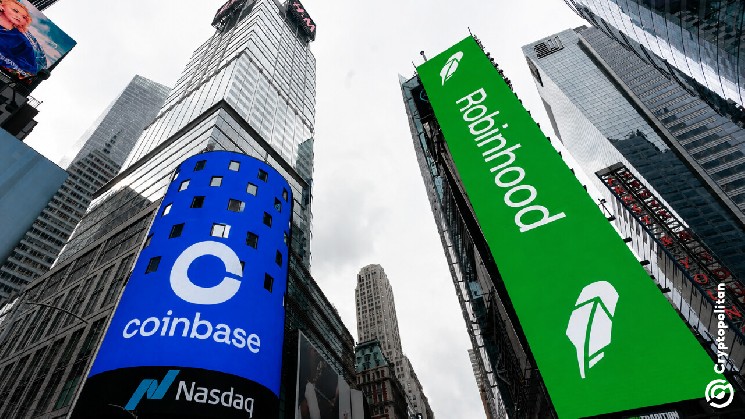
Coinbase and Robinhood Vie for the Next Phase of Cryptocurrency Market Evolution Ahead of Earnings Reports

Coinbase and Robinhood are set to report their Q2 2026 financial results this week, with the outcomes serving as key indicators for the future direction of the crypto market. While both companies have grown from their 2021 IPOs—Coinbase as a dedicated crypto exchange and Robinhood as a commission-free brokerage that expanded into crypto—their paths are now converging in competition. Analysts project Robinhood to report a profit of about $0.40 per share on ~$1.25B revenue, while Coinbase is expected to post a loss of ~$0.36 per share on ~$1.3B revenue. Despite similar revenue figures, investors value Robinhood more highly, viewing it as a diversified fintech firm rather than a pure-play crypto company. This perception has been reinforced as Robinhood gained retail trading market share, with its quarterly trading volume growing from ~$261B in early 2024 to over $704B in Q1 2026, outpacing Coinbase's growth to ~$517B. Both companies are investing heavily in blockchain-based financial infrastructure, such as tokenized stocks and stablecoins, to build more sustainable revenue streams beyond transaction fees. Coinbase has successfully reduced its reliance on trading fees, with subscription/service revenue and stablecoin revenue seeing significant growth. However, over half of its subscription revenue is tied to USDC, exposing it to new competition from banks and payment processors launching rival stablecoins. Robinhood is pursuing a global expansion strategy, recently launching its own layer-2 blockchain (Robinhood Chain) and offering tokenized U.S. stocks in over 120 countries. Its revenue is more diversified, with crypto assets making up only about 12% of its total, which helps explain its premium valuation compared to Coinbase. The upcoming reports will reveal which company's strategy is gaining more traction in shaping the next phase of crypto market evolution.

cryptonews.ru12m ago

Coinbase and Robinhood Vie for the Next Phase of Cryptocurrency Market Evolution Ahead of Earnings Reports

cryptonews.ru12m ago

Trading

Spot

Hot Articles

How to Buy BILL

Welcome to HTX.com! We've made purchasing Billions Network (BILL) simple and convenient. Follow our step-by-step guide to embark on your crypto journey.Step 1: Create Your HTX AccountUse your email or phone number to sign up for a free account on HTX. Experience a hassle-free registration journey and unlock all features.Get My AccountStep 2: Go to Buy Crypto and Choose Your Payment MethodCredit/Debit Card: Use your Visa or Mastercard to buy Billions Network (BILL) instantly.Balance: Use funds from your HTX account balance to trade seamlessly.Third Parties: We've added popular payment methods such as Google Pay and Apple Pay to enhance convenience.P2P: Trade directly with other users on HTX.Over-the-Counter (OTC): We offer tailor-made services and competitive exchange rates for traders.Step 3: Store Your Billions Network (BILL)After purchasing your Billions Network (BILL), store it in your HTX account. Alternatively, you can send it elsewhere via blockchain transfer or use it to trade other cryptocurrencies.Step 4: Trade Billions Network (BILL)Easily trade Billions Network (BILL) on HTX's spot market. Simply access your account, select your trading pair, execute your trades, and monitor in real-time. We offer a user-friendly experience for both beginners and seasoned traders.

2.5k Total ViewsPublished 2026.05.07Updated 2026.06.02

How to Buy BILL

Discussions

Welcome to the HTX Community. Here, you can stay informed about the latest platform developments and gain access to professional market insights. Users' opinions on the price of BILL (BILL) are presented below.

活动图片