加密货币市场本周赢家与输家:DEXE、LIT、BONK、JUP

ambcryptoPublished on 2026-07-12Last updated on 2026-07-12

Abstract

本周加密货币市场受宏观地缘事件影响呈现震荡走势。比特币一度下跌但随后反弹,守住63,000美元支撑,展现出韧性。市场资金明显从投机资产转向基本面更强的协议类代币。 **涨幅领先者**: - **DeXe (DEXE)** 大涨73%,领跑周涨幅榜,但技术指标显示超买,短期可能面临获利回吐压力。 - **Arbitrum (ARB)** 上涨20%,延续前周涨势,有望突破0.10美元关键阻力。 - **Lighter (LIT)** 上涨5%,成功突破2.70美元阻力位,趋势转多。 - 另类代币中,TCC、Cash Cat 等出现惊人涨幅,但波动极大。 **跌幅显著者**: - **Bonk (BONK)** 下跌18%,完全回吐前周涨幅,跌至历史新低,空头趋势延续。 - **Audiera (BEAT)** 下跌12%,但仍在关键支撑区间2.00–2.50美元之上,整体升势未破。 - **Jupiter (JUP)** 下跌超10%,回落至0.25美元以下,但仍处于长期上升通道内,关注0.20美元支撑。 - 其他代币如LAB、ETHGas等出现大幅下跌。 整体来看,市场在波动中呈现分化,资金偏好转向具基本面的项目。交易者需警惕短期过热风险,并关注关键支撑与阻力位的突破情况。

本周,宏观事件主导了加密货币市场。

中东地区重新升温的地缘政治紧张局势引发了一次短暂的避险操作,导致比特币[BTC]和山寨币下跌,随后BTC收复失地并持稳于63,000美元支撑位上方,彰显了其韧性。

在此背景下,基于协议的(protocol-based)山寨币以强劲的两位数涨幅主导了赢家榜单,而本周最大的输家大多来自投机性资产,这反映出市场资金明显向基本面更强的项目轮动。

每周赢家

DeXe [DEXE] 如何强化其看涨结构?

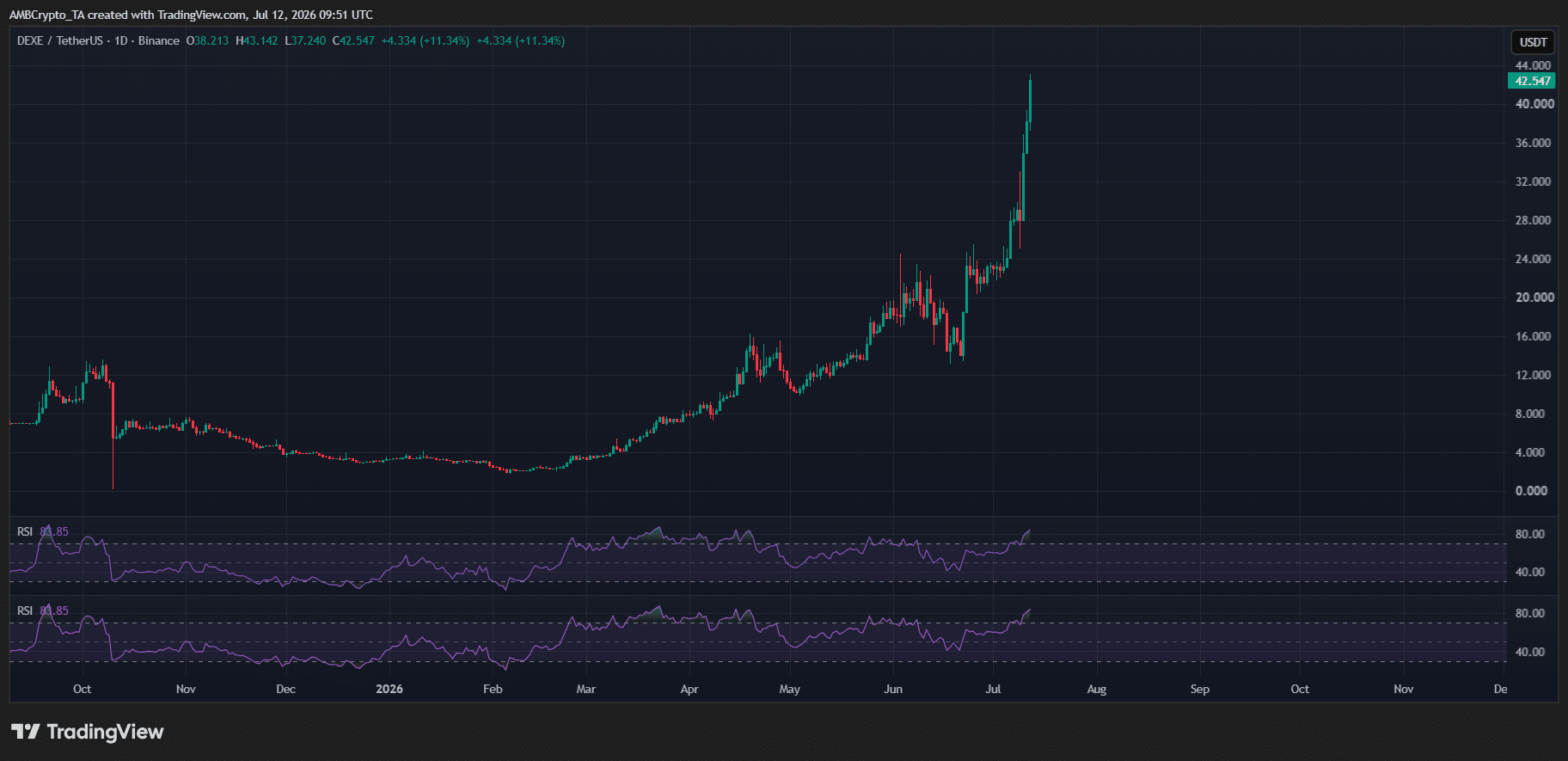
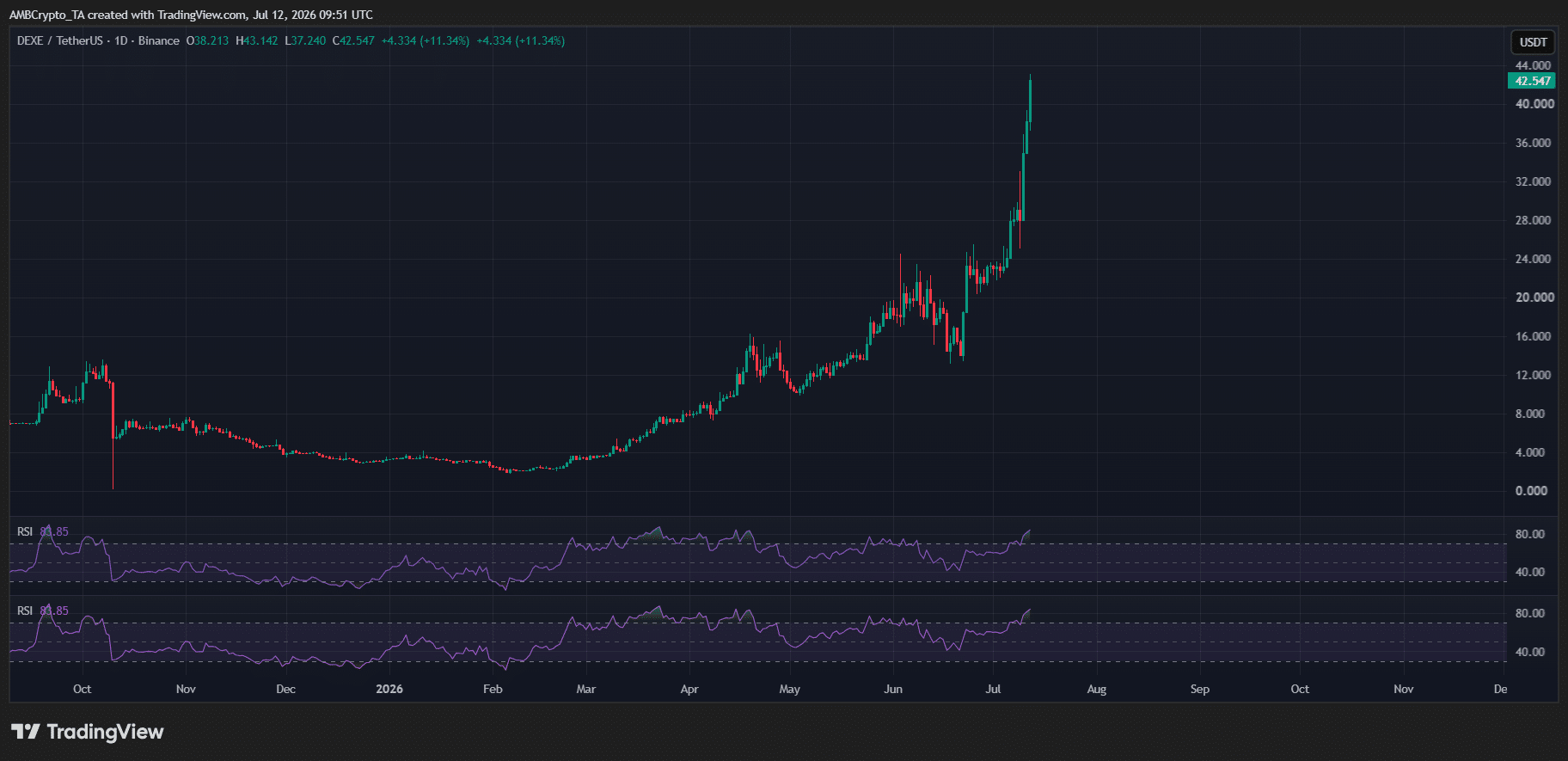
DeXe [DEXE] 以高达73%的涨幅领跑本周赢家,创下了其有记录以来最强劲的单周表现。尽管更广泛的加密货币市场情绪喜忧参半,但这一走势反映出市场对去中心化治理协议的强劲需求。

从技术角度来看,DEXE目前正逼近50美元阻力位,使再次突破成为可能。然而,这轮涨势也开始显示出疲态。截至发稿时,RSI已深入超买区域,表明买家可能已过度买入。

与此同时,DEXE在不到四个交易日内上涨了73%,突显了疯狂的买入热潮,而这通常预示着一段降温期的到来。随着地缘政治紧张局势影响市场情绪,导致整体市场再次转向避险,短期获利了结可能会增加。
来源: TradingView (DEXE/USDT)

如果发生这种情况,35美元是第一个需要关注的关键支撑位。然而,如果买家继续吸收卖压,DEXE仍有可能突破50美元并延续涨势。

总体而言,DEXE以强劲的势头进入新一周,但随着技术指标变得过度延伸,风险也随之升高。

Arbitrum [ARB] 正逼近关键阻力区

Arbitrum [ARB] 是本周涨幅第二大的代币,在上一周上涨8%之后,本周又攀升了20%。连续上涨表明买家正逐步占据主导地位,看涨动能持续累积。从技术面看,ARB仍未显过热迹象。

尽管涨势强劲,但周线RSI仍处于超买区域下方,表明本轮涨势仍有扩展空间。日线图也继续录得更高的高点,显示买家仍掌控局面。下一个需要关注的关键水平是0.10美元阻力区。自5月底的调整中失守以来,ARB尚未重新收复该水平,这使得它成为一个重要的技术障碍。

如果买盘压力以其当前的速度持续,突破0.10美元上方的可能性越来越大。这将为新一轮上涨打开大门,使ARB成为本周值得关注的技术形态较强的标的之一。

Lighter [LIT] 继续摆脱看跌控制

Lighter [LIT] 以5%的涨幅跻身本周涨幅榜第三位。虽然涨幅小于本周最大赢家,但这表明LIT延续了其近期的强势。

技术面上,更重要的进展是LIT已突破2.70美元阻力位。此前,该代币在过去两周内上涨超过50%,显示即使在强劲的上升趋势之后,买家仍愿意买入。

成功收复阻力位也将市场情绪转向有利于多头的方向。如果买盘压力持续,突破可能会吸引新的动量交易者,从而增加向3美元迈进的可能性。

其他值得注意的赢家

除了主流币种之外,本周一些山寨币的异动也引人注目。

TCC [TCC] 以惊人的66,301%涨幅领跑市场,其次是Cash Cat [CASHCAT],涨幅达3,928%,而Yei Finance [CLO] 上涨76%,为本周表现最佳者收尾。

每周输家

Bonk [BONK] 是如何抹去上周涨幅的?

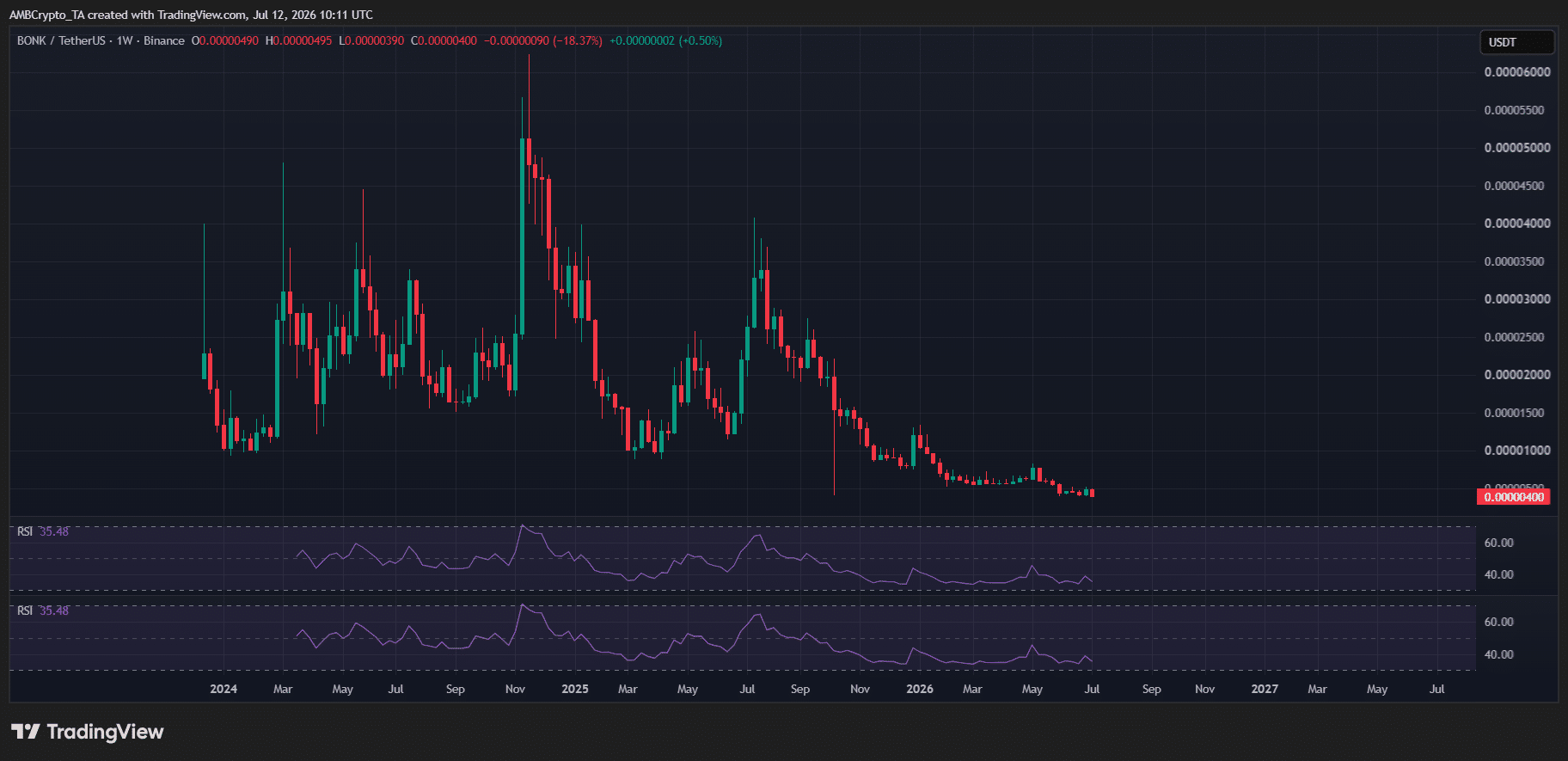
Bonk [BONK] 以18%的跌幅领跑本周输家,完全抹去了上周18.6%的涨幅。这一走势再次提醒人们模因币领域常见的剧烈波动。

有趣的是,尽管本周有1.1亿个BONK被销毁,但这轮抛售还是发生了。这表明代币销毁不足以扭转市场情绪。从技术上看,BONK也显得疲弱。自2025年第三季度中期周期以来,周线图一直在录得更低的低点,表明更广泛的下行趋势依然完好。

尽管截至撰稿时RSI已处于深度超卖区域,但买家尚未以足够坚定的信念介入以扭转趋势。本周的下跌也推动BONK跌至约0.0000039美元的历史新低,强化了看跌结构。
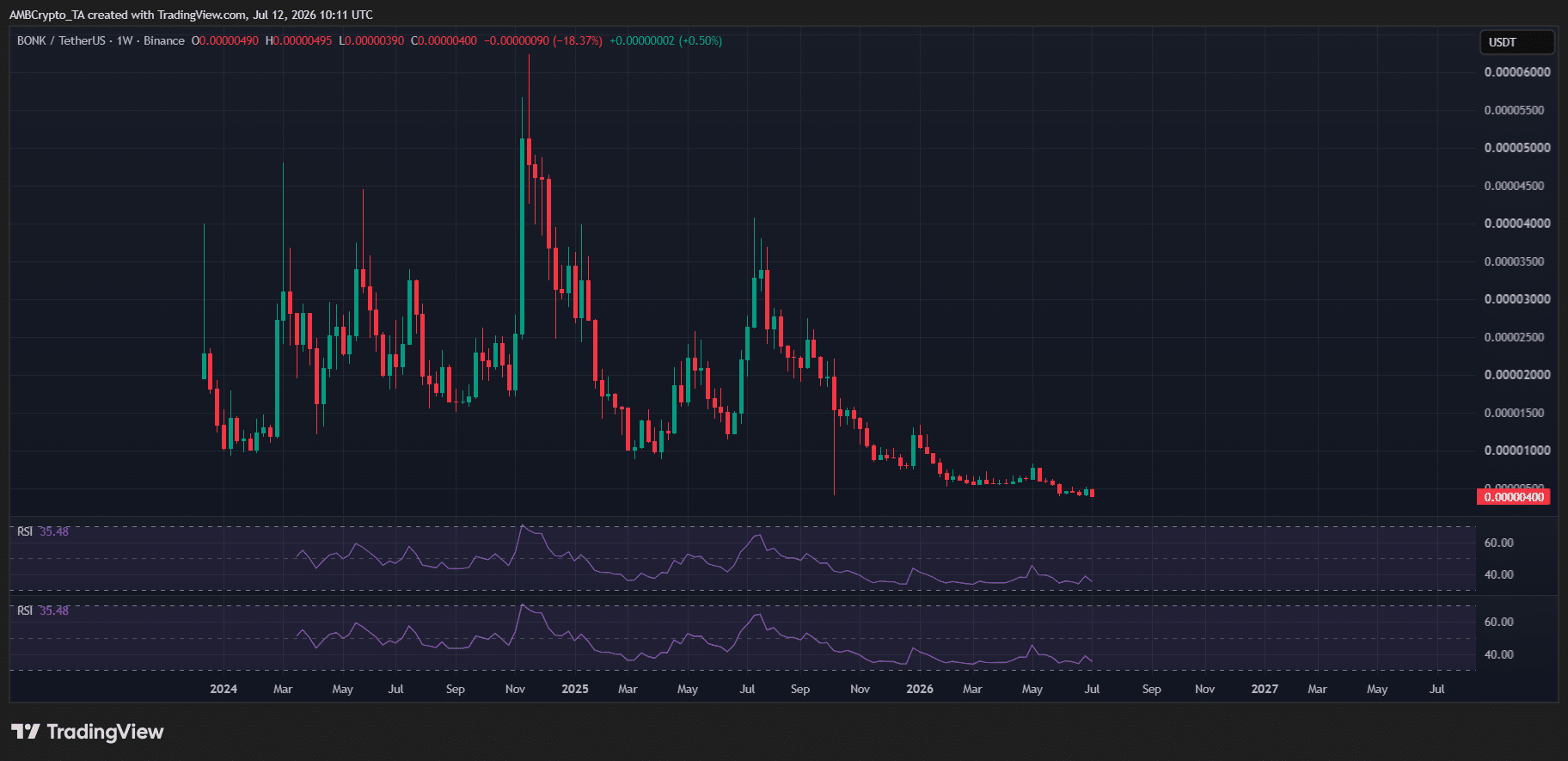
来源: TradingView (BONK/USDT)

除非市场情绪改善或买家收复关键阻力位,否则BONK很可能持续承压,使其成为下周技术形态较弱的标的之一。

Audiera [BEAT] 正在测试关键支撑的强度

Audiera [BEAT] 是本周第二大输家,在连续两周上涨后下跌了12%。尽管出现回调,BEAT仍持稳于其近期突破时所收复的水平之上,这表明多头尚未失去控制。

技术面上,目前的焦点是2.00至2.50美元的支撑区域。自5月中旬以来,买家一直在此区域附近介入,引发了几次周线反弹,并保持了更广泛的上升趋势。这使得本周的下跌看起来更像是降温,而非趋势逆转。

如果多头再次守住支撑位,BEAT可能会积累足够的动能,再次向3.50美元阻力位发起冲击。成功突破该水平将确认另一个更高的高点,并使BEAT成为下周值得关注的较强看涨形态之一。

为什么Jupiter [JUP] 出现了一个多月以来最弱的单周上涨?

Jupiter [JUP] 是本周第三大输家,跌幅略高于10%。此轮回调发生在连续数周上涨之后,并将该代币推回到0.25美元阻力位下方。

然而从技术趋势上看,多头仍占优势。JUP持续保持更高的高点和更高的低点形态,表明更广泛的上升趋势依然完好。下一个需要关注的关键水平是0.20美元,在之前的回调中,买家一直在该水平介入。

这使得JUP目前处于健康的盘整阶段,而非完全的趋势反转。如果多头继续坚守支撑位,当前的调整可能为下一轮上涨奠定基础。

重新收复0.25美元将强化看涨结构,并增加再次突破的可能性,使JUP成为下周需要关注的关键山寨币之一。

其他值得注意的输家

在更广泛的市场中,下行波动性冲击剧烈。

LAB [LAB] 以96%的跌幅领跌输家榜,其次是ETHGas [GWEI],下跌了54%,而BUILDon [B] 在空头动能加剧中下跌了47.7%。

结论

本周对加密货币市场而言是过山车般的一周。暴涨、急跌、永不停歇的波动。一如既往,保持敏锐,做好自己的研究,并明智地进行交易。


最终总结

  • DeXe [DEXE]、Arbitrum [ARB] 和 Lighter [LIT] 本周涨幅领先。
  • Bonk [BONK]、Audiera [BEAT] 和 Jupiter [JUP] 则出现显著下跌。

Trending Cryptos

Related Questions

Q根据文章,哪些加密货币是本周的涨幅榜前三名?它们分别取得了多大的涨幅?

A根据文章,本周涨幅榜前三名的加密货币及其涨幅分别是:DeXe [DEXE] 上涨73%,Arbitrum [ARB] 上涨20%,以及 Lighter [LIT] 上涨5%。

Q文章提到BONK本周下跌了18%,并且提到了一个技术面原因。这个原因是什么?

A文章提到,BONK本周下跌18%,从技术面看,其周线图自2025年第三季度中期以来一直在形成更低的低点,这表明其更广泛的下跌趋势仍然完整。此外,本周的下跌使其价格跌至约0.0000039美元的历史新低,强化了看跌结构。

Q在文章列举的“其他值得关注的输家”中,跌幅最大的两个代币是什么?它们的跌幅分别是多少?

A在文章列举的“其他值得关注的输家”中,跌幅最大的两个代币是 LAB [LAB] 和 ETHGas [GWEI]。其中,LAB下跌了96%,ETHGas下跌了54%。

Q文章在分析Arbitrum (ARB)的走势时,提到了一个需要关注的关键阻力位。这个阻力位是多少?

A文章在分析Arbitrum (ARB)时指出,下一个需要关注的关键阻力位是0.10美元区域。ARB自5月底的调整中失守该水平后,就未能重新收复,因此它是一个重要的技术障碍。

Q文章在结论部分提到,本周加密货币市场的整体表现被形容为什么?

A文章在结论部分提到,本周对于加密货币市场来说是一次“过山车”(a rollercoaster),经历了大幅上涨、急剧下跌和持续不断的波动。

Related Reads

The Success of Robinhood Chain Proves Ethereum Is Not Dead

The article argues that Robinhood's decision to build its own dedicated blockchain, Robinhood Chain, as an Ethereum Layer 2 (L2) using Arbitrum technology is a powerful endorsement of Ethereum's L1+L2 model, not a rejection of it. This move reflects a broader shift in the crypto industry from projects focused on token monetization to real-world businesses building cash-generating operations. Historically, many crypto projects chose infrastructure to support token sales and speculative value. In contrast, businesses like Robinhood and Coinbase (with Base) choose infrastructure based on commercial needs: security, liquidity, customer reach, and control. Ethereum's model provides a trusted, neutral, and liquid global settlement layer (L1) coupled with customizable, high-performance execution environments (L2s). This allows companies to maintain control and specialization without the cost and risk of building an independent L1 from scratch. The author contends that as more traditional enterprises enter the space to build sustainable businesses, they will rationally select Ethereum's L1 for maximum security and liquidity and its L2s for scalability and customization. This trend strengthens Ethereum's network effects and the utility of ETH as the native gas and asset within this expanding ecosystem. Robinhood's choice is thus seen as a landmark example of pragmatic business strategy aligning with Ethereum's architectural strengths.

marsbit34m ago

The Success of Robinhood Chain Proves Ethereum Is Not Dead

marsbit34m ago

South Korean Broker's 'Below-Expectations' Forecast Triggers 12% Plunge in SK Hynix, Putting Pressure on Entire Storage Sector

South Korean brokerage KIS released a forecast for SK Hynix's Q2 2026 earnings, predicting operating profit of 60.4 trillion won, up 556% year-over-year. However, this figure was about 8% below the market consensus of 65 trillion won. The shortfall was attributed to SK Hynix's high proportion of HBM (High Bandwidth Memory) revenue. HBM is typically sold under long-term agreements (LTAs) with fixed prices, which limited the company's average selling price (ASP) growth compared to the soaring spot market prices for standard DRAM and NAND. KIS emphasized this was a methodological adjustment to include LTA pricing, not a fundamental deterioration, and maintained its buy rating and 3.8 million won target price. Nevertheless, the report triggered a sharp market sell-off. SK Hynix's stock plunged over 12%, falling below 2 million won and extending its pullback from recent highs. The sell-off spread to related assets: leveraged ETFs tracking SK Hynix and Samsung Electronics fell sharply in Hong Kong, and A-share memory stocks also declined. Analysts note the incident highlights market sensitivity to earnings misses versus high expectations. However, KIS argues the long-term investment thesis remains intact, with the industry shift toward LTAs potentially leading to more stable, sustained profitability rather than volatile quarter-to-quarter ASP gains.

链捕手41m ago

South Korean Broker's 'Below-Expectations' Forecast Triggers 12% Plunge in SK Hynix, Putting Pressure on Entire Storage Sector

链捕手41m ago

Is the MicroStrategy Model Failing? Imitator Holding 30,000 Bitcoins Sees Pre-IPO Investors Backing Out

"The 'Bitcoin Treasury' model is facing a critical test. BSTR Holdings, a company founded by Adam Back and holding 30,021 Bitcoin, has called off its planned merger with SPAC Cantor Equity Partners I. The deal, which would have taken it public, fell apart as the attached private investment (PIPE) financing collapsed. This failure highlights a core vulnerability of the 'Bitcoin accumulation company' strategy popularized by MicroStrategy. The model relies on a key metric: mNAV, or the premium of a company's stock market value over the value of its Bitcoin holdings. This premium fuels a cycle where companies issue shares at a premium, use the cash to buy more Bitcoin, and theoretically increase the Bitcoin per share for investors. However, with Bitcoin's price down roughly 49% from its late-2024 peak, this premium has evaporated across the sector. Companies like American Bitcoin and Metaplanet are also under severe pressure. For BSTR, the lack of premium meant investors were unwilling to fund the original deal structure at the proposed terms. The companies are now renegotiating. The next SEC filing detailing any new agreement will be a crucial indicator. It will show if the model can be repriced for a low-premium environment by preserving Bitcoin holdings and investor commitments, or if it requires significantly diluting shareholders and scaling back ambitions. The outcome is a public stress test for the entire 'Bitcoin treasury' investment thesis."

marsbit1h ago

Is the MicroStrategy Model Failing? Imitator Holding 30,000 Bitcoins Sees Pre-IPO Investors Backing Out

marsbit1h ago

Want Another Bull Market? Bitcoin Needs Trillions in Fresh Capital Inflow

Title: Want Another Bull Run? Bitcoin Needs Trillions in New Capital Bitcoin has fallen 50% from its October 2025 high of $126k, now trading near $63,000. Recent on-chain reports reveal structural differences in this downturn compared to past cycles, extending beyond simple price charts. A key issue is declining capital efficiency. CryptoQuant analysis shows the capital required for price appreciation has surged dramatically. In 2011, $27 billion in net inflows drove a 55,436% gain. From 2018-2021, $36.5 billion fueled a ~2000% rise. This cycle, $69.7 billion in realized cap growth has yielded only a 689% increase. Today, an estimated $101 billion is needed to double the price, versus just $5 million in 2011. The report concludes that triggering a major bull run now likely requires over $1 trillion in new institutional capital, positioning Bitcoin as a core global asset class rather than relying on retail ETF flows. Meanwhile, supply is tightening. K33 Research notes long-term holder supply has hit a record 79% of circulating coins. Dormant bitcoin moving after 2+ years is at its lowest since 2012. Alphractal data confirms this trend, with ~830k BTC recently moving to long-term storage. This scarcity of tradable supply can amplify price moves from any new buying pressure but doesn't guarantee capital inflow. Profitability metrics signal a potential bottom. CryptoQuant's Net Realized Profit/Loss ratio has dropped to -0.35, a 43-month low matching levels seen during the 2022 FTX crash. Historically, such extremes preceded major bull markets in 2015 and 2019. The current price is only 16% above the network's realized price; historically, this has led to average gains of 41% in six months and 81% in one year. Bitcoin is testing key support near $60,000, with analysts noting a potential W-bottom pattern forming. Macro headwinds persist. U.S. spot Bitcoin ETFs saw record monthly outflows of over $4.5 billion in June. Uncertainty around Federal Reserve policy under a potential new chair and mixed economic data add pressure. While European institutional infrastructure is slowly developing (e.g., German banks offering BTC services), this is a demand factor, not an immediate liquidity catalyst. In summary, the market shows signs of bottoming: sell-side pressure is largely exhausted, supply is scarce, and metrics are at historical extremes. However, for a significant bull run akin to past cycles, unprecedented institutional capital—likely exceeding $1 trillion—is required to overcome the new reality of drastically lower capital efficiency. The decisive variable of massive new institutional inflows remains absent.

Foresight News1h ago

Want Another Bull Market? Bitcoin Needs Trillions in Fresh Capital Inflow

Foresight News1h ago

Trading

Spot

Hot Articles

How to Buy JUP

Welcome to HTX.com! We've made purchasing Jupiter (JUP) simple and convenient. Follow our step-by-step guide to embark on your crypto journey.Step 1: Create Your HTX AccountUse your email or phone number to sign up for a free account on HTX. Experience a hassle-free registration journey and unlock all features.Get My AccountStep 2: Go to Buy Crypto and Choose Your Payment MethodCredit/Debit Card: Use your Visa or Mastercard to buy Jupiter (JUP) instantly.Balance: Use funds from your HTX account balance to trade seamlessly.Third Parties: We've added popular payment methods such as Google Pay and Apple Pay to enhance convenience.P2P: Trade directly with other users on HTX.Over-the-Counter (OTC): We offer tailor-made services and competitive exchange rates for traders.Step 3: Store Your Jupiter (JUP)After purchasing your Jupiter (JUP), store it in your HTX account. Alternatively, you can send it elsewhere via blockchain transfer or use it to trade other cryptocurrencies.Step 4: Trade Jupiter (JUP)Easily trade Jupiter (JUP) on HTX's spot market. Simply access your account, select your trading pair, execute your trades, and monitor in real-time. We offer a user-friendly experience for both beginners and seasoned traders.

3.4k Total ViewsPublished 2024.03.29Updated 2026.06.02

How to Buy JUP

Discussions

Welcome to the HTX Community. Here, you can stay informed about the latest platform developments and gain access to professional market insights. Users' opinions on the price of JUP (JUP) are presented below.

活动图片