Standard Chartered lại 'vẽ' biểu đồ tăng 50 lần, đặt mục tiêu 3.500 USD cho AAVE

链捕手Published on 2026-06-25Last updated on 2026-06-25

Abstract

Tập đoàn Standard Chartered tiếp tục đưa ra dự báo táo bạo về tiền mã hóa, lần này là về AAVE. Ngân hàng này dự đoán AAVE có khả năng tăng 50 lần, đạt 3.500 USD vào cuối năm 2030. Lập luận dựa trên kỳ vọng TVL của DeFi tăng 37 lần lên khoảng 2,7 nghìn tỷ USD và tỷ lệ thâm nhập của RWA (tài sản thế giới thực) vào DeFi tăng từ 3,5% lên 30%. Báo cáo nhấn mạnh mô hình kinh doanh hiệu quả của Aave và khả năng nắm bắt cơ hội từ làn sóng mã hóa tài sản thông qua thị trường cho vay có giấy phép Horizon và stablecoin GHO. Dù có sự kiện rút tiền liên quan đến lỗ hổng bảo mật KelpDAO vào tháng 4, nó được coi là biến động ngắn hạn. Về cơ bản, Aave thể hiện sự vững chãi. Grayscale cũng đánh giá AAVE là tài sản được thúc đẩy bởi dòng tiền và hiện đang bị định giá thấp. Aave chiếm 80,7% lợi nhuận của toàn bộ thị trường cho vay DeFi tính đến nay, trong khi chỉ nắm giữ khoảng một nửa TVL của ngành. Tuy nhiên, mô hình cho vay peer-to-pool của Aave tồn tại điểm yếu cố hữu về hiệu quả sử dụng vốn, dẫn đến tổn thất "vô hình" đáng kể do vốn nhàn rỗi. Sự kiện KelpDAO đã phơi bày rủi ro này. Các giao thức mới nổi như Morpho, với thiết kế hiệu quả hơn, đang trở thành đối thủ cạnh tranh tiềm năng. Tóm lại, Aave đang đứng ở ngã ba đường giữa tầm nhìn lạc quan và thách thức thực tế. Tương lai của nó sẽ phụ thuộc vào khả năng tìm ra con đường mở rộng quy mô, củng cố nền tảng để hỗ trợ tầm nhìn tăng trưởng hàng nghìn tỷ USD.

Tác giả: Jae, PANews

Sau UNI, Standard Chartered lại đưa ra tuyên bố mạnh mẽ với ngành công nghiệp tiền mã hóa: AAVE có khả năng tăng vọt 50 lần trước cuối năm 2030, đạt mức 3.500 USD.

Bài đọc liên quan:Standard Chartered 'đánh cược' 40 lần, kêu gọi UNI tăng lên 100 USD

Luận điệu cực đoan, hệ số nhân phóng đại, cùng với kịch bản quen thuộc: Giá AAVE vượt qua mốc 80 USD, mức tăng 24 giờ từng chạm gần 20%. Thị trường cho vay trên chuỗi xôn xao, có người reo mừng vì các ông lớn truyền thống lạc quan về AAVE, cũng có người chế giễu Standard Chartered là một bên bán hàng khác bị choáng ngợp.

Trận chiến tiếp theo của Aave sẽ diễn ra trong sự đan xen giữa tưởng tượng và thực tế.

Standard Chartered dùng Excel 'vẽ' 'đường nến' tăng 50 lần cho AAVE

Nếu cô đọng báo cáo nghiên cứu AAVE của Standard Chartered thành một câu, đó sẽ là: Quy mô tiền gửi quyết định dung lượng cho vay, dung lượng cho vay thúc đẩy thu nhập phí, và cuối cùng thu nhập phí chuyển hóa thành vốn hóa thị trường token. Trong 12 tháng qua, khoảng 90% thu nhập phí của Aave đến từ chênh lệch lãi suất ròng giữa gửi và vay.

Khung định giá truyền thống dựa trên logic ánh xạ tuyến tính cũng được Standard Chartered áp dụng trực tiếp vào giao thức cho vay. Dựa trên mô hình định giá của họ, AAVE sẽ đi theo một đường cong tăng trưởng theo từng bậc.
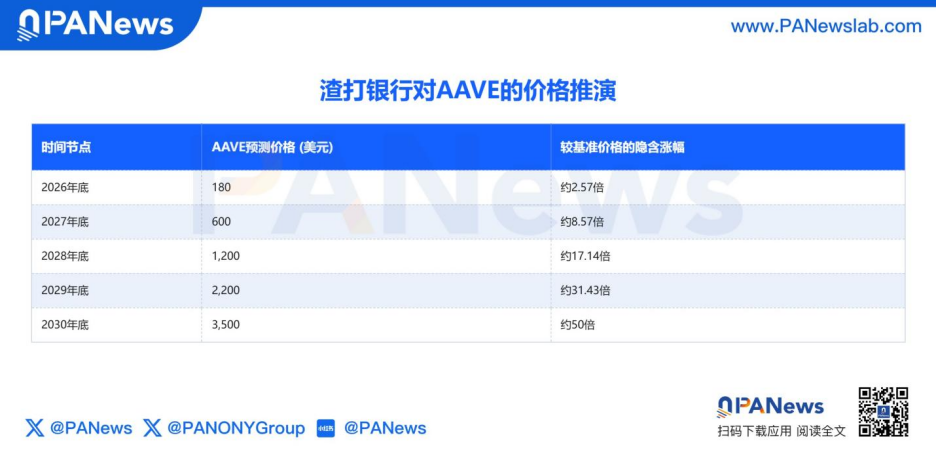
Giả định của Standard Chartered bắt nguồn từ dự đoán về hai xu hướng chính trong phân khúc DeFi:

  • TVL (Tổng giá trị bị khóa) của DeFi sẽ tăng 37 lần. Standard Chartered dự đoán, đến năm 2030, tổng tài sản hoạt động trong DeFi sẽ tăng 37 lần so với mức hiện tại, đạt khoảng 2,7 nghìn tỷ USD. Động lực đến từ mức tăng trưởng 2 nghìn tỷ USD do mở rộng quy mô stablecoin và làn sóng token hóa RWA (Tài sản thế giới thực).

  • Tỷ lệ thâm nhập của RWA trong DeFi tăng từ 3.5% lên 30%. Điều này có nghĩa là, hàng nghìn tỷ USD tài sản truyền thống sẽ đổ vào các giao thức cho vay trên chuỗi.

Nhìn lại thời kỳ đỉnh cao vào tháng 10 năm ngoái, Aave từng quản lý khoản tiền gửi lên tới 75 tỷ USD. Nếu xem nó như một ngân hàng truyền thống, quy mô này đủ để lọt vào top 35 ngân hàng lớn nhất Hoa Kỳ.

Standard Chartered cho rằng, hiệu quả hoạt động của Aave vượt xa các ngân hàng truyền thống phụ thuộc vào mạng lưới chi nhánh vật lý và nhân sự cồng kềnh. Một khi làn sóng token hóa đến, Aave sẽ dựa vào thị trường cho vay có giấy phép Horizon và việc thu phí từ stablecoin GHO của mình, để chuyển hóa lợi nhuận từ việc đưa RWA lên chuỗi thành thu nhập thực tế cho giao thức.

Đối với việc rút tiền hàng loạt do sự cố bảo mật cầu nối rsETH của KelpDAO hồi tháng 4, Standard Chartered định tính đó là biến động ngắn hạn trong giai đoạn tạo đáy, chứ không phải sự sụp đổ của các yếu tố cơ bản lâu dài của giao thức.

Ngay cả khi bỏ qua câu chuyện dài hạn và quay lại góc nhìn trung và ngắn hạn, các yếu tố cơ bản của Aave cũng đủ vững chắc.

Vào ngày 18 tháng 6, Grayscale đã công bố một báo cáo chuyên sâu về Aave, lần đầu tiên áp dụng mô hình DCF (Chiết khấu dòng tiền) và phương pháp P/E (Tỷ số giá trên thu nhập) của tài chính truyền thống vào định giá giao thức DeFi.

Kết luận của Grayscale là: AAVE là tài sản điển hình được thúc đẩy bởi dòng tiền, hiện đang ở trong vùng giá bị đánh giá thấp.
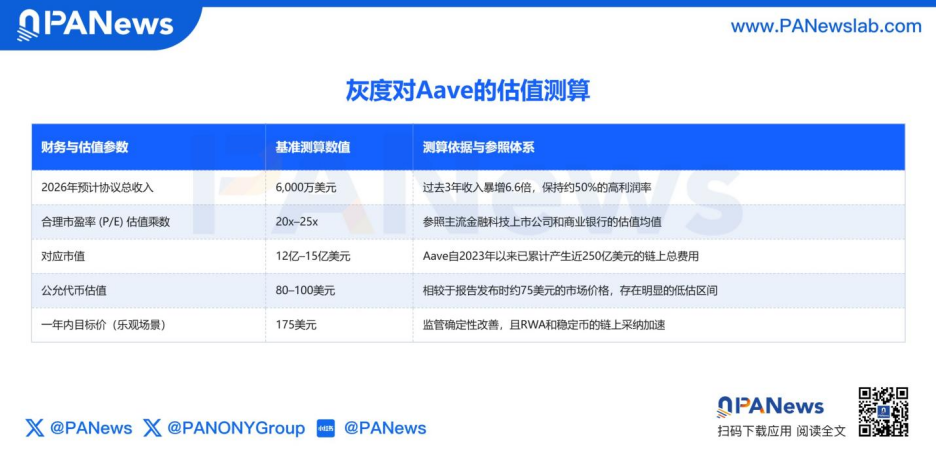
Grayscale nhấn mạnh, doanh thu giao thức cả năm 2025 của Aave lên tới 142 triệu USD, sở hữu dòng tiền lành mạnh. Quan trọng hơn, kế hoạch mua lại và đốt token được Aave DAO khởi động vào tháng 4 năm ngoái, cùng với đề xuất "Aave Will Win" về việc chuyển lợi nhuận sản phẩm cho người nắm giữ token, đã tạo ra cơ chế thông suốt con đường dẫn truyền “Giao thức tạo máu → Token tăng giá”.

Chiếm 8/10 lợi nhuận với một nửa TVL của cả phân khúc, một phần vốn nhàn rỗi trở thành gót chân Achilles

Ngoài bức tranh vĩ mô do vốn thể chế vẽ nên, Aave cũng đã xây dựng được hào sâu phòng thủ ở cấp độ vi mô.

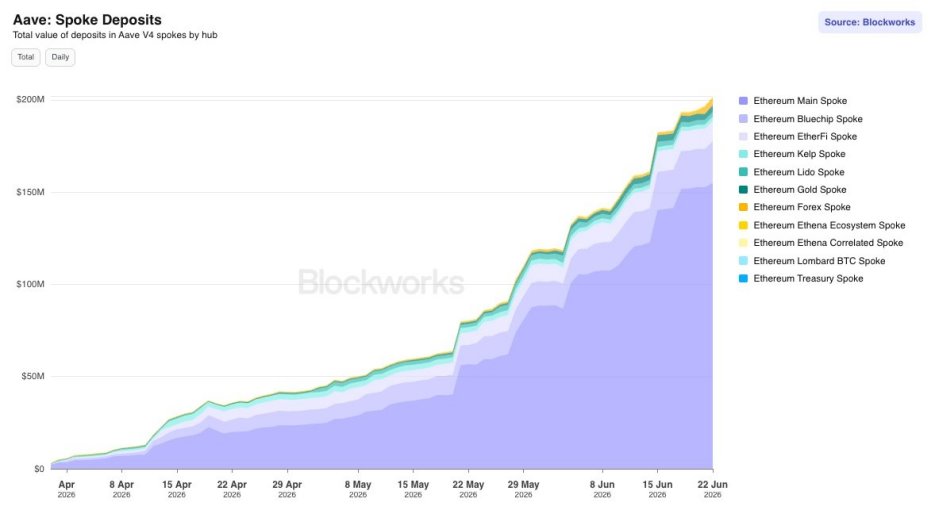
Đầu tiên, là sự đột phá vượt kỳ vọng của kiến trúc công nghệ thế hệ mới Aave V4. Là đợt viết lại kiến trúc cơ bản quy mô lớn nhất của giao thức kể từ năm 2020, V4 sử dụng thiết kế "Trung tâm thanh khoản + Nhánh (Hub-and-Spoke)", phá vỡ hiệu ứng ốc đảo thanh khoản đơn chuỗi trước đây. Tính đến thời điểm hiện tại, tổng tiền gửi V4 đã vượt qua 200 triệu USD, quy mô cho vay gần 60 triệu USD.
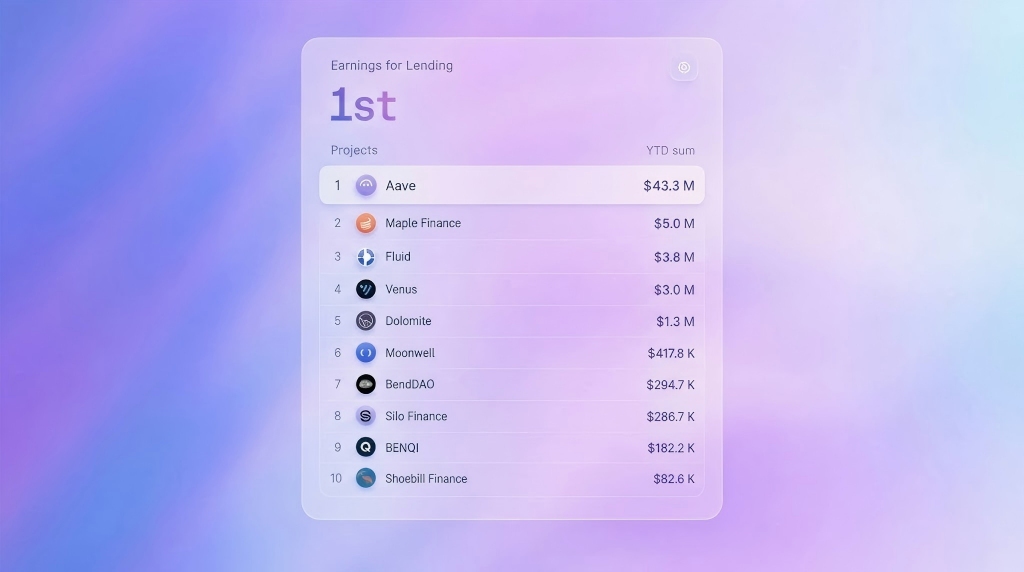
Đáng chú ý hơn là khả năng sinh lời của nó. Tổ chức phân tích dữ liệu trên chuỗi MSB Intel chỉ ra rằng, từ đầu năm đến nay, Aave trong phân khúc cho vay đã tạo ra khoảng 43,3 triệu USD "Lợi nhuận giữ lại giao thức" (Earnings), chiếm 80,7% tổng lợi nhuận của cả phân khúc. Các giao thức xếp sau như Maple Finance, Fluid, Venus, lợi nhuận đơn lẻ của mỗi giao thức đều không vượt quá 5 triệu USD, không cùng quy mô với Aave.

Trong thế giới kinh doanh truyền thống, chất lượng của một doanh nghiệp thường được quyết định bởi lợi nhuận ròng, chứ không phải tổng tài sản. Lợi nhuận giữ lại là một chỉ số phản ánh thực tế khả năng tạo ra giá trị ròng trên chuỗi của giao thức, sau khi đã trừ đi các chi phí vận hành liên quan và khuyến khích lạm phát token.

Nói cách khác, Aave đã sử dụng khoảng một nửa TVL của cả phân khúc để chiếm lấy hơn 80% lợi nhuận ròng của hệ thống. Cơ cấu lợi nhuận gần như độc quyền này chính là viên đá tảng vững chắc nhất trong dự đoán tăng 50 lần của Standard Chartered.
Ở mặt khác của đồng xu, căn bệnh mãn tính về cấu trúc mà tổ chức nghiên cứu tiền mã hóa Delphi Digital từng đề cập, vẫn là một bài toán chưa được giải quyết. Nguồn gốc của vấn đề nằm trong mô hình cho vay ngang hàng qua pool (Peer-to-Pool) của Aave.

Theo tính toán của Delphi Digital, trên ba thị trường chính là WETH, USDT, USDC, tổn thất vô hình (Deadweight Loss) hàng năm của Aave do vốn nhàn rỗi gây ra lên tới 52 triệu USD, quy mô gần bằng một nửa thu nhập ròng năm hóa của quý I/2026.
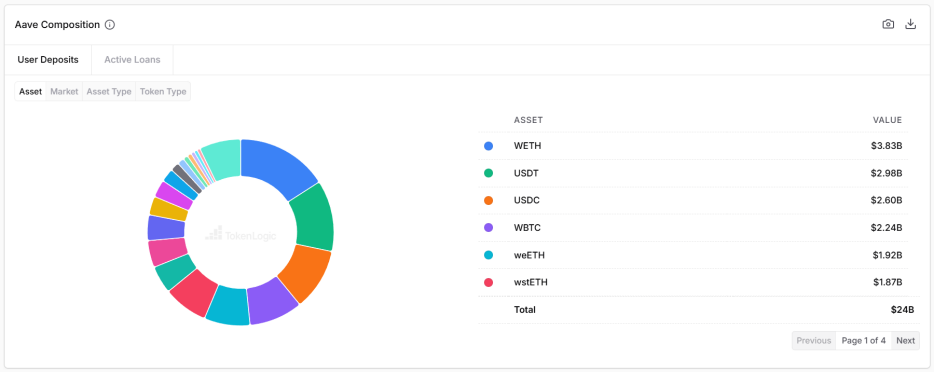
Sự tách rời có hệ thống giữa lãi suất tiền gửi và lãi suất cho vay là khuyết điểm tự nhiên của mô hình ngang hàng qua pool. Để đảm bảo người gửi tiền có thể rút lại bất cứ lúc nào mà không bị tổn thất, Aave phải duy trì một vùng đệm thanh khoản nhàn rỗi khổng lồ trong pool vốn. Điều này dẫn đến việc lãi suất mà người gửi tiền nhận được thường thấp hơn 25% đến 35% so với lãi suất mà người vay phải trả. Khoảng chênh lệch ở giữa chính là chi phí cơ hội của vốn nhàn rỗi. Ngay cả khi tầng quản trị DAO điều chỉnh hệ số dự trữ về 0, tổn thất vô hình do vốn nhàn rỗi vẫn sẽ lên tới 36 triệu USD.

Sự cố KelpDAO hồi tháng 4 càng làm lộ rõ sự mong manh của mô hình này. Sau khi hacker rút gần 200 triệu USD WETH, tỷ lệ sử dụng pool vốn WETH bị khóa ở mức 100% trong suốt 5 ngày, người dùng gửi tiền thông thường không thể rút tiền, cũng không thể tham gia thanh lý, để lại vết sẹo cho Aave đến nay vẫn chưa lành hẳn.

Loại khiếm khuyết cấu trúc này khiến Aave dễ bị lây nhiễm "rủi ro thượng nguồn", cộng với điểm yếu bẩm sinh về hiệu quả vốn thấp, cũng tạo cơ hội cho những người đến sau đột phá. Các giao thức cho vay mới nổi như Morpho, tập trung vào cách ly mô-đun, kết hợp ngang hàng chính xác, thiết kế cơ bản tối giản, đang từ phía hiệu quả ăn mòn thị phần của Aave, trở thành đối thủ cạnh tranh mạnh mẽ nhất dưới ngai vàng của nó.

Nhìn lại từ điểm giữa năm 2026, Aave đang đứng ở ngã rẽ giữa tưởng tượng và thực tế.

Chiếc 'bánh vẽ' '3.500 USD' của Standard Chartered phản ánh tham vọng của tài chính truyền thống đối với việc đưa tài sản lên chuỗi. So với sự tăng trưởng của con số TVL, trọng tâm tương lai của Aave sẽ là tìm ra một con đường khả thi để hỗ trợ quy mô tài sản nghìn tỷ USD.

Ngai vàng cho vay DeFi vẫn còn đó, nhưng nền móng bên dưới ngai vàng, vẫn cần trải qua một cuộc tái cấu trúc hoặc gia cố.


Trending Cryptos

Related Questions

QNgân hàng Standard Chartered đưa ra dự báo giá nào cho AAVE vào năm 2030 và dựa trên các giả định cốt lõi nào?

ANgân hàng Standard Chartered dự báo AAVE có thể tăng 50 lần, đạt mức 3,500 USD vào cuối năm 2030. Dự báo này dựa trên hai giả định chính: (1) Tổng giá trị tài sản được khóa (TVL) trong DeFi sẽ tăng 37 lần lên khoảng 2.7 nghìn tỷ USD, được thúc đẩy bởi sự mở rộng của stablecoin và làn sóng tài sản thế giới thực (RWA) lên chuỗi. (2) Tỷ lệ thâm nhập của RWA trong DeFi sẽ tăng từ 3.5% lên 30%.

QTheo Grayscale, điều gì làm cho AAVE trở thành một tài sản hấp dẫn và tại sao họ cho rằng nó đang bị định giá thấp?

AGrayscale cho rằng AAVE là một tài sản điển hình được thúc đẩy bởi dòng tiền (cash flow-driven asset). Báo cáo của họ chỉ ra rằng AAVE có dòng tiền mạnh mẽ với doanh thu giao thức năm 2025 đạt 142 triệu USD. Hơn nữa, các cơ chế như kế hoạch mua lại và đốt token (bắt đầu từ tháng 4 năm ngoái) và đề xuất 'Aave Will Win' (chuyển lợi nhuận sản phẩm cho người nắm giữ token) đã tạo ra một con đường rõ ràng từ 'việc tạo ra doanh thu của giao thức đến việc gia tăng giá trị token'. Dựa trên các mô hình định giá truyền thống như DCF và P/E, họ kết luận giá hiện tại của AAVE đang ở trong vùng định giá thấp.

QAave đã thể hiện sức mạnh về khả năng sinh lời như thế nào so với các đối thủ trong cùng lĩnh vực cho vay DeFi?

ATheo phân tích từ MSB Intel, Aave thể hiện khả năng sinh lời vượt trội. Tính từ đầu năm đến nay, Aave đã tạo ra khoảng 43.3 triệu USD 'lợi nhuận giữ lại giao thức' (Protocol Earnings), chiếm tới 80.7% tổng lợi nhuận của toàn bộ phân khúc cho vay DeFi. Điều đáng chú ý là Aave đạt được điều này trong khi chỉ chiếm khoảng một nửa tổng TVL của phân khúc, cho thấy hiệu quả và vị thế gần như độc quyền trong việc tạo ra lợi nhuận ròng.

QMô hình cho vay 'ngang hàng qua nhóm' (Peer-to-Pool) của Aave tồn tại những hạn chế cố hữu nào, và chúng gây ra vấn đề gì?

AMô hình 'ngang hàng qua nhóm' của Aave có một số hạn chế cố hữu chính: (1) Tổn thất vô hình do vốn nhàn rỗi (Deadweight Loss): Để đảm bảo người gửi tiền có thể rút tiền bất cứ lúc nào, giao thức phải duy trì một bộ đệm thanh khoản nhàn rỗi lớn trong nhóm. Điều này dẫn đến lãi suất cho người gửi tiền thường thấp hơn 25-35% so với lãi suất người đi vay phải trả, gây ra tổn thất cơ hội ước tính lên tới 52 triệu USD/năm chỉ với ba thị trường chính. (2) Rủi ro lây nhiễm và kém hiệu quả vốn: Sự cố với KelpDAO vào tháng 4 đã cho thấy sự dễ tổn thương của mô hình này, khi một vụ tấn công có thể làm tắc nghẽn toàn bộ nhóm thanh khoản, ngăn người dùng rút tiền. Cấu trúc này cũng kém hiệu quả về vốn, tạo cơ hội cho các đối thủ cạnh tranh mới (như Morpho) với các mô hình hiệu quả hơn.

QPhiên bản Aave V4 mang lại sự đổi mới quan trọng nào và nó đã đạt được những kết quả ban đầu ra sao?

AAave V4 là bản nâng cấp kiến trúc cốt lõi lớn nhất kể từ năm 2020, với thiết kế đột phá 'Trung tâm thanh khoản & Nhánh' (Liquidity Hub-and-Spoke). Thiết kế này phá vỡ hiệu ứng 'ốc đảo' thanh khoản đơn chuỗi trước đây, cho phép quản lý thanh khoản linh hoạt và hiệu quả hơn trên nhiều chuỗi. Về kết quả ban đầu, tính đến thời điểm bài báo, tổng số tiền gửi vào V4 đã vượt 200 triệu USD, với quy mô cho vay đạt gần 60 triệu USD, cho thấy sự tiếp nhận tích cực từ cộng đồng.

Related Reads

In the AI Era, What's Left for Bitcoin?

As Bitcoin falls below $60,000, the author reflects on the relationship between AI and Bitcoin, seeing them as two sides of the same coin. In the AI era, the cost of generating content has plummeted, making fake text, images, and videos increasingly easy and cheap to produce. This has led to a fundamental shift: while AI dramatically lowers the cost of information production, it also undermines trust and authenticity online. What becomes truly valuable is not more content, but the ability to verify what is real—"verifiability." This perspective offers a new lens for Bitcoin. Its massive energy consumption, often criticized as wasteful, is reinterpreted. While AI burns energy to enhance "capability" and efficiency, Bitcoin burns energy to produce "verifiability." Its purpose is not to be trusted but to enable a system where no trust in intermediaries—banks, platforms, or developers—is needed. Every transaction and the entire ledger's history is secured by cryptography and a decentralized network of nodes, making it independently verifiable. AI cannot forge a transaction on the Bitcoin network because the system is designed for proof, not generation. The author draws a historical parallel to the Renaissance: the printing press drastically reduced the cost of copying knowledge, while double-entry bookkeeping reduced the cost of trust in commerce. Today, AI is the new printing press, reducing content creation costs to near zero. Blockchain, and Bitcoin as its pioneer, may be the modern equivalent of double-entry bookkeeping—a foundational technology for verifying digital asset ownership and historical records without centralized authorities. Thus, AI and blockchain are not competitors. AI lowers the cost of creation; blockchain lowers the cost of verification. In an age where AI can generate anything, true scarcity may lie not in more content, but in independently verifiable facts. Whether the market will reprice Bitcoin accordingly remains uncertain, but its core value proposition as a "machine for producing verifiability" becomes strikingly relevant.

marsbit16m ago

In the AI Era, What's Left for Bitcoin?

marsbit16m ago

In the Age of AI, What's Left for Bitcoin?

Author: Sevclub, Seven Research Amid Bitcoin's recent drop below $60k, the author reflects on a growing sense that AI and Bitcoin are two sides of the same coin. Today, encountering any content triggers a new default question: "Was this made by AI?" The cost of generating convincing text, images, and video is now negligible. While the internet lowered information *distribution* costs, AI is crashing information *production* costs to near zero. The consequence is a flood of content where truth and falsehood are increasingly indistinguishable. In this environment, what becomes truly valuable is not more information, but the ability to verify what is real—"verifiability." This reframes the common criticism that Bitcoin "wastes electricity." AI consumes power to produce "capability" (e.g., more powerful models). Bitcoin consumes power to produce something else: "verifiability." Bitcoin's core purpose isn't about belief or trust in any institution, developer, or even its creator. It's about enabling independent verification. Every bitcoin's origin, every transaction, and the integrity of the entire ledger are secured by mathematics, cryptography, and a global network of nodes. AI can fabricate convincing media, but it cannot falsify a transaction on the Bitcoin network. The expended energy makes篡改历史 (tampering with history) prohibitively expensive, purchasing a globally verifiable ledger. The author draws a historical parallel to the Renaissance. The printing press drastically reduced the cost of copying knowledge, while double-entry bookkeeping reduced the cost of trust in commerce—one enabled creation, the other verification. Today, AI is the new printing press, driving content production costs toward zero. The question becomes: what is this era's "double-entry bookkeeping"? Blockchain appears to be the leading candidate. It doesn't verify which news is true or which image is real, but it provides a foundational layer for independently verifying asset ownership and historical records in the digital realm without centralized authorities. Therefore, AI and blockchain are not in competition. AI lowers the cost of *generation*. Blockchain (and Bitcoin as a prime example) lowers the cost of *verification*. One creates, the other proves. Whether Bitcoin ultimately succeeds remains uncertain, facing potential challenges from quantum computing, regulation, and technical evolution. However, the author now sees it less as a "machine for making bitcoin" and more as a "machine for making verifiability." In an age where AI can generate anything, true scarcity may no longer be "more content," but "more independently verifiable facts." Whether the market will price this accordingly is a separate question.

链捕手25m ago

In the Age of AI, What's Left for Bitcoin?

链捕手25m ago

Trading

Spot

Hot Articles

What is $BANK

Bank AI: A Revolutionary Step in the Future of Banking Introduction In an era marked by rapid advancements in technology, Bank AI stands at the intersection of artificial intelligence (AI) and banking services. This innovative project seeks to redefine the financial landscape, enhancing operational efficiency, security measures, and customer experiences through the power of AI. As we embark on this exploration of Bank AI, we will delve into what the project entails, its operational dynamics, its historical context, and significant milestones. What is Bank AI? At its core, Bank AI represents a transformative initiative aimed at integrating artificial intelligence into various banking operations. This project harnesses the capabilities of AI to automate processes, improve risk management protocols, and enhance customer interaction through personalized services. The primary objectives of Bank AI include: Automation of Banking Functions: By leveraging AI technologies, Bank AI aims to automate routine tasks, reducing the burden on human resources and enhancing efficiency. Enhanced Risk Management: The project utilises AI algorithms to predict and identify risks, thereby fortifying security measures against fraud and other threats. Personalization of Banking Services: Bank AI focuses on offering tailored financial products and services by analysing customer data and behaviours. Improving Customer Experience: The implementation of AI-driven solutions, such as chatbots and virtual assistants, aims to provide users with more human-like interactions, revolutionising the way customers engage with banks. With these goals, Bank AI positions itself as a crucial player in rendering banking more efficient, secure, and user-centric. Who is the Creator of Bank AI? Details regarding the creator of Bank AI remain unknown. As such, no specific individual or organisation has been identified in the available information. The anonymity surrounding the project's inception raises questions but does not detract from its ambitious vision and objectives. Who are the Investors of Bank AI? Similar to the project's creator, specific information regarding the investors or supporting organisations of Bank AI has not been disclosed. Without this information, it is challenging to outline the financial backing and institutional support that might be propelling the project forward. Nevertheless, the importance of having a robust investment foundation is pivotal for sustaining development in such an innovative field. How Does Bank AI Work? Bank AI operates on several innovative fronts, focusing on unique factors that differentiate it from traditional banking frameworks. Below are key operational features: Automation: By applying machine learning algorithms, Bank AI automates various manual processes within banks. This results in reduced operational costs and allows human workers to redirect their efforts towards more strategic activities. Advanced Risk Management: The integration of AI into risk management practices equips banks with tools to accurately predict potential threats such as fraud, ensuring that customer information and assets remain secure. Tailored Financial Recommendations: Through continuous learning from customer interactions, the AI systems develop a nuanced understanding of user needs, enabling them to offer tailored advice on financial decisions. Enhanced Customer Interactions: Utilizing chatbots and virtual assistants powered by AI, Bank AI enables a more engaging customer experience, allowing users to have their queries resolved quickly, thus reducing wait times and improving satisfaction levels. Together, these operational features position Bank AI as a pioneer in the banking sector, establishing new benchmarks for service delivery and operational excellence. Timeline of Bank AI Understanding the trajectory of Bank AI requires a look at its historical context. Below is a timeline highlighting important milestones and developments: Early 2010s: The conceptualization of AI integration into banking services began to gain attention as banking institutions recognised the potential benefits. 2018: A marked increase in the implementation of AI technologies occurred when banks started using AI tools like chatbots for basic customer service and risk management systems for improved security handling. 2023: The sophistication of AI continued to advance, with generative AI being introduced for more complex tasks such as document processing and real-time investment analysis. This year marked a significant leap in the capabilities afforded to banks by AI technology. 2024-Current Status: As of this year, Bank AI is on an upward trajectory, with ongoing research and developments poised to further enhance capabilities in banking operations. Continued exploration of AI applications hints at exciting developments yet to come. Key Points About Bank AI Integration of AI in Banking: Bank AI focuses on adopting artificial intelligence to streamline banking processes and improve user experiences. Automation and Risk Management Focus: The project strongly emphasizes these areas, aiming to shift the burden of routine tasks while enhancing security frameworks through predictive analytics. Personalized Banking Solutions: By harnessing customer data, Bank AI enables tailored banking services that cater to individual user needs. Commitment to Development: Bank AI remains committed to ongoing research and development efforts, ensuring its adaptability and ongoing relevance as technology continues to evolve. Conclusion In summary, Bank AI exemplifies a crucial step forward in the banking industry, leveraging artificial intelligence to reshape operational paradigms, enhance security, and promote customer satisfaction. Despite gaps in information surrounding the creator and investors, the clear objectives and functional mechanisms of Bank AI provide a strong foundation for its ongoing evolution. As AI technology continues to advance and merge with the banking sector, Bank AI is well-positioned to significantly impact the future of financial services, enhancing the way we understand and interact with banking.

1.1k Total ViewsPublished 2024.04.05Updated 2024.12.03

What is $BANK

How to Buy BANK

Welcome to HTX.com! We've made purchasing Lorenzo Protocol (BANK) simple and convenient. Follow our step-by-step guide to embark on your crypto journey.Step 1: Create Your HTX AccountUse your email or phone number to sign up for a free account on HTX. Experience a hassle-free registration journey and unlock all features.Get My AccountStep 2: Go to Buy Crypto and Choose Your Payment MethodCredit/Debit Card: Use your Visa or Mastercard to buy Lorenzo Protocol (BANK) instantly.Balance: Use funds from your HTX account balance to trade seamlessly.Third Parties: We've added popular payment methods such as Google Pay and Apple Pay to enhance convenience.P2P: Trade directly with other users on HTX.Over-the-Counter (OTC): We offer tailor-made services and competitive exchange rates for traders.Step 3: Store Your Lorenzo Protocol (BANK)After purchasing your Lorenzo Protocol (BANK), store it in your HTX account. Alternatively, you can send it elsewhere via blockchain transfer or use it to trade other cryptocurrencies.Step 4: Trade Lorenzo Protocol (BANK)Easily trade Lorenzo Protocol (BANK) on HTX's spot market. Simply access your account, select your trading pair, execute your trades, and monitor in real-time. We offer a user-friendly experience for both beginners and seasoned traders.

4.9k Total ViewsPublished 2025.05.09Updated 2026.06.02

How to Buy BANK

Discussions

Welcome to the HTX Community. Here, you can stay informed about the latest platform developments and gain access to professional market insights. Users' opinions on the price of BANK (BANK) are presented below.

活动图片