Claude to Mandate "Face-Scan ID Verification", No ID No Service Starting July?

链捕手Published on 2026-06-15Last updated on 2026-06-15

Abstract

Anthropic, the creator of Claude AI, has sent privacy policy update emails to users, signaling a significant shift. The key change, effective July 8, is the potential requirement for consumer-level users (Free, Pro, Max plans) to verify their age or identity. This verification would be conducted through the third-party service Persona, involving uploading a government-issued photo ID and taking a live selfie for comparison. Anthropic states this data is for security purposes only, will not be used for model training, and is processed by Persona, not stored on its own servers. The update also clarifies data handling for Claude's new capabilities: when performing multi-step tasks or connecting to third-party apps, user data may flow between Anthropic and those external services. Additionally, more information may be collected from users who participate in Anthropic research. This move is seen as a major step towards establishing accountability as AI agents become more powerful and autonomous, capable of executing complex, real-world tasks. It follows previous enforcement actions, like the banning of the "Fable 5" account, and indicates a broader industry trend toward stricter user identification and safety measures. The verification is expected to apply in specific scenarios, particularly as users engage Claude in more complex agentic workflows.

Author: New Zhiyuan

Anthropic is in the headlines again!

In recent days, many Claude users opened their email to find a message from Anthropic. The title seemed innocuous - "Privacy Policy Update Notification". But the content left them stunned:

"We may ask you to verify your age or identity."
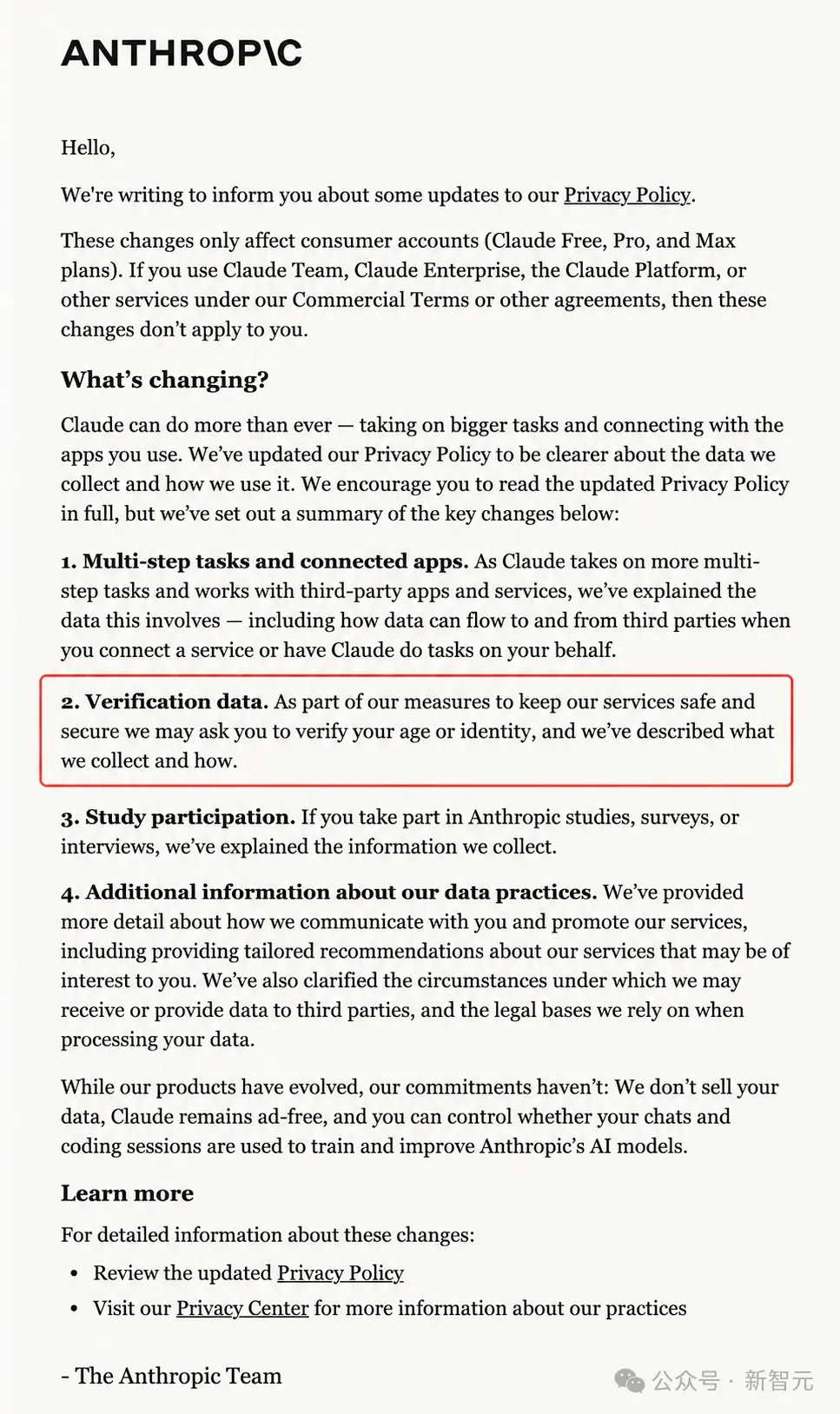
Someone shared a screenshot of the email on X, and the comments exploded. According to the email content, starting July 8th, Claude will likely start asking for your ID. Has Anthropic's real-name verification finally arrived?
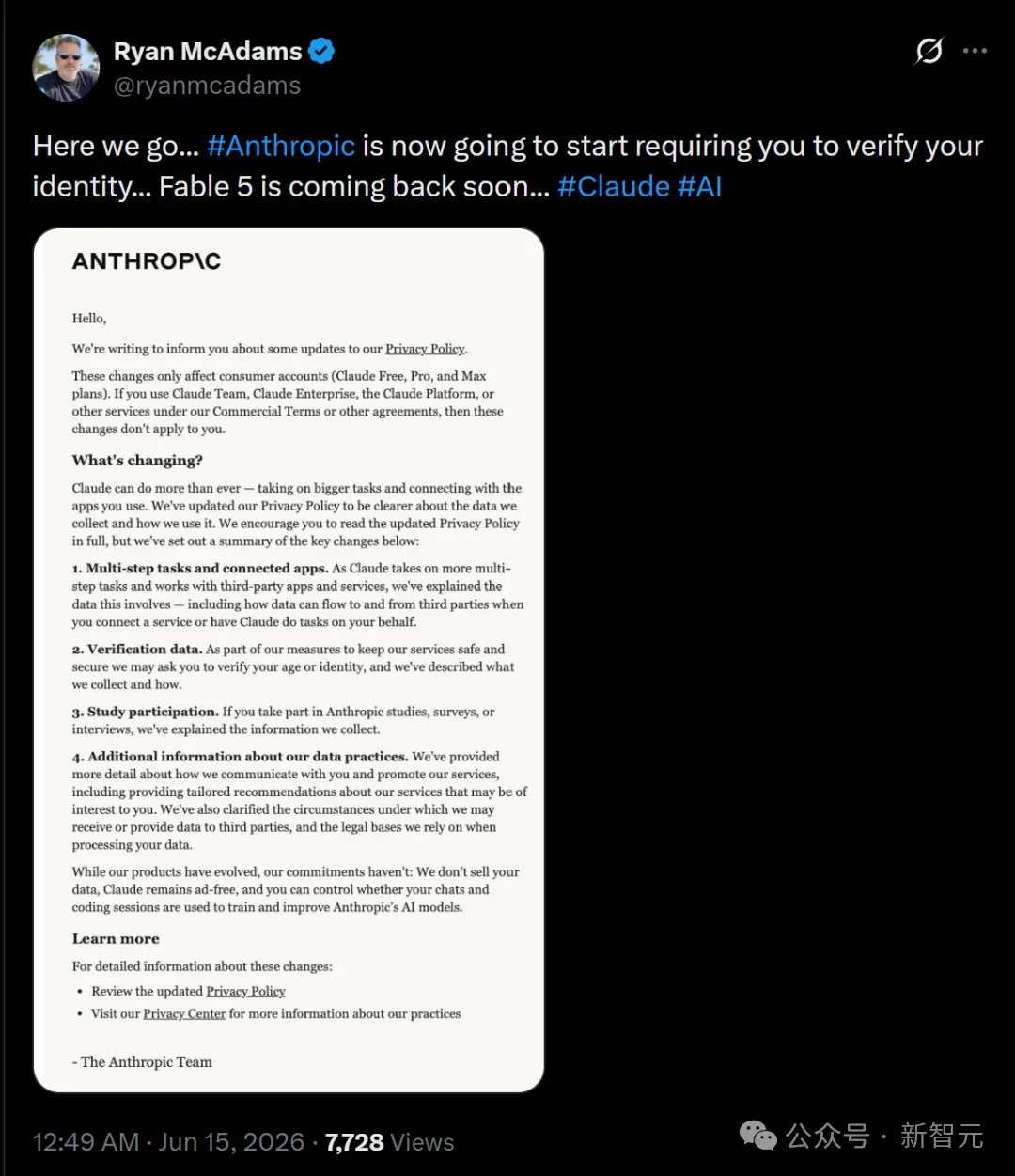
Anthropic Suddenly Announces, Is Real-Name Verification Really Coming?

On June 10th, many Claude users' inboxes received an email from Anthropic.
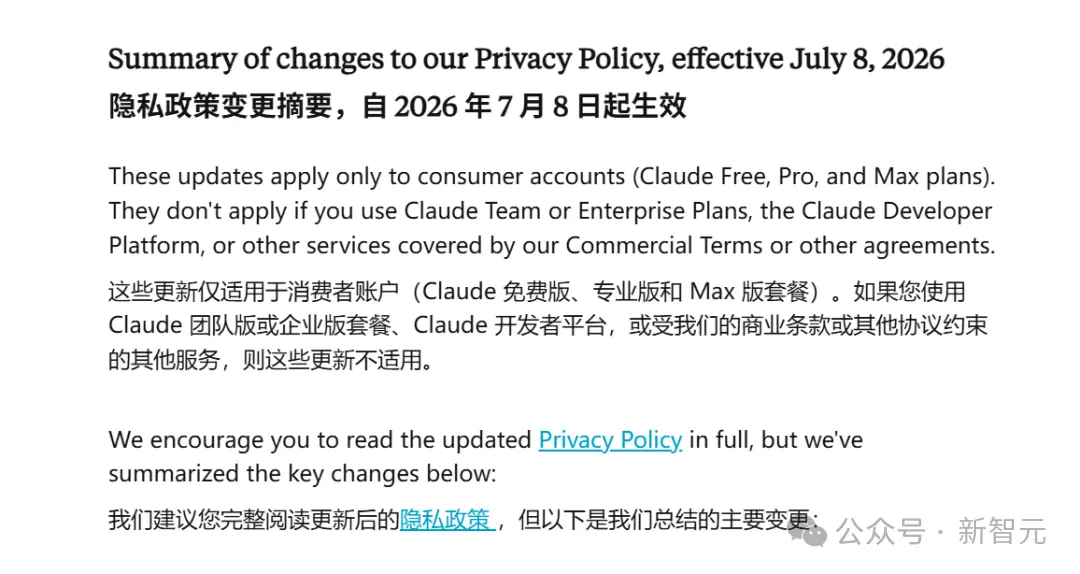
The email mentions that starting July 8th, Anthropic may ask users to verify their age or identity, citing the reason as "enhancing security." More interestingly, some found they just received this email today, while their other accounts hadn't received it at all before, suggesting it might be a batch rollout or an A/B test.

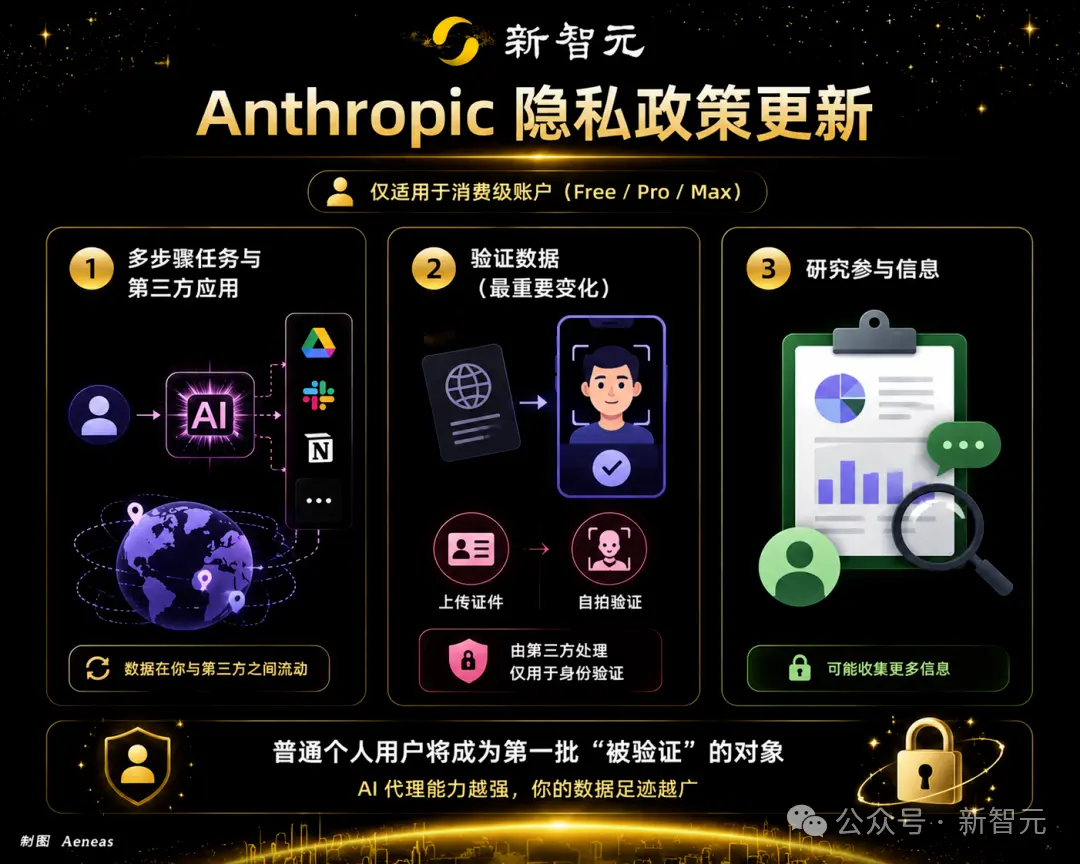
According to the officially updated privacy policy in the email, there are three core changes:
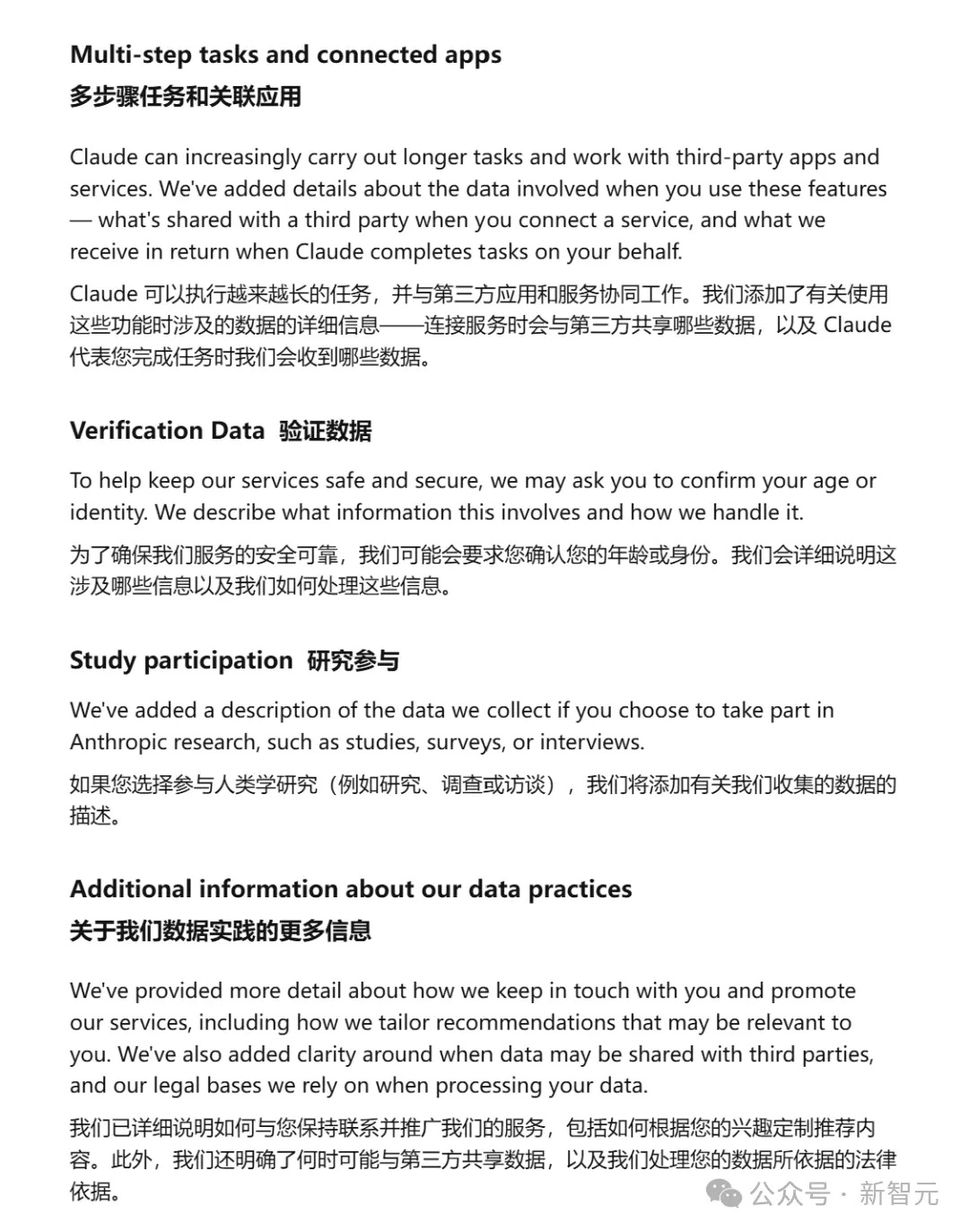
1. Data Flow for Multi-Step Tasks and Third-Party Apps

As Claude's capabilities improve, it can perform multi-step tasks on behalf of users (like helping you plan a full trip: checking flights, booking hotels, arranging itineraries), and can also connect to third-party apps (like Google Drive, Slack, Notion, etc.).

Moreover, your data no longer stays solely on Anthropic's servers. Anthropic explicitly states in the updated privacy policy: When you connect a service or have Claude perform tasks for you, data can flow between you and third parties.

This means your conversation content, uploaded files, and even your commands may leave Anthropic's servers and enter third-party app processing pipelines. For ordinary users, the more powerful the AI's "agentic capabilities," the broader your data footprint becomes.

2. Verification Data (Core Change)

This is the most impactful part of this update. The policy text reads:

As part of our efforts to maintain the security and reliability of our services, we may ask you to verify your age or identity. We are explaining here what information we collect and how.

How will verification be done?

According to Anthropic's official support page, verification will be conducted through the third-party service Persona. The specific process includes:

  • Uploading a government-issued, photo ID document (passport, driver's license, ID card, etc.)

  • Taking a real-time selfie (for comparison with the ID photo)

Anthropic attempts to reassure users, emphasizing that this data is only used to confirm identity, and will not be used for model training; data will not be stored on Anthropic's own servers (handled by Persona); and the entire process is only for specific security and compliance scenarios.

Nevertheless, this notification still shocked the user base. On platform X, one user shared an email screenshot with the caption: "Received on June 10th, thought it was just a regular update at the time... looking back now, terrifying to contemplate." Another user joked: They said they need to verify identity, so is Fable 5 coming back?

3. Research Participation Information

If you participate in Anthropic's research surveys or interviews, they will collect more information.
⚠️ Important Note:

The above three changes apply only to consumer accounts (Free, Pro, Max). Business customers (Team, Enterprise) are not affected. This means ordinary individual users will be the first batch to undergo "verification."

Anthropic explains on its official support page: Identity verification was previously only used in specific scenarios targeting minors, violators, or accounts in unsupported regions. In the future, as agent tasks become more complex, the scope of verification will gradually expand.

Identity verification is not something Anthropic is doing for the first time. Previously, when dealing with minor protection, violators, and accounts in some unsupported regions, similar verification methods have been used. The difference is that this time, the wording and scope are more explicit, and they specifically highlighted one sentence—in the future, as Agent tasks become increasingly complex, verification scenarios may continue to expand.

Many heavy Agent users worry: in the future, when using Claude to run automated tasks, will there be constant pop-ups asking for face scans? Currently, the official has not provided more detailed trigger conditions; after July 8th, there will likely be more specific explanations.

AI's "Wild West Era" Is Coming to an End

Thinking back to the recent uproar over the "Fable 5 Ban" incident, everything seems to have been foreshadowed.

When the Fable 5 account was banned by the authorities for crossing safety red lines, it shocked everyone. Many thought it might be a one-off disciplinary action for an extreme case, but now it appears that Fable 5's downfall is not an isolated incident, but rather a prelude to a comprehensive tightening by Anthropic and even the entire AI industry.

As AI's capabilities evolve from a "chat companion tool" to an "all-powerful agent" capable of operating third-party applications and executing complex tasks, the authorities will never allow another Fable 5 to run wild beyond legal boundaries.

The so-called "real-name system" and "face-scan verification" mark that on the eve of the full-scale explosion of AI Agents, major players must establish an unbreakable accountability tracing mechanism in advance. Once AI causes trouble while booking tickets, editing files, or even executing more complex business commands on your behalf, the platform must know exactly which real-life "person" is giving the orders behind the screen.

From July 8th onward, every time you attempt to have Claude help you complete multi-step complex tasks, it might be accompanied by a pop-up: Please upload your ID document.

Anthropic's message reveals—winter is coming. From now on, face-scan verification and account purging will likely become the norm for the AI industry in 2026.

In another month, when using Claude, one must be prepared to hold up their ID at any moment.

References:

  • https://x.com/ryanmcadams/status/2066201356034011370?s=20

  • https://privacy.claude.com/en/articles/10301952-updates-to-our-privacy-polic

Trending Cryptos

Related Questions

QWhat is the main announcement Anthropic made to its users regarding Claude's privacy policy, and what change is expected starting July 8th?

AAnthropic announced an update to Claude's privacy policy, notifying users that starting July 8th, the company may require them to verify their age or identity to enhance security. This verification would be conducted through the third-party service Persona and could involve uploading a government-issued photo ID and taking a live selfie.

QAccording to the article, what are the three key changes outlined in the updated privacy policy?

AThe three key changes are: 1) Clarification on how user data flows during multi-step tasks and interactions with third-party apps connected to Claude. 2) The introduction of identity and age verification for users. 3) Clarification on the collection of information for users participating in Anthropic's research programs, such as surveys and interviews.

QWhich group of Claude users will primarily be affected by the new identity verification requirement?

AThe new identity verification requirement will primarily affect consumer-level accounts, including Free, Pro, and Max plans. Business customers using Team or Enterprise plans are not impacted by this change.

QWhat is the stated reason Anthropic is implementing identity verification, and how does the company claim to handle the collected data?

AAnthropic states the reason for implementing identity verification is to enhance the safety and reliability of its services. The company claims the data will only be used to confirm identity, not for model training. The verification process is handled by the third-party service Persona, and the data is not stored on Anthropic's own servers.

QHow does the article connect this policy change to the broader trend in the AI industry, specifically mentioning the 'Fable 5' incident?

AThe article suggests this policy change is part of a broader industry-wide tightening of regulations. It connects it to the 'Fable 5' incident, where an account was banned for safety violations, implying that as AI agents like Claude become capable of performing complex, multi-step tasks, companies must establish clear accountability and traceability to prevent misuse, marking the end of a more 'wild' era for AI.

Related Reads

Goldman Sachs: July Smashes Through Crowded Trades, U.S. Stock Bull Market Not Broken but Harder to Navigate

Goldman Sachs: July Sees Crowded Trades Unwound, U.S. Bull Market Intact but Getting Tougher. The U.S. stock market in July did not see an index-level crash, but rather a significant unwinding of speculative positions. While the S&P 500 remained stable—trading within a narrow 3.5% range and staying within 2% of its high—underlying market dynamics were volatile. Heavily crowded trades, particularly in high-momentum tech, AI-linked stocks, and Asian strategies, faced severe pressure and forced deleveraging. Data indicates this was a meaningful cleanse, not a minor adjustment. Global tech exposure saw its largest sell-off in over five years, leverage in Korean equity ETFs plummeted, and Goldman's prime brokerage recorded the largest gross exposure reduction since late 2022. Leverage on momentum factors among fundamental long/short clients fell to the 28th percentile of its one-year range. The AI trade narrative shifted from pure potential to a focus on tangible returns. While Meta failed to show clear AI monetization, Microsoft and Amazon provided evidence that massive capital expenditure is translating into scalable revenue and product growth, preventing a blanket sell-off of the AI sector. The Federal Reserve's more opaque communication style and volatility in long-end Treasury yields have introduced new friction, particularly for rate-sensitive growth and tech stocks. The broader outlook for U.S. equities remains favorable, supported by a strong economy, robust earnings, and substantial AI capital expenditure. However, risk/reward is no longer cheap, and the market's upward elasticity has weakened. The Nasdaq 100's trajectory—up 12% year-to-date despite significant pullbacks—illustrates that the bull trend persists but the path is becoming more difficult. The key lesson from July is that the market no longer rewards crowded, highly leveraged trades, requiring more disciplined and liquid portfolio approaches.

marsbit4m ago

Goldman Sachs: July Smashes Through Crowded Trades, U.S. Stock Bull Market Not Broken but Harder to Navigate

marsbit4m ago

Interview with Robinhood Executive: Meme + Tokenized US Stocks as "Barbell" Customer Acquisition Strategy, All Business Lines Achieve Hundreds of Millions in Revenue

Interview with Robinhood executive Johann Kerbrat reveals the company's "barbell" customer acquisition strategy for its new Robinhood Chain, combining meme tokens with tokenized stocks. Three weeks after mainnet launch, the chain has seen over $3B in weekly DEX volume and 105M transactions. Kerbrat explains the logic behind the permissionless chain: meme tokens attract DeFi users, while tokenized real-world assets (RWA), currently over 90 US stocks and ETFs accessible in 120+ countries, serve global users. The goal is to bring Robinhood's 27 million funded accounts on-chain by simplifying DeFi with a user-friendly interface, exemplified by features like Robinhood Earn which offers yield without requiring wallet management. Built on Arbitrum's technology stack for its speed, low cost, and Ethereum's security, the chain focuses on financial products like Earn, spot trading, and perpetuals. Kerbrat downplays direct competition with platforms like Base, emphasizing the goal of expanding the overall market for on-chain assets. He details selective partnerships (e.g., Morpho, Lighter) based on compliance, unique UX, and differentiation. While regulatory clarity is pending for US perpetuals, the expansion continues via Bitstamp in Europe. Finally, Kerbrat positions Robinhood as a "super app" integrating stocks, options, crypto, banking, and AI trading, with all major business lines generating hundreds of millions in revenue. For the chain, current priority is driving adoption over maximizing gas fee revenue.

marsbit2h ago

Interview with Robinhood Executive: Meme + Tokenized US Stocks as "Barbell" Customer Acquisition Strategy, All Business Lines Achieve Hundreds of Millions in Revenue

marsbit2h ago

Fidelity Q3 Report: BTC, ETH, and SOL Continue to Build Bottoms; How Much Further Will This Crypto Bear Market Go?

Fidelity's Q3 Crypto Signal Report analyzes the current bear market, noting Bitcoin (BTC), Ethereum (ETH), and Solana (SOL) are in a prolonged bottoming phase. Key indicators like the weighted Net Unrealized Profit/Loss (NUPL) have turned negative (-0.01), signaling the market is slightly below its aggregate cost basis, with BTC acting as the primary stabilizing asset. BTC's dominance has risen to 68%, indicating a lack of capital rotation to other digital assets. Performance has been weak across the board, with BTC, ETH, and SOL down significantly year-to-date. Market sentiment is depressed, exacerbated by substantial outflows from spot ETPs and a challenging macro environment. The report compares the current ~203-day downtrend to historical ~300-day bottoming cycles, suggesting the process may be two-thirds complete, with late 2026 as a potential timeframe to monitor. For Bitcoin, NUPL at 0.09 indicates cautious sentiment, while momentum signals remain negative. The Yardstick metric points to potential undervaluation relative to network security (hashrate). Ethereum's NUPL is deep in the "capitulation" zone at -0.43, a historically positive signal for future returns, though its momentum and network fee revenue are negative. Solana shows the deepest NUPL at -0.72 but demonstrates relative resilience in on-chain activity and stablecoin transfer volume. The report concludes that while several metrics are near historical capitulation levels, a definitive market bottom has not yet been established. The path forward likely involves continued consolidation, with BTC's relative strength and fundamental on-chain usage for ETH and SOL providing key areas for investor observation.

marsbit2h ago

Fidelity Q3 Report: BTC, ETH, and SOL Continue to Build Bottoms; How Much Further Will This Crypto Bear Market Go?

marsbit2h ago

Trading

Spot

Hot Articles

How to Buy ID

Welcome to HTX.com! We've made purchasing SPACE ID (ID) simple and convenient. Follow our step-by-step guide to embark on your crypto journey.Step 1: Create Your HTX AccountUse your email or phone number to sign up for a free account on HTX. Experience a hassle-free registration journey and unlock all features.Get My AccountStep 2: Go to Buy Crypto and Choose Your Payment MethodCredit/Debit Card: Use your Visa or Mastercard to buy SPACE ID (ID) instantly.Balance: Use funds from your HTX account balance to trade seamlessly.Third Parties: We've added popular payment methods such as Google Pay and Apple Pay to enhance convenience.P2P: Trade directly with other users on HTX.Over-the-Counter (OTC): We offer tailor-made services and competitive exchange rates for traders.Step 3: Store Your SPACE ID (ID)After purchasing your SPACE ID (ID), store it in your HTX account. Alternatively, you can send it elsewhere via blockchain transfer or use it to trade other cryptocurrencies.Step 4: Trade SPACE ID (ID)Easily trade SPACE ID (ID) on HTX's spot market. Simply access your account, select your trading pair, execute your trades, and monitor in real-time. We offer a user-friendly experience for both beginners and seasoned traders.

3.6k Total ViewsPublished 2024.03.29Updated 2026.06.02

How to Buy ID

Discussions

Welcome to the HTX Community. Here, you can stay informed about the latest platform developments and gain access to professional market insights. Users' opinions on the price of ID (ID) are presented below.

活动图片