Coinbase – Un Meilleur Marché Permet des Hypothèques Garanties par Bitcoin et l'USDC

bitcoinistPublished on 2026-06-06Last updated on 2026-06-06

Abstract

Better Mortgage, en partenariat avec Coinbase, propose désormais un nouveau produit de prêt hypothécaire acceptant le Bitcoin et l'USDC comme garantie. Le premier prêt, garanti par Fannie Mae, a été accordé à un couple du Michigan. Le produit se distingue par l'absence de liquidation du collatéral crypto, qui reste en garde pendant toute la durée du prêt sans être vendu en cas de baisse de valeur. Avec une liste d'attente déjà ouverte et un volume prévu de 250 millions de dollars, le lancement à l'échelle nationale est prévu pour cet été, avec des plans d'extension à d'autres actifs numériques à l'avenir.

Better Mortgage a déjà ouvert une liste d'attente pour un nouveau produit de prêt immobilier qui accepte le Bitcoin et l'USDC comme garantie, avec des plans pour un lancement à l'échelle nationale cet été et un volume de prêt projeté de 250 millions de dollars sur la base des inscriptions jusqu'à présent.

Fonctionnement du Produit

Le prêteur hypothécaire s'associe à la plateforme d'échange de cryptomonnaies Coinbase pour alimenter les transactions en arrière-plan.

Les emprunteurs disposant d'importants avoirs en Bitcoin sont connectés à Better via l'interface produit de Coinbase, où ils passent par le processus de candidature, sont approuvés, puis autorisent en un clic le transfert de leur Bitcoin vers un portefeuille de conservation, selon Roy Zhang, directeur produit chez Coinbase.

Le premier prêt dans le cadre de cet arrangement a été accordé à un couple d'Ann Arbor, dans le Michigan, identifié uniquement comme Joe et Amy. Joe a déclaré que ce dispositif lui donnait confiance car leur Bitcoin restait sécurisé dans un compte de conservation au lieu d'être vendu pour couvrir un acompte.

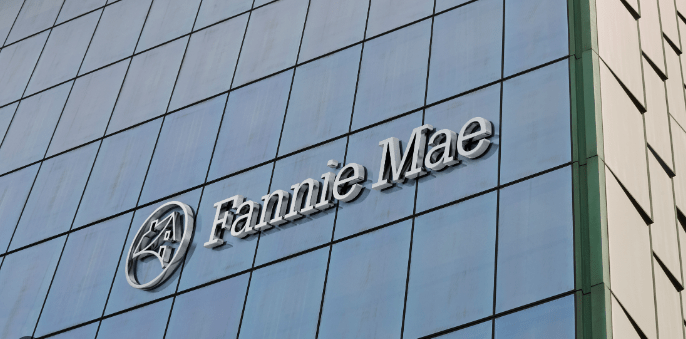
Source : Fannie Mae
Le Soutien de Fannie Mae Ajoute du Poids

Ce qui distingue ce produit des précédentes expériences de prêt garanti par des cryptomonnaies est l'implication de Fannie Mae. L'entreprise parrainée par le gouvernement, qui a annoncé en mars qu'elle commencerait à accepter les cryptomonnaies pour les acomptes hypothécaires, a fourni la garantie conforme qui fait du prêt un instrument financier standard.

BTCUSD s'échange actuellement à 61 986 $. Graphique : TradingView

Le fondateur et PDG de Better, Vishal Garg, a qualifié ce soutien de significatif, affirmant qu'il équivaut à ce qu'une entreprise parrainée par le gouvernement américain accepte des actifs numériques à la place d'espèces détenues sur un compte bancaire comme garantie. Il a ajouté que le produit devrait s'étendre au-delà du Bitcoin et de l'USDC à d'autres actifs numériques, y compris des actions tokenisées, avec le temps.

Pas de Liquidation pour les Emprunteurs

Un détail qui distingue ce produit du prêt sur marge standard est que la garantie n'est pas sujette à liquidation. Dans la structure actuelle, le Bitcoin et l'USDC engagés restent en conservation pour toute la durée du prêt sans être vendus si leur valeur baisse.

Coinbase a annoncé le premier prêt financé sur X, le décrivant comme le tout premier prêt hypothécaire assuré par Fannie Mae et garanti par le Bitcoin aux États-Unis. Le déploiement complet est prévu avant la fin de l'été, avec Better gérant le service du prêt et Coinbase gérant l'infrastructure sous-jacente des actifs numériques.

Image principale de Unsplash, graphique de TradingView

Related Questions

QQuel est le nouveau produit de prêt hypothécaire annoncé par Better Mortgage et quelle est son innovation principale ?

ABetter Mortgage lance un nouveau produit de prêt hypothécaire qui accepte le Bitcoin et l'USDC comme garantie. L'innovation principale est qu'il s'agit du premier prêt hypothécaire aux États-Unis garanti par Fannie Mae et adossé à des actifs numériques comme le Bitcoin.

QQuel rôle Coinbase joue-t-il dans ce produit de prêt hypothécaire ?

ACoinbase, en partenariat avec Better Mortgage, fournit l'infrastructure technologique pour les transactions. Elle connecte les emprunteurs à Better via son interface produit, gère le processus de demande et assure la garde des actifs numériques (Bitcoin/USDC) mis en garantie dans un portefeuille de custode.

QPourquoi le soutien de Fannie Mae est-il important pour ce produit ?

ALe soutien de Fannie Mae est crucial car il s'agit d'une entreprise parrainée par le gouvernement américain. Sa garantie 'conforme' transforme le prêt en un instrument financier standard, légitimant ainsi l'utilisation d'actifs numériques (comme le Bitcoin) à la place des liquidités traditionnelles pour le versement initial d'un prêt hypothécaire.

QEn quoi ce prêt adossé à la crypto diffère-t-il d'un prêt sur marge standard ?

AContrairement à un prêt sur marge standard, la garantie (Bitcoin ou USDC) dans ce produit n'est pas soumise à une liquidation. Les actifs numériques restent en custode pendant toute la durée du prêt et ne sont pas vendus, même si leur valeur baisse sur le marché.

QQuels sont les plans d'expansion future pour ce produit de prêt selon le PDG de Better ?

ASelon Vishal Garg, le fondateur et PDG de Better, le produit devrait s'étendre au-delà du Bitcoin et de l'USDC pour inclure à terme d'autres actifs numériques, comme des actions tokenisées.

Related Reads

Warsh's Debut: Will the FED Chair Who Knows Crypto Best Bring Surprises or Shocks to the Market?

Kevin Warsh, the new Federal Reserve Chairman, prepares for his inaugural press conference amidst a challenging macroeconomic landscape: resurgent inflation, a bond market sell-off, and political pressure from President Trump for rate cuts. Uniquely, Warsh holds indirect investments in over 20 crypto and Web3 entities (e.g., Solana, dYdX), making him the first Fed Chair with disclosed crypto exposure. His stance may combine a hawkish, inflation-focused monetary policy with a crypto-friendly regulatory philosophy that shifts from Powell’s “same risk, same rule” approach toward a framework acknowledging blockchain’s productivity value. Warsh’s leadership could impact crypto markets across three dimensions: a paradigm shift in regulation (potentially accelerating pro-innovation legislation and stable币 rules), a re-pricing of risk premiums based on clearer communication and his view of AI as a structural disinflationary force, and a long-term reallocation of global institutional capital driven by increased legitimacy. Two potential scenarios for the press conference are outlined. A “positive surprise” would involve a dovish-leaning tone on rates coupled with signals of regulatory openness, potentially boosting crypto asset valuations. Conversely, a “negative shock” would see a more hawkish-than-expected stance on inflation and rates, triggering a broad risk-asset selloff that crypto markets would not escape. While ethics rules required Warsh to divest his crypto holdings upon confirmation, his deep understanding of the technology may fundamentally lower policy uncertainty and build a more receptive long-term foundation for digital assets’ integration into the mainstream financial system.

marsbit8h ago

Warsh's Debut: Will the FED Chair Who Knows Crypto Best Bring Surprises or Shocks to the Market?

marsbit8h ago

Trading

Spot
Futures

Hot Articles

What is $BITCOIN

DIGITAL GOLD ($BITCOIN): A Comprehensive Analysis Introduction to DIGITAL GOLD ($BITCOIN) DIGITAL GOLD ($BITCOIN) is a blockchain-based project operating on the Solana network, which aims to combine the characteristics of traditional precious metals with the innovation of decentralized technologies. While it shares a name with Bitcoin, often referred to as “digital gold” due to its perception as a store of value, DIGITAL GOLD is a separate token designed to create a unique ecosystem within the Web3 landscape. Its goal is to position itself as a viable alternative digital asset, although specifics regarding its applications and functionalities are still developing. What is DIGITAL GOLD ($BITCOIN)? DIGITAL GOLD ($BITCOIN) is a cryptocurrency token explicitly designed for use on the Solana blockchain. In contrast to Bitcoin, which provides a widely recognized value storage role, this token appears to focus on broader applications and characteristics. Notable aspects include: Blockchain Infrastructure: The token is built on the Solana blockchain, known for its capacity to handle high-speed and low-cost transactions. Supply Dynamics: DIGITAL GOLD has a maximum supply capped at 100 quadrillion tokens (100P $BITCOIN), although details regarding its circulating supply are currently undisclosed. Utility: While precise functionalities are not explicitly outlined, there are indications that the token could be utilized for various applications, potentially involving decentralized applications (dApps) or asset tokenization strategies. Who is the Creator of DIGITAL GOLD ($BITCOIN)? At present, the identity of the creators and development team behind DIGITAL GOLD ($BITCOIN) remains unknown. This situation is typical among many innovative projects within the blockchain space, particularly those aligning with decentralized finance and meme coin phenomena. While such anonymity may foster a community-driven culture, it intensifies concerns about governance and accountability. Who are the Investors of DIGITAL GOLD ($BITCOIN)? The available information indicates that DIGITAL GOLD ($BITCOIN) does not have any known institutional backers or prominent venture capital investments. The project seems to operate on a peer-to-peer model focused on community support and adoption rather than traditional funding routes. Its activity and liquidity are primarily situated on decentralized exchanges (DEXs), such as PumpSwap, rather than established centralized trading platforms, further highlighting its grassroots approach. How DIGITAL GOLD ($BITCOIN) Works The operational mechanics of DIGITAL GOLD ($BITCOIN) can be elaborated on based on its blockchain design and network attributes: Consensus Mechanism: By leveraging Solana’s unique proof-of-history (PoH) combined with a proof-of-stake (PoS) model, the project ensures efficient transaction validation contributing to the network's high performance. Tokenomics: While specific deflationary mechanisms have not been extensively detailed, the vast maximum token supply implies that it may cater to microtransactions or niche use cases that are still to be defined. Interoperability: There exists the potential for integration with Solana’s broader ecosystem, including various decentralized finance (DeFi) platforms. However, the details regarding specific integrations remain unspecified. Timeline of Key Events Here is a timeline that highlights significant milestones concerning DIGITAL GOLD ($BITCOIN): 2023: The initial deployment of the token occurs on the Solana blockchain, marked by its contract address. 2024: DIGITAL GOLD gains visibility as it becomes available for trading on decentralized exchanges like PumpSwap, allowing users to trade it against SOL. 2025: The project witnesses sporadic trading activity and potential interest in community-led engagements, although no noteworthy partnerships or technical advancements have been documented as of yet. Critical Analysis Strengths Scalability: The underlying Solana infrastructure supports high transaction volumes, which could enhance the utility of $BITCOIN in various transaction scenarios. Accessibility: The potential low trading price per token could attract retail investors, facilitating wider participation due to fractional ownership opportunities. Risks Lack of Transparency: The absence of publicly known backers, developers, or an audit process may yield skepticism regarding the project's sustainability and trustworthiness. Market Volatility: The trading activity is heavily reliant on speculative behavior, which can result in significant price volatility and uncertainty for investors. Conclusion DIGITAL GOLD ($BITCOIN) emerges as an intriguing yet ambiguous project within the rapidly evolving Solana ecosystem. While it attempts to leverage the “digital gold” narrative, its departure from Bitcoin's established role as a store of value underscores the need for a clearer differentiation of its intended utility and governance structure. Future acceptance and adoption will likely depend on addressing the current opacity and defining its operational and economic strategies more explicitly. Note: This report encompasses synthesised information available as of October 2023, and developments may have transpired beyond the research period.

376 Total ViewsPublished 2025.05.13Updated 2025.05.13

What is $BITCOIN

Discussions

Welcome to the HTX Community. Here, you can stay informed about the latest platform developments and gain access to professional market insights. Users' opinions on the price of BTC (BTC) are presented below.

活动图片














