比特币现金(BCH)处于十字路口:多头冲锋还是空头重装待发?

TheNewsCryptoPublished on 2026-02-17Last updated on 2026-02-17

Abstract

截至2月17日,加密货币市场在红绿图表间波动,试图寻找方向,整体呈现恐慌情绪。比特币(BTC)和以太坊(ETH)正尝试反弹,而比特币现金(BCH)在过去24小时内小幅上涨0.34%,交易区间为552.29美元至579.70美元,当前价格约为562.65美元,日交易量达3.741亿美元。市场出现78.4万美元的BCH清算。 若空头压力加剧,BCH价格可能下探550.49美元支撑位,进一步下跌或形成“死叉”,导致价格跌至538.25美元以下。反之,若多头势头转强,价格可能挑战574.51美元阻力位,甚至突破586.74美元。 技术分析显示,MACD线位于信号线下方,表明短期看跌动能,但整体趋势仍偏多。CMF值为-0.12,显示中等卖出压力,资金外流暗示分布而非积累。日线RSI为58.72,略偏多头,而Bull Bear Power(BBP)为4.2,显示买方主导地位较强。短期弱势可能延续,但多头仍有上行空间。

截至2月17日,加密货币市场在红绿图表间摇摆不定,正在寻找正确的方向。值得注意的是,数字资产市场普遍呈现极度恐慌情绪。与此同时,比特币(BTC)和以太坊(ETH)正尝试复苏。在山寨币阵营中,比特币现金(BCH)在过去24小时内上涨了0.34%。

该资产的交易区间最低为552.29美元,最高为579.70美元。截至撰稿时,比特币现金交易价位在562.65美元水平,日交易量达到3.741亿美元。此外,根据Coinglass数据,市场经历了价值78.406万美元的BCH清算。

随着比特币现金的看跌情绪加剧,价格可能会下滑并测试550.49美元附近的关键支撑位。若进一步向下修正将触发死叉形态的形成,价格走势可能逐渐回落至538.25美元甚至更低。

相反,如果该资产的势头转为看涨,价格行为可能会攀升至574.51美元的阻力位。在上行压力下,假设多头启动金叉形态,比特币现金价格可能上涨至586.74美元或更高。

比特币现金的短期弱势会进一步加深吗?

比特币现金的技术分析报告显示,移动平均线收敛散度(MACD)线位于信号线下方,表明存在短期看跌势头。只要两条线都保持在零轴上方,更广泛的趋势仍然有利于多头。

柴金资金流(CMF)指标为-0.12,表明BCH市场存在适度的卖出压力。由于该值低于零,资金正在流出该资产,这暗示着分布而非积累。虽然强度并不极端,但空头占据优势。

此外,比特币现金的日相对强弱指数(RSI)为58.72,暗示温和的看涨势头。由于读数高于中性水平50,买家占据优势。存在看涨偏见,且有足够的上升空间。BCH的多空动力指标(BBP)位于4.2,显示出强烈的看涨主导。买家正将价格显著推高至移动平均线之上,可能反映出坚实的上升动能。

最新加密货币要闻

加密货币及其他全球市场对即将到来的美伊会谈作出反应

标签山寨币BCH比特币现金加密货币

Trending Cryptos

Related Questions

Q根据文章,比特币现金(BCH)当前的价格和交易量是多少?

A截至撰写时,比特币现金的交易价格在562.65美元水平,日交易量达到3.741亿美元。

Q文章中提到的比特币现金的关键支撑位和阻力位分别是多少?

A关键支撑位在550.49美元附近,阻力位在574.51美元。

Q技术指标MACD和CMF分别显示了比特币现金的什么市场信号?

AMACD线位于信号线下方,表明短期看跌动量;CMF值为-0.12,表明存在适度的卖出压力,资金正在流出。

Q相对强弱指数(RSI)和牛熊力量(BBP)指标对比特币现金的走势有何暗示?

ARSI为58.72,暗示温和的看涨动量,买家占优势;BBP为4.2,表明强劲的看涨主导,买家正将价格显著推高至移动平均线之上。

Q文章中提到哪些因素可能影响比特币现金价格的进一步走势?

A如果看跌势头增强,价格可能测试550.49美元支撑位,甚至进一步下探至538.25美元以下;如果看涨动量转强,价格可能攀升至574.51美元阻力位,甚至达到586.74美元或更高。

Related Reads

Goldman Sachs: July Smashes Through Crowded Trades, U.S. Stock Bull Market Not Broken but Harder to Navigate

Goldman Sachs: July Sees Crowded Trades Unwound, U.S. Bull Market Intact but Getting Tougher. The U.S. stock market in July did not see an index-level crash, but rather a significant unwinding of speculative positions. While the S&P 500 remained stable—trading within a narrow 3.5% range and staying within 2% of its high—underlying market dynamics were volatile. Heavily crowded trades, particularly in high-momentum tech, AI-linked stocks, and Asian strategies, faced severe pressure and forced deleveraging. Data indicates this was a meaningful cleanse, not a minor adjustment. Global tech exposure saw its largest sell-off in over five years, leverage in Korean equity ETFs plummeted, and Goldman's prime brokerage recorded the largest gross exposure reduction since late 2022. Leverage on momentum factors among fundamental long/short clients fell to the 28th percentile of its one-year range. The AI trade narrative shifted from pure potential to a focus on tangible returns. While Meta failed to show clear AI monetization, Microsoft and Amazon provided evidence that massive capital expenditure is translating into scalable revenue and product growth, preventing a blanket sell-off of the AI sector. The Federal Reserve's more opaque communication style and volatility in long-end Treasury yields have introduced new friction, particularly for rate-sensitive growth and tech stocks. The broader outlook for U.S. equities remains favorable, supported by a strong economy, robust earnings, and substantial AI capital expenditure. However, risk/reward is no longer cheap, and the market's upward elasticity has weakened. The Nasdaq 100's trajectory—up 12% year-to-date despite significant pullbacks—illustrates that the bull trend persists but the path is becoming more difficult. The key lesson from July is that the market no longer rewards crowded, highly leveraged trades, requiring more disciplined and liquid portfolio approaches.

marsbit2h ago

Goldman Sachs: July Smashes Through Crowded Trades, U.S. Stock Bull Market Not Broken but Harder to Navigate

marsbit2h ago

Interview with Robinhood Executive: Meme + Tokenized US Stocks as "Barbell" Customer Acquisition Strategy, All Business Lines Achieve Hundreds of Millions in Revenue

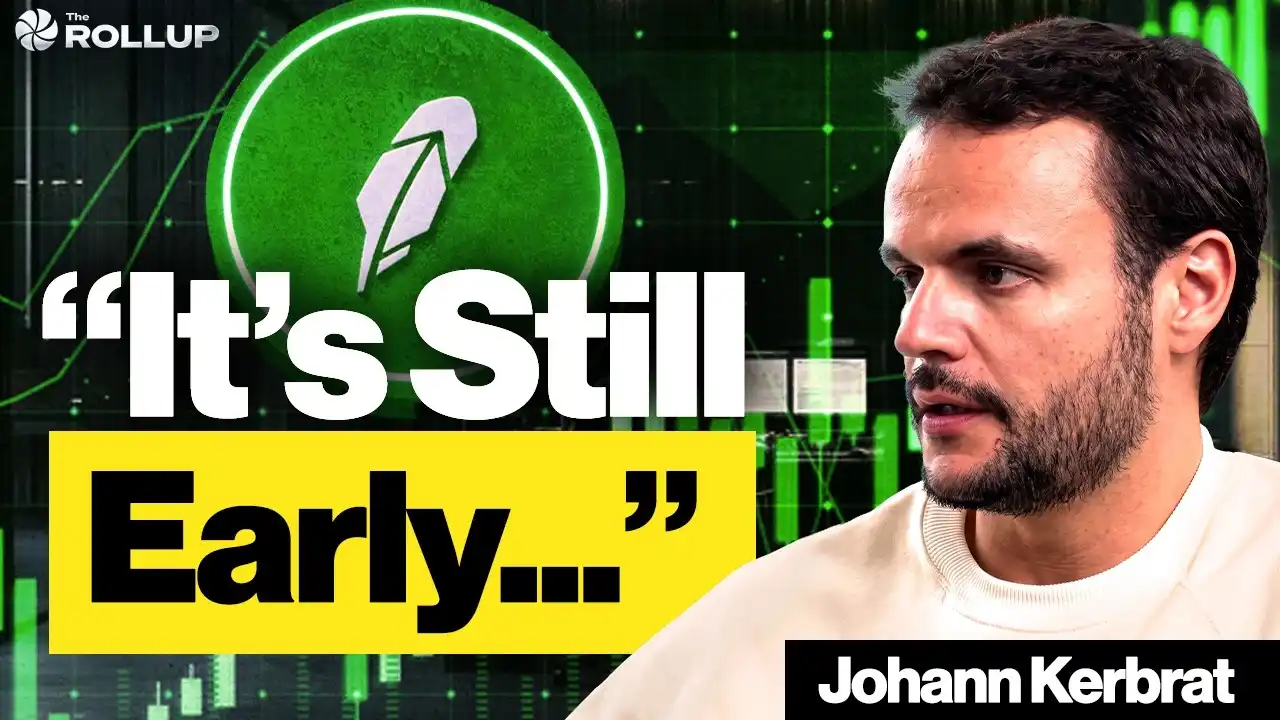
Interview with Robinhood executive Johann Kerbrat reveals the company's "barbell" customer acquisition strategy for its new Robinhood Chain, combining meme tokens with tokenized stocks. Three weeks after mainnet launch, the chain has seen over $3B in weekly DEX volume and 105M transactions. Kerbrat explains the logic behind the permissionless chain: meme tokens attract DeFi users, while tokenized real-world assets (RWA), currently over 90 US stocks and ETFs accessible in 120+ countries, serve global users. The goal is to bring Robinhood's 27 million funded accounts on-chain by simplifying DeFi with a user-friendly interface, exemplified by features like Robinhood Earn which offers yield without requiring wallet management. Built on Arbitrum's technology stack for its speed, low cost, and Ethereum's security, the chain focuses on financial products like Earn, spot trading, and perpetuals. Kerbrat downplays direct competition with platforms like Base, emphasizing the goal of expanding the overall market for on-chain assets. He details selective partnerships (e.g., Morpho, Lighter) based on compliance, unique UX, and differentiation. While regulatory clarity is pending for US perpetuals, the expansion continues via Bitstamp in Europe. Finally, Kerbrat positions Robinhood as a "super app" integrating stocks, options, crypto, banking, and AI trading, with all major business lines generating hundreds of millions in revenue. For the chain, current priority is driving adoption over maximizing gas fee revenue.

marsbit4h ago

Interview with Robinhood Executive: Meme + Tokenized US Stocks as "Barbell" Customer Acquisition Strategy, All Business Lines Achieve Hundreds of Millions in Revenue

marsbit4h ago

Trading

Spot

Hot Articles

What is $BITCOIN

DIGITAL GOLD ($BITCOIN): A Comprehensive Analysis Introduction to DIGITAL GOLD ($BITCOIN) DIGITAL GOLD ($BITCOIN) is a blockchain-based project operating on the Solana network, which aims to combine the characteristics of traditional precious metals with the innovation of decentralized technologies. While it shares a name with Bitcoin, often referred to as “digital gold” due to its perception as a store of value, DIGITAL GOLD is a separate token designed to create a unique ecosystem within the Web3 landscape. Its goal is to position itself as a viable alternative digital asset, although specifics regarding its applications and functionalities are still developing. What is DIGITAL GOLD ($BITCOIN)? DIGITAL GOLD ($BITCOIN) is a cryptocurrency token explicitly designed for use on the Solana blockchain. In contrast to Bitcoin, which provides a widely recognized value storage role, this token appears to focus on broader applications and characteristics. Notable aspects include: Blockchain Infrastructure: The token is built on the Solana blockchain, known for its capacity to handle high-speed and low-cost transactions. Supply Dynamics: DIGITAL GOLD has a maximum supply capped at 100 quadrillion tokens (100P $BITCOIN), although details regarding its circulating supply are currently undisclosed. Utility: While precise functionalities are not explicitly outlined, there are indications that the token could be utilized for various applications, potentially involving decentralized applications (dApps) or asset tokenization strategies. Who is the Creator of DIGITAL GOLD ($BITCOIN)? At present, the identity of the creators and development team behind DIGITAL GOLD ($BITCOIN) remains unknown. This situation is typical among many innovative projects within the blockchain space, particularly those aligning with decentralized finance and meme coin phenomena. While such anonymity may foster a community-driven culture, it intensifies concerns about governance and accountability. Who are the Investors of DIGITAL GOLD ($BITCOIN)? The available information indicates that DIGITAL GOLD ($BITCOIN) does not have any known institutional backers or prominent venture capital investments. The project seems to operate on a peer-to-peer model focused on community support and adoption rather than traditional funding routes. Its activity and liquidity are primarily situated on decentralized exchanges (DEXs), such as PumpSwap, rather than established centralized trading platforms, further highlighting its grassroots approach. How DIGITAL GOLD ($BITCOIN) Works The operational mechanics of DIGITAL GOLD ($BITCOIN) can be elaborated on based on its blockchain design and network attributes: Consensus Mechanism: By leveraging Solana’s unique proof-of-history (PoH) combined with a proof-of-stake (PoS) model, the project ensures efficient transaction validation contributing to the network's high performance. Tokenomics: While specific deflationary mechanisms have not been extensively detailed, the vast maximum token supply implies that it may cater to microtransactions or niche use cases that are still to be defined. Interoperability: There exists the potential for integration with Solana’s broader ecosystem, including various decentralized finance (DeFi) platforms. However, the details regarding specific integrations remain unspecified. Timeline of Key Events Here is a timeline that highlights significant milestones concerning DIGITAL GOLD ($BITCOIN): 2023: The initial deployment of the token occurs on the Solana blockchain, marked by its contract address. 2024: DIGITAL GOLD gains visibility as it becomes available for trading on decentralized exchanges like PumpSwap, allowing users to trade it against SOL. 2025: The project witnesses sporadic trading activity and potential interest in community-led engagements, although no noteworthy partnerships or technical advancements have been documented as of yet. Critical Analysis Strengths Scalability: The underlying Solana infrastructure supports high transaction volumes, which could enhance the utility of $BITCOIN in various transaction scenarios. Accessibility: The potential low trading price per token could attract retail investors, facilitating wider participation due to fractional ownership opportunities. Risks Lack of Transparency: The absence of publicly known backers, developers, or an audit process may yield skepticism regarding the project's sustainability and trustworthiness. Market Volatility: The trading activity is heavily reliant on speculative behavior, which can result in significant price volatility and uncertainty for investors. Conclusion DIGITAL GOLD ($BITCOIN) emerges as an intriguing yet ambiguous project within the rapidly evolving Solana ecosystem. While it attempts to leverage the “digital gold” narrative, its departure from Bitcoin's established role as a store of value underscores the need for a clearer differentiation of its intended utility and governance structure. Future acceptance and adoption will likely depend on addressing the current opacity and defining its operational and economic strategies more explicitly. Note: This report encompasses synthesised information available as of October 2023, and developments may have transpired beyond the research period.

1.3k Total ViewsPublished 2025.05.13Updated 2025.05.13

What is $BITCOIN

Discussions

Welcome to the HTX Community. Here, you can stay informed about the latest platform developments and gain access to professional market insights. Users' opinions on the price of BTC (BTC) are presented below.

活动图片