Strategy不再「疯狂扫货」,是比特币此次下跌的原因吗?

marsbitPublished on 2025-11-03Last updated on 2025-11-04

2025 年大部分时间,比特币的支撑位之所以看似难以撼动,是因为企业数字资产库(DAT)与交易所交易基金(ETF)意外结盟,共同构成了支撑基础。

企业通过发行股票和可转换债券购买比特币,ETF 资金流入则悄然吸纳新增供应量。两者共同构建了稳固的需求基础,助力比特币抵御了金融环境收紧的压力。

如今,这一基础正开始松动。

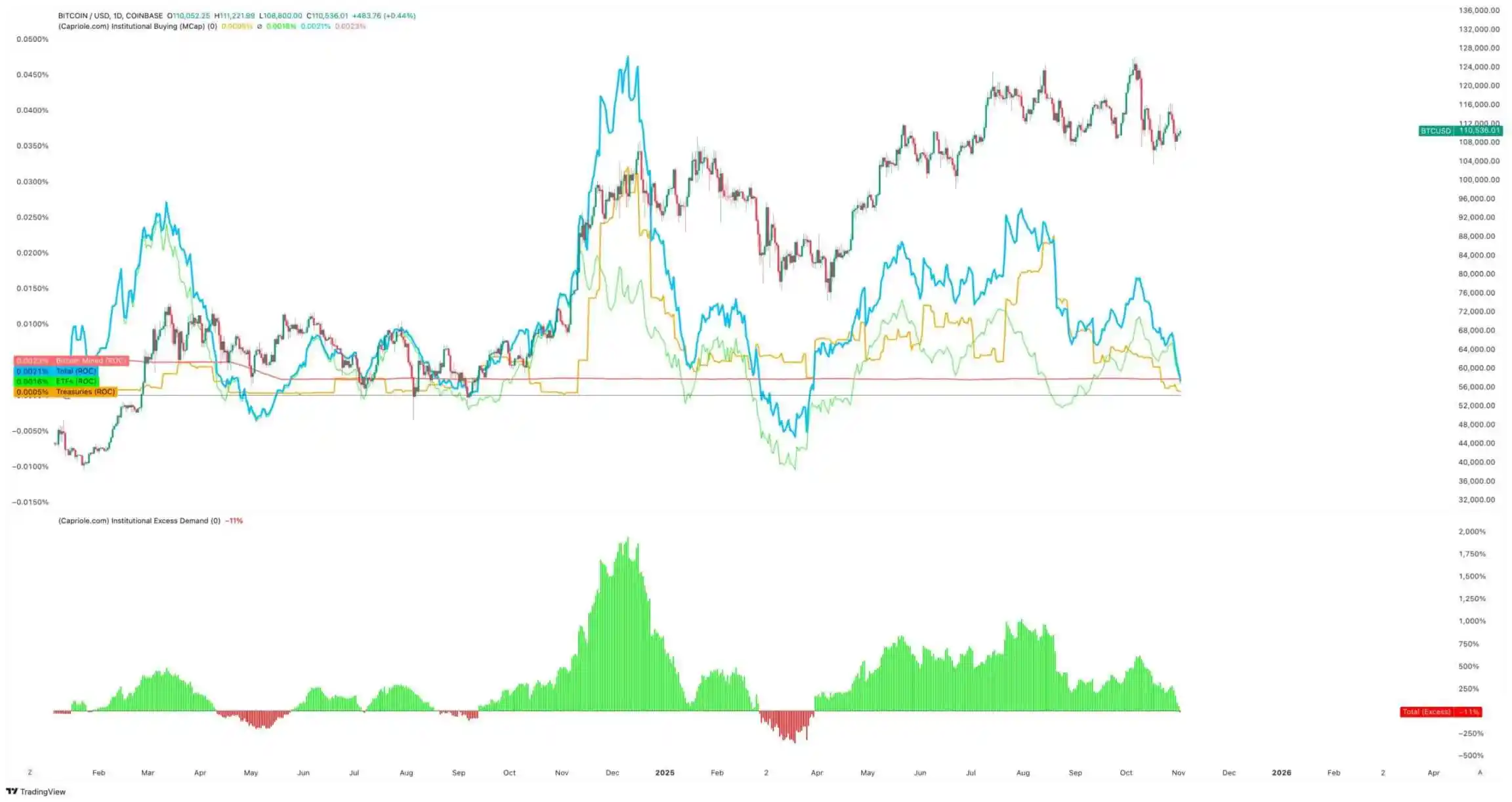
11 月 3 日,Capriole Investments 创始人 Charles Edwards 在 X 平台发文称,随着机构增持步伐放缓,他的看涨预期已减弱。

他指出:「7 个月来,机构净买入量首次跌破每日挖矿供应量,情况不妙。」
ETF

Edwards 表示,即便其他资产表现优于比特币,这一指标仍是他保持乐观的关键原因。

但就目前情况而言,约有 188 家企业财库持有可观的比特币头寸,其中许多企业除了比特币敞口外,商业模式较为单一。

比特币财库增持放缓

没有哪家公司比近期更名为「Strategy」的微策略更能代表企业比特币交易。

这家由 Michael Saylor 领导的软件制造商已转型为比特币财库公司,目前持有超 67.4 万枚比特币,稳居全球最大单一企业持有者地位。

然而,其近几个月的买入节奏大幅放缓。

Strategy 在第三季度仅增持约 4.3 万枚比特币,为今年以来最低季度买入量。考虑到该公司在此期间部分比特币购买量骤降至仅几百枚,这一数字并不令人意外。

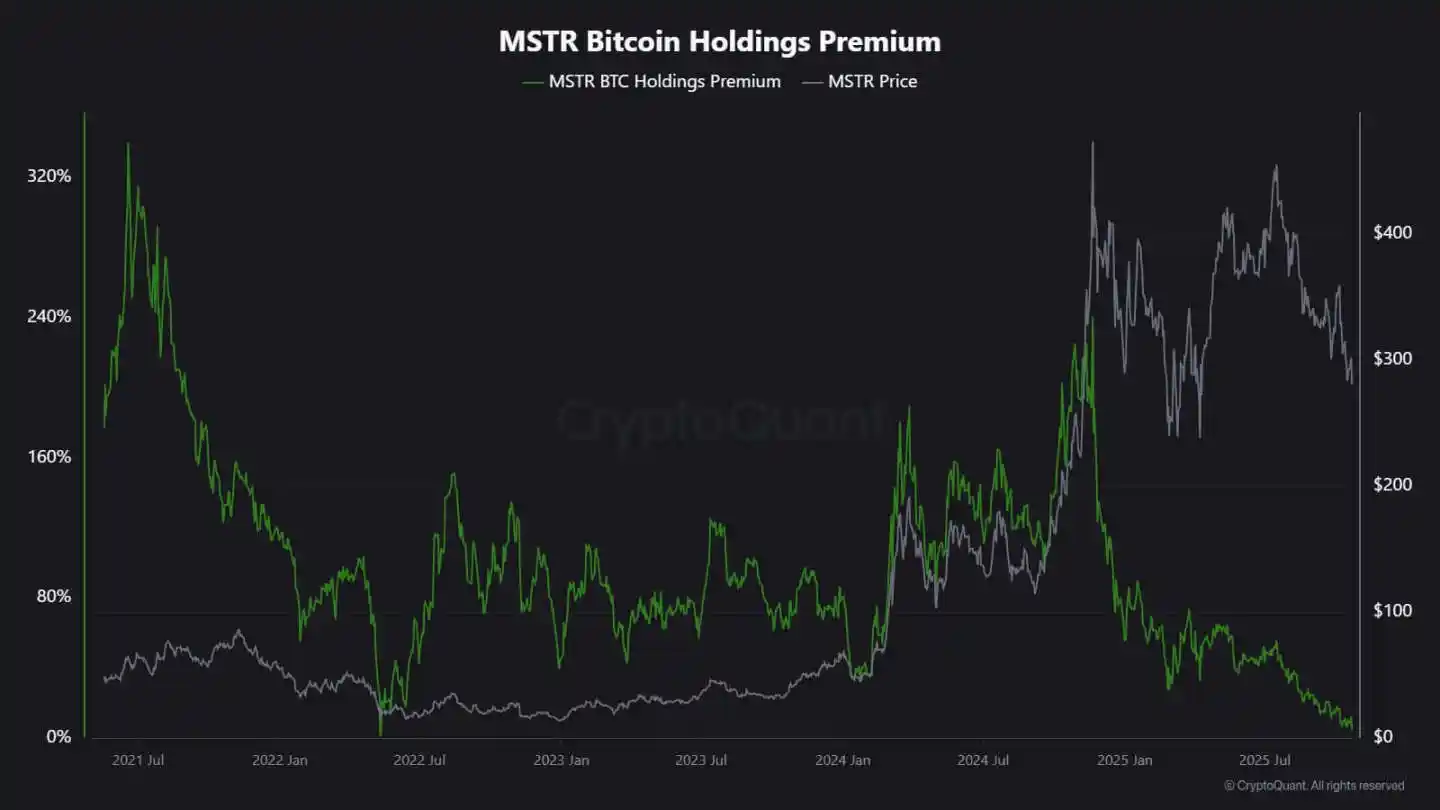
CryptoQuant 分析师 J.A. Maarturn 解释,增持放缓可能与 Strategy 的净资产价值(NAV)下跌有关。

他表示,投资者曾为 Strategy 资产负债表上每 1 美元的比特币支付高额「NAV 溢价」,实际上是通过杠杆敞口让股东分享比特币上涨收益。但自年中以来,这一溢价已大幅收窄。

估值红利减弱后,通过发行新股购买比特币不再能带来显著增值,企业融资增持的动力也随之下降。

Maarturn 指出:「融资难度加大,股票发行溢价已从 208% 降至 4%。」
ETF

与此同时,增持降温的趋势并非仅限于 Strategy。

东京上市企业 Metaplanet 曾效仿这家美国先驱企业的模式,但其股价在大幅下跌后,近期交易价格低于其持有的比特币市值。

作为回应,该公司批准了股票回购计划,同时推出了新增融资指导方针以扩大比特币财库。此举表明该公司对其资产负债表充满信心,但也凸显了投资者对「加密财库」商业模式的热情正在减退。

事实上,比特币资产库增持放缓已导致部分企业合并。

上月,资产管理公司 Strive 宣布收购规模较小的比特币资产库公司 Semler Scientific。合并后,这些公司将持有近 1.1 万枚比特币。

这些案例反映的是结构性约束,而非信念动摇。当股票或可转换债券发行不再能获得市场溢价时,资金流入就会枯竭,企业增持自然随之放缓。

ETF 资金流向如何?

长期被视为「新增供应量自动吸纳器」的现货比特币 ETF,也出现了类似的乏力迹象。

2025 年大部分时间里,这些金融投资工具主导了净需求,申购量持续超过赎回量,尤其是在比特币飙升至历史高点期间。

但到 10 月下旬,其资金流向变得不稳定。受利率预期变化影响,投资组合经理调整头寸、风险部门削减敞口,部分周资金流向转为负值。这种波动性标志着比特币 ETF 进入了行为新阶段。

宏观环境已收紧,快速降息的希望逐渐破灭,流动性条件降温。尽管如此,市场对比特币敞口的需求依然强劲,但已从「稳步流入」转为「脉冲式流入」。

SoSoValue 的数据直观反映了这一转变。10 月前两周,加密资产投资产品吸引了近 60 亿美元资金流入;但截至月末,随着赎回量增至 20 多亿美元,部分流入被抹去。

ETF

这一模式表明,比特币 ETF 已成熟为真正的双向市场。它们仍能提供深厚流动性和机构准入渠道,但不再是单向的增持工具。

当宏观信号波动时,ETF 投资者的退出速度可能与入场速度同样迅速。

对比特币的市场影响

这一转变并不必然意味着比特币将迎来下跌,但确实预示着波动性将加大。随着企业和 ETF 的吸纳能力减弱,比特币的价格走势将越来越受短期交易者和宏观情绪驱动。

Edwards 认为,在这种情况下,新的催化剂——如货币宽松、监管明确或股市风险偏好回归——可能会重新点燃机构买盘。

但就目前而言,边际买家态度更为谨慎,这使得价格发现对全球流动性周期更为敏感。

影响主要体现在两方面:

第一,曾作为支撑位的结构性买盘正在减弱。在吸纳不足的时期,盘中波动可能加剧,因为缺乏足够的稳定买家来抑制波动性。2024 年 4 月的减半从机制上减少了新增供应量,但若无持续需求,仅靠稀缺性无法保证价格上涨。

第二,比特币的相关性特征正在转变。随着资产负债表增持降温,该资产可能再次跟随整体流动性周期波动。实际利率上升和美元走强时期可能对价格构成压力,而宽松环境则可能使其在风险偏好回升行情中重拾领涨地位。

本质上,比特币正重新进入宏观反射阶段,其表现更接近高 beta 风险资产,而非数字黄金。

与此同时,这一切并未否定比特币作为稀缺、可编程资产的长期叙事。相反,这反映了机构动态的影响力日益增强——这些机构曾使比特币免受散户驱动的波动影响,而如今,正是当初将比特币推入主流投资组合的机制,使其与资本市场的关联更为紧密。

未来几个月将考验在缺乏企业和 ETF 自动资金流入的情况下,比特币能否维持价值存储属性。

如果参照历史,比特币往往具备适应能力。当一个需求渠道放缓时,另一个渠道就会涌现——可能来国家储备、金融科技整合,或宏观宽松周期中散户的回归。

Trending Cryptos

Related Reads

After 13% Daily Distribution, Why Did SATA Still Fall?

Strive Asset Management's BTC-linked preferred stock SATA transitioned from monthly to daily dividend distributions on June 16, with a current annualized yield of 13%. Despite this change, SATA's price fell approximately 9.9% from June 22 to June 26. The analysis highlights that this decline reflects fundamental credit and structural risks, not simply dividend frequency. SATA represents a perpetual, cumulative preferred equity interest in Strive, not a direct Bitcoin-backed bond. Its dividends depend on Strive's corporate credit and access to capital markets. While Strive's Bitcoin holdings grew from 15,009 to 19,864 BTC between May 12 and June 18, SATA's outstanding shares grew faster (from ~4.96 million to ~7.83 million). Coupled with a drop in BTC price, the pure Bitcoin coverage ratio for SATA's stated amount fell from ~2.44x to ~1.52x. A further ~34.3% decline in BTC to ~$39,416 would bring this coverage to 1.0x. Daily dividends smooth cash flow for investors and reduce dividend-capture trading, but do not eliminate price volatility or credit risk. SATA now trades at a ~12.25% discount to its $100 stated amount, implying a market yield of ~14.81% and a credit spread of ~1,117 bps over SOFR. Key risks include a negative feedback loop if SATA trades below par, making new issuance dilutive; reliance on capital markets for dividend funding despite a ~17-month cash buffer; and the perpetual nature of the security, where dividends can be deferred. In summary, SATA innovates by providing daily income from a Bitcoin-focused corporate balance sheet, but its recent price action underscores its exposure to Bitcoin valuation, company-specific financing risks, and perpetual duration. The market is repricing it from a near-par yield product to a deeply discounted high-risk credit instrument.

marsbit29m ago

After 13% Daily Distribution, Why Did SATA Still Fall?

marsbit29m ago

Unlocking 20%, $125 Million in Pressure, Can PUMP Hold Up?

"Pump.fun Faces Crucial Test with $125M Token Unlock Despite a cooldown in the meme coin market, Pump.fun remains one of Web3's top revenue-generating protocols, earning $28.4 million in the past 30 days. The platform has accumulated approximately $1.05 billion in total revenue from over 12 million tokens created. The protocol now faces its biggest challenge: the first unlock of team and investor tokens. A total of 82.5 billion PUMP tokens (8.25% of total supply, 20.23% of previous circulating supply), valued at around $125 million, have been unlocked. This potential selling pressure is significant compared to the token's 24-hour trading volume of only $28 million. While Pump.fun uses a portion of its revenue to buy back and burn PUMP tokens, creating buy-side pressure, this support has weakened. The buyback rate was reduced from 100% to 50% of net fees in April 2024. In June 2024, monthly buybacks totaled just $9.2 million, an over 80% drop from its peak. At this rate, selling just 7% of the newly unlocked tokens would offset a full month of buybacks. Furthermore, this unlock is only the first batch; team and investors still hold another 247.5 billion locked PUMP tokens, with 240 billion community tokens awaiting a release schedule. Despite these headwinds, PUMP is argued to be a relatively scarce asset in the current market. With a $610 million market cap against $28.4 million in monthly revenue, its valuation is lower than competitors like Hyperliquid. The investment thesis for PUMP is not betting on a single meme coin but on the persistent activity of the meme market and Pump.fun's ability to maintain its position as a key platform. The conclusion suggests that while the unlock tests short-term price resilience, the protocol's underlying revenue strength will determine PUMP's long-term trajectory, potentially making the current dip a viable entry point for long-term accumulation."

Odaily星球日报42m ago

Unlocking 20%, $125 Million in Pressure, Can PUMP Hold Up?

Odaily星球日报42m ago

Aave Withdrawal, TVL Plunges: Where is MegaETH's Valuation Anchor?

MegaETH, once a highly anticipated new blockchain, has seen a dramatic decline in its Total Value Locked (TVL) and token price. According to DefiLlama data, its TVL plummeted nearly 60% in 24 hours, falling to just over $30 million from a May peak, with the Aave V3 protocol withdrawing 80% of its liquidity. The MEGA token price dropped to around $0.048, with a market cap of ~$54 million and a fully diluted valuation (FDV) of ~$480 million. The analysis identifies three key mismatches between MegaETH's valuation and its fundamentals. First, its high FDV contrasts with minimal real usage: low protocol revenue (~$90k/30 days) and few daily active addresses. Second, its DeFi narrative is contradicted by its revenue structure, where a collectible card game (Monster) generates most income, not major DeFi protocols like Aave. Third, initial hype from VC backing and airdrop farming has faded without sustained user adoption or clear applications. The TVL was heavily concentrated in Aave and largely driven by cyclical arbitrage strategies involving stablecoins like USDm and USDe. As the yield for these strategies diminished, funds rapidly exited. The departure of this speculative capital has exposed a lack of substantial, organic ecosystem activity. While the sharp drop could be seen as a correction from inflated expectations, the article suggests MegaETH's valuation lacks a solid foundation. Future price movements may rely on short-term market sentiment rather than genuine improvement in network fundamentals, such as increased real usage, a diversified application ecosystem, and consistent user growth. The situation reflects a broader market trend of demanding clearer value propositions beyond just high TVL figures.

marsbit1h ago

Aave Withdrawal, TVL Plunges: Where is MegaETH's Valuation Anchor?

marsbit1h ago

Trading

Spot

Hot Articles

What is $BITCOIN

DIGITAL GOLD ($BITCOIN): A Comprehensive Analysis Introduction to DIGITAL GOLD ($BITCOIN) DIGITAL GOLD ($BITCOIN) is a blockchain-based project operating on the Solana network, which aims to combine the characteristics of traditional precious metals with the innovation of decentralized technologies. While it shares a name with Bitcoin, often referred to as “digital gold” due to its perception as a store of value, DIGITAL GOLD is a separate token designed to create a unique ecosystem within the Web3 landscape. Its goal is to position itself as a viable alternative digital asset, although specifics regarding its applications and functionalities are still developing. What is DIGITAL GOLD ($BITCOIN)? DIGITAL GOLD ($BITCOIN) is a cryptocurrency token explicitly designed for use on the Solana blockchain. In contrast to Bitcoin, which provides a widely recognized value storage role, this token appears to focus on broader applications and characteristics. Notable aspects include: Blockchain Infrastructure: The token is built on the Solana blockchain, known for its capacity to handle high-speed and low-cost transactions. Supply Dynamics: DIGITAL GOLD has a maximum supply capped at 100 quadrillion tokens (100P $BITCOIN), although details regarding its circulating supply are currently undisclosed. Utility: While precise functionalities are not explicitly outlined, there are indications that the token could be utilized for various applications, potentially involving decentralized applications (dApps) or asset tokenization strategies. Who is the Creator of DIGITAL GOLD ($BITCOIN)? At present, the identity of the creators and development team behind DIGITAL GOLD ($BITCOIN) remains unknown. This situation is typical among many innovative projects within the blockchain space, particularly those aligning with decentralized finance and meme coin phenomena. While such anonymity may foster a community-driven culture, it intensifies concerns about governance and accountability. Who are the Investors of DIGITAL GOLD ($BITCOIN)? The available information indicates that DIGITAL GOLD ($BITCOIN) does not have any known institutional backers or prominent venture capital investments. The project seems to operate on a peer-to-peer model focused on community support and adoption rather than traditional funding routes. Its activity and liquidity are primarily situated on decentralized exchanges (DEXs), such as PumpSwap, rather than established centralized trading platforms, further highlighting its grassroots approach. How DIGITAL GOLD ($BITCOIN) Works The operational mechanics of DIGITAL GOLD ($BITCOIN) can be elaborated on based on its blockchain design and network attributes: Consensus Mechanism: By leveraging Solana’s unique proof-of-history (PoH) combined with a proof-of-stake (PoS) model, the project ensures efficient transaction validation contributing to the network's high performance. Tokenomics: While specific deflationary mechanisms have not been extensively detailed, the vast maximum token supply implies that it may cater to microtransactions or niche use cases that are still to be defined. Interoperability: There exists the potential for integration with Solana’s broader ecosystem, including various decentralized finance (DeFi) platforms. However, the details regarding specific integrations remain unspecified. Timeline of Key Events Here is a timeline that highlights significant milestones concerning DIGITAL GOLD ($BITCOIN): 2023: The initial deployment of the token occurs on the Solana blockchain, marked by its contract address. 2024: DIGITAL GOLD gains visibility as it becomes available for trading on decentralized exchanges like PumpSwap, allowing users to trade it against SOL. 2025: The project witnesses sporadic trading activity and potential interest in community-led engagements, although no noteworthy partnerships or technical advancements have been documented as of yet. Critical Analysis Strengths Scalability: The underlying Solana infrastructure supports high transaction volumes, which could enhance the utility of $BITCOIN in various transaction scenarios. Accessibility: The potential low trading price per token could attract retail investors, facilitating wider participation due to fractional ownership opportunities. Risks Lack of Transparency: The absence of publicly known backers, developers, or an audit process may yield skepticism regarding the project's sustainability and trustworthiness. Market Volatility: The trading activity is heavily reliant on speculative behavior, which can result in significant price volatility and uncertainty for investors. Conclusion DIGITAL GOLD ($BITCOIN) emerges as an intriguing yet ambiguous project within the rapidly evolving Solana ecosystem. While it attempts to leverage the “digital gold” narrative, its departure from Bitcoin's established role as a store of value underscores the need for a clearer differentiation of its intended utility and governance structure. Future acceptance and adoption will likely depend on addressing the current opacity and defining its operational and economic strategies more explicitly. Note: This report encompasses synthesised information available as of October 2023, and developments may have transpired beyond the research period.

758 Total ViewsPublished 2025.05.13Updated 2025.05.13

What is $BITCOIN

Discussions

Welcome to the HTX Community. Here, you can stay informed about the latest platform developments and gain access to professional market insights. Users' opinions on the price of BTC (BTC) are presented below.

活动图片