MetaMask Adds Multichain Support for EVM, Solana, and Bitcoin

TheCryptoTimesPublished on 2025-10-28Last updated on 2025-10-28

MetaMask has introduced one of its biggest updates yet, bringing multichain accounts to users. The well-known crypto wallet, originally built for Ethereum, is moving beyond its old one-account-one-address system. 

With this update, a single MetaMask account can now manage several addresses across multiple blockchain networks, including Ethereum, EVM-compatible chains, and Solana, with Bitcoin support expected in the near future.

A seamless multichain experience

The new update removes the need to create separate accounts for every blockchain network. MetaMask, which started as an Ethereum-only wallet, has steadily expanded to support EVM layer-2 networks such as Arbitrum, Base, and Linea, along with other EVM-compatible chains. 

Now, with upgrades to its underlying architecture, MetaMask can natively support non-EVM networks like Solana — and soon, Bitcoin will be part of that list too.

“This means fewer accounts to manage, less switching back and forth, and easier cross-network activities,” MetaMask stated in its official blog post.

The feature is being automatically rolled out on MetaMask Mobile version 7.57 and Extension version 13.5, requiring no manual action from users. From now on, multichain accounts will be the default account type across MetaMask.

How it works

MetaMask explained that it’s moving from the old system of “1 account = 1 address” to a new structure where “1 account = multiple.” This change is built on BIP-44, a technical standard that lets wallets create and manage multiple accounts using a single recovery phrase.

Under this new setup:

  • Wallet: A wallet is a collection of accounts that are managed through one recovery phrase or private key.
  • Account: Each account can now have multiple addresses from different blockchains within the same wallet. This means users don’t need to create separate accounts for every network anymore.
  • Address: An address is a unique identifier on a blockchain that’s used to send or receive tokens.

With this change, a single multichain account can hold several addresses across supported networks, making it simpler to manage assets in one place. For instance, “Account 1” can now have addresses for Ethereum, Solana, and soon, Bitcoin.

Existing accounts remain safe

MetaMask clarified that all previously created addresses remain accessible. Each multichain account automatically pairs one EVM address with one Solana address, and if there’s an imbalance, new addresses will be created accordingly.

“If you did create Solana accounts in the past, they’ll be ‘matched up’ with an EVM address chronologically and auto-adopt the EVM account name,” MetaMask explained. “If you do have more Solana accounts than EVM accounts, new EVM addresses will be created to ‘match up’ and auto-adopt the Solana account name.”

Hardware wallet accounts, however, remain limited to EVM networks for now, as Solana support is still under development.

MASK token speculation grows

Speculation about MetaMask’s long-anticipated MASK token has grown stronger after a website, believed to be a potential claims portal, briefly went live earlier this week. The site was live for only a short period before being redirected to MetaMask’s official homepage.

Its sudden appearance quickly drew attention within the crypto community, with many believing it could be an early sign that MetaMask’s long-awaited native token launch is getting closer.

Consensys CEO Joe Lubin recently hinted that the MASK token could arrive “sooner than you would expect,” confirming that the company is “very actively” developing it.

With MetaMask’s multichain upgrade now live and token rumors swirling, the crypto community is watching closely as one of Web3’s most-used wallets takes a major step toward its next phase.

Also Read: Uniswap Adds Solana to its Token Swapping Platform for Unified DeFi


Mobile Only ImageMobile Only Image

Trending Cryptos

Related Reads

The Biggest Crypto Bull? Are Compliant Token Fundraisers Making a Comeback?

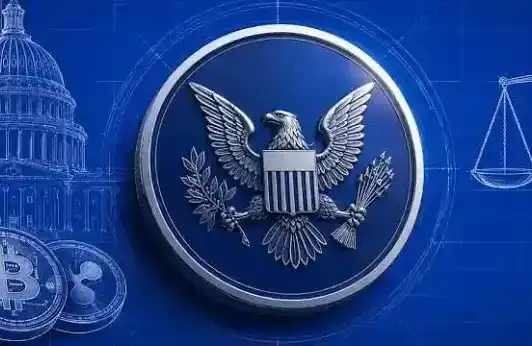
On August 18th, the U.S. Securities and Exchange Commission (SEC) released a draft proposal titled "Regulation Crypto Assets." This proposal establishes a new legal framework for compliant token fundraising in the United States, aiming to create a structured path for projects from initial offering to regulatory "graduation." The draft introduces two primary fundraising exemptions for projects. The "startup exemption" allows early-stage projects to raise up to $5 million over four years. Larger projects can use a tiered system to raise $20 million or $75 million within 12 months, subject to stricter disclosure and auditing requirements. These exemptions provide a legal alternative to full securities registration, mandating that projects disclose details on governance, development plans, security risks, and team information. A core concept in the proposal is the "investment contract" relationship formed when tokens are sold based on promises of future development work. The SEC's focus shifts from debating whether a token is a security to tracking whether the issuer has fulfilled its key promises to investors. A token can "graduate" from this regulated status—entering a "safe harbor"—only after the issuer publicly certifies that all significant commitments made during the fundraising have been either completed or permanently ceased. This "promise-based" approach significantly impacts project strategy. To facilitate an earlier graduation, projects may be incentivized to make fewer and more modest public promises during fundraising, creating a tension between attracting investors with ambitious roadmaps and simplifying the path to regulatory exit. The proposal also influences airdrop design. Retroactive airdrops that reward past user activity without prior promises are less likely to be regulated. However, "points" programs that explicitly promise future tokens in exchange for current user actions (like trading or providing services) could be considered part of the fundraising and count toward exemption limits. Currently a draft open for public comment, the "Regulation Crypto Assets" proposal represents a potential shift toward a more defined, compliance-focused era for U.S. crypto fundraising, where the amount raised is capped by rules and a token's regulatory status depends on the fulfillment of explicit developer promises.

marsbit19m ago

The Biggest Crypto Bull? Are Compliant Token Fundraisers Making a Comeback?

marsbit19m ago

Trading

Spot

Hot Articles

What is $BITCOIN

DIGITAL GOLD ($BITCOIN): A Comprehensive Analysis Introduction to DIGITAL GOLD ($BITCOIN) DIGITAL GOLD ($BITCOIN) is a blockchain-based project operating on the Solana network, which aims to combine the characteristics of traditional precious metals with the innovation of decentralized technologies. While it shares a name with Bitcoin, often referred to as “digital gold” due to its perception as a store of value, DIGITAL GOLD is a separate token designed to create a unique ecosystem within the Web3 landscape. Its goal is to position itself as a viable alternative digital asset, although specifics regarding its applications and functionalities are still developing. What is DIGITAL GOLD ($BITCOIN)? DIGITAL GOLD ($BITCOIN) is a cryptocurrency token explicitly designed for use on the Solana blockchain. In contrast to Bitcoin, which provides a widely recognized value storage role, this token appears to focus on broader applications and characteristics. Notable aspects include: Blockchain Infrastructure: The token is built on the Solana blockchain, known for its capacity to handle high-speed and low-cost transactions. Supply Dynamics: DIGITAL GOLD has a maximum supply capped at 100 quadrillion tokens (100P $BITCOIN), although details regarding its circulating supply are currently undisclosed. Utility: While precise functionalities are not explicitly outlined, there are indications that the token could be utilized for various applications, potentially involving decentralized applications (dApps) or asset tokenization strategies. Who is the Creator of DIGITAL GOLD ($BITCOIN)? At present, the identity of the creators and development team behind DIGITAL GOLD ($BITCOIN) remains unknown. This situation is typical among many innovative projects within the blockchain space, particularly those aligning with decentralized finance and meme coin phenomena. While such anonymity may foster a community-driven culture, it intensifies concerns about governance and accountability. Who are the Investors of DIGITAL GOLD ($BITCOIN)? The available information indicates that DIGITAL GOLD ($BITCOIN) does not have any known institutional backers or prominent venture capital investments. The project seems to operate on a peer-to-peer model focused on community support and adoption rather than traditional funding routes. Its activity and liquidity are primarily situated on decentralized exchanges (DEXs), such as PumpSwap, rather than established centralized trading platforms, further highlighting its grassroots approach. How DIGITAL GOLD ($BITCOIN) Works The operational mechanics of DIGITAL GOLD ($BITCOIN) can be elaborated on based on its blockchain design and network attributes: Consensus Mechanism: By leveraging Solana’s unique proof-of-history (PoH) combined with a proof-of-stake (PoS) model, the project ensures efficient transaction validation contributing to the network's high performance. Tokenomics: While specific deflationary mechanisms have not been extensively detailed, the vast maximum token supply implies that it may cater to microtransactions or niche use cases that are still to be defined. Interoperability: There exists the potential for integration with Solana’s broader ecosystem, including various decentralized finance (DeFi) platforms. However, the details regarding specific integrations remain unspecified. Timeline of Key Events Here is a timeline that highlights significant milestones concerning DIGITAL GOLD ($BITCOIN): 2023: The initial deployment of the token occurs on the Solana blockchain, marked by its contract address. 2024: DIGITAL GOLD gains visibility as it becomes available for trading on decentralized exchanges like PumpSwap, allowing users to trade it against SOL. 2025: The project witnesses sporadic trading activity and potential interest in community-led engagements, although no noteworthy partnerships or technical advancements have been documented as of yet. Critical Analysis Strengths Scalability: The underlying Solana infrastructure supports high transaction volumes, which could enhance the utility of $BITCOIN in various transaction scenarios. Accessibility: The potential low trading price per token could attract retail investors, facilitating wider participation due to fractional ownership opportunities. Risks Lack of Transparency: The absence of publicly known backers, developers, or an audit process may yield skepticism regarding the project's sustainability and trustworthiness. Market Volatility: The trading activity is heavily reliant on speculative behavior, which can result in significant price volatility and uncertainty for investors. Conclusion DIGITAL GOLD ($BITCOIN) emerges as an intriguing yet ambiguous project within the rapidly evolving Solana ecosystem. While it attempts to leverage the “digital gold” narrative, its departure from Bitcoin's established role as a store of value underscores the need for a clearer differentiation of its intended utility and governance structure. Future acceptance and adoption will likely depend on addressing the current opacity and defining its operational and economic strategies more explicitly. Note: This report encompasses synthesised information available as of October 2023, and developments may have transpired beyond the research period.

2.0k Total ViewsPublished 2025.05.13Updated 2025.05.13

What is $BITCOIN

Discussions

Welcome to the HTX Community. Here, you can stay informed about the latest platform developments and gain access to professional market insights. Users' opinions on the price of BTC (BTC) are presented below.

活动图片