The White House is reportedly exploring new pro-crypto candidates to lead the Commodity Futures Trading Commission (CFTC) as the confirmation of President Donald Trump’s initial pick, Brian Quintenz, has stalled.
White House Eyes More Crypto-Friendly Candidates
On Thursday, Bloomberg reported that the Trump administration is allegedly weighing additional candidates to chair the CFTC following the delay in Brian Quintenz’s confirmation process, according to people familiar with the matter.
Although the White House has not announced that it’s shifting away from Trump’s original chairman pick, a new list of potential picks has emerged over the past few weeks, the report revealed.
Among the CFTC chair contenders, the White House is considering Michael Selig, chief counsel to the Securities and Exchange Commission’s (SEC) Crypto Task Force, and Tyler Williams, counselor to Treasury Secretary Scott Bessent on digital asset policy.
Notably, the highly anticipated market structure is expected to shift most of the crypto market supervision to the CFTC, increasing the regulator’s responsibilities. However, the agency, which is intended to be a five-person, bipartisan commission, is down to only acting Chairman Caroline Pham, who is also expected to depart from the agency once a permanent leader is appointed.
With the personnel shortage and Quintenz confirmation stalling, it has been difficult to carry out critical agency business, previous reports claim. “Turmoil continues as the agency’s responsibilities, and the potential market risks, are multiplying,” Bloomberg stated in August.
At the time, a White House spokesperson denied that there’s chaos at the agency, affirming that “President Trump has made it a priority to make America the crypto capital of the world, and in doing so has called for the revitalization of the Commodity Futures Trading Commission to play a larger role in securing this promise.”
Quintenz-Winklevoss Clash Stalls CFTC Leadership
The CFTC has been in leadership limbo since July, after the US Senate Agriculture Committee delayed the vote on President Trump’s nominee days before the August recess. Reports claimed that the committee stalled Quintenz’s confirmation process following a request from the White House.
The request came after Tyler and Cameron Winklevoss, Gemini co-founders, allegedly pressed President Trump to reconsider Quintenz’s nomination, arguing that he wouldn’t “shake up the CFTC enough” and was not aligned with Trump’s agenda.
In August, a group of crypto organizations sent a letter to the US President in support of the CFTC chair candidate. They highlighted Quintenz’s extensive experience in the private sector and his knowledge and foresight in digital asset regulation.
“Mr. Quintenz is uniquely prepared to lead the CFTC in establishing fair, transparent, and trusted markets that will safeguard America’s leadership in digital assets,” the letter affirmed, emphasizing that installing a permanent leader is “absolutely critical” to achieve the Commission’s goals and accomplish Trump’s crypto mission.
Last week, Quintenz seemingly confirmed the rumors after sharing private messages with the Winklevoss twins. He suggested the US president “might have been misled” by the crypto exchange co-founders, which led to the delay.
As reported by Bitcoinist, Tyler Winklevoss asked Quintenz’s opinion on the crypto exchange’s 13-page complaint letter, which raised multiple concerns and complaints about the CFTC’s Division of Enforcement (DOE) conduct against the crypto exchange over the years. However, Winklevoss was ultimately “disappointed and surprised” with the CFTC nominee response.
“It’s my understanding that after this exchange, they contacted the President and asked that my confirmation be paused for reasons other than what is reflected in these texts,” Quintenz wrote on X.
Ultimately, he pledged to continue to support Trump’s vision “in whatever capacity” he can, as “protecting the President and his agenda are more important than any job.”
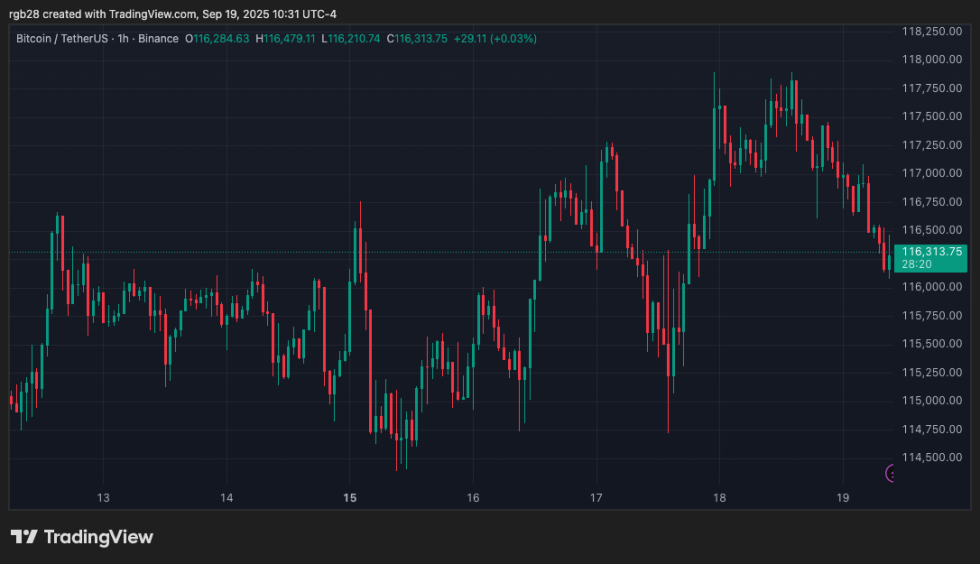
Bitcoin (BTC) trades at $116,313 in the one-week chart. Source: BTCUSDT on TradingView

Related Posts