Цена Solana (SOL) приближается к $250, но продажи угрожают ралли

cryptonews.ruPublished on 2025-02-16Last updated on 2025-09-17

Solana продолжает расти, приближаясь к важной отметке в $250. Этот уровень считается ключевым для SOL

Однако на пути к этой цели криптовалюта сталкивается с недоверием значительной части держателей.

Ключевые держатели продают Solana

Данные показывают, что долгосрочные держатели начали распродавать накопления. Эти инвесторы играют важную роль в движении Solana: их покупки поддерживают рост, а продажи могут привести к падению.

На момент написания этого анализа продажи долгосрочных держателей достигли шестимесячного максимума, что говорит о снижении уверенности. Это может давить на цену Solana в краткосрочной перспективе, мешая ей закрепиться на уровне $250 и снижая импульс, если продажи продолжатся.
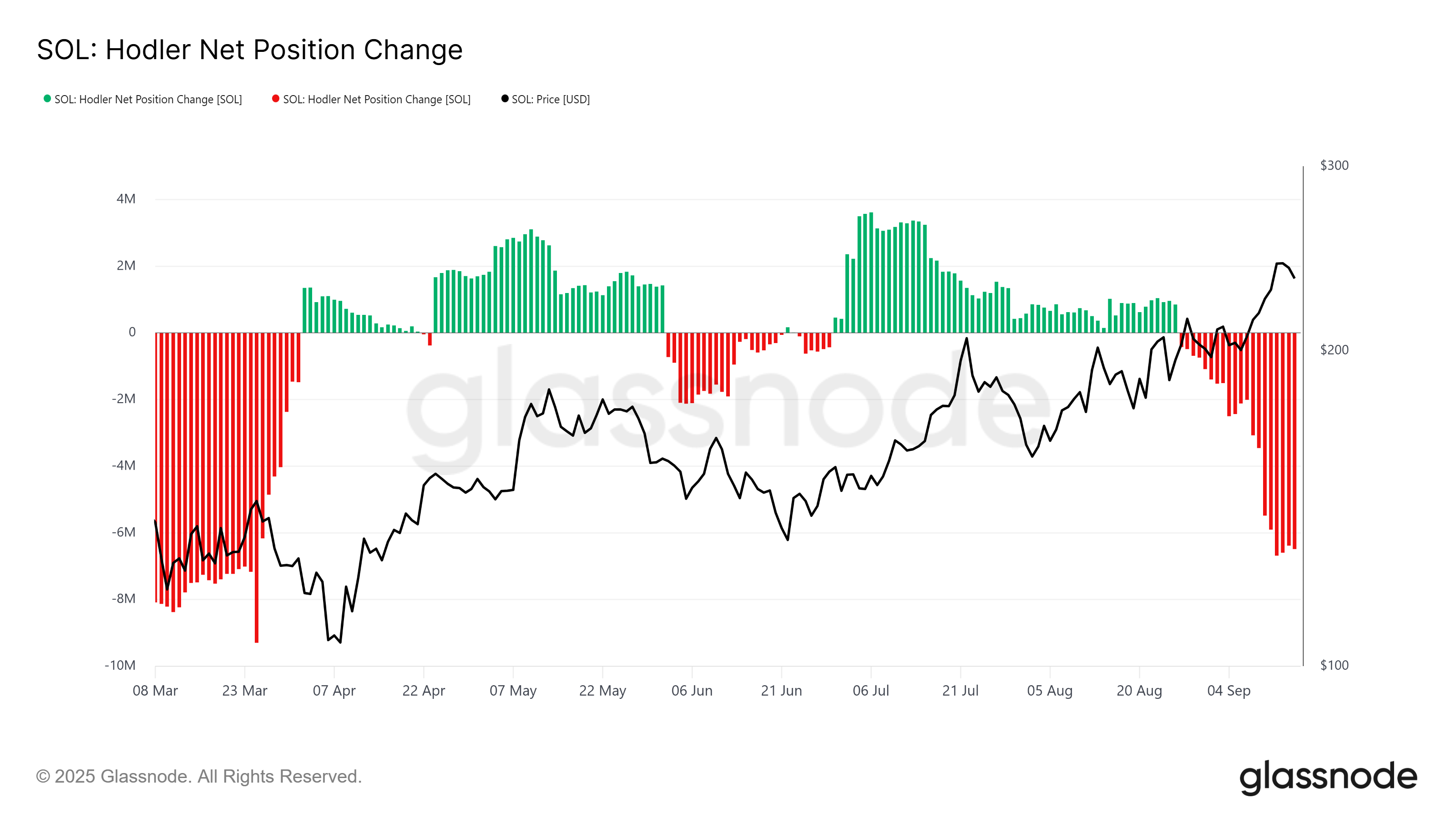
Изменение чистой позиции HODLer Solana
Изменение чистой позиции HODLer Solana. Источник: Glassnode

Тем временем индикатор NUPL для Solana показывает, что криптовалюта еще не достигла точки насыщения. Исторически, движение к порогу Вера-Отрицание на уровне 0,5 часто предвещает разворот, приводя к длительным коррекциям в последующие недели.

Это оставляет Solana возможность для краткосрочного роста, прежде чем начнется период охлаждения.
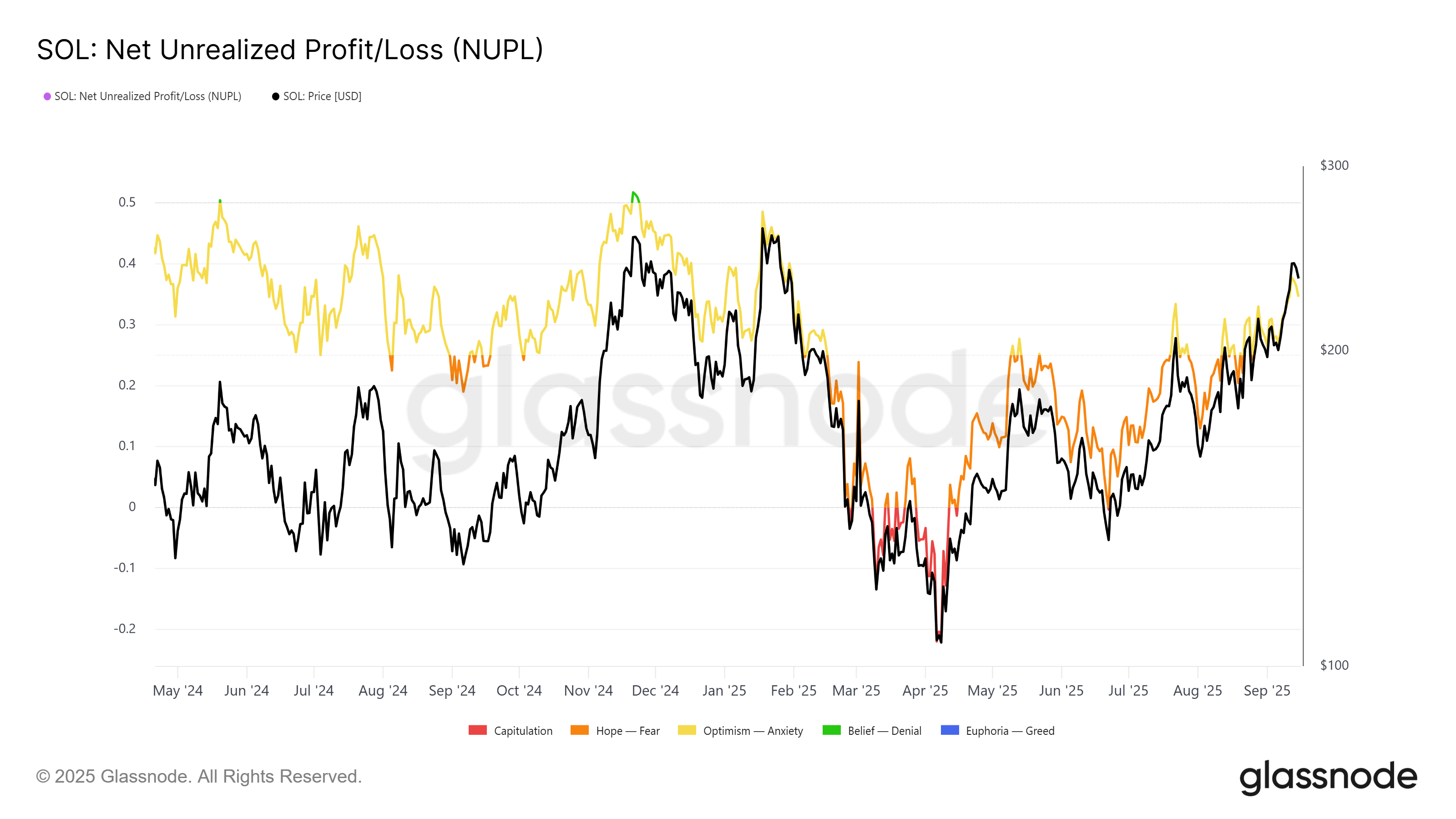
График NUPL для Solana
График NUPL для Solana. Источник: Glassnode

Цена SOL приближается к критическому уровню

Сейчас Solana торгуется на уровне $235, всего на 6% ниже отметки $250. В выходные SOL пыталась достичь этой цели, но не смогла, однако удержалась выше поддержки в $232.

Если бычий импульс продолжится, Solana получит шанс восстановиться от $232 и протестировать сопротивление на уровне $242. Успешный прорыв, особенно если долгосрочные держатели замедлят продажи, может подтолкнуть SOL к отметке выше $250 в ближайшее время.
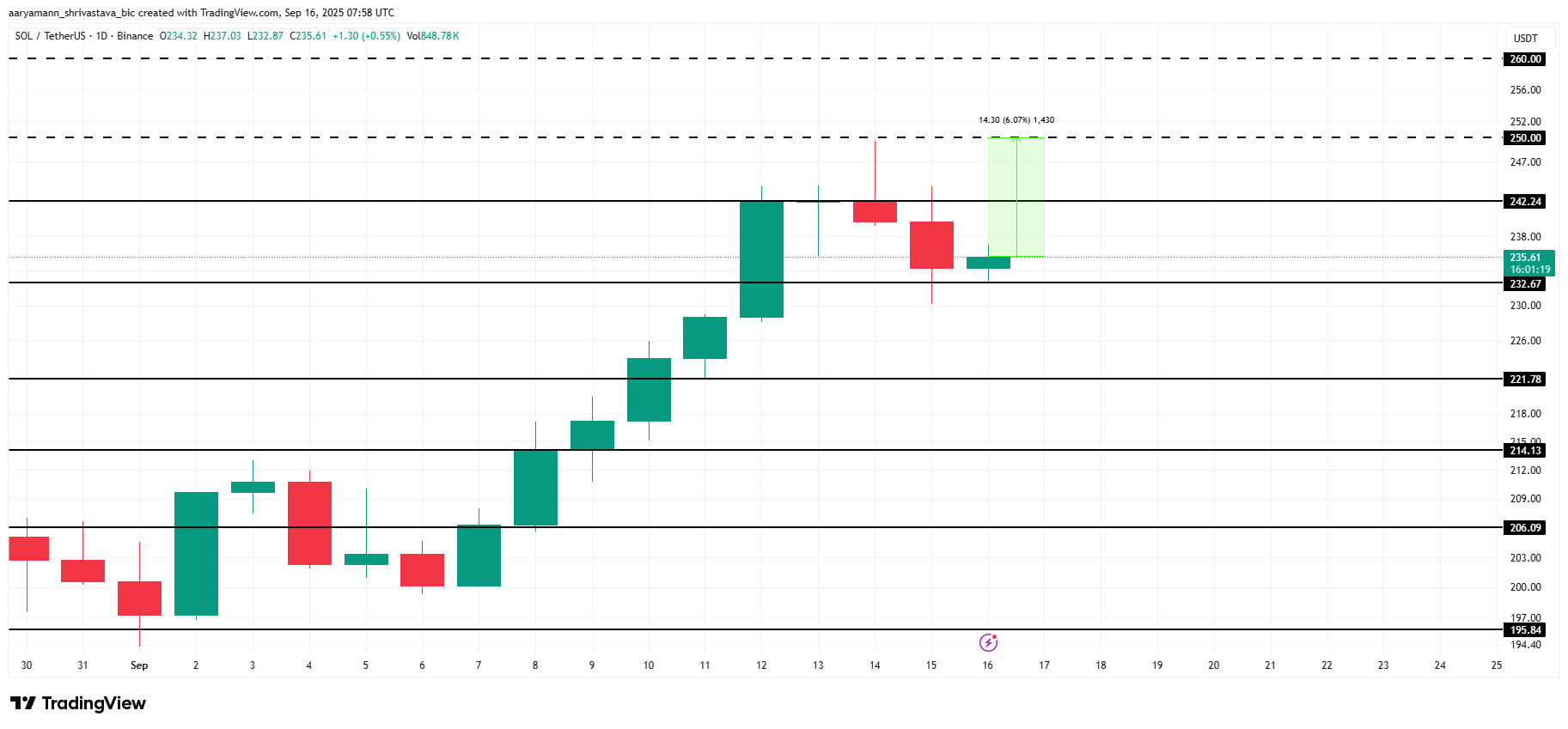
Анализ цены Solana
Анализ цены Solana. Источник: TradingView

Однако, если давление продаж со стороны долгосрочных держателей усилится, Solana может столкнуться с трудностями в удержании $232 в качестве поддержки. Это грозит привести к снижению до $221, что подорвет бычий импульс и аннулирует краткосрочные прогнозы роста.


Trending Cryptos

Related Reads

Lao Huang: Prompt is Dead, the Entire AI Community is Frenziedly Chasing Loops

The article "Prompt is Dead: The AI Industry is Obsessively Chasing Loops" discusses a major shift in AI development, where "Loop Engineering" is replacing traditional prompt engineering. Industry leaders like NVIDIA's Jensen Huang, Andrew Ng, and engineers from Anthropic and OpenAI argue that manually crafting prompts is becoming obsolete. Instead, the new focus is on designing autonomous, self-improving AI systems (loops) that can operate 24/7. A loop system typically involves five key phases: Discovery (finding tasks), Handoff (assigning to agents), Validation (critical independent review), Persistence (saving progress), and Scheduling (automated operation). The core idea is to move humans from being the operational "engine" to being the system "architects" who design the loop, define goals, and set up verification mechanisms. A major challenge and necessity is implementing robust, independent validation to prevent AI from uncritically approving its own work. The trend is seen as part of a move towards "inference-time compute," where allocating computational budget effectively becomes a key engineering skill. While loops can produce higher-quality outputs, they are more expensive and time-consuming than simple prompting. The article warns of risks like "verification debt," "comprehension corrosion," and "cognitive surrender," where engineers might stop understanding the code their systems generate. Ultimately, the article concludes that in an era of automated loops, human judgment and oversight remain the most critical and scarce resources.

marsbit6m ago

Lao Huang: Prompt is Dead, the Entire AI Community is Frenziedly Chasing Loops

marsbit6m ago

Anthropic's Latest Report Reveals Global Workers' Patterns: Seeking Sleep at 5 AM, Asking for Recipes at 6 PM

A new report from Anthropic analyzes millions of hourly user interactions with Claude AI, revealing detailed patterns in daily life and work. The data shows distinct rhythms: people most frequently ask about sleep help around 5 AM, seek news at 7 AM, and search for dinner recipes at 6 PM—the day's single largest query spike. Usage sharply diverges between weekdays and weekends. Workdays are dominated by professional tasks like business emails and coding (backend, APIs). Weekends see a surge in personal use—nearly 50% of conversations—focused on emotional support, creative writing (especially fan fiction), medical advice, and side projects like AI agent design or game development. Weekend "entrepreneurial" queries peak globally, while job-hunting activity drops. The report introduces "artifact" analysis, finding 93% of conversations produce a tangible output (explanation, document, code, etc.). Blog posts are 81% work-related, while creative writing is over 80% personal. High-wage professionals (e.g., marketing managers, programmers) use Claude more intensively outside work hours, with longer conversations, more tokens consumed, and greater use of deep thinking features compared to lower-wage roles. Interestingly, Claude's responses typically register at a higher reading level than user prompts (by about one educational year on average), except for audience-focused writing like emails or blogs where the gap nearly disappears. The data also captures specific cultural moments, like an 8x spike in tax-related queries on the U.S. filing deadline. Precise hourly data transforms fragmented queries into a collective diary of modern life—mapping not just economic activity, but also cycles of anxiety, creativity, and daily rhythm, with AI acting as both a productivity tool and an intimate, always-available confidant.

marsbit23m ago

Anthropic's Latest Report Reveals Global Workers' Patterns: Seeking Sleep at 5 AM, Asking for Recipes at 6 PM

marsbit23m ago

Margin Exhausted, "Brother Huang Li Cheng" Begins Selling Monkeys at a Loss

Taiwanese crypto whale "Machi Big Brother" Jeffrey Huang has been forced to sell his prized Bored Ape Yacht Club (BAYC) NFTs at significant losses to cover mounting losses from a highly leveraged ETH long position on Hyperliquid. Over the past month, Huang sold 34 BAYC NFTs for 326 ETH (approx. $514,000), realizing a loss of 399 ETH (approx. $631,000). The proceeds were transferred to Hyperliquid to replenish margin for his perpetual contract trades. One ape, BAYC #6057, bought for 76.84 ETH four years ago, was sold for just 7.65 ETH, a 90% loss in ETH terms. Huang began his high-leverage (25-40x) ETH long strategy in September 2025 when ETH was around $4,700. While his account once showed over $45 million in unrealized profit, the subsequent crash of ETH to the $1,600 range erased all gains. As of June 26, his cumulative losses on Hyperliquid reached $33.85 million, with over 335 liquidations earning him the community nickname "King of Liquidations." With conventional funds depleted, Huang's once-valuable NFT collection, which at its peak included around 200 BAYCs and was worth tens of millions, has become a lifeline. His remaining ~150 BAYCs, valued at roughly $1.6 million at current floor prices, provide only limited runway for his persistent high-stakes trading. Huang rose to prominence in crypto as a key figure in popularizing BAYC NFTs in Asia during the 2021 bull market. His pivot to perpetual contracts has now led to a cycle where his iconic "monkeys" are being sold to fund a failing trading strategy.

Foresight News1h ago

Margin Exhausted, "Brother Huang Li Cheng" Begins Selling Monkeys at a Loss

Foresight News1h ago

Trading

Spot

Hot Articles

Discussions

Welcome to the HTX Community. Here, you can stay informed about the latest platform developments and gain access to professional market insights. Users' opinions on the price of SOL (SOL) are presented below.

活动图片