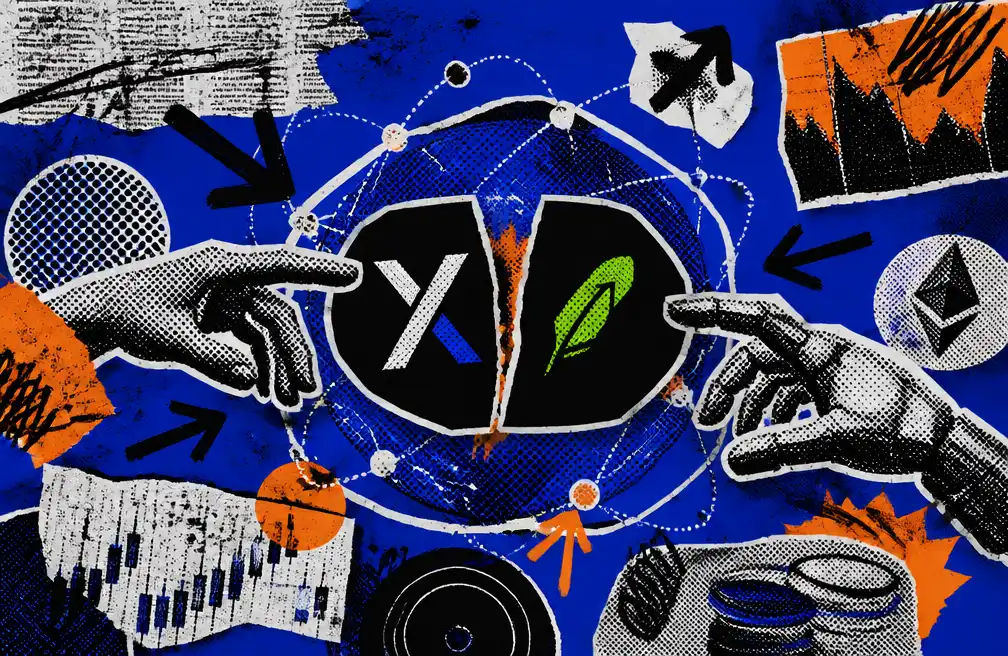
Upbit Parent Dunamu To Provide Tech and Compliance Support for Vietnam’s First Domestic Crypto Exchange

ccn.comPublished on 2025-08-07Last updated on 2025-08-14

Key Takeaways
  • South Korea’s leading exchange operator, Dunamu, will help Vietnam launch its first domestic crypto exchange.
  • Dunamu will provide technology, infrastructure, compliance, and investor protection support.
  • Vietnam’s crypto market is booming but still operates in a legal gray area.

South Korea’s Dunamu, operator of top exchange Upbit, is stepping onto the Vietnamese stage, partnering with MB Bank to launch the country’s first homegrown crypto exchange.

Under the agreement, Dunamu will provide technology and infrastructure support and guidance on compliance, investor protection, and talent development — a comprehensive package aimed at building a secure, scalable platform.

Top Crypto Tax Software
Sponsored
Disclosure
We sometimes use affiliate links in our content, when clicking on those we might receive a commission at no extra cost to you. By using this website you agree to our terms and conditions and privacy policy.

Vietnam’s Top Bank Turns to Crypto

On Aug. 12, Dunamu and MB Bank signed a Memorandum of Understanding (MoU) at the Korea–Vietnam business forum in Seoul, attended by business leaders from both nations.

MB Bank, one of Vietnam’s five largest government-run banks, was founded in 1994 under the Ministry of Defense. Today, it serves 33 million customers and manages nearly $50 billion in assets.

Plans for the exchange date back to July, when Dunamu Vice Chairman and co-founder Kim Hyoung-nyon met with Vietnamese Prime Minister Pham Minh Chinh and pledged support for Vietnam’s digital economy.

“The partnership is especially significant as Dunamu is exporting Korea’s exchange model and technology as part of an overseas state-led initiative,” a company official said.

Crypto in a Gray Zone

Despite its popularity, crypto in Vietnam still operates without a clear legal framework.

According to Dunamu CEO Oh Kyoung-suk, the country holds huge potential: more than 20 million virtual asset holders, $800 billion in trading volume, and the world’s fifth-largest inflow of blockchain-based assets.

The new exchange project aligns with Vietnam’s ongoing efforts to regulate the sector, with the Digital Technology Industry Law set to take effect in January 2026.

The government is also exploring sandbox programs for testing exchanges under real-world conditions.

A $400 Million Barrier to Entry

One headline-grabbing detail is the minimum charter capital required to operate a crypto exchange in Vietnam: VND 10 trillion, or roughly $400 million.

This figure is far higher than in other countries, where pilot programs often require just $50,000 to a few hundred thousand dollars.

For comparison, it’s 33 times the capital needed to start an airline in Vietnam and more than three times the amount required to establish a national commercial bank ($127 million).

Officials say the steep requirement is designed to protect investors, safeguard financial stability, and enforce robust risk management — all in line with Financial Action Task Force (FATF) anti-money laundering guidelines.

Exchanges must also clearly state that digital assets are not legal tender, with only the Vietnamese dong recognized, and must meet the country’s top cybersecurity rating, Level 4.

Was this Article helpful? Yes No

Trending Cryptos

Related Reads

Bitwise Chief Investment Officer: STRC Plunge is a Bottom Signal, Bull Market to Start in Autumn

Bitwise CIO: STRC's Plunge Signals Market Bottom, Bull Run Likely This Fall Bitwise CIO Matt Hougan analyzes the recent sharp decline of Strategy's perpetual preferred shares (STRC) and its implications for the bitcoin market. STRC, a product designed for stable, high-yield income, fell dramatically from its $100 target to $75 amid concerns about Strategy's ability to maintain dividends as bitcoin prices dropped. While Strategy's overall balance sheet remains strong, with ample assets to cover liabilities, market panic stemmed from its right to suspend STRC dividends. In response, Strategy introduced a new framework, committing to sell bitcoin as needed to fund dividends and allowing STRC to float freely, abandoning the $100 peg mechanism. This shift marks a change in Strategy's role from a consistent net buyer to a more dynamic participant in the bitcoin market. Hougan views the STRC volatility and related sell-off in MicroStrategy (MSTR) stock as classic late-cycle behavior, where mismatched leverage is being purged from the system. He draws parallels to the GBTC premium unwind after the 2021 bull market. This necessary deleveraging, he argues, is a precursor to finding a market bottom. Key bottoming signals to watch include MSTR trading at a discount to its net asset value (NAV), crypto fear & greed indices hitting extreme lows, and sustained negative bitcoin funding rates. Hougan concludes that as excess leverage is cleared, the market is nearing its bottom, setting the stage for a new bull cycle to begin in the autumn. The next major wave of buyers, he believes, will be institutional investors like banks, asset managers, and pension funds.

marsbit17m ago

Bitwise Chief Investment Officer: STRC Plunge is a Bottom Signal, Bull Market to Start in Autumn

marsbit17m ago

The Largest Upgrade Since The Merge? How Glamsterdam Will Affect Ethereum?

Ethereum's next major upgrade, Glamsterdam (combining consensus layer "Gloas" and execution layer "Amsterdam"), is scheduled for late 2026 and considered the most significant overhaul since The Merge. It aims to fundamentally enhance L1 performance and architecture to prepare for substantial capacity increases. The upgrade centers on three core changes: 1. **Enshrined PBS (ePBS - EIP-7732):** Integrates the Proposer-Builder Separation directly into the protocol, eliminating reliance on external relays. This extends the window for processing execution payloads, allowing nodes more time to handle larger blocks and more data, paving the way for a higher Gas Limit. 2. **Block-Level Access Lists (BALs - EIP-7928):** Provides a pre-declared "map" in the block header of all state data (accounts, storage) that transactions will access and modify. This enables potential parallel transaction processing and faster state synchronization for nodes. 3. **Gas Repricing (EIP-8037):** Overhauls the gas model to more accurately reflect the real resource costs for nodes. It separates computation costs from state storage costs, making operations that create permanent state data (like new accounts) more expensive, while computation-heavy operations become relatively cheaper. These changes work together to solve the trilemma of scaling: giving nodes more time to process larger blocks (ePBS), reducing execution bottlenecks (BALs), and controlling unsustainable state growth (Gas Repricing). The goal is a credible path to a higher Gas Limit (e.g., 200M gas) without compromising decentralization by overburdening node hardware. For users: * Transaction fees for simple transfers may decrease and become more stable due to increased block space, but state-intensive operations (contract deployment) may cost more. * Gas estimation by wallets will improve in accuracy. * L2 data posting costs could become more stable long-term due to increased Blob capacity. * EIP-7708 will standardize logs for ETH transfers, improving tracking for wallets and exchanges. Node operators must upgrade clients, but ETH holders need take no action. In essence, Glamsterdam doesn't just raise the block size limit; it re-engineers Ethereum's core block production, execution, and economic models to enable sustainable, decentralized scaling.

marsbit1h ago

The Largest Upgrade Since The Merge? How Glamsterdam Will Affect Ethereum?

marsbit1h ago

Trading

Spot

Hot Articles

Discussions

Welcome to the HTX Community. Here, you can stay informed about the latest platform developments and gain access to professional market insights. Users' opinions on the price of S (S) are presented below.

活动图片