加密世界的「1995 时刻」:历史正在重复,但剧本已经不同

深潮Published on 2025-08-07Last updated on 2025-08-08

这场变革不同于 90 年代互联网,由金融正规军和 AI 共同驱动,更可能诞生开放协议而非垄断平台,标志着技术范式加速转移。

撰文:Oliver,火星财经

我们正处在一个加密世界的分裂时刻。一方面,是前所未有的机构热潮:贝莱德、富达等华尔街巨擘以前所未有的姿态拥抱比特币,其现货 ETF 产品如抽水机般吸纳着数百亿美元的传统资本;主权财富基金和国家养老金也开始悄然将加密资产纳入其庞大的投资组合。这股浪潮,让「加密货币成为主流」的叙事听起来无比真实。

但另一方面,对于普通大众而言,加密世界似乎从未如此遥远。除了价格的剧烈波动和少数投机者的故事,它在日常生活中几乎毫无存在感。曾经喧嚣一时的 NFT 市场归于沉寂,曾经被寄予厚望的 Web3 游戏也未能「破圈」。这种巨大的温差,构成了一个核心矛盾:一边是金融精英们的盛宴,另一边却是主流世界的隔岸观火。我们该如何理解这种脱节?

正是在这样的背景下,Visa 公司高层,包括其首席执行官阿尔弗雷德·凯利(Alfred F. Kelly Jr.),在多个场合提出了一个深刻的判断:加密货币正处在一个类似于「90 年代初期电子商务」的阶段,虽然尚未被大众完全理解,但其底层技术和生态系统正在快速成熟,即将迎来一个采用曲线的「超级拐点」。富国银行(Wells Fargo)等机构的研究则为这个比喻提供了数据支撑。研究报告显示,加密货币的用户采用曲线与 1990 年代初期的互联网惊人地相似。即便互联网诞生于 1983 年,但直到 1995 年,全球也仅有不到 1% 的人口在使用它。这个数字与今天的加密货币用户占比何其相似。历史表明,颠覆性技术在迎来爆发前,都需要经历一个漫长、缓慢且让大众感到困惑的爬坡期。
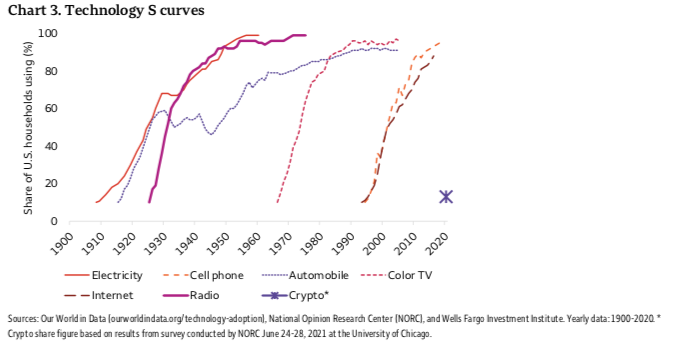
然而,这个看似完美的类比,却可能掩盖了更深层的真相。历史并非简单的重复。今天的加密世界,其演进的剧本,正被两个当年无法想象的变量——金融「正规军」的入场与人工智能(AI)的崛起——彻底改写。这不仅是历史的重演,更是一场加速的、形态迥异的进化。

旧世界的巨头,新大陆的拓荒者

1990 年代的电子商务革命,是一场典型的「颠覆者」的游戏。当年的亚马逊、eBay、PayPal,都是从主流商业世界的边缘地带崛起的「新贵」,他们用全新的规则挑战着沃尔玛、花旗银行等传统巨头。那是一个属于车库创业者和风险投资家的英雄时代,故事的主线是「颠覆」与「取代」。

而今天,加密货币的故事则呈现出截然不同的叙事。最引人注目的拓荒者,不再仅仅是那些穿着连帽衫的密码朋克,更有来自华尔街和硅谷,西装革履的金融「正规军」。他们并非要摧毁旧世界,而是试图将整个旧世界「搬运」到新的技术底层之上。这种「由内而外」的变革,其广度和深度,在 2025 年表现得淋漓尽致。

贝莱德(BlackRock)首席执行官拉里·芬克(Larry Fink)「资产代币化」的预言正在加速实现。继 2024 年比特币现货 ETF 大获成功后,贝莱德与 Securitize 合作,在以太坊上推出了其首个代币化基金——BUIDL,将传统货币市场基金的股份变成了可以在区块链上 24/7 流转的代币。与此同时,将加密资产作为战略储备的企业(被称为 DATCOs)数量激增,其资产负债表上持有的加密资产总额已历史性地突破了 1000 亿美元。

更关键的变量来自美国政府态度的转变。过去模糊不清甚至时有敌意的监管环境,在 2025 年迎来了决定性的转折。美国政府不仅自身成为比特币的重要持有者(通过执法没收持有近 20 万枚比特币),更重要的是,开始为行业建立清晰的「游戏规则」。7 月签署的《GENIUS 法案》是美国首个针对稳定币的全面联邦监管框架,为这个市值超过 2500 亿美元的市场提供了合规路径。紧接着,允许价值 9 万亿美元的美国退休金投资加密货币等另类资产的行政命令,更是为市场打开了巨大的增量资金入口。这种自上而下的认可,彻底改变了机构入场的风险收益计算,也让这场变革的根基变得异常稳固。

AI:寻找原生经济土壤的「新物种」

如果说金融巨头的入场是为加密世界铺设了通往现实世界的高速公路,那么人工智能的爆发,则为这片新大陆带来了第一批真正意义上的「原住民」。

1995 年的互联网,解决的是「人」与「信息」、「人」与「商品」的连接问题。电子商务的本质,是将人类社会的商业活动数字化、在线化。而我们正在进入的下一个时代,将是关于「AI」与「AI」之间如何进行经济协作的时代。AI 作为一种新的生产力,正在以前所未有的速度创造数字内容、代码、设计乃至科学发现。这些由 AI 创造的价值,迫切需要一个与之匹配的、原生的经济系统。

加密技术恰好为此而生。试想一个场景:一个 AI 设计程序,自主创作了一款独特的艺术作品。它可以通过一个智能合约,将该作品铸造成一个 NFT(非同质化代币),从而获得独一无二的、可验证的所有权。随后,另一个 AI 营销程序可以发现这个 NFT,并自主决定支付一笔微小的加密货币费用,在社交媒体上进行推广。如果一个服装品牌的 AI 采购代理看中了这个设计,它可以直接与持有 NFT 的智能合约交互,自动支付授权费,获得生产 1000 件 T 恤的许可。整个过程无需任何人类干预,价值的创造、确权、流转和分配,都在链上瞬时完成。

这并非科幻。以太坊创始人 Vitalik 就曾指出,AI 与加密的结合可以解决彼此的核心问题:AI 需要可信的规则和资产所有权,而加密世界则需要一个能自主行动的「用户」。这种共生关系,正在催生全新的应用场景。例如,去中心化计算网络(如 Akash Network)允许 AI 开发者用加密货币租用全球闲置的 GPU 算力;而链上 AI 模型则试图通过代币经济激励,来构建更透明、更抗审查的智能系统。

这种 AI 原生的经济活动,其规模和速度可能远超人类商业活动的总和。它所需要的,是一个全球统一、低摩擦、可编程的价值结算层。这正是加密技术的核心价值所在,也是 90 年代的互联网无法企及的宏大愿景。

我们在寻找的,是下一个「亚马逊」还是「TCP/IP」?

面对如此变局,投资者和建设者们常常会问:谁会是加密世界的「亚马逊」或「谷歌」?

这个问题本身,或许就受到了历史经验的局限。亚马逊的成功,是建立在 Web 2.0 的平台经济模式之上——一个中心化的公司,通过提供卓越的服务,吸引海量用户,最终形成赢家通吃的网络效应。然而,加密世界的精神内核在于「协议」而非「平台」。它的目标,是创造出像 TCP/IP(互联网的底层通信协议)一样开放、中立、无需许可的公共基础设施。

因此,未来的赢家,可能不是一个封闭的商业帝国,而是一个开放的生态系统或一个被广泛采用的底层标准。我们看到的,可能是某个 Layer 2 网络(如 Arbitrum 或 Optimism)凭借其卓越的性能和开发者生态,成为绝大多数应用的实际承载层;也可能是某个跨链通信协议(如 LayerZero 或 Axelar),成为连接所有区块链的「价值路由器」;又或者是某个去中心化身份(DID)标准,成为所有用户进入数字世界的统一通行证。

这些「协议」层的胜利者,其商业模式将与亚马逊截然不同。它们不会通过收取高额平台税来盈利,而是通过其原生代币,捕捉整个生态系统增长的价值。它们更像是城市道路、供水系统这样的公共事业,而非一家独大的超级市场。

当然,这并不意味着应用层没有机会。在这些开放的协议之上,依然会诞生出伟大的公司。但它们成功的关键,将不再是构建封闭的护城河,而是如何更好地利用这些开放协议,为用户创造独特的价值。

最后,回到那个引用:如果你愿意把 Visa CEO 的判断看作一个信号,而非决议,那么更重要的问题是「我们如何把信号转成实践」。对企业而言,这是从战略对接、合规准备到产品落地的综合工程;对个人与机构投资者而言,则是把长期视角与短期波动区分清楚,既不盲从也不消极回避,去寻找那些可以在真实经济中产生价值的链上用例。

历史给了我们两样东西:一是镜像,让我们看到可能的轨迹;二是教训,让我们记住最终的赢家往往不是最快的投机者,而是建立起持久、真实需求并能跨越周期的基础设施与平台。今天的加密,正在同时书写两部分剧本——热闹的市场短篇与缓慢成型的基础设施长篇。若 Visa 所言非虚,未来十年会是后者加速成为主流的关键十年。


Related Reads

Satoshi Nakamoto Sued? $83.7 Billion Worth of BTC Up for 'Legal Claim'

An anonymous individual known as Noah Doe, along with two Wyoming LLCs, has filed a lawsuit in the New York Supreme Court. They are attempting to use New York's "lost and found" laws to claim legal ownership of approximately 837 billion USD worth of Bitcoin held in 39,069 dormant addresses. Crucially, this list includes addresses believed to belong to Bitcoin's creator, Satoshi Nakamoto (holding around 837 billion USD), alongside other long-inactive addresses from Mt. Gox and early Bitcoin holders. The plaintiff's legal strategy hinges on classifying these public Bitcoin addresses as "lost property." They submitted a USB drive containing only the public addresses to the New York Police Department, sent OP_RETURN notifications on the Bitcoin blockchain, and issued press releases. Their argument is that after these efforts and a waiting period, they should be granted ownership. A key, and highly controversial, claim is an unnamed "independent expert" valuing each address at under 10 USD, allowing for a faster legal process. Analysts from Galaxy point out major flaws in the case. The plaintiff never physically possessed the Bitcoin or private keys. The "under 10 USD" valuation is considered unrealistic, and allowing anonymous companies to claim such vast assets is highly unusual. Even if the plaintiff wins, they would only receive a court declaration of ownership, not the actual private keys to move the Bitcoin. The real danger lies in this court document acting as a "cloud on title." If any of these Bitcoins are later transferred to a regulated exchange or custodian, the plaintiff could present the judgment to freeze the assets, forcing the true owner into lengthy and de-anonymizing litigation to prove ownership. The outcome is uncertain, but the case highlights potential legal risks for dormant cryptocurrency holdings.

marsbit4m ago

Satoshi Nakamoto Sued? $83.7 Billion Worth of BTC Up for 'Legal Claim'

marsbit4m ago

Is Satoshi in Legal Trouble? $83.7 Billion Worth of BTC Might Be 'Legally Claimed'

An anonymous plaintiff, “Noah Doe,” and two shell companies have filed a lawsuit in New York Supreme Court, seeking a declaratory judgment granting them ownership of 39,069 dormant Bitcoin addresses containing approximately 3.8 million BTC (worth ~$293.5 billion). Their claim is based on New York’s lost property law, arguing these addresses are abandoned assets. The plaintiff “found” the addresses, stored them on a USB drive, and delivered it to a police station, followed by chain notifications (OP_RETURN) and a press release. Notably, the list includes addresses linked to Bitcoin creator Satoshi Nakamoto (holding ~1.1 million BTC), a Mt. Gox hacker address, a provably unspendable burn address, and other long-inactive wallets. The plaintiff’s “independent expert” controversially values each address at under $10 to invoke a fast-track legal process. Critical issues question the lawsuit's validity: the lost property law is designed for physical items, not publicly viewable blockchain addresses; the valuation is implausible; and the plaintiff’s anonymity is contested. Even if successful, the plaintiff would only receive a paper judgment, not the private keys. However, such a ruling could create a “title defect,” allowing them to challenge future transactions of these coins on regulated platforms, potentially freezing assets and forcing anonymous holders to reveal themselves in legal disputes. The court is unlikely to grant a broad default judgment given the novel and high-stakes nature of the claim.

Odaily星球日报7m ago

Is Satoshi in Legal Trouble? $83.7 Billion Worth of BTC Might Be 'Legally Claimed'

Odaily星球日报7m ago

Deconstructing the U.S. Stock Quantum Computing Sector: IonQ, Rigetti, D-Wave, Which of These Concept Stocks is Worth Betting On?

**Title:** Analyzing the US Quantum Computing Race: IonQ, Rigetti, D-Wave – Which Concept Stock is Worth Betting On? **Summary:** The podcast discusses the resurgence of quantum computing as a national priority for both the US and China, driven by its potential to break current encryption, revolutionize drug discovery, finance, and logistics. The core challenge is commercializing the technology, which is hampered by high error rates in quantum bits (qubits). Quantum error correction, requiring thousands of physical qubits per reliable logical qubit, is key but years away. The analysis compares three main publicly traded US quantum computing firms: * **IonQ (Ion Trap):** Considered the most financially stable with the fastest commercial progress (2025 revenue: $130M, +202%) and high-quality clients. Its valuation is very high, pricing in significant future growth. * **Rigetti (Superconducting):** Seen as the highest-risk, highest-potential-reward bet. It has the smallest revenue but recently launched a 108-qubit system. Its valuation multiples are extreme, making it highly sensitive to news. * **D-Wave (Quantum Annealing):** Has the most unique positioning with real-world enterprise clients today (e.g., Mastercard, Volkswagen) solving optimization problems. Its recent acquisition moves it into general-purpose quantum computing ("dual-platform"), adding execution risk. Major tech giants like Google, IBM, and Microsoft are also heavily invested, pursuing various technical approaches. Nvidia is positioning itself as the essential bridge between classical and quantum computing. The investment phase is likened to AI in 2018-2020: promising underlying technology with accelerating breakthroughs but a commercial inflection point still 3-7 years away, suggesting potential for a market correction ("bubble washout"). For investors, suggested approaches include gaining exposure through tech giants with quantum divisions (e.g., Google, IBM) or using niche ETFs like WQTM for pure-play quantum exposure, rather than direct stock picks in the highly volatile pure-play companies at this early stage.

marsbit34m ago

Deconstructing the U.S. Stock Quantum Computing Sector: IonQ, Rigetti, D-Wave, Which of These Concept Stocks is Worth Betting On?

marsbit34m ago

From Parallel Finance to Mainstream Finance: The On-Chain Securities Era Ushers in a Historic Window

From Parallel Finance to Mainstream: The Dawn of On-Chain Securities For over a decade, the crypto industry has operated as a parallel financial system with its own currencies, markets, and assets—from Bitcoin and ICOs to DeFi, NFTs, and memecoins. Despite building a robust internal ecosystem, a wall has separated it from the traditional financial world. That barrier is now crumbling. The industry's first act was one of internal evolution: ICOs streamlined fundraising, DeFi recreated financial services on-chain, and layer-2 networks competed for scalability—all within the crypto bubble. While innovative, this cycle remained closed, with capital and users circulating internally, leading to volatile boom-bust cycles. Even Bitcoin ETFs, while attracting Wall Street capital, merely provided a channel to buy crypto assets without bridging the systems. The next, larger narrative is Real-World Assets (RWA) moving on-chain. This involves tokenizing stocks, bonds, funds, and future cash flows. Blockchain can compress the complex traditional processes of trading, settlement, clearing, and custody into a seamless, automated network operating in seconds. This shift is creating a new financial gateway: the native crypto securities broker. This entity will combine functions of an exchange, broker, bank, and custodian into a unified global financial operating system. Consequently, the next major battleground won't be the "public chain wars" focused on speed and cost, but the competition to build the financial infrastructure capable of hosting high-quality, liquid real-world assets. Access to global equities, index funds, or stakes in companies like SpaceX could erase the boundary between crypto and traditional finance, unlocking a market orders of magnitude larger than crypto's current valuation. In summary, after years of creating a separate financial world, crypto's next decade will be defined by its integration into the existing global financial system, marking the true beginning of its largest growth story.

marsbit55m ago

From Parallel Finance to Mainstream Finance: The On-Chain Securities Era Ushers in a Historic Window

marsbit55m ago

Trading

Spot
Futures

Hot Articles

Discussions

Welcome to the HTX Community. Here, you can stay informed about the latest platform developments and gain access to professional market insights. Users' opinions on the price of AI (AI) are presented below.

活动图片