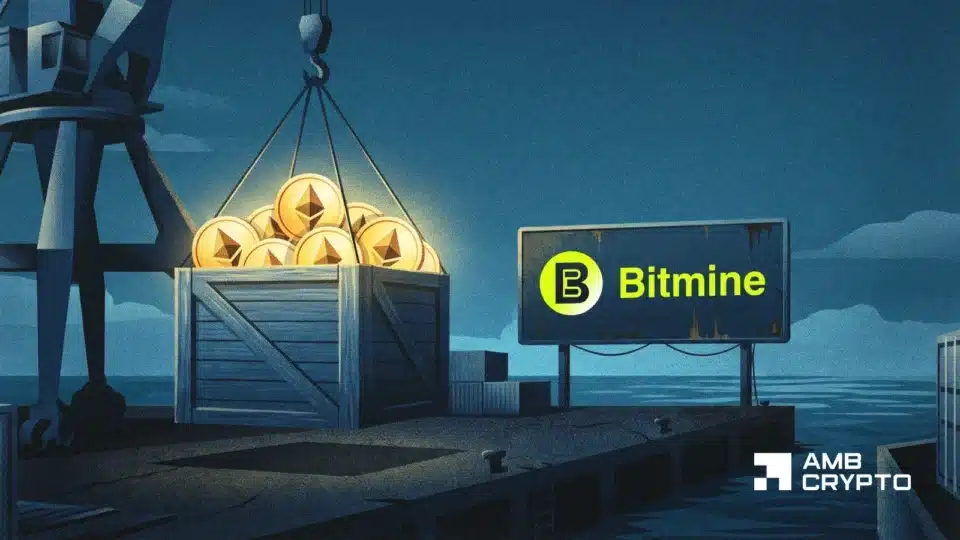
Эксперты заявили о накоплении Ethereum и обсуждении актива в социальных сетях

cryptonews.ruPublished on 2025-01-29Last updated on 2025-07-30

  • В Santiment заявили, что Ethereum находится в центре внимания из-за нескольких факторов.
  • По данным экспертов Lookonchain, с 9 июля киты накопили Ethereum на более чем $2,4 млрд.
  • Аналитики CryptoQuant считают, что ралли актива не связано с перетеканием капитала из биткоина.

Ethereum остается в центре внимания, и это обусловлено сразу несколькими факторами, заявили в Santiment. По данным экспертов, на Reddit активно обсуждают мошеннические схемы с поддельными криптокошельками, из-за которых пользователи теряют Ethereum. В Telegram Ethereum упоминается как ключевая платформа для смарт-контрактов и демонстрирует рост в направлениях стейкинга, DeFi, NFT, L2-решений и институционального принятия.

🗣️ With cryptocurrencies ranging, the coins seeing the highest social media discussion increases are:

🪙 Solana $SOL: Trending due to increased discussions about the Solana blockchain network known for high-speed, low-cost transactions. Key factors include significant staking… pic.twitter.com/zsZzltPxiJ

— Santiment (@santimentfeed) July 29, 2025

Кроме того, активность вокруг актива усилилась на фоне ценовых колебаний и празднования 10-летия сети.

Аналитик Али Мартинез отметил, что некоторые из крупнейших китов в сети приобрели более 220 000 ETH на сумму около $840 млн только за последние 48 часов. По данным Lookonchain, с 9 июля, всего девять новых кошельков накопили 640 646 ETH (на сумму $2,43 млрд).

Эксперты CryptoQuant добавили, что ралли Ethereum не финансируется за счет биткоина. По их данным, реализованная капитализация биткоина — метрика, показывающая объем реального инвестированного капитала — достигла рекордных $1,018 трлн 25 июля.

Это означает, что инвестиции в биткоин продолжают расти, даже несмотря на ралли Ethereum, говорится в сообщении. Таким образом, рост актива объясняется притоком нового капитала, а не перераспределением из биткоина. На это повлияли как эффект от Закона Генезиса (Genesis Law), так и высокие ожидания относительно развития экосистемы Ethereum, подытожили аналитики.

Ранее в Glassnode заявили, что открытый интерес к Ethereum вырос до максимума за более чем два года.


Trending Cryptos

Related Reads

In the AI Era, What's Left for Bitcoin?

As Bitcoin falls below $60,000, the author reflects on the relationship between AI and Bitcoin, seeing them as two sides of the same coin. In the AI era, the cost of generating content has plummeted, making fake text, images, and videos increasingly easy and cheap to produce. This has led to a fundamental shift: while AI dramatically lowers the cost of information production, it also undermines trust and authenticity online. What becomes truly valuable is not more content, but the ability to verify what is real—"verifiability." This perspective offers a new lens for Bitcoin. Its massive energy consumption, often criticized as wasteful, is reinterpreted. While AI burns energy to enhance "capability" and efficiency, Bitcoin burns energy to produce "verifiability." Its purpose is not to be trusted but to enable a system where no trust in intermediaries—banks, platforms, or developers—is needed. Every transaction and the entire ledger's history is secured by cryptography and a decentralized network of nodes, making it independently verifiable. AI cannot forge a transaction on the Bitcoin network because the system is designed for proof, not generation. The author draws a historical parallel to the Renaissance: the printing press drastically reduced the cost of copying knowledge, while double-entry bookkeeping reduced the cost of trust in commerce. Today, AI is the new printing press, reducing content creation costs to near zero. Blockchain, and Bitcoin as its pioneer, may be the modern equivalent of double-entry bookkeeping—a foundational technology for verifying digital asset ownership and historical records without centralized authorities. Thus, AI and blockchain are not competitors. AI lowers the cost of creation; blockchain lowers the cost of verification. In an age where AI can generate anything, true scarcity may lie not in more content, but in independently verifiable facts. Whether the market will reprice Bitcoin accordingly remains uncertain, but its core value proposition as a "machine for producing verifiability" becomes strikingly relevant.

marsbit17m ago

In the AI Era, What's Left for Bitcoin?

marsbit17m ago

In the Age of AI, What's Left for Bitcoin?

Author: Sevclub, Seven Research Amid Bitcoin's recent drop below $60k, the author reflects on a growing sense that AI and Bitcoin are two sides of the same coin. Today, encountering any content triggers a new default question: "Was this made by AI?" The cost of generating convincing text, images, and video is now negligible. While the internet lowered information *distribution* costs, AI is crashing information *production* costs to near zero. The consequence is a flood of content where truth and falsehood are increasingly indistinguishable. In this environment, what becomes truly valuable is not more information, but the ability to verify what is real—"verifiability." This reframes the common criticism that Bitcoin "wastes electricity." AI consumes power to produce "capability" (e.g., more powerful models). Bitcoin consumes power to produce something else: "verifiability." Bitcoin's core purpose isn't about belief or trust in any institution, developer, or even its creator. It's about enabling independent verification. Every bitcoin's origin, every transaction, and the integrity of the entire ledger are secured by mathematics, cryptography, and a global network of nodes. AI can fabricate convincing media, but it cannot falsify a transaction on the Bitcoin network. The expended energy makes篡改历史 (tampering with history) prohibitively expensive, purchasing a globally verifiable ledger. The author draws a historical parallel to the Renaissance. The printing press drastically reduced the cost of copying knowledge, while double-entry bookkeeping reduced the cost of trust in commerce—one enabled creation, the other verification. Today, AI is the new printing press, driving content production costs toward zero. The question becomes: what is this era's "double-entry bookkeeping"? Blockchain appears to be the leading candidate. It doesn't verify which news is true or which image is real, but it provides a foundational layer for independently verifying asset ownership and historical records in the digital realm without centralized authorities. Therefore, AI and blockchain are not in competition. AI lowers the cost of *generation*. Blockchain (and Bitcoin as a prime example) lowers the cost of *verification*. One creates, the other proves. Whether Bitcoin ultimately succeeds remains uncertain, facing potential challenges from quantum computing, regulation, and technical evolution. However, the author now sees it less as a "machine for making bitcoin" and more as a "machine for making verifiability." In an age where AI can generate anything, true scarcity may no longer be "more content," but "more independently verifiable facts." Whether the market will price this accordingly is a separate question.

链捕手25m ago

In the Age of AI, What's Left for Bitcoin?

链捕手25m ago

Trading

Spot

Hot Articles

Discussions

Welcome to the HTX Community. Here, you can stay informed about the latest platform developments and gain access to professional market insights. Users' opinions on the price of ETH (ETH) are presented below.

活动图片