筹建4.5亿美元SUI财库,MCVT股价3天3倍

Odaily星球日报Published on 2025-07-29Last updated on 2025-07-29

原创 | Odaily 星球日报(@OdailyChina

作者 | 叮当(@XiaMiPP

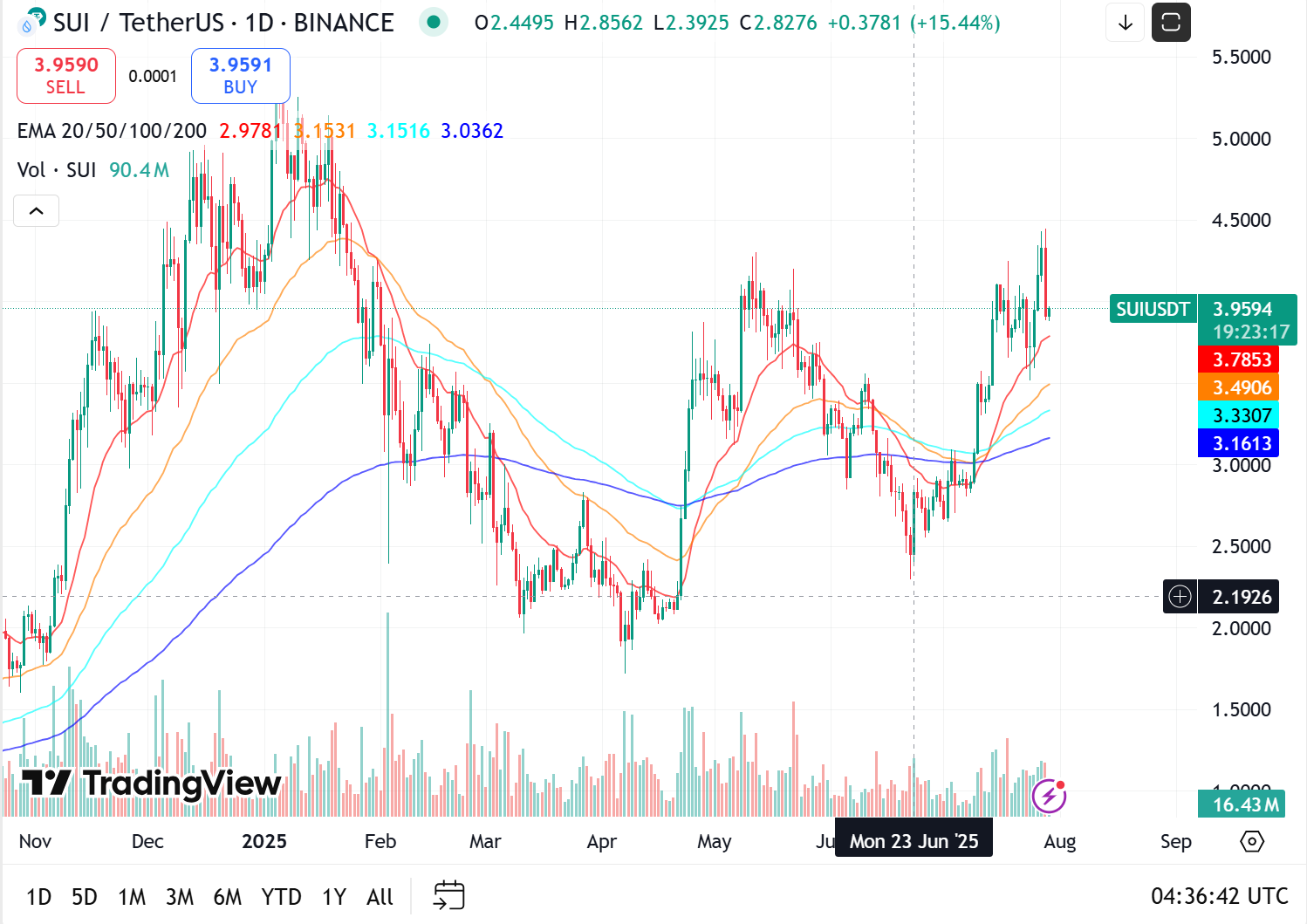
7 月 28 日,纳斯达克上市公司 Mill City Ventures III 于 7 月 28 日宣布已签署证券购买协议,将配股募资 4.5 亿美元启动 SUI 财库战略。据悉,该交易预计于 2025 年 7 月 31 日前后完成,需满足常规成交条件。在这一消息推动下,MCVT 股价在短短三日内飙升,最大涨幅超过 300%。

从特种金融到区块链转型

Mill City Ventures III,总部位于美国明尼苏达州,一直以来专注于为私营企业、微型公司及高净值个人提供高利率短期贷款。其贷款业务通常依赖抵押品或个人担保,期限不超过九个月,旨在降低违约风险。

公司最初名为 Poker Magic, Inc.,涉足游戏和娱乐领域,2013 年转型为业务发展公司(BDC),并于 2019 年退出 BDC 选举,专注于特种金融业务。

然而,近日宣布的 4.5 亿美元私募配售标志着公司业务模式的重大转型。公告显示,约 98% 的募集资金将用于购买 Sui 区块链原生代币 SUI,其余 2% 则将支持传统的短期贷款业务。这一战略意味着,SUI 代币将成为公司未来的核心储备资产,彻底改变了公司资产结构。此次交易由伦敦的数字资产对冲基金 Karatage Opportunities 和 Sui 基金会领投,吸引了包括 Galaxy Digital 和 Pantera Capital 等知名加密机构的参与。交易完成后,Karatage 联合创始人 Marius Barnett 将出任公司董事会主席,Stephen Mackintosh 将担任首席投资官,进一步强化公司在区块链领域的战略布局。

Sui 储备浪潮中的领跑者

凭借这一举措,Mill City Ventures III 已成为目前宣布 SUI 储备最大的一家上市公司。根据 Odaily 星球日报的统计,其他已持有或计划持有 SUI 的上市公司包括 Lion Group(持有约 101.57 万枚 SUI,价值约 400 万美元)、OFA Group、LGHL 和 Aurora 等。然而,这些公司规模相对较小,大多数仅持有包括 SUI 在内的多种加密货币。相比之下,Mill City Ventures III 的巨大投资使其在 Sui 生态中占据了独特位置。

Sui 生态的复苏与潜力

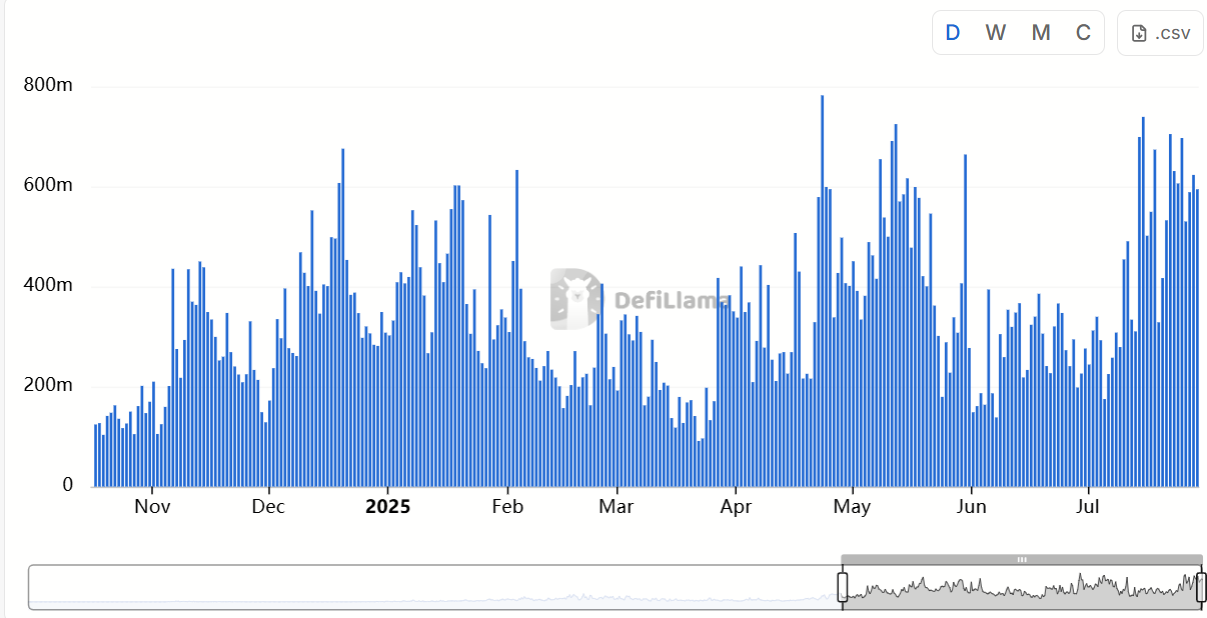
Sui 生态近期展现出强劲的复苏势头。2025 年 5 月 22 日,Sui 生态内的去中心化交易所(DEX)Cetus 遭遇 2.23 亿美元的黑客攻击,引发链上资金大规模流出,对生态信心造成重创。然而,经过数月的修复,Sui 生态已全面恢复。据 defillama.com 数据显示,截至 2025 年 7 月,链上总锁仓价值(TVL)达到历史新高的 21.3 亿美元。
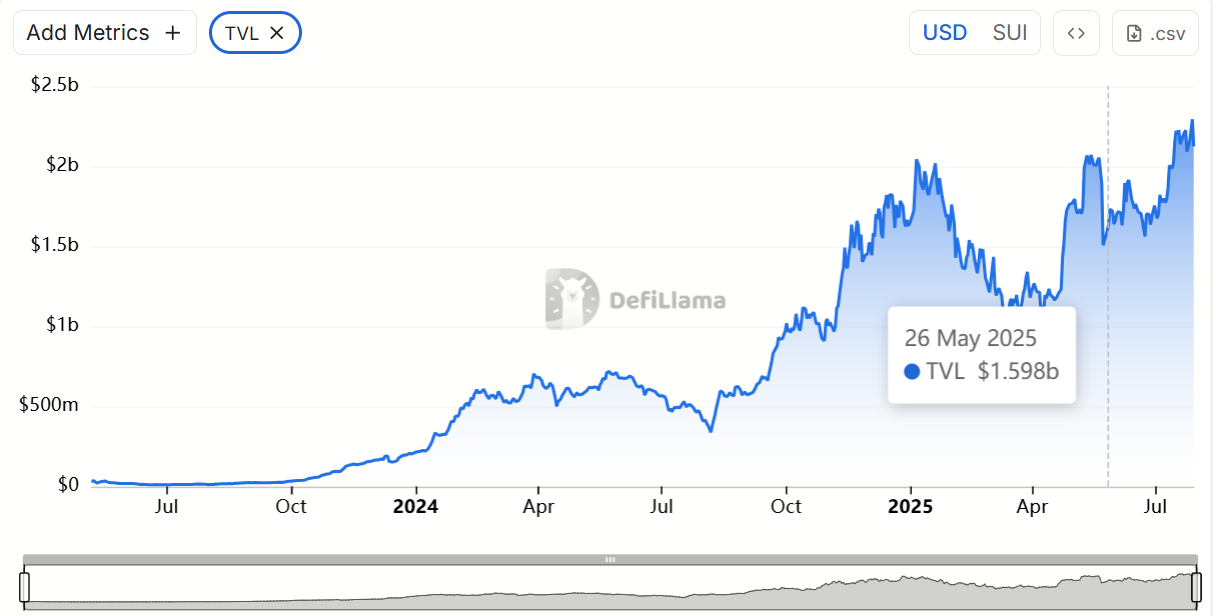
DEX 交易量也自 6 月以来稳步攀升,SUI 代币价格实现同步上涨,反映出市场对 Sui 生态的信心回暖。
加密 ETF 热潮与 SUI 的市场前景

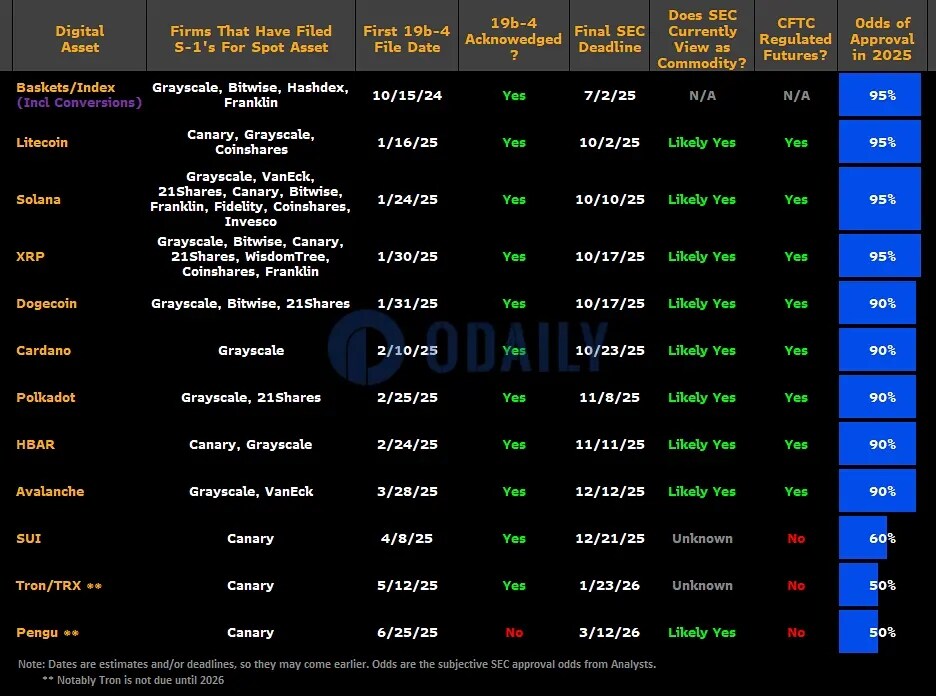
在当前的加密市场周期中,交易所交易基金(ETF)成为机构资金入场的主力途径,也为山寨币提供了新的叙事机会。据悉,Canary 已提交了 SUI 现货 ETF 的申请,这也意味着 SUI 在机构投资领域的吸引力进一步提升。根据彭博社 ETF 分析师 James Seyffart 的预测,2025 年下半年将迎来一波加密现货 ETF 获批潮,其中 LTC、SOL 和 XRP 的获批概率高达 95%,DOGE、HBAR、Cardano、Polkadot 和 Avalanche 的获批概率为 90%,而 SUI 的获批概率为 60%。尽管 SUI 的 ETF 获批概率相对较低,但作为传统金融眼中的新兴区块链项目,其潜力仍不容小觑。
市场情绪与交易机会

随着 SUI 的关注度不断升温,市场情绪也变得愈发活跃。知名交易员 Eugene 在 7 月 26 日的发文中表示,尽管山寨币整体表现逊色于比特币,但他仍在 ETH 和 SUI 上建立了多头仓位。他指出,ETH 在 3500 美元附近展现出强支撑,而 SUI 则具备短期交易潜力,适合低时间框架的快速交易(LTF scalp)。不过,Eugene 也强调,如果 ETH 跌破 3500 美元,他将会考虑止损离场。

更有意思的是,Eugene 在昨日晚间的发文中认为,SUI 近期的价格强势可能与内部人士在 SUI 财库消息交易中的提前布局有关,虽然这种影响程度难以量化。基于这一判断,Eugene 表示,尽管不认为这将构成重大利空,但由于市场上已有仓位提前反应这一消息,他已经选择获利了结,退出了多头头寸。


Related Reads

The Fate of Digital Banks: No Fancy App Can Outshine a Banking License

The Fate of Digital Banks: A Flashy App is No Match for a Banking License The article argues that despite attracting billions of users with fee-free checking accounts and sleek apps, most "neobanks" struggle to be profitable because their core business—transaction fees—is inherently low-margin. The real profit engine of banking is lending (credit), which generates interest income. However, many early neobanks operated without their own banking licenses, which restricted their ability to lend at scale. Examples like Nubank, Revolut, and Chime illustrate the point. While they gained users with free accounts, their eventual profitability came from rolling out credit products. The piece highlights systemic risks for neobanks that rely on third-party infrastructure, citing the Synapse bankruptcy, which froze user funds and revealed the fragility of such models. The solution, according to the author, is obtaining a formal banking license, like the U.S. OCC's national trust charter. This provides regulatory backing, allows direct custody of funds, and eliminates dependency on intermediary partners. The trend is now evident in the crypto sector, where companies like Kraken, SoFi, and others are actively pursuing such licenses. The article concludes that while technology changes, the fundamental business logic of banking—profiting from lending—remains constant. Successful digital banks ultimately conform to this old model, just with better interfaces and fairer terms.

Foresight News5m ago

The Fate of Digital Banks: No Fancy App Can Outshine a Banking License

Foresight News5m ago

In the Name of Charity, For the Benefit of the Family: How the Trump Family Turns Philanthropy into Profit?

Charity for Profit: How the Trump Family Turned Philanthropy into Personal Gain Amid a recent controversy over misleading claims about his cryptocurrency company American Bitcoin, Eric Trump invoked his children's cancer charity as evidence of his good intentions. While his Curetivity foundation (formerly the Eric Trump Foundation) has donated over $25 million to St. Jude Children's Research Hospital, an investigation reveals a pattern of self-dealing and opaque practices that benefited the Trump family business. Internal documents show that from 2011 to 2016, over $500,000 from the charity was funneled back to Trump-owned properties for event costs, transactions often omitted from tax filings. This created clear conflicts of interest, with figures like former club manager and current White House aide Dan Scavino involved on both sides. Public claims of "one of the lowest expense ratios" were contradicted by records showing significant spending on entertainment, auctions, and transportation. Facing scrutiny in 2017, Eric Trump distanced himself from the board and rebranded the foundation. After a state investigation shifted focus to compliance rather than enforcement, he returned as the public face. Fundraising events, now less transparent, continue at Trump venues. Estimates suggest these events have directed over $1 million to the Trump Organization over two decades. The same playbook of optimistic claims and obscured financial realities is now evident in Eric Trump's role at American Bitcoin. He promoted it as a highly profitable venture with low mining costs, but reports indicate most Bitcoin was purchased with funds from constant stock issuance, not mined, with actual costs far higher than claimed. While the company's stock has crashed nearly 90% from its peak, Eric Trump's personal stake remains valuable. The recurring pattern involves aggressive public defense, legal maneuvering to bury records, making minimal changes to satisfy regulators, and eventually repackaging the venture to regain trust, often successfully.

marsbit14m ago

In the Name of Charity, For the Benefit of the Family: How the Trump Family Turns Philanthropy into Profit?

marsbit14m ago

Bernstein Report: Agentic AI Will Transform CPU from Supporting Role to Leading Role, Bullish on Hygon Information

Bernstein research report: Agentic AI will turn CPUs from supporting players to leading roles, bullish on Hygon Information. Analysts led by David Dai argue that AI is transitioning from the chatbot era to the agentic AI era. Unlike simple query-response models, agentic AI involves complex workflows including retrieval, planning, tool calling, and multi-step reasoning. This shift dramatically increases the demand for CPU compute to orchestrate these tasks, manage memory, and prevent expensive GPU idling. The report forecasts that the GPU-to-CPU ratio in inference clusters will reverse from 8:1 in 2025 to 1:1 by 2029. In agentic AI workloads, CPUs could account for 50% of the compute, on par with GPUs. Consequently, the server CPU Total Addressable Market (TAM) is projected to surge from $37 billion in 2025 to $223 billion by 2030, representing a 6x expansion. Arm is identified as a key beneficiary due to its superior performance-per-watt and a strategic shift from IP licensing to designing its own chips, targeting $15 billion in chip revenue by 2030. Bernstein raises Arm's price target to $500. For x86 vendors, the report is Overweight on AMD (target $600) and Hygon Information (target CNY 450), citing leadership and strong growth in the Chinese market respectively. Intel's target is raised to $100, reflecting upgraded earnings assumptions. The analysis acknowledges significant supply-side risks, questioning whether foundry and memory capacity can support such rapid CPU growth. The optimistic demand forecast also heavily relies on Nvidia's guidance for over $1 trillion in annual AI infrastructure spend by 2027.

marsbit22m ago

Bernstein Report: Agentic AI Will Transform CPU from Supporting Role to Leading Role, Bullish on Hygon Information

marsbit22m ago

Will UNI Reach $100 in Four Years? Can Standard Chartered's Prediction Come True?

TL;DR: Standard Chartered Bank predicts UNI token will reach $100 by 2030, based on the growth of tokenized assets fueling demand for open DeFi liquidity and Uniswap's potential to capture fees from that trading. However, institutional tokenized products like BlackRock's BUIDL fund show that strict access controls and permissioned systems remain major barriers. Standard Chartered's $100 price target for Uniswap's (UNI) governance token by 2030 projects massive growth from current levels. The bank's thesis hinges on tokenized real-world assets (RWA) reaching trillions in value and a significant portion flowing into open, decentralized markets for trading and liquidity, rather than remaining in closed, permissioned systems. Uniswap's position as a leading decentralized exchange (DEX) infrastructure could allow it to capture a major share of this future trading activity. A key challenge is whether tokenized assets like bonds, funds, and stocks will trade openly on DEXs or be restricted to controlled, institutional platforms. The case of BlackRock's BUIDL fund exemplifies this tension: while it uses Uniswap's technology for settlements, trading is strictly limited to pre-approved, whitelisted institutional participants. This hybrid model provides DeFi efficiency but maintains traditional access barriers. For UNI to achieve such a high valuation, Uniswap must not only see increased trading volume from tokenized assets but also implement effective value-capture mechanisms for token holders. Recent governance proposals aim to direct protocol fees to UNI stakers, creating a clearer link between platform usage and token value. Ultimately, the realization of Standard Chartered's prediction depends on the future structure of the tokenized asset market. If open liquidity pools and reduced restrictions prevail, Uniswap's role could expand far beyond crypto-native trading. If permissioned, walled-garden systems dominate, its growth from institutional tokenization may be limited. The prediction itself signals growing institutional recognition of DeFi's potential role in the future of finance.

marsbit31m ago

Will UNI Reach $100 in Four Years? Can Standard Chartered's Prediction Come True?

marsbit31m ago

Trading

Spot
Futures

Hot Articles

How to Buy SUI

Welcome to HTX.com! We've made purchasing SUI Network (SUI) simple and convenient. Follow our step-by-step guide to embark on your crypto journey.Step 1: Create Your HTX AccountUse your email or phone number to sign up for a free account on HTX. Experience a hassle-free registration journey and unlock all features.Get My AccountStep 2: Go to Buy Crypto and Choose Your Payment MethodCredit/Debit Card: Use your Visa or Mastercard to buy SUI Network (SUI) instantly.Balance: Use funds from your HTX account balance to trade seamlessly.Third Parties: We've added popular payment methods such as Google Pay and Apple Pay to enhance convenience.P2P: Trade directly with other users on HTX.Over-the-Counter (OTC): We offer tailor-made services and competitive exchange rates for traders.Step 3: Store Your SUI Network (SUI)After purchasing your SUI Network (SUI), store it in your HTX account. Alternatively, you can send it elsewhere via blockchain transfer or use it to trade other cryptocurrencies.Step 4: Trade SUI Network (SUI)Easily trade SUI Network (SUI) on HTX's spot market. Simply access your account, select your trading pair, execute your trades, and monitor in real-time. We offer a user-friendly experience for both beginners and seasoned traders.

8.3k Total ViewsPublished 2024.03.29Updated 2026.06.02

How to Buy SUI

Discussions

Welcome to the HTX Community. Here, you can stay informed about the latest platform developments and gain access to professional market insights. Users' opinions on the price of SUI (SUI) are presented below.

活动图片