耗资1.48亿美元的加密晚宴:特朗普与TRUMP持币者的“共谋”

Odaily星球日报Published on 2025-05-23Last updated on 2025-05-24

Abstract

从高尔夫俱乐部到国会山,一场被抗议声包围的“持币者特权盛宴”。

原创 | Odaily星球日报(@OdailyChina
作者 | 叮当(@XiaMiPP

耗资1.48亿美元的加密晚宴:特朗普与TRUMP持币者的“共谋”


北京时间 5 月 23 日早上 7 点(美国东部时间 5 月 22 日晚),一场加密与政治交汇的特殊晚宴,在华盛顿特区郊外的特朗普国家高尔夫俱乐部如期举行。


这不是一次普通的社交晚宴,而是前 220 名 TRUMP 代币持有者的荣耀之夜——他们凭借 4 月 23 日至 5 月 12 日间的持仓排名,赢得了与美国总统特朗普共进晚餐的机会。


首届 TRUMP Meme 币竞赛回顾


4 月 19 日,加密社区成员@thetrenchdiver 发文称:特朗普计划为持有 TRUMP 币的大额投资者举办晚宴。随着消息的传播,TRUMP 代币价格从接近低谷的 7.7 美元拉升至 8.7 美元,涨幅接近 13% 。尽管如此,但许多人对消息的真实性仍是半信半疑。


直到 4 月 23 日,官方正式确认了这一消息:特朗普将于 5 月 22 日为 TRUMP 代币前 220 名持有者举办“TRUMP DINNER”晚宴,地点定于华盛顿特区的特朗普国家高尔夫俱乐部,并开放注册。此时,代币价格已经上涨至 9.2 美元左右。该则消息的正式确认瞬时将价格推升至 16.2 美元左右,涨幅达到 76% 。但是随后披露的晚宴细则称特朗普可能缺席,引发代币价格回落至 13.3 美元附近。


尽管如此,晚宴的吸引力仍持续发酵。4 月 26 日,TRUMP 代币价格稳步拉升至 16.4 美元附近。


5 月 12 日,首届 TRUMP Meme 币竞赛正式收官,排行榜锁定。排行榜根据 4 月 23 日至 5 月 12 日期间的每小时平均持币量排名,前 220 名持有者获得晚宴入场资格,其中前 25 名更可参加与特朗普的 VIP 招待会及白宫特别参观活动。此外,所有排行榜参与者均获颁 TRUMP NFT 作为纪念。活动详情可参考Odaily星球日报此前发布的《我要见特朗普之“TRUMP 晚宴”参会指南》。


晚宴流程与要求


依据 BitMart 创始人 Sheldon Xia 此前提供的信息,本次 TRUMP 晚宴禁止携带任何礼物和大型拍照设备,摄影设备不得超过手机级别的摄像头。着装方面要求遵守“Black Tie”标准,即必须穿西装、领带和皮鞋,整体着装要求非常正式。


所有参与者需提供基本的个人信息,如姓名、国籍、联系方式等,并接受严格的背景调查。非美国用户可能会接受特别审核,审核结果通常在活动临近时确认。目前尚未有因背景调查被淘汰的案例。


活动当天将进行严格的安检,VIP 参与者将提前 1 小时参加特别接待,与特朗普互动交流。随后进行为期两小时的正式晚宴。次日安排白宫参观,但特朗普是否陪同尚未确认。晚宴后还设有非正式小组活动。


1.48 亿美元的入场券:从持仓超 2000 万美元的孙宇晨到 1200 美元"漏洞玩家"


要进入这个精英俱乐部,代价远不止一套正装那么简单。


根据 Meme 币 TRUMP 官方网站公布的排行榜,这场晚宴的"门票"价格足以令人瞠目。前 25 名持有者的总持仓量高达 898 万枚代币。其中,波场创始人孙宇晨以超 2000 万美元的持仓稳居榜首,VIP 席位第二则由 MemeCore 认领,做市商 Wintermute 则凭借早期布局位列前三。


有数据统计显示,TRUMP Meme 币买家在竞赛期间共投入约 1.48 亿美元竞争 220 个席位,相当于人均豪掷 67 万美元。但最终坐在特朗普餐桌旁的,却是两个极端:

  • 顶级玩家:波场创始人孙宇晨以超 2000 万美元持仓稳居榜首,做市商 Wintermute 则凭借早期持仓策略虽仅持仓 40 万枚,却挤进前三。
  • 漏洞猎手:第 188 名的 Morten Christensen 与朋友通过"买入+做空对冲"的套利操作,仅支付 1200 美元交易费便锁定席位,其持仓甚至在排名确认后迅速清零。

这种荒诞的对比并非个例。有数据显示,前 25 名中有 22 人在活动公布后购入代币。然而排名确认后,晚宴前 220 名持有者中 17 个钱包地址持仓量已归零,其中包括排名第 25 位的“noah”。


Chainalysis 数据揭露了一个更残酷的现实: 58 个钱包盈利超 1000 万美元,总收益超过 10 亿美元,但同时有 76.4 万个钱包出现亏损。这场博弈,终归不是所有人都是赢家。


晚宴参会实录:加密与政治的微妙共舞


当特朗普如约出现在晚宴现场时,这场活动的象征意义已经超越了简单的商业聚会,成为加密资本与传统政治权力首次正式“握手”的历史性场合。


孙宇晨致辞:感谢总统力挺加密行业


作为最大持仓者,火币 HTX 全球顾问、波场 TRON 创始人孙宇晨受邀登台致辞。他表示,“非常感谢特朗普政府为我们的行业所做的一切。就在不久之前,加密人士还在不断地受到压迫,我们不可能在华盛顿举办如此盛大的活动,让所有从业者汇聚在美国,共建加密行业。这是我能想到的最美好的事。如果我能来美国,那么所有人都可以来。”其致辞视频截图也在社交媒体刷屏,孙宇晨本人随后亲自回应社区讨论。


 Sheldon Xia:千万美元买来的“黄金五分钟”


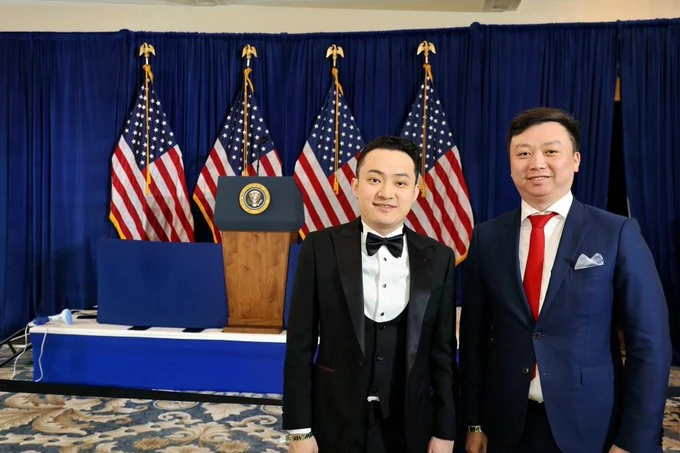
BitMart 创始人 Sheldon Xia 透露,其投入了 1000 万美元左右,进入前 25 名席位,获得了与特朗普短暂交流的机会。这一投资是晚宴确认之后进行的,目的是确保自己的席位。不过其目前依然持有这部分资产,而不是为了“锁定席位”后立刻抛售。Sheldon Xia  计划询问特朗普关于加密领域宏观监管的方向,包括美国以及全球市场的相关政策。
耗资1.48亿美元的加密晚宴:特朗普与TRUMP持币者的“共谋”


                         图源自 Sheldon 官方 X 账号

Kronos Research CIO 深度观察:从金融工具到身份象征的蜕变


Kronos Research CIO Vincent 同样受邀出席了特朗普的 VIP 晚宴,其称持有 TRUMP 是基于早期的市场信号和叙事动能,而非出于政治立场。而从一个长期观察市场结构的人角度来看,这标志着加密资产正从金融工具,逐步演化为社会与政治身份的表达方式。它并非只是“参与历史”,而是亲眼见证一种新的叙事逻辑如何走入权力中心。对整个行业来说,这是一种极具象征意义的信号。


从俱乐部到国会山:加密晚宴的政治风暴


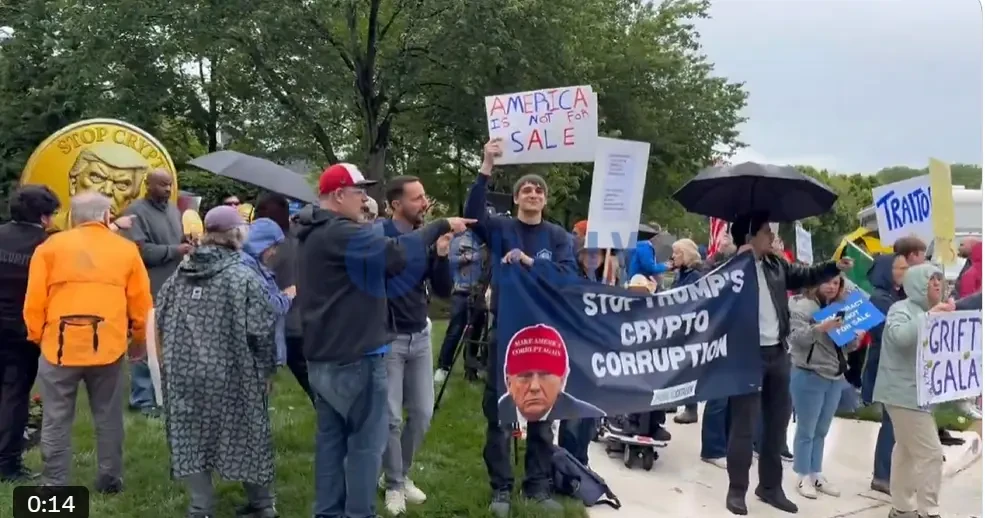
在特朗普国家高尔夫俱乐部璀璨的水晶吊灯下,当特朗普与持币者们举杯合影时,俱乐部外的抗议者正高举"加密腐败"标语——这场耗资上亿美元的晚宴,在民主党人眼中早已逾越了“行业交流”的边界。

耗资1.48亿美元的加密晚宴:特朗普与TRUMP持币者的“共谋”


耗资1.48亿美元的加密晚宴:特朗普与TRUMP持币者的“共谋”


据 @CryptoDoggyCN 消息,因场外抗议及民主党议员反对,主办方禁止直播和录像,违规者被请出场。特朗普在晚宴一小时后离场,原计划的白宫参观可能因安保或行程调整取消,具体原因未披露。


就在晚宴进行数小时前,一场针对"加密货币腐败"的狙击战已在国会山打响。美国民主党领袖众议员 Maxine Waters 提出了一项新法案,旨在应对总统涉足数字资产引发的担忧。据悉,Maxine Waters 及另外 14 位民主党共同发起人在周四下午提出了《 2025 年停止加密货币中的交易、持有与不公平市场回报法案》。该法案明确规定:禁止总统及其亲属持有可能影响市场的数字资产


争议的种子早已埋下。据披露,特朗普计划于 5 月举办两场加密主题活动: 除了这场持币者晚宴,还有由 MAGA Inc.超级 PAC 组织的"加密与 AI 创新者晚宴",后者每个席位标价高达 150 万美元。这引发了包括参议员 Elizabeth Warren 在内的多位政要质疑,认为此举可能涉及"以总统特权换取商业投资"的利益交换。


特朗普在回应质疑时强调自己"未从中获利",并将加密产业视为中美竞争的战略领域。而在面对 TRUMP 代币价格在晚宴消息公布后一度暴涨 50% ,特朗普却声称对其估值"毫无概念"。


消费者权益倡导组织 Craig Holman更是直接表示:“特朗普曾经标榜‘太富有不会被收买’,现在却开创了政治献金的新模式——用代币代替支票,我们从未有过一位总统像这位总统一样如此爱钱。”


这番控诉直指问题的核心:当加密资本与政治权力如此亲密共舞时,民主的边界是否正在被重新定义?在俱乐部外的抗议者看来,这场晚宴已经给出了答案。

Trending Cryptos

Related Reads

AI Billing Black Box Exposed: 1.7 Million Overcharged, Anthropic Refunds But Doesn’t Admit Fault

A startup named Vaudit, founded by former Oracle director Michael Hahn, audits AI bills for companies and claims to have identified approximately $1.7 million in overcharges across 60 businesses, totaling $34 million in reviewed bills. The alleged discrepancies primarily involve charges for Anthropic's Claude Code. Common issues cited include billing for newer, more expensive models when older, cheaper ones were used; charging for failed or errored requests; and "retry storms" where AI agents silently retry failed tasks, accumulating costs unnoticed. Major clients like Panasonic, HP, and Honda were among those audited. While Vaudit reports that around 80% of the disputed charges were refunded by providers like Amazon, Google, Microsoft, Anthropic, and OpenAI after申诉, the AI companies largely deny systemic problems. Anthropic stated overcharges do not appear widespread and it does not bill for uncompleted requests or errors, while OpenAI said it found no evidence of such issues affecting its customers. The situation highlights the inherent opacity and complexity of AI billing, which is based on token usage that is difficult to track and predict, especially with multi-agent, multi-model workflows. This complexity is creating a new market for third-party AI bill auditing services like Vaudit, which charges fees based on recovered amounts. Separately, Anthropic faces a proposed class-action lawsuit alleging its high-tier subscription plans deliver far less usage than advertised. The case underscores growing scrutiny over AI service pricing and transparency as major providers prepare for IPOs.

marsbit15m ago

AI Billing Black Box Exposed: 1.7 Million Overcharged, Anthropic Refunds But Doesn’t Admit Fault

marsbit15m ago

Tencent Buys Baidu Chips

China's internet giants, once defined by building closed, self-sufficient empires, are undergoing a fundamental shift. A key signal is Baidu's plan to spin off its AI chip unit, Kunlun Xin, for a Hong Kong IPO targeting a $50 billion valuation, potentially exceeding its parent company's worth. Concurrently, Alibaba's T-Head is also pursuing independence. Most significantly, reports indicate that rival Tencent has become a major customer for Kunlun Xin's chips. This move, where competitors begin procuring each other's core technologies, marks a decisive break from the past era of internal duplication and isolation. It signals the maturation of China's AI industry into a more open, specialized ecosystem. The underlying driver is the immense and clear cost of AI infrastructure, particularly the exploding demand for inference compute driven by AI agents and applications. Hardware is no longer just an internal cost center but a profitable, strategic business in itself. Globally, a parallel trend is evident as OpenAI, Google, Amazon, and others develop their own AI chips to control costs and optimize performance. The competition has moved beyond model benchmarks to a deeper, foundational war over token cost efficiency, inference cluster performance, and secure, scalable computing power. Baidu and Alibaba aren't dismantling their empires but are instead decoupling non-core, capital-intensive infrastructure to participate in and shape a larger, collaborative industrial base. The era of the all-encompassing super-app is giving way to an age of strategic specialization and open ecosystem building in the AI race.

marsbit31m ago

Tencent Buys Baidu Chips

marsbit31m ago

The Token Itself Is an Asset: Three Types of Tokenized Stocks, Which One Suits You?

"Tokenized Stocks: Three Types, Which One Fits You? For investors outside the US, buying stocks like SpaceX or Nvidia is difficult, requiring brokers, cross-border transfers, and often accredited investor status. Blockchain offers an alternative through tokenized stocks, a term encompassing three distinct products with vastly different ownership, voting, and profit rights. 1. **Full Real Ownership**: Companies like Superstate register native equity directly on-chain (e.g., Solana). Holders are on the official shareholder registry, with full voting rights, dividends, and legal ownership. This offers maximum rights but potentially less DeFi flexibility. 2. **SPV-Backed Tokens (Surrendered Ownership for DeFi Composability)**: Issuers like Backed (xStocks) and Ondo use offshore Special Purpose Vehicles (SPVs) to hold underlying shares 1:1 and issue tracking tokens. Investors get price exposure and dividends (reinvested as more tokens) but hold a claim on the SPV, not direct stock ownership. This enables use as collateral in DeFi protocols (Kamino, Morpho) and 24/7 minting/redemption, but carries SPV counterparty risk (highlighted by the PreStocks collapse). 3. **Perpetual Futures (Pure Price Speculation)**: Platforms like TradeXYZ (on Hyperliquid) and Ostium offer perpetual contracts. These are synthetic derivatives with no underlying stock ownership, using funding rates to track spot prices. They require only a price oracle, allowing extremely fast listing (e.g., SpaceX pre-IPO) and high leverage, attracting speculators. Their trading volume far exceeds tokenized spot products. The core value of tokens is that they don't need to replicate full stock ownership. Most retail investors never vote. Tokenization creates layered financial tools: full equity for institutions, composable tokens for DeFi users, and perpetuals for leveraged traders."

marsbit31m ago

The Token Itself Is an Asset: Three Types of Tokenized Stocks, Which One Suits You?

marsbit31m ago

AI as the Boss: Nearly Bankrupts 10 Companies...

A recent study from Princeton University tested 14 AI models, including large language models (LLMs) and a rule-based algorithm, in a simulation where they acted as CEOs of a virtual SaaS startup over 500 days. The goal was to grow an initial $1 million capital. The results were stark: only four "CEOs" ended with a profit. The top performer was Claude Fable 5, multiplying the capital 47-fold to $47.15 million. Claude Opus 4.8 and GPT-5.5 followed. Notably, the fourth profitable entity was a simple, pre-programmed rule-based algorithm, which outperformed many advanced LLMs with $15.76 million in profit. Five other models, including several major LLMs, went bankrupt before the simulation ended. Key takeaways from the research highlight that successful AI CEOs demonstrated a tendency for exploration and adaptation over caution. They excelled in discovering hidden information, predicting future cash flow, adapting quickly to changes (like competitor moves), and engaging in strategic "if-then" planning. The study also found that equipping LLMs with programming-agent frameworks, optimized for coding tasks, actually harmed their performance in this CEO role, suggesting a need for domain-specific adaptations. The article concludes by contrasting AI's current operational proficiency within defined frameworks with the type of visionary, intuitive decision-making—exemplified by figures like Steve Jobs—that truly drives transformative business strategy. This critical "matrix-drawing" capability, it argues, remains uniquely human.

marsbit41m ago

AI as the Boss: Nearly Bankrupts 10 Companies...

marsbit41m ago

Trading

Spot

Hot Articles

What is TRUMP CAT

Trump Cat Family, $Trump Cat: An Unraveled Mystery Introduction In the constantly evolving landscape of crypto projects and web3 innovations, a curious phenomenon has emerged—one that appears to straddle the line between cryptocurrency and internet meme culture. This is the enigmatic “Trump Cat Family”, also referred to as “$Trump Cat”. Though it might arouse curiosity among crypto enthusiasts, the reality appears far removed from the standard definition of a crypto project. This article aims to explore the concept of Trump Cat Family, bringing to light the context surrounding it and clarifying its status in the crypto realm. What is Trump Cat Family, $Trump Cat? At first glance, one might think that “Trump Cat Family” refers to a legitimate cryptocurrency or web3 project. However, upon deeper investigation, it becomes evident that the term lacks the trappings of a traditional crypto venture. Instead, “Trump Cat” seems to be predominantly associated with the viral meme culture that surged following controversial statements made by former U.S. President Donald Trump regarding Haitian immigrants. The media coverage sparked a myriad of memes, humoristic interpretations, and a wave of social commentary. These memes depict various forms of satire centered on Trump's dialogue, often utilizing cats in comedic and sometimes absurd scenarios. Rather than a structured project aimed at addressing technological advancements or financial transactions, the “Trump Cat Family” concept exists predominantly in the realm of internet humor. Who is the Creator of Trump Cat Family, $Trump Cat? In the investigation of who stands behind the “Trump Cat Family,” it becomes apparent that there exists no identifiable creator or founding figure. The phenomenon seems to have originated from collective internet expression, rather than from a singular visionary with a defined project goal. This anonymity further emphasizes its status as a meme rather than a structured initiative akin to most known crypto projects. Who are the Investors of Trump Cat Family, $Trump Cat? Given that “Trump Cat Family” does not conform to the characteristics of a reputable crypto project, the question of investment becomes moot. There have been no established foundations or organizations expressing support for a project by this name. Instead, what exists are individual contributors to meme culture—hobbyists, artists, and social media users who collectively populate the internet with their interpretations and humor surrounding the term “Trump Cat.” This organic growth within digital human communication reflects more of a social commentary than a financial investment landscape. How Does Trump Cat Family, $Trump Cat Work? If one seeks to establish how “Trump Cat Family” operates, the answer is vastly different from what might be expected of standard crypto projects. There are no operational mechanisms, technological innovations, or unique features inherent to this phenomenon. Instead, it exists through viral spread online, relying upon social media platforms for proliferation. The “how” lies in the realm of culture and communication—its essence derived from the dynamics of social interaction rather than from established crypto protocols or blockchain functionalities. What makes “Trump Cat” unique, if anything, is the way it dramatizes a political dialogue through humor. People utilize engaging visuals, inside jokes, and inventive storytelling to convey sentiments regarding political figures and societal issues. The power of memes transcends traditional communication, encapsulating complex thoughts in a form that resonates widely, yet remains elusive in terms of quantifiable success or structured goals. Timeline of Trump Cat Family, $Trump Cat September 2024: The discourse surrounding Donald Trump's comments about Haitian immigrants allegedly consuming pets gains traction online, leading to a blossoming of memes and parodic interpretations across various platforms. Continuing Impact: Following this period, the “Trump Cat” phenomenon sees continued life as social media users leverage humor to address, critique, or simply celebrate the absurdity of political conversations and events. It is essential to note that as “Trump Cat Family” lacks the formal structure of a traditional project, the timeline consists primarily of anecdotal observation rather than remarkable milestones commonly found in recognized crypto ventures. Key Points Meme Culture: Rather than a structured crypto initiative, “Trump Cat” aligns more with the evolving landscape of internet memes. Origin of the Term: The genesis of “Trump Cat” relates directly to commentary on President Trump's remarks about Haitian immigrants, sparking widespread humoristic representation. Absence of a Project Framework: The term fails to align with any defined project objectives, creators, or investors, marking it as a novel cultural experience rather than a crypto project. Conclusion In summary, the investigation into “Trump Cat Family, $Trump Cat” reveals a phenomenon entrenched in internet meme culture rather than a recognized project within the cryptocurrency or web3 sectors. The virality surrounding the term is birthed from collective user engagement, reflective of modern digital discourse rather than a formalized initiative with structure or strategic foresight. For all the curiosity it may invoke among those seeking the next big crypto project, “Trump Cat Family” serves as a testament to humanity's creativity, humor, and often absurd relationship with politics in the digital age.

3.0k Total ViewsPublished 2025.01.22Updated 2025.01.22

What is TRUMP CAT

TRUMP: Decoding Trump's Crypto "Game of Power"

This article analyzes the underlying mechanics and participation approaches within the $TRUMP ecosystem, examining its technical, narrative, and community aspects.

40.8k Total ViewsPublished 2025.04.23Updated 2025.04.29

TRUMP: Decoding Trump's Crypto "Game of Power"

Discussions

Welcome to the HTX Community. Here, you can stay informed about the latest platform developments and gain access to professional market insights. Users' opinions on the price of TRUMP (TRUMP) are presented below.

活动图片