以太坊领涨,「山寨季」要回来了吗?分析师们怎么看

marsbitPublished on 2025-05-11Last updated on 2025-05-12

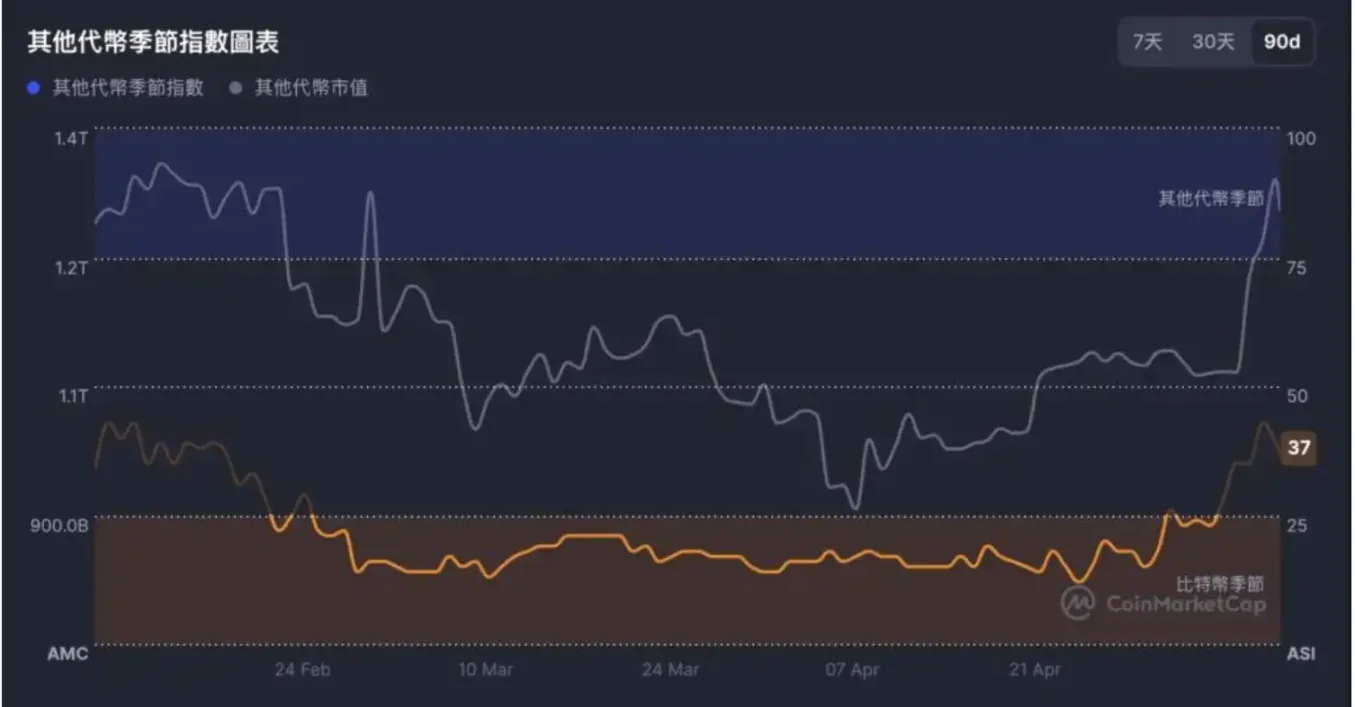
以太坊(ETH)近日展现出超越比特币的强劲上涨动能,今(5 月 11 日)晨在川普宣布与中国贸易会谈取得重大进展后,ETH 一度突破 2,600 美元,重新点燃市场短期乐观情绪。与此同时,CMC 统计的山寨季指数近日已触底回升站上 40,创下近 90 天内高点。引发「山寨季」(Altcoin Season)是否即将来临的热议。

市场


分析师看法分歧


部分市场观察家对山寨币后市持积极看法。分析师 Mister Crypto 预测,未来三至六个月市场或迎来「改变人生」的行情,山寨币每日 40% 的回报或成常态。


市场


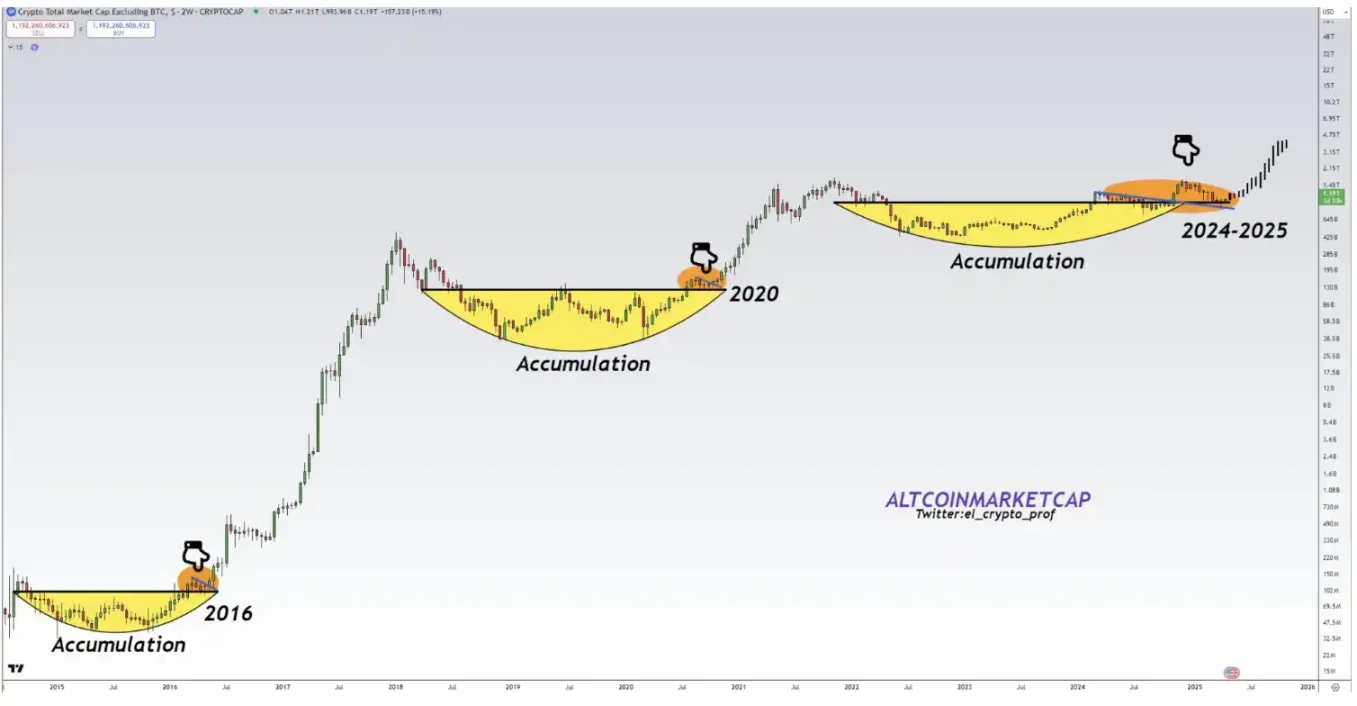
技术交易员 Moustache 也指出,山寨币经历重复积累后常现爆发性增长,认为当前市场结构与 2016、2020 年相似,宣称「2025 年山寨币季节已正式开始」。


市场


审慎派观点:市场热度与挑战并存


不过也并非所有分析师都乐观。分析师 2Lambroz 虽承认山寨币季节可能来临,但指出市场「人们想追涨,但缺乏对强有力叙事的信念」。他观察到,与 2021 年不同,目前未见大量散户投资者入场,且交易者资金轮动更快,缺乏长期持有动力。


评论员 Rekt Fencer 则质疑乐观情绪,指出多数山寨币自去年 12 月已跌 90%,近期约 10% 的反弹易被过度解读,讽刺道:「这就是我们等待的山寨币季节吗?」他认为,比特币主导地位仍高于 54% 等关键门槛,机构对比特币的偏好或持续影响资金流向。本轮市场或更分化,不同板块山寨币表现将有显著差异。


关键指标与宏观变量


除了技术分析外,山寨币市场未来走向也受多重关键因素影响。首先,比特币价格及其市场主导地位至关重要。比特币价格上涨提振市场情绪,但其主导地位变化仍是判断山寨币季节的关键。其次,整体市场情绪与风险偏好亦为重要因素。全球宏观经济与地缘政治的乐观发展,如美中贸易谈判进展及印巴紧张局势缓解,均可能推动资金流入包括加密货币及迷因币在内的风险资产。


Kronos Research 首席执行官 Hank Huang 表示,加密货币市场正乘全球乐观情绪浪潮反弹,以太坊强势反弹带动了山寨币市场,但资金能否从比特币有效轮动至山寨币,以及散户参与程度仍是观察重点。

Trending Cryptos

Related Reads

You Use Claude and Codex Every Day, but Meta Has Restricted Internal Use

In May, Meta imposed internal restrictions on its engineers regarding the use of Claude Code and Codex, two widely used AI programming tools. Despite being a major client, Meta's guidelines, still in effect, prohibit these external models from being used for specific tasks to prevent potential "escalations with partners." The core concern is "distillation"—the risk that outputs from Claude or Codex could inadvertently contaminate the training data and evaluation processes for Meta's in-house AI coding assistant, MetaCode. If MetaCode is trained or evaluated using data generated by these external models, it risks learning their capabilities rather than developing its own, blurring the line of intellectual origin. The restrictions are precise: engineers cannot use the external models to generate test questions, debug source code, or suggest test cases. AI-generated content is also barred from environments accessible to MetaCode. However, AI can still assist with peripheral tasks like workflow setup and code organization, provided all outputs are manually reviewed. This caution reflects a broader industry dilemma. While distillation is a common technique, using a competitor's model output for training raises legal and ethical questions about the ownership of derived capabilities. Contractual terms from companies like OpenAI and Anthropic explicitly forbid using their outputs to build competing products, putting enforcement power in the hands of rivals. The move is also financially motivated, as Meta seeks to reduce its hefty internal AI spending, estimated in the billions this year. Meta's policy illustrates the delicate balance companies must strike: leveraging powerful external AI tools while safeguarding the integrity and independence of their own AI development. As AI systems increasingly help build other AIs, distinguishing the origin of capabilities becomes a fundamental challenge for the entire industry.

marsbit1h ago

You Use Claude and Codex Every Day, but Meta Has Restricted Internal Use

marsbit1h ago

Why Do We Need an AI Content Perspective Today?

The article "Why Do We Need an AI Content Perspective Today?" explores the complex and often contentious integration of AI into the cultural and creative industries, particularly film and television. It begins with the cancellation of Amazon's AI-generated animation "Punky Duck," highlighting the ethical debates surrounding AI content. AI's rapid advancement is transforming video production, enabling cost-effective, full-length AI films (e.g., "RAPHAEL," "Dreams of Violets") while sparking industry resistance over issues like "synthetic actors." The core debate has shifted from whether to use AI to how to use it responsibly. The article analyzes why AI's entry into film is uniquely unsettling. It distinguishes between "cultural fast food" (short-form, fast-paced content like micro-dramas) and "cultural main courses" (traditional, long-form film/TV). AI currently excels at the former, matching its fragmented narratives, shallow emotional needs, and free-to-consumer models. However, venturing into the latter challenges the human-centric essence of storytelling—creativity, emotional depth, and the unique value of human labor and experience. While AI can generate massive volumes of content and lower costs, it risks devaluing human creativity, leading to homogenized output, and creating unfair competition through potential intellectual property infringement. Its efficiency also amplifies content safety risks, making preemptive governance crucial. To counter these risks, the article proposes establishing clear boundaries guided by a human-centered AI content perspective. It outlines four principles: 1) Amplify, rather than displace, human creative space; 2) Respect and protect human creative output; 3) Ensure human creative control and responsibility remain paramount; and 4) Guarantee transparency and traceability in AI creation. The conclusion emphasizes that humans must act as the "helmsmen" of technology, steering AI development to enhance, not replace, the core human values at the heart of cultural expression.

marsbit2h ago
Why Do We Need an AI Content Perspective Today?

marsbit2h ago

Trading

Spot

Hot Articles

Discussions

Welcome to the HTX Community. Here, you can stay informed about the latest platform developments and gain access to professional market insights. Users' opinions on the price of ETH (ETH) are presented below.

活动图片