Animoca’s David Ching on Backing Catizen and Building Future of Web3 Gaming: ‘A Strategic Fit for Our Portfolio’

ccn.comPublished on 2025-05-03Last updated on 2025-05-03

Key Takeaways
  • Animoca Brands has officially become a strategic investor in Catizen, one of the largest Web3 games on Telegram.
  • The second major airdrop, tied to the Bombie spin-off, will launch on May 20, 2025.
  • Animoca is also the parent company of major Web3 titles like Axie Infinity and The Metaverse.

Animoca Brands, one of the biggest names in Web3, is investing in Catizen, a Telegram-based game that has quickly become one of the platform’s largest Web3 communities.

With a new airdrop season underway, we spoke to David Ching, Director of Investments and Strategic Partnerships at Animoca, to discuss why the firm is backing Catizen and what the future holds for Telegram’s Web3 ecosystem.

Why Catizen, and Why Now?

When Catizen launched in March 2024, riding the wave of interest sparked by Hamster Kombat, it quickly became a breakout hit.

The Telegram-based game offered a simple proposition: tap the screen to collect cats, merge them for better rewards, and earn in-game points that translate into airdrop allocations.

The loop was easy to grasp and addictive, drawing tens of millions of users almost overnight.

Since then, the game has grown into one of Telegram’s largest Web3 communities, with roughly 49 million players to date.

But while Catizen’s rise was swift, one of the most influential names in blockchain gaming, Animoca Brands, held off on investing, that is, until now. 

Animoca’s decision to invest comes as Catizen prepares to roll out its second major airdrop, tied to the Bombie spin-off.

“The timing aligns with its [Catizen’s] expansion, including upcoming airdrops for Bombie and Cattea, and the 2025 roadmap unveiled in February,” Ching explains.

“We see growth potential and accessibility, and that makes it a strategic fit for our portfolio.” He added.

Ching adds that Animoca’s involvement goes beyond investment; the firm will also provide strategic guidance in areas like “tokenomics, ecosystem design, and community engagement.”

Longevity

Animoca’s investment in Catizen is part of a larger strategy to tap into Telegram’s booming Web3 ecosystem.

The firm has backed several other Telegram-based games, including Anichess, ENJOR, and RoOLZ Telegram Games, as well as acquiring the social gaming platform GAMEE.

According to Ching, Animoca sees “strong longevity” in The Open Network (TON) and its integration with Telegram’s massive user base.

“We see strong longevity in TON, given its integration with Telegram’s 1 billion users is still at an early stage and there is still a lot of potential to be realized,” Ching says. “This positions TON as a major avenue for onboarding Web2 users into the Web3 ecosystem.”

However, despite the huge influx of players, retention remains a challenge for many Telegram-based games, including Catizen. While the game peaked at 49 million players, it now records just over 1 million monthly active users.

Animoca is optimistic about the development and believes Catizen is a great fit.

“Catizen’s uniqueness lies in its focus on developer resources, a strong pipeline of mini-games, and an expanding ecosystem,” Ching explains. “This broadens our reach to a wider audience and complements our existing investments.”

To combat retention issues, Ching emphasizes the importance of building an integrated ecosystem, where progress in one game benefits all others in the ecosystem.

“Catizen is already doing this,” he notes.

Building an Integrated Ecosystem

As Catizen enters its second airdrop season, it’s expanding its ecosystem.

The game has integrated two other titles, Bombie and Cattea, into its rewards system, encouraging players to engage across multiple games.

In Catizen’s App Center, players can earn rewards by completing tasks not just in Catizen, but also in Bombie and Cattea.

This cross-game integration helps create a pipeline of engagement, says Ching. “In practice, that means players who try the new games are rewarded in the main Catizen campaign. This cross-game linkage encourages players to engage with each title.”

Ching highlighted this complementary nature of Bombie and Cattea, noting that both games are designed to engage players in new ways while enriching the Catizen community.

“Bombie and Cattea are intended to engage players in new ways while feeding into the main game’s community,” he explained.

Since its launch in August 2024, Bombie has attracted around 9–10 million users, which Ching describes as a “healthy audience.”

Meanwhile, Cattea, though newer, is already integrated into Catizen’s reward system, allowing players to earn Cattea-related points in the ongoing airdrop seasons.

“These titles help diversify content and keep the ecosystem fresh,” Ching added. “Having multiple games creates a pipeline of engagement.”

Yet, despite its ambitious expansion, Catizen is not immune to challenges.

Like Hamster Kombat, Catizen has faced criticism over handling its airdrop, with some players voicing frustration over last-minute token adjustments and lower-than-expected returns.

Ching acknowledges these concerns. “Transparency and effectiveness in large-scale airdrop distributions, involving substantial user bases and the need for fairness, can always be enhanced.”

Looking Ahead: The Bombie Airdrop

As Catizen continues to expand its ecosystem, all eyes are on the upcoming Bombie airdrop, set to launch on May 20, 2025.

If successful, it could be one of the biggest token-generation events (TGEs) of the year, further solidifying Catizen’s place in the Telegram-based Web3 ecosystem.

For Animoca, the Bombie airdrop is a key milestone. With its new strategic backing from Animoca, Catizen appears poised to maintain its momentum, bringing more players and games into the fold as it continues to scale its innovative approach to Web3 gaming.

Was this Article helpful? Yes No

Trending Cryptos

Related Reads

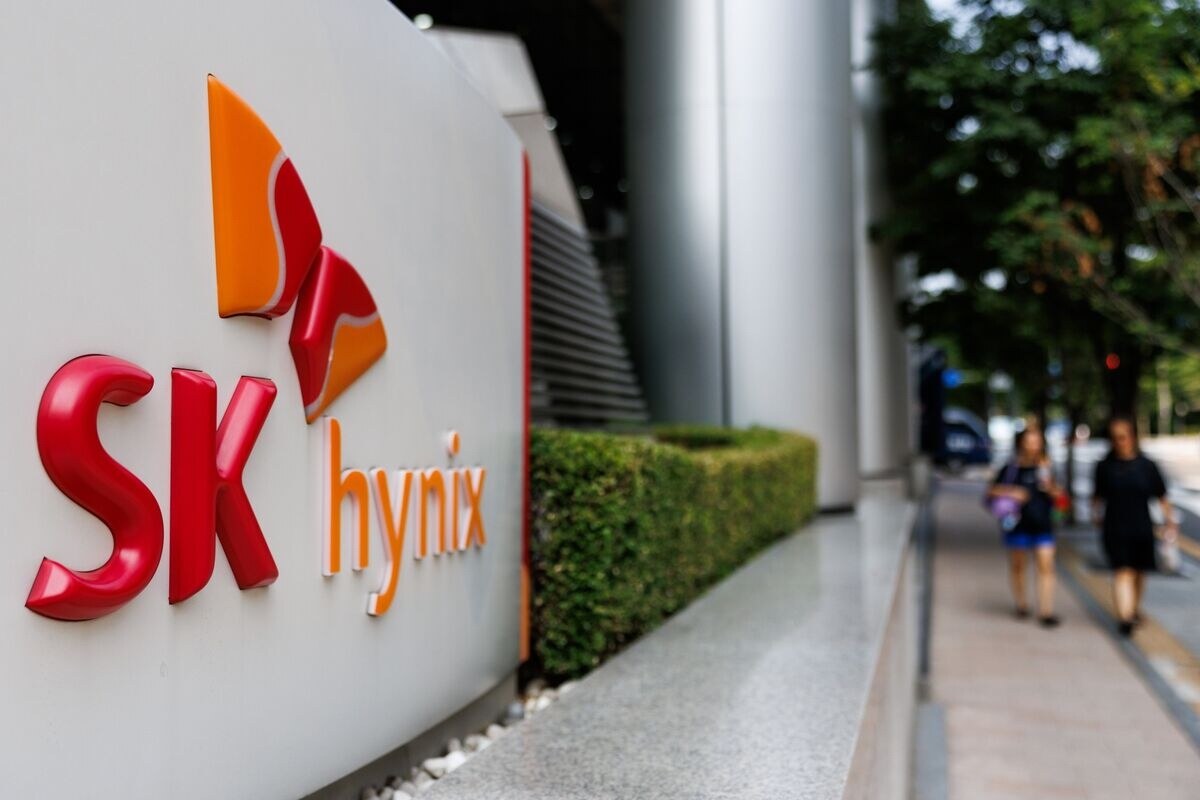
Sevenfold Oversubscription, Can SK Hynix Save the Semiconductor Industry This Time?

SK Hynix's planned US ADR listing is drawing intense interest, with its offering reportedly oversubscribed by over seven times, potentially making it the largest foreign listing in US history. The fundraising of approximately $24.5 billion is intended for expanding its Korean production capacity, including advanced packaging and EUV equipment. This massive demand from long-term funds and prominent institutions like Baillie Gifford and Situational Awareness Partners (led by noted investor Leopold Aschenbrenner) presents a stark contrast to the recent downturn in the broader semiconductor sector. The sector has faced a significant correction, with SK Hynix's own stock falling nearly 30% from its June high. This sell-off was triggered by concerns that major tech giants might slow their AI infrastructure spending, following signals like Meta's reported plan to sell surplus computing capacity. The strong ADR appetite suggests long-term investors still believe in the AI investment cycle's fundamentals, viewing the recent decline more as a valuation reset than a demand collapse. Some market speculation even suggests the pre-IPO price drop could be strategic, setting the stage for a stronger post-listing performance. While SK Hynix's successful listing may act as a short-term positive catalyst for market sentiment, the article argues the true signal for a sustained semiconductor recovery will come from upcoming earnings reports of tech giants like Microsoft, Google, Meta, and Amazon. Their future capital expenditure plans will be crucial in determining whether the AI-driven growth cycle can continue.

Odaily星球日报12m ago

Sevenfold Oversubscription, Can SK Hynix Save the Semiconductor Industry This Time?

Odaily星球日报12m ago

Breaking News: Musk Delivers the Most Powerful Grok 4.5, Slashes Price of Top-tier Opus Intelligence Drastically

**Elon Musk Launches Grok 4.5: A Cost-Effective, High-Performance AI Rival** SpaceXAI, in collaboration with Cursor, has released Grok 4.5, its new flagship AI model designed specifically for coding and agentic tasks. Trained on tens of thousands of NVIDIA GB300 GPUs using massive, high-quality data filtered from trillions of Cursor developer interactions, the model emphasizes "per-token intelligence." In benchmark performance, Grok 4.5 is highly competitive. It scores 64.7% on SWE Bench Pro (surpassing GPT-5.5's 58.6% and Opus 4.7's 64.3%), 83.3% on Terminal Bench 2.1 (nearly matching GPT-5.5), and 62.0% on DeepSWE 1.0 (beating Opus 4.8). Overall, it ranks fourth in AAAI official tests and first in the Harvey legal agent benchmark. The model's key advantage is its combination of speed, efficiency, and low cost. It generates responses at 80 tokens per second and, crucially, uses far fewer tokens to complete tasks—4.2 times fewer than Opus 4.8 on SWE Bench Pro. It is priced at $2 per million input tokens and $6 per million output tokens, significantly undercutting competitors. Musk stated it is "roughly equivalent to Opus 4.7, but much faster." Early user tests show Grok 4.5 can generate functional code for applications like 3D solar system simulators and basic games from simple prompts, though some note it still lags behind top models in certain creative tasks. Musk has hinted at a major update next month, leveraging real-world engineering data from his companies, with an even larger 2-trillion parameter version reportedly in development. Grok 4.5 positions itself not as the absolute strongest model, but as a highly efficient and affordable alternative in the top tier.

marsbit17m ago

Breaking News: Musk Delivers the Most Powerful Grok 4.5, Slashes Price of Top-tier Opus Intelligence Drastically

marsbit17m ago

Today, The Hong Kong Exchange Was Once Again Overwhelmed

Hong Kong's stock exchange witnessed an exceptionally busy day on July 9, with a record seven companies conducting initial public offerings (IPOs) simultaneously. The list included major firms such as Luxshare Precision, which launched the largest Hong Kong IPO of the year, and other notable names like Tri-Ring Group and Qiyunshan Food. However, the market reception was sharply divided on the first trading day. While Qiyunshan Food's shares surged over 110%, several other newcomers, including Luxshare Precision, Dingtai High-Tech, and Rigol Technologies, opened below their issue prices, with some falling nearly 20%. This event highlights a broader, bustling IPO scene in Hong Kong for 2024, with 82 Chinese companies listing in the first half alone—more than double the figure from the same period last year. A significant portion of this activity comes from dual "A+H" listings, where mainland China-listed firms seek secondary listings in Hong Kong. These larger companies have accounted for nearly 60% of total fundraising. Despite the high volume, recent trends show a cooling market sentiment for many new listings. Several IPOs in early July, including that of Tongrentang Healthcare, debuted with significant losses, indicating increased investor caution and selectivity. The market narrative is shifting, with capital increasingly concentrating on high-growth sectors like artificial intelligence, robotics, and semiconductors, while traditional manufacturing and consumer goods face greater pressure and volatility. This divergence underscores a market where success is no longer guaranteed by merely listing, but depends heavily on a company's growth prospects and sector appeal.

marsbit21m ago

Today, The Hong Kong Exchange Was Once Again Overwhelmed

marsbit21m ago

Glassnode: Crypto Market Enters Later Stages of Bottoming Phase

Glassnode: Crypto Market Enters Later Stages of Bottom Formation Bitcoin has traded below the true market average and the short-term holder cost basis for five consecutive months, indicating a deep undervaluation. On-chain data reveals a significant shift in selling pressure, with long-term holders now accounting for 43% of all realized losses. Daily realized losses for this group recently peaked at $280 million, the highest level since December 2022. While this large-scale capitulation is a hallmark of bear market bottoms, a sustained decline in this metric is a prerequisite for a sustained recovery. Institutional demand remains weak. US spot Bitcoin ETFs continue to see monthly net outflows, although the pace has moderated from June's peak. Furthermore, average daily ETF trading volumes have contracted by approximately 80% from their October 2025 peak, reflecting subdued institutional participation. Derivatives markets present a mixed picture. Overall positioning has shifted to cautiously bullish, with the put/call ratio dropping to a yearly low. However, the options volatility skew remains elevated, signaling that traders are still paying a premium for downside protection. The spot price also trades below the gamma "max pain" level. In summary, multiple indicators suggest the market is in the later phases of a bottoming process, characterized by long-term holder capitulation and weak institutional inflows. However, key confirmation signals for a durable trend reversal—a sustained drop in long-term holder selling pressure, stabilization of ETF flows, and a price recovery above key cost bases—are still pending.

Foresight News47m ago

Glassnode: Crypto Market Enters Later Stages of Bottoming Phase

Foresight News47m ago

Trading

Spot

Hot Articles

Discussions

Welcome to the HTX Community. Here, you can stay informed about the latest platform developments and gain access to professional market insights. Users' opinions on the price of S (S) are presented below.

活动图片