Could XRP ETF Approval Be Near? Ripple To Meet SEC Chair Paul Atkins On May 2

bitcoinistPublished on 2025-05-02Last updated on 2025-05-02

Abstract

As positive shifts in cryptocurrency regulation unfold under President Donald Trump's second administration, speculation is mounting regarding the potential approval...

Trusted Editorial content, reviewed by leading industry experts and seasoned editors. Ad Disclosure

As positive shifts in cryptocurrency regulation unfold under President Donald Trump’s second administration, speculation is mounting regarding the potential approval of spot XRP ETF applications. 

This anticipation is fueled by significant changes at the US Securities and Exchange Commission (SEC), particularly the appointment of Paul Atkins as the new chair. Known for his pro-crypto stance, Atkins represents a departure from the stringent regulatory environment established by former chair Gary Gensler.

Speculation Rises Around XRP ETF Applications

The timing of a possible XRP ETF approval is further ignited by reports of a potential meeting between Ripple Labs’ executive chairman and co-founder Chris Larsen and SEC Chair Paul Atkins. Such discussions could pave the way for expedited decisions on XRP ETF applications. 

Earlier this week, Bitcoinist highlighted that the SEC has set a new deadline of June 17, 2025, for either approving or disapproving the XRP ETF application submitted by asset manager Franklin Templeton or initiating further proceedings to assess the proposal.

Bloomberg ETF expert James Seyffart has indicated that while the June deadline is crucial, market participants should prepare for a series of decisions expected in the fourth quarter of 2025. 

However, Bloomberg’s ETF expert specifically pointed to mid-October—around the 18th of this year—as a pivotal date for a potential spot XRP ETF decision by the regulatory body.

Ripple Labs Sees Renewed Hope 

Adding to the excitement, crypto investor Steph Is Crypto recently shared on social media site X (formerly Twitter), that insiders suggest the meeting between Larsen and Atkins, reportedly scheduled for May 2, could bring the approval of XRP ETF applications closer to reality. However, as of Thursday, no official confirmation or statements have been released by either party, leaving this scenario uncertain.

The ongoing speculation for XRP ETF applications come amid a more favorable environment for Ripple Labs, which has long advocated for regulatory changes in the US. 

The previous administration faced criticism for its enforcement actions and lawsuits targeting major players in the crypto sector, including Ripple Labs itself. 

Since Gensler’s resignation on January 20, 2025, several lawsuits against prominent companies like Coinbase, Robinhood, Uniswap Labs, and Kraken have been dropped, further easing regulatory pressures.

This renewed optimism not only fuels hopes for XRP ETF approval but also raises expectations for other crypto ETFs, including those for Litecoin (LTC), Solana (SOL), Dogecoin (DOGE), and Cardano (ADA), which may also receive approvals later this year. 

XRP ETF
The 1D chart shows XRP’s price recovery. Source: XRPUSDT on TradingView.com

At the time of writing, XRP, currently the fifth largest cryptocurrency on the market in terms of capitalization, is trading at $2.21, up 8% in fourteen days amid renewed optimism in the market after a challenging few months.

Featured image from DALL-E, chart from TradingView.com 

Editorial Process for bitcoinist is centered on delivering thoroughly researched, accurate, and unbiased content. We uphold strict sourcing standards, and each page undergoes diligent review by our team of top technology experts and seasoned editors. This process ensures the integrity, relevance, and value of our content for our readers.

Ronaldo is a seasoned crypto enthusiast with over four years of experience in the field. He is passionate about exploring the vast and dynamic world of decentralized finance (DeFi) and its practical applications for achieving economic sovereignty. Ronaldo is constantly seeking to expand his knowledge and expertise in the DeFi space, as he believes it holds tremendous potential for transforming the traditional financial landscape.

Related Reads

Private Credit in US Dollar

Stablecoins are evolving into a new type of money market fund, channeling crypto deposits into the $2 trillion private credit market. This mirrors the 1970s innovation where money market funds pooled small deposits to buy high-yield government securities, bypassing bank restrictions. Today, platforms like Apollo's ACRED tokenized fund and Figure's on-chain lending system allow stablecoin holders to access institutional private credit strategies with no minimum investment, offering yields of 8-12%. On-chain tokenization enables greater liquidity and DeFi composability (e.g., using tokens as collateral for leveraged positions) compared to traditional, locked-up private credit funds. Consequently, on-chain private credit has grown 15x in a year to $5.87 billion, though it remains a tiny fraction (0.3%) of the global market. However, this model carries significant risks, as illustrated by the failure of Goldfinch. Launched in 2021, it directed crypto deposits to motorcycle loans in Kenya and Nigeria. Critical issues included a lack of local oversight, leading to unauthorized fund transfers and borrower defaults. With $56 million now trapped in non-performing loans, its collapse highlights that while blockchain streamlines capital transfer, the essential 90% of lending—underwriting, monitoring, and recovery—remains a costly, localized challenge. Success requires robust, traditional credit infrastructure, not just on-chain execution.

marsbit12m ago

Private Credit in US Dollar

marsbit12m ago

Goldman Sachs: How to Invest in Tech Stocks in the Second Half of the Year?

Goldman Sachs remains bullish on tech stocks in the second half of the year, advising a shift from "buying the sector" to "picking individual companies." The firm's latest report indicates the AI-driven tech cycle shows no signs of peaking, with supply exceeding demand or technological progress slowing yet to materialize. Recent pullbacks are viewed as healthy corrections following rapid gains, not a trend reversal. Three core investment themes are highlighted: 1) Maintain overweight positions in AI server and data center-related hardware stocks. 2) Conduct more nuanced risk-reward assessments in sub-sectors where supply and demand are tightening. 3) During periods of declining risk appetite, consider software and IT services companies leveraging AI to create new business opportunities as a defensive play. The report emphasizes that future outperformance will depend more on individual company competitiveness (alpha) rather than broad sector momentum (beta). Companies likely to excel are those benefiting from price increases, possessing strong capacity expansion capabilities, having undervalued AI growth potential, or holding unique catalysts. For defense, Goldman suggests focusing on AI-enabling software and service firms—such as those in AI consulting, data infrastructure, and cybersecurity—which may see efficiency gains and new demand, rather than retreating to traditional defensive sectors. Overall, the strategy balances offensive exposure to AI infrastructure with defensive positioning in AI-applicable software and services.

链捕手17m ago

Goldman Sachs: How to Invest in Tech Stocks in the Second Half of the Year?

链捕手17m ago

Wall Street's Take on the June Fed Meeting Minutes: Focus on Core Inflation, No Short-Term Urgency to Hike Rates

Wall Street's View on Fed June Minutes: Inflation is the Key, No Urgency for Near-Term Hike The minutes of the Federal Reserve's June FOMC meeting revealed a unified Wall Street interpretation: inflation remains the true determinant for future policy moves. Major institutions including Goldman Sachs, Morgan Stanley, and Citigroup concluded that the Fed remains data-dependent, with its path hinging on upcoming inflation data. Key takeaways from the minutes: * **No Immediate Tightening**: Despite "a few" participants seeing reasons to hike, none actively advocated for it at the June meeting. The consensus was to hold the federal funds rate steady at 3.5%-3.75%. * **Inflation as the Decisive Factor**: The Fed outlined two primary scenarios. If inflation declines "soon" toward the 2% target, "almost all" officials would support maintaining or eventually cutting rates. If inflation persists high due to factors like AI demand or supply shocks, "almost all" would see some policy tightening as necessary. * **Patience is Warranted**: Officials noted inflation remains above target but cited anchored inflation expectations and a labor market not currently driving price pressures as reasons for patience. The Fed is focused on the *direction* of inflation over the next few months. * **No Policy Framework Shift**: The minutes reaffirmed a data-dependent approach rather than a fundamental shift toward pre-emptive tightening. Institutional Forecasts: * **Morgan Stanley**: Expects rates on hold in 2026, with potential cuts in 2027 if inflation cools. * **Goldman Sachs**: Baseline scenario sees rates unchanged through 2026, with inflation moderating gradually. * **Citigroup**: Takes a more dovish view, suggesting market pricing for a July hike is too aggressive and forecasting potential rate cuts starting in late 2026. Overall, the minutes were perceived as marginally dovish, emphasizing a watchful stance on inflation data with no near-term urgency to hike.

marsbit23m ago

Wall Street's Take on the June Fed Meeting Minutes: Focus on Core Inflation, No Short-Term Urgency to Hike Rates

marsbit23m ago

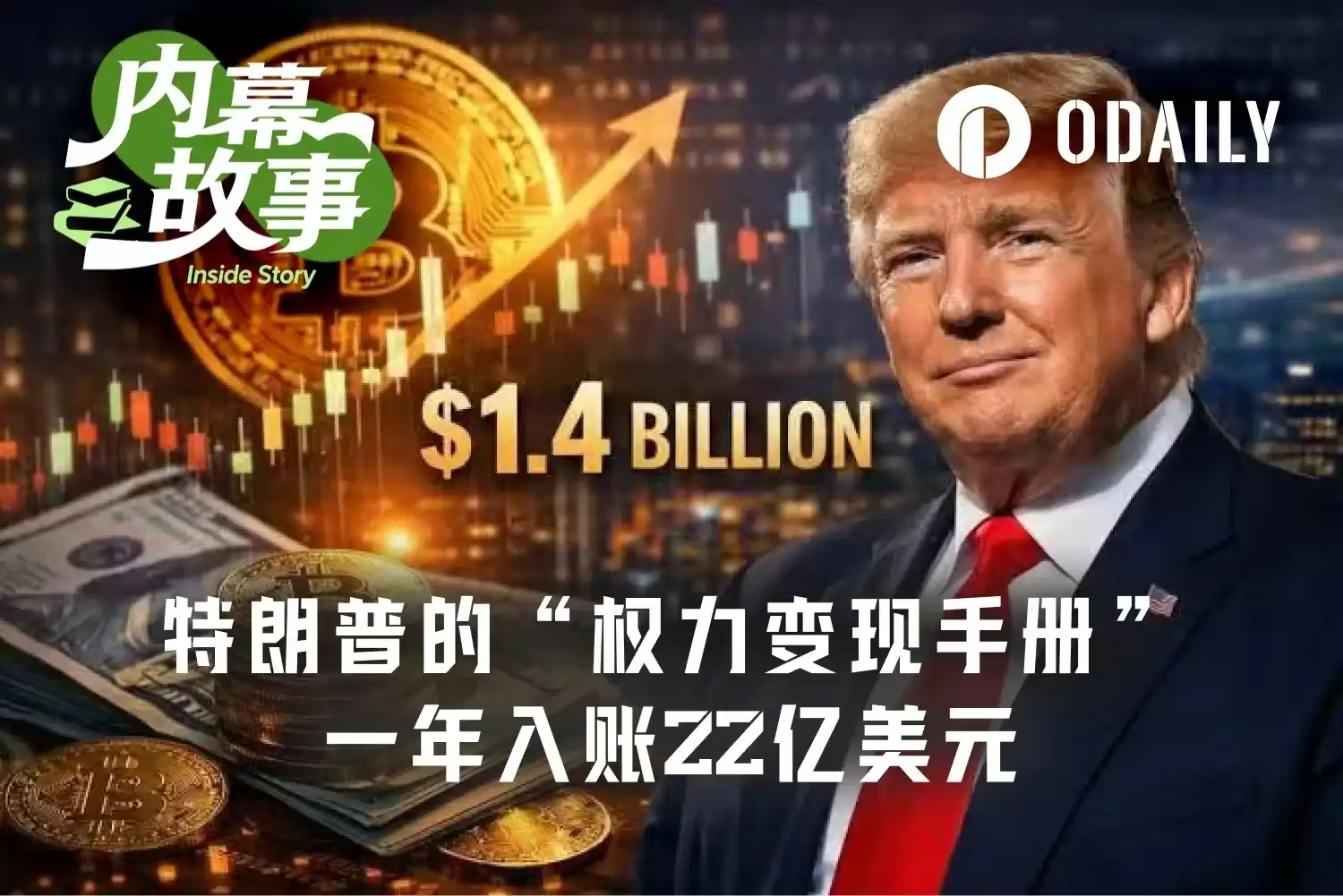
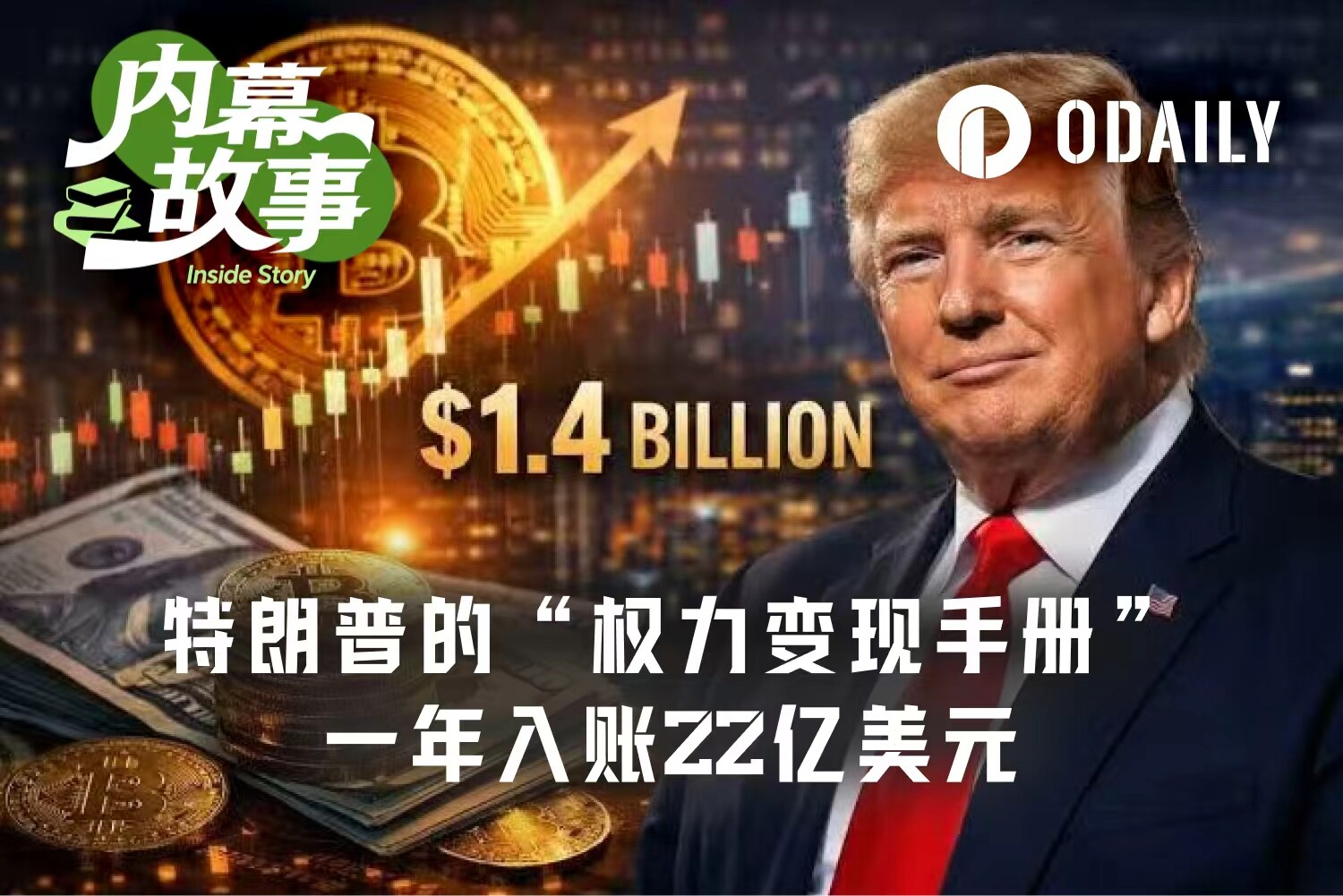
Trump Earns $2.2 Billion Annually, Two-Thirds from Cryptocurrency, with 87 Stock Trades Daily

Former U.S. President Donald Trump reported a personal income exceeding $2.2 billion in 2025, the highest annual income for a sitting president, according to U.S. government financial disclosures. This income primarily stemmed from cryptocurrency ventures and investments, starkly contrasting the standard presidential salary of $400,000. More than two-thirds ($1.4 billion) of his income originated from cryptocurrency-related activities. This includes over $1 billion in Bitcoin and Ethereum holdings, approximately $800 million from World Liberty Financial (a crypto project co-founded with his son), and about $635 million from sales of the TRUMP meme coin. Overall, Trump family crypto operations reportedly generated over $2.3 billion in profit after his 2025 inauguration. Trump's stock portfolio showed heavy trading activity, with over 22,000 trades executed in 2025—averaging 87 trades per day. Major holdings included tech giants like Google, Apple, Nvidia, and Microsoft. Notably, some large-scale stock purchases coincided with major policy announcements, such as tariffs, raising questions about potential insider trading. His traditional business empire, centered on real estate and branding, contributed $575 million. Additionally, he earned nearly $60 million through numerous "DT Marks" licensing companies, which leverage the Trump brand globally in locations like Dubai and Abu Dhabi. The report highlights significant conflicts of interest, as countries like the UAE and Saudi Arabia, whose entities invested in Trump's businesses, later received favorable U.S. policy treatment. Trump has stated he delegates financial management and is not directly involved in day-to-day investment decisions.

Odaily星球日报23m ago

Trump Earns $2.2 Billion Annually, Two-Thirds from Cryptocurrency, with 87 Stock Trades Daily

Odaily星球日报23m ago

Trading

Spot
活动图片