亚利桑那州领跑,美国多州加速比特币战略储备立法进程

Odaily星球日报Published on 2025-05-01Last updated on 2025-05-01

Abstract

亚利桑那州为各州树立标杆,德克萨斯州、阿拉巴马州等紧随其后。

4 月 29 日,两项《亚利桑那州战略比特币储备法案》顺利通过众议院最终投票,将等待民主党州长 Katie Hobbs 签署,亚利桑那州成为了美国首个要求公共资金投资比特币的州。其中法案 SB 1373 提议设立由州财政官管理的数字资产战略储备基金,每财年最多可将 10% 投资于比特币等数字资产;法案 SB 1025 则允许州财政和退休金系统将最多 10% 的可用资金投资于虚拟货币,重点布局比特币。

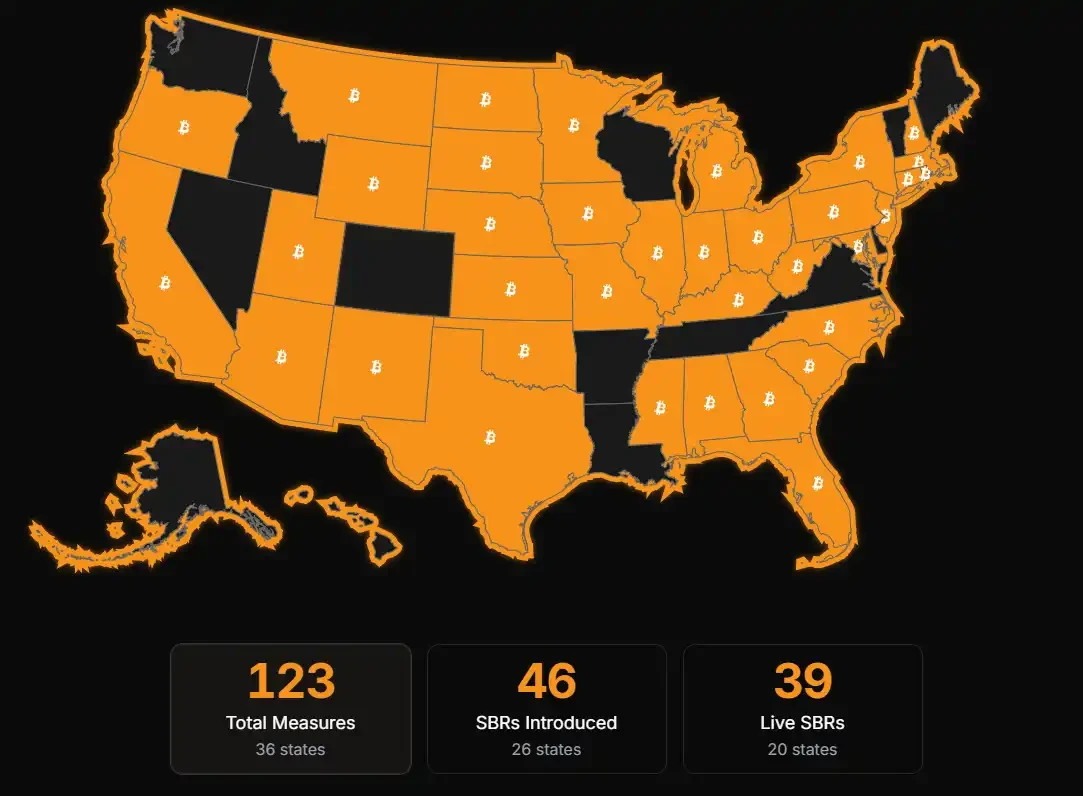
在联邦层面,特朗普已于 3 月签署行政命令,要求建立战略比特币储备和数字资产库存。亚利桑那州州政府将加密货币纳入公共财政管理,反映了数字资产日益增长的主流认可度。根据法案追踪网站 Bitcoin Laws 数据,美国已有 26 个州提出创建比特币储备的法案,以下是除亚利桑那州以外其他州的法案进展情况。
亚利桑那州领跑,美国多州加速比特币战略储备立法进程

明确支持州

除已通过法案的亚利桑那州,德克萨斯州、阿拉巴马州与明尼苏达州的立法议程也在稳步向好推进。

德克萨斯州

德克萨斯州在比特币储备立法中展现出跨党派支持。参议院已通过《战略比特币储备法案》(SB-21),允许使用公共资金购买比特币及其他高市值加密货币,目标持有规模达 5000 亿美元,并计划从经济稳定基金中拨款 2.5 亿美元。此外,众议院提出的 HB 4258 法案进一步授权地方政府投资加密货币,显示其立法框架的全面性 5 。目前该法案已提交给该州的政府效率交付委员会,如果该法案能顺利通过该州参众两院成为法律,则将于今年 9 月 1 日生效。

德克萨斯州很早就展现出对加密货币的支持。2021 年,德州立法会成立「德州工作小组」,专注于区块链发展,并凭借德州丰富且便宜的能源吸引大量比特币挖矿企业进驻。例如,Riot Blockchain 在 Rockdale 运营的 Whinstone 设施,已成为北美最大的单一比特币挖矿中心。

副州长 Dan Patrick 曾表示:「比特币是数字黄金,其有限供应与去中心化特性,将成为德州未来的关键资产。」根据 Bitcoin Magazine 报导,德州目前有 8 项与比特币或加密货币相关的法案提出,在这八项法案中,HB 4258 是第五项提交委员会审议的法案,包括目前这项法案在内的四项法案 (HB 4258、HB 1598、SB 21 和 SB 778) 都要求德州建立战略比特币储备。

阿拉巴马州

阿拉巴马州共和党参议员 April Weaver 4 月初提交了第 283 号参议院法案(SB 283),与自 2025 年 3 月以来提出的第 482 号众议院法案(HB 482)同行,通过设定「市值 7500 亿美元」的门槛(当前仅比特币符合),间接锁定比特币为储备资产。且加密资产必须由州财务主管直接管理,不得超过州预算的 10% 。如果该法案通过,将于 2025 年 10 月 1 日生效。

明尼苏达州

明尼苏达州共和党众议员 B. Olson 于 2025 年 4 月 1 日提交了第 2946 号众议院法案(HF 2946),被称为明尼苏达比特币法。相应的参议院法案 SF 2661 自 2025 年 3 月以来提交。这两项法案内容完全相同,允许州投资委员会将公共资金分配给比特币,还接受 BTC 作为税款和政府交易的支付方式,并修改了 12 项现行法律,包括税号、退休计划和投资规定等以整合加密货币。如果该法案通过,将于 2026 年 1 月 1 日生效。

稳步推进州

新罕布什尔州

新罕布什尔州的法案是 H B3 02 ,由共和党议员 Keith Ammon 提出,并得到了两党的支持。法案允许州财务主管将最多 5% 的州公共资金(基于普通基金、收入稳定基金等)投资于符合条件的数字资产或贵金属(如黄金、白银),初始提案为 10% ,后因安全性考量下调至 5% 。2025 年 4 月 10 日,该法案以 192 票支持、 179 票反对的结果通过众议院全体表决,州财务主管莫妮卡·梅扎佩尔表示,若法案生效,将启动试点投资,初期规模或达 1.8 亿美元。

俄亥俄州

参议员 Sandra O'Brien 于 2025 年 1 月 28 日提出俄亥俄州比特币储备法案 SB 57 ,授权州财政直接投资比特币,规定比特币持有至少五年,并要求州机构接受加密货币支付。还允许州居民、机构和大学捐赠比特币至储备基金。1 月 29 日,提交至参议院金融机构、保险和技术委员会,目前仍处于委员会审查阶段,无进一步进展。

犹他州

2025 年初,犹他州州众议员 Jordan Teuscher 于 1 月 21 日提出一项名为 HB 0230 的「区块链和数字创新修正案」,该法案最初允许州财政官将最多 10% 的公共资金投资于数字资产,包括比特币、非同质化代币(NFTs)和稳定币,但需满足监管批准、市场资本化和流动性等条件。2025 年 3 月 10 日,犹他州参议院通过了 HB 0230 ,但删除了允许州财政投资比特币的关键条款,改为提供居民的数字资产保管保护、挖矿权、运行节点和参与质押的权利。

州直接投资比特币的条款被删除,反映了立法者对市场风险的担忧。参议员 Kirk A. Cullimore 在 3 月 7 日的会议上表示,删除储备条款是由于「对这些政策早期采用的诸多担忧」。截止目前,犹他州未建立州级比特币储备,而是将立法重点转向数字资产的监管和创新保护。

佛罗里达州

佛罗里达州的 HB 487 法案于 2025 年 2 月提出,允许州首席财务官和州行政委员会将包括一般收入基金和预算稳定基金在内的公共资金最高 10% 投资于比特币。4 月 10 日,通过众议院保险和银行小组委员会的一致支持(无反对票),进入政府运作小组委员会审查。目前处在政府运作小组委员会审查阶段,尚未有进一步进展。

除此之外,还有爱荷华州、密苏里州、乔治亚州、伊利诺伊州、堪萨斯州、肯塔基州、马里兰州、马萨诸塞州、密歇根州、新墨西哥州、北卡罗来纳州、罗德岛州、西弗吉尼亚州等 13 个州的比特币储备法案正在提出或推进的阶段,且尚未遭到明确否决或搁置。

否定搁置州

俄克拉荷马州

俄克拉荷马州科迪·梅纳德于 2025 年 1 月 15 日提出 HB 1203 法案,旨在允许州储备基金和退休基金投资比特币及其他数字资产,最高可达 5% 。3 月 25 日该法案以 77 : 15 的投票结果通过众议院,移交参议院。但于 4 月 15 日遭到参议院税收及收入委员会以 6 票对 5 票否决,法案失败,且目前尚未看到继续推进迹象。

蒙大拿州

蒙大拿州议员于 2025 年 1 月 31 日,提出 HB 429 法案,提议允许州投资高达 5000 万美元的比特币、数字资产、稳定币和贵金属,作为州财政的多元化投资。但该法案于 2 月 21 日在众议院以 59 票对 41 票被否决,未能通过第一轮投票,且无迹象表明会重启。蒙大拿州对比特币储备的立法努力告一段落。

宾夕法尼亚州

宾夕法尼亚州代表 Mike Cabell 和 Aaron Kaufer 于 2024 年 11 月 14 日提出 HB 2664 法案,允许州财政官将宾夕法尼亚州一般基金、雨天基金和州投资基金的最高 10% 投资于比特币和基于加密货币的交易所交易产品,可能涉及高达 9.7 亿美元的投资。但根据 2025 年 3 月 2 日的报道,该法案在立法过程中「被有效终止」,未能进一步推进,且目前尚未看到再次推进的可能。

北达科他州

北达科他州代表 Nathan Toman、Josh Christy 和参议员 Jeff Barta 共同于 2025 年 1 月 11 日提出战略比特币储备法案,法案旨在允许州财政投资比特币,但具体投资比例和细节未明确。但目前该法案未能继续推进,立法失败,且无迹象表明会重启,北达科他州对比特币储备的立法努力告一段落。

南达科他州

南达科他州立法者于 2025 年 2 月 25 日推迟了一项可能允许州采用比特币作为战略储备资产的法案,该法案具体细节未明确,但旨在允许州财政投资比特币。推迟理由是比特币价格波动性过高,目前法案已终止,且无进一步推进可能。

怀俄明州

2025 年 1 月 18 日,法案被引入,由怀俄明州参议员 Cynthia Lummis 于 2025 年 1 月 18 日支持引入 HB 0201 法案,该法案允许州财政官投资比特币,最高可达 3% ,包括一般基金、永久矿产信托基金和永久土地基金,投资可通过直接购买或使用受监管的比特币交易所交易产品进行,并要求年度报告以确保透明度。但目前该法案未有进一步进展,被列为失败法案,立法努力告一段落。

亚利桑那州的突破为美国各州树立了标杆,德克萨斯州、阿拉巴马州等紧随其后,正通过立法将比特币纳入公共财政框架,旨在分散资产风险并抢占数字经济先机。曾因加密货币波动风险大、监管难度高等原因否决建立比特币储备的州,以及其他正在推进流程的州,也可能因为亚利桑那州迈出的第一步而转换风向标。尽管面临多重挑战,比特币作为「数字黄金」的定位正通过地方立法逐步巩固,其能否成为主流储备资产仍需观察,但毋庸置疑的是加密正越来越被主流所接纳,未来的路也将越来越宽广。


Trending Cryptos

Related Reads

A Former ByteDance Employee's Account: How I Started with Two Pinduoduo Hard Drives and Made a 600% Profit with Seagate to Achieve Financial Freedom?

Summary: A former ByteDance employee describes how a personal observation led to a highly profitable investment in Seagate Technology ($STX). Needing hard drives for a personal data project in August, he noticed their prices on Pinduoduo were rising consistently. Investigating further using price-tracking tools, he confirmed a broader, sustained price increase for high-capacity HDDs. He traced this to surging AI demand, as data centers require massive, cost-effective storage for model training and data, favoring high-capacity enterprise HDDs like those from Seagate. This demand was squeezing consumer supply. After initial research and a small purchase, he waited for confirmation from institutional 13F filings. Seeing a clear multi-quarter trend of increasing institutional ownership in Seagate, he significantly increased his position. From an entry around $150, Seagate's stock price rose over sixfold to approximately $965. He attributes the success to a methodology of identifying anomalies in everyday life (e.g., product shortages/price hikes), researching the underlying structural cause, identifying the publicly-traded beneficiary, and using 13F data to confirm institutional interest over multiple quarters. He cautions that this was one successful case among others that failed and is not offering investment advice.

链捕手1h ago

A Former ByteDance Employee's Account: How I Started with Two Pinduoduo Hard Drives and Made a 600% Profit with Seagate to Achieve Financial Freedom?

链捕手1h ago

BTC Hits Its Lowest Point Since 2024, But Is It Still Not the Right Time to Buy the Dip?

**Summary:** Bitcoin (BTC) has plunged to new lows in 2024, dropping over 50% from its all-time high to around $57,800, while Ethereum and Solana also show significant weakness. The market sentiment is at "extreme fear." The primary headwinds are identified as massive and sustained net outflows from US spot Bitcoin ETFs since May 2026, creating significant selling pressure, and the evaporation of expectations for a US Federal Reserve interest rate cut in 2026, which makes holding cash and bonds more attractive than risk assets like crypto. Analysts are actively debating the potential bottom. Key predictions include: * **glassnode's Rafael:** Suggests a bottom between $46,000 and $54,000, based on on-chain metrics like Realized Price and CVDD. He notes that institutional demand (via ETFs) is currently a net seller, not a buyer. * **BIT Analysis:** Argues the bear market is in its final stage, with a potential bottoming zone between $50,000 and $55,000, possibly aligning with the 2026 FIFA World Cup period (June-July). * **Wintermute:** Believes the market is in the late stages of a bear market but cautions the true bottom may not arrive until September-October 2026, contingent on renewed capital inflows. * **Liquid Capital's JackYi:** Posits that July-August 2026 could be the final capitulation and the best accumulation window, with potential bottom prices ranging from $51,000 to $43,000. * **Jiang Zhuo'er (BTC.TOP):** Predicts a bottom between $42,000 and $44,000 in October-December 2026, based on cycle analysis and MSTR's mNAV metric. * **Prediction Markets:** Polymarket data indicates a 79% chance BTC falls below $55,000 in 2026, a 65% chance below $50,000, and a 30% chance below $40,000. The consensus is that while bearish conditions are severe, the exact timing and price level of the ultimate bottom remain uncertain and depend on factors like ETF flows, macroeconomic policy, and potential market shocks.

Foresight News1h ago

BTC Hits Its Lowest Point Since 2024, But Is It Still Not the Right Time to Buy the Dip?

Foresight News1h ago

Trading

Spot

Hot Articles

What is $BITCOIN

DIGITAL GOLD ($BITCOIN): A Comprehensive Analysis Introduction to DIGITAL GOLD ($BITCOIN) DIGITAL GOLD ($BITCOIN) is a blockchain-based project operating on the Solana network, which aims to combine the characteristics of traditional precious metals with the innovation of decentralized technologies. While it shares a name with Bitcoin, often referred to as “digital gold” due to its perception as a store of value, DIGITAL GOLD is a separate token designed to create a unique ecosystem within the Web3 landscape. Its goal is to position itself as a viable alternative digital asset, although specifics regarding its applications and functionalities are still developing. What is DIGITAL GOLD ($BITCOIN)? DIGITAL GOLD ($BITCOIN) is a cryptocurrency token explicitly designed for use on the Solana blockchain. In contrast to Bitcoin, which provides a widely recognized value storage role, this token appears to focus on broader applications and characteristics. Notable aspects include: Blockchain Infrastructure: The token is built on the Solana blockchain, known for its capacity to handle high-speed and low-cost transactions. Supply Dynamics: DIGITAL GOLD has a maximum supply capped at 100 quadrillion tokens (100P $BITCOIN), although details regarding its circulating supply are currently undisclosed. Utility: While precise functionalities are not explicitly outlined, there are indications that the token could be utilized for various applications, potentially involving decentralized applications (dApps) or asset tokenization strategies. Who is the Creator of DIGITAL GOLD ($BITCOIN)? At present, the identity of the creators and development team behind DIGITAL GOLD ($BITCOIN) remains unknown. This situation is typical among many innovative projects within the blockchain space, particularly those aligning with decentralized finance and meme coin phenomena. While such anonymity may foster a community-driven culture, it intensifies concerns about governance and accountability. Who are the Investors of DIGITAL GOLD ($BITCOIN)? The available information indicates that DIGITAL GOLD ($BITCOIN) does not have any known institutional backers or prominent venture capital investments. The project seems to operate on a peer-to-peer model focused on community support and adoption rather than traditional funding routes. Its activity and liquidity are primarily situated on decentralized exchanges (DEXs), such as PumpSwap, rather than established centralized trading platforms, further highlighting its grassroots approach. How DIGITAL GOLD ($BITCOIN) Works The operational mechanics of DIGITAL GOLD ($BITCOIN) can be elaborated on based on its blockchain design and network attributes: Consensus Mechanism: By leveraging Solana’s unique proof-of-history (PoH) combined with a proof-of-stake (PoS) model, the project ensures efficient transaction validation contributing to the network's high performance. Tokenomics: While specific deflationary mechanisms have not been extensively detailed, the vast maximum token supply implies that it may cater to microtransactions or niche use cases that are still to be defined. Interoperability: There exists the potential for integration with Solana’s broader ecosystem, including various decentralized finance (DeFi) platforms. However, the details regarding specific integrations remain unspecified. Timeline of Key Events Here is a timeline that highlights significant milestones concerning DIGITAL GOLD ($BITCOIN): 2023: The initial deployment of the token occurs on the Solana blockchain, marked by its contract address. 2024: DIGITAL GOLD gains visibility as it becomes available for trading on decentralized exchanges like PumpSwap, allowing users to trade it against SOL. 2025: The project witnesses sporadic trading activity and potential interest in community-led engagements, although no noteworthy partnerships or technical advancements have been documented as of yet. Critical Analysis Strengths Scalability: The underlying Solana infrastructure supports high transaction volumes, which could enhance the utility of $BITCOIN in various transaction scenarios. Accessibility: The potential low trading price per token could attract retail investors, facilitating wider participation due to fractional ownership opportunities. Risks Lack of Transparency: The absence of publicly known backers, developers, or an audit process may yield skepticism regarding the project's sustainability and trustworthiness. Market Volatility: The trading activity is heavily reliant on speculative behavior, which can result in significant price volatility and uncertainty for investors. Conclusion DIGITAL GOLD ($BITCOIN) emerges as an intriguing yet ambiguous project within the rapidly evolving Solana ecosystem. While it attempts to leverage the “digital gold” narrative, its departure from Bitcoin's established role as a store of value underscores the need for a clearer differentiation of its intended utility and governance structure. Future acceptance and adoption will likely depend on addressing the current opacity and defining its operational and economic strategies more explicitly. Note: This report encompasses synthesised information available as of October 2023, and developments may have transpired beyond the research period.

536 Total ViewsPublished 2025.05.13Updated 2025.05.13

What is $BITCOIN

Discussions

Welcome to the HTX Community. Here, you can stay informed about the latest platform developments and gain access to professional market insights. Users' opinions on the price of BTC (BTC) are presented below.

活动图片