比特币在 DeFi 的新篇章:探索Lombard、Babylon、Corn、Pendle的创新突破

marsbitPublished on 2024-09-26Last updated on 2024-09-26

最大化收益和利用LBTC农场多个空投的综合指南

简介

几年前,如果你持有大量本土比特币,想要在DeFi中使用并赚取收益,你的选择非常有限——在少数流动性强、1:1支持的比特币协议中,流通量约为28.5万个BTC的Wrapped Bitcoin(WBTC)可能是你最好的选择。虽然WBTC相对可靠,但它并不是一个收益资产,除了基本的用例如流动性提供(LP)和借贷外,它没有提供太多链上实用性。尽管如此,自2019年推出以来,其主导地位一直没有受到太大挑战。

自那时起,发生了许多变化。去年夏天,BitGo宣布将其对WBTC的唯一法律保管权转变为与与Justin Sun和Tron有联系的公司BiT Global的合资企业。这一惊喜变化引发了对WBTC帝国的多个新挑战者的推出,包括来自主要参与者如Coinbase的cbBTC。在这些新进入者中,有一个特别吸引了我的注意:Lombard Finance。他们新推出的流动比特币产品LBTC代表了一种在DeFi中使用比特币的新方式。今天,我将告诉你它是什么、如何运作、具有什么样的实用性,以及如何利用它同时进行多个空投的农场操作。

要点

  • Lombard与Babylon
  • 美味的玉米
  • Pendle派对
  • 空投提示与正确的农场维护
  • 尝试计算每日积分与投资回报率(ROI)
  • 文章底部附有互动计算器

Lombard与Babylon

为了理解LBTC,让我们首先简要介绍一下Babylon、Lombard以及它们如何协同工作以产生一个可以在DeFi中使用的代币。Babylon是一个提供比特币时间戳(使用BTC备份PoS链数据)和质押(使用BTC提供去中心化经济安全)的协议,它为Lombard提供了后台引擎。尽管Babylon尚未委托其质押,但他们计划很快投入使用,到那时他们将为比特币持有者产生收益,目标是成为比特币的Eigenlayer。

这太棒了,但如果你想将这些质押的比特币用于其他地方,你需要Lombard及其旗舰流动质押代币LBTC。它的工作原理如下:首先,你将你的以太坊钱包连接到Lombard并质押你的比特币——为了接受它,Lombard会为你提供一个比特币地址——当你发送比特币时,你的比特币会被重新质押到Babylon,Lombard会在以太坊L1上为你铸造相应数量的LBTC。Babylon会跟踪你的BTC质押,而Lombard则为你提供一个可组合的DeFi流动收据代币。当Babylon的验证者服务上线时,LBTC甚至会从其底层BTC提供的质押服务中获得收益。到目前为止总结如下:

  • 将BTC质押到Lombard
  • BTC重新质押到Babylon,由一组被称为安全财团的可信方管理
  • 通过Lombard铸造LBTC(在ETH L1上发行)

当你想要退出生态系统时,只需将你的LBTC发送回Lombard进行销毁,此时Babylon将被提示取消对你比特币的质押。为了简化这个过程,Babylon使用未花费交易输出(UTXOs)来锁定和解锁来自自我保管库的比特币,并通过条件数据的组合来验证接收者。正如我所说的,这非常简单!

如果你想了解更多关于他们的增长愿景、质押/取消质押流程和安全财团的信息,请查看Lombard的文档。对于想阅读关于Babylon Staking工作原理的15页技术简报的朋友,可以随意查阅。

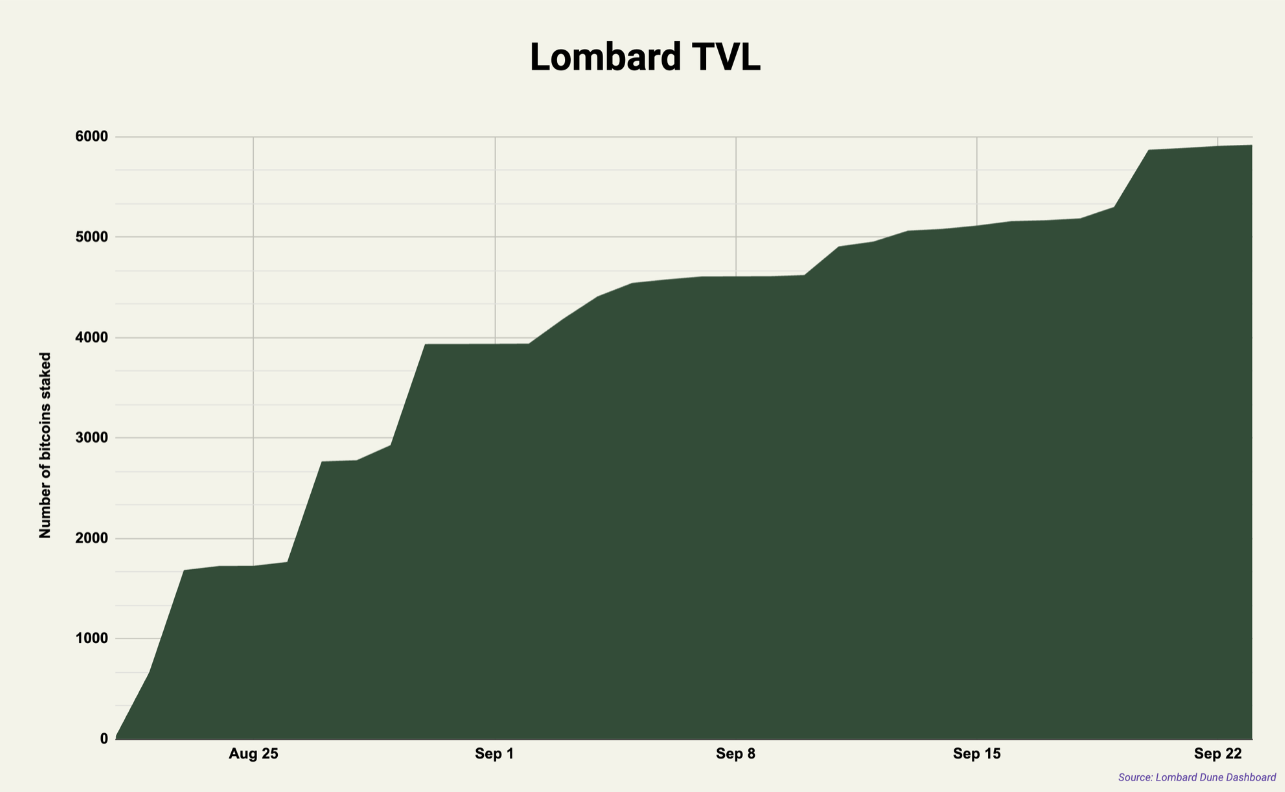
自8月22日推出以来,LBTC的总锁仓价值(TVL)经历了稳健的增长,迅速攀升至超过5900个BTC,约合3.73亿美元。作为对比,这仍然仅相当于WBTC规模的约3.6%!
WBTC

Here's a link to Lombard's Dune page

所以,现在你已经理解了Lombard是如何运作的,并且刚刚铸造了足够的LBTC来购买一个小岛(或者可能是一个快乐餐)。接下来该怎么办呢?

美味的玉米
WBTC

随着Babylon和Lombard建立用于链上使用比特币的新基础,许多其他参与者正在开发针对比特币的特定应用,以利用这一新领域的增长。Corn是一个新的以太坊二层解决方案,旨在为比特币在DeFi中提供最佳收益、杠杆和流动性——一个一站式服务平台,您可以将新获得的流动比特币投入使用。如今,Corn基本上只是增加你空投倍数的一种方式(稍后会详细讨论),但请关注他们继续为LBTC推出收益产品。

在最近的一次X Spaces活动中,Lombard、Babylon、Corn和Pendle的创始成员参与了讨论,Corn的联合创始人简要谈到了比特币和以太坊之间的竞争。他表示,只有在过去一年的时间里,两个阵营的人们才开始合作,共同构建一个可靠的基于EVM的DeFi生态系统,以服务于持有大量本土比特币的人。为了实现这一目标,他们显然需要激励增长,正如任何新兴项目所做的那样,他们寻求大家喜爱的收益代币化引擎——Pendle。

Pendle派对

Pendle是一个协议,允许交易者购买固定收益(PT)或以杠杆方式进行点数投机(YT)。由于Pendle在《On Chain Times》中已经进行了详细讨论,我就不再深入讲解它的工作原理,但这里有一个我之前写的帖子,更全面地解释了这一点。

在看到Eigenlayer生态系统带来的好处后,Pendle毫不犹豫地全力投入BTCfi。Eigenlayer、LSTs和Pendle YT的组合重塑了DeFi的格局,现在比特币质押正试图重新运用这一成功的策略。

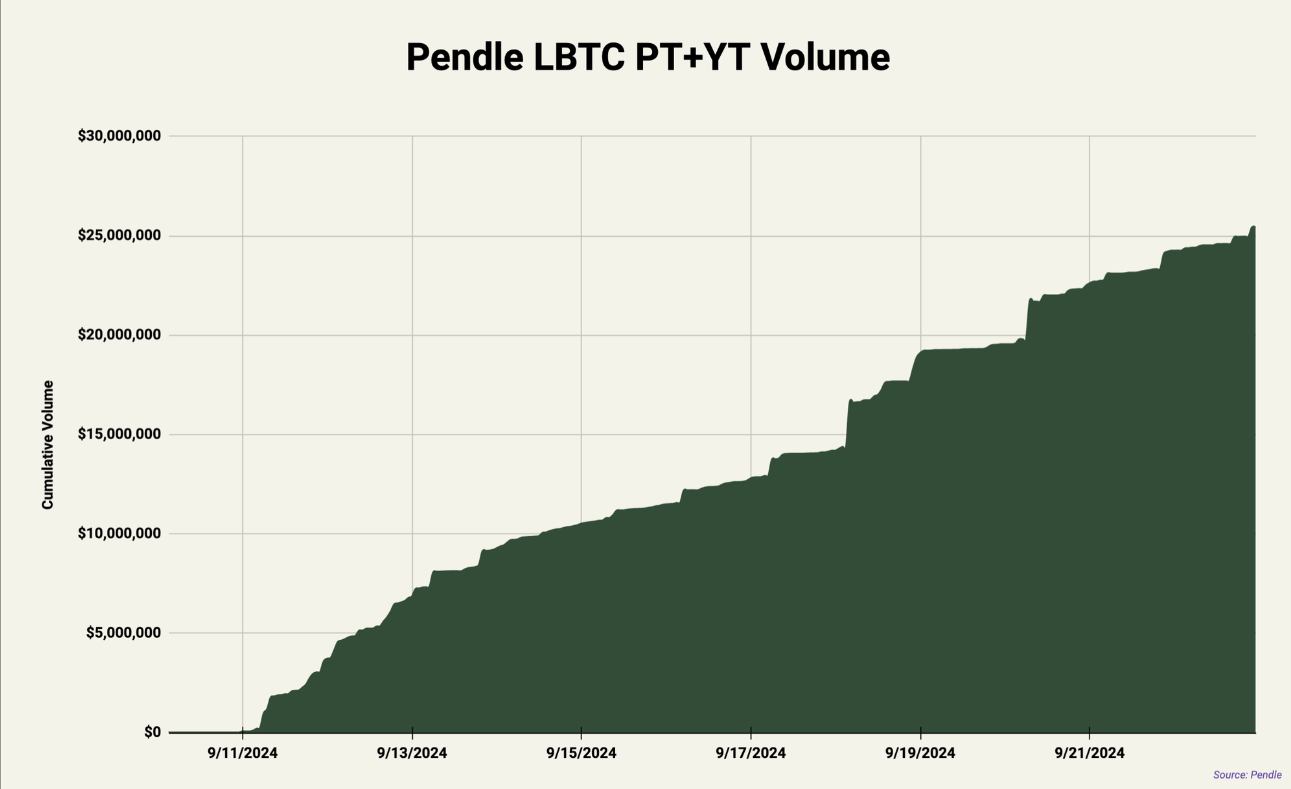
显然,这种做法是有效的,因为交易量在不到两周的时间里已经超过了2500万美元!
WBTC

稍后我会讲到YT,但首先我们来谈谈一些其他看起来非常有吸引力的Pendle操作:

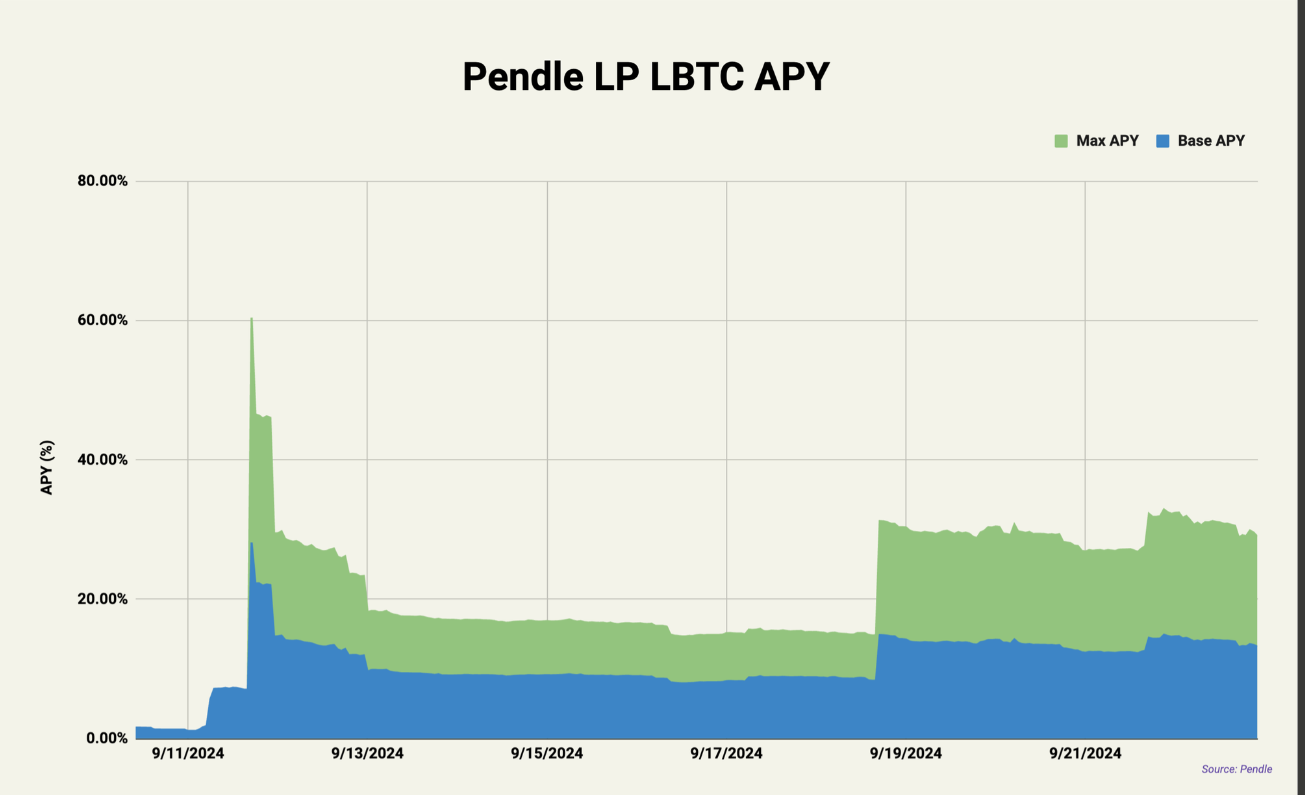
1.LP-LBTC

  • 提供流动性,同时保留一些点数,赚取池收益和$PENDLE奖励
  • ~29.46% 年化收益率(APY),~7.51% 投资回报率(ROI,浮动)
  • 对Lombard/Corn的点数暴露率约为90% vs. LBTC

WBTC

Side note - I’m in this pool and can confirm the APY has been closer to max than base most days 

2.PT-LBTC

  • 7.919% 年化收益率(APY),2.02% 投资回报率(ROI,固定,必须持有至到期才能实现)
  • 已经是相当不错的收益,但可以更好……

3.PT-LBTC + Zerolend 循环

  • 将PT供应到协议中,借入更多的LBTC,然后重复使用更多的PT
  • 通过循环实现最高10倍杠杆 = 79.19% 年化收益率(APY),20.2% 投资回报率(ROI)
  • 最高贷款价值比(LTV)90%,清算阈值95%,供应APY 2.89% / 借入APY 4.06%

对于那些希望保留一些真实收益的人来说,这三种不同风险水平和时间线的选项非常不错。不过,你们不是来这里听这些的。让我们来谈谈如何从这些项目的组合中获取点数。

维护农场

在我们进入农场之前,快速说明一下——因为目前没有Lombard的存款在赚取Babylon的点数,所以我在这里的分析中不会包括它。Babylon的创始人最近在X上表示,LBTC将在下一轮提升限额后开始赚取点数,所以请耐心等待。所有讨论的策略最终都会赚取Babylon点数,因为它们都使用LBTC。

话虽如此,让我们分析一下Corn和Lombard的活动,以及几种农场的方式:

Lombard Lux

LBTC

一旦你铸造了LBTC,就会以每1000质押的比特币质押天数的速度开始赚取Lombard点数,称为Lux。换句话说,一个用户如果质押0.01个比特币1天,就会赚取0.01*1000 = 10 Lux。该活动始于8月22日,预计将持续到第四季度末或第一季度初(我的猜测)。

DeFi集成

Lombard希望为LBTC持有者提供广泛的集成选项,他们确实做到了。用户可以存入Lombard自己的LBTC/wBTC金库,该金库利用自动化DeFi策略产生3%的年化收益率(APY)并赚取4倍的Lux,或者选择通过多个蓝筹合作伙伴如Morpho、Symbiotic、Uniswap和Curve来赚取收益。将资金存入这些金库是选择特定类型点数曝光的好方法。目前,超过3.44亿美元的LBTC(约占总锁仓价值的92%)正在DeFi中使用。

Pendle

在Pendle上持有的YT-LBTC头寸将自动赚取3倍的Lux,此外还有YT提供的自然杠杆(目前约为48倍价格杠杆)。因此,总的来说,这些YT以约145倍的速率赚取点数,相比之下,裸LBTC则仅为1倍。
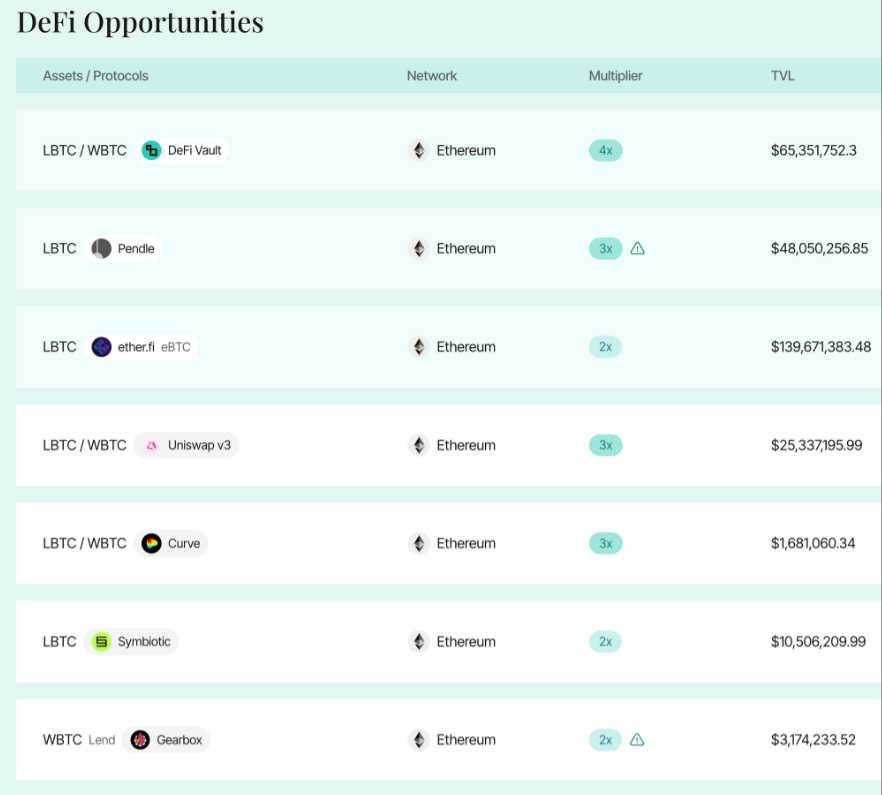
WBTC

Lombard DeFi Opportunities page

Corn Kernels

Silos

Corn目前处于空投活动的第二阶段,第一阶段为完成早期访问清单中的任务分配点数。在第二阶段(于8月22日宣布)中,用户可以通过将LBTC(或其他资产)存入Corn的Silos(资金池)来赚取Corn点数(称为Kernels)。Kernels的累积速度为每存入1美元每3.5小时获得1个Kernels(约每天6.85个),并且最多可以获得3倍的倍数。存入LBTC的用户将以1.5倍的Kernels速率赚取。

参考 + Galxe

邀请你的朋友,可以获得第一位推荐者赚取的Kernels的20%,第二位推荐者的12%,第三位推荐者的6%和第四位推荐者的4%。通过完成Corn的任务所获得的每个Galxe点也等于1个Kernel。

Pendle

与Lombard Lux类似,Pendle的YT-LBTC以3倍的速率赚取Kernels,并具有相同的约48倍价格杠杆,为每美元提供约145倍的总点数曝光。
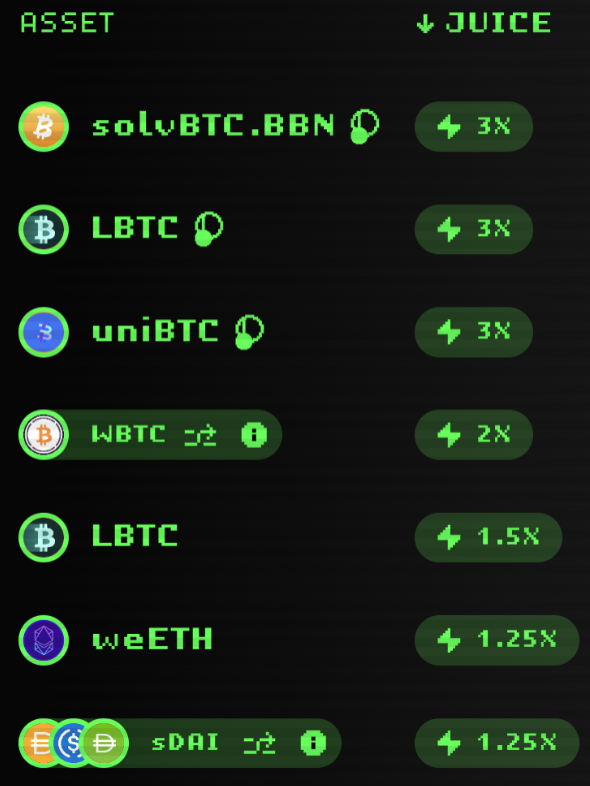
WBTC

Corn Pendle integrations + Silos

(非常)投机的计算器

假设

  • 我使用的现货比特币价格为63,200美元,以计算2024年9月23日的每日点数。
  • 正如我之前提到的,我在这里不包括Babylon点数,尽管LBTC最终会赚取它们。Babylon点数将提升讨论的两种策略的投资回报率(ROI)。
  • ROI计算器假设你在Corn和Pendle池子的各自启动日期进入。
  • 我使用的共识快照日期在第四季度末和第一季度初之间,假设这些项目将在类似时间框架内进行空投。还假设行业标准的5%空投。
  • ROI图表中的“代币FDV”指的是每个代币的FDV,而不是合并的FDV。我还推测了相当大的看涨价格波动(在FDV中反映出来)。
  • 因此,10亿美元这一列意味着Corn和Lombard的未来代币各自的FDV为10亿美元。
  • 我假设从现在到三月之间,总的每日增长率大约为6倍,用于我的Lux/Kernel数量预测。

还有一个重要的说明:Lombard Lux是以比特币计价的(像Eigenlayer点数一样),而Corn Kernels是以美元驱动的,这意味着如果比特币的价格上涨,给定LBTC头寸的Kernels收益率也会增加。我在这里不会考虑未来比特币的价格变化,所以如果你对目前的价格走势特别看跌或看涨,请将其考虑在内。

2024年9月23日的每日点数计算
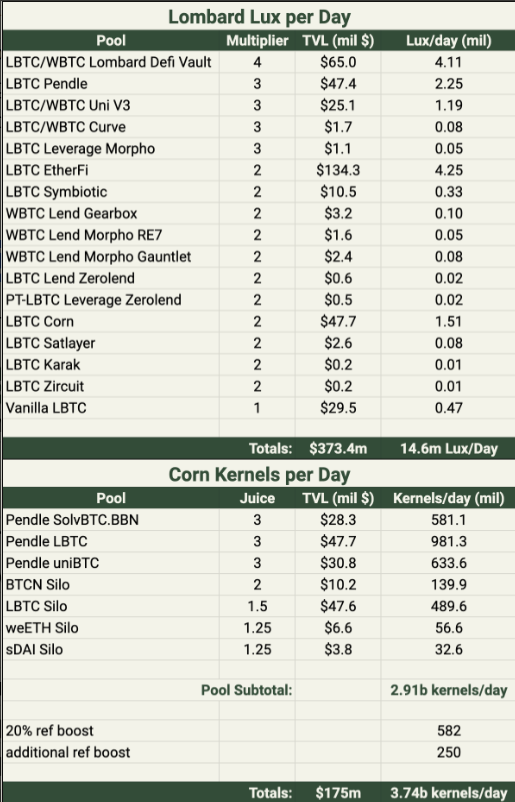
WBTC

LBTC Corn Silo与Pendle YT-LBTC的投资回报率(ROI)
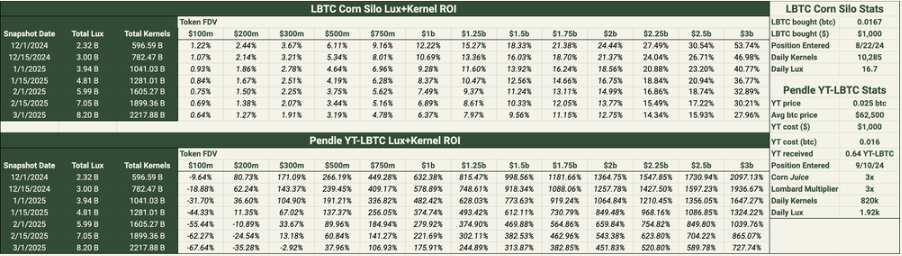
WBTC

Daily Kernel/Lux earnings assume $1000 capital invested

总结思考

就这样。如今,在2024年,作为一位本土比特币巨鲸,你再也不能说WBTC是唯一能够在DeFi中使用你币的真实选择了。Lombard、Babylon、Corn和Pendle是四个关键参与者,正在推动比特币在链上使用的新运动。无论是利用YT杠杆堆叠多种类型的点数,还是通过Silos或Vaults收集被动收益,或者两种策略的某种组合,LBTC无疑提供了价值,并且似乎将会长期存在。

随着我们进入秋冬季节,关注这两个协议的总锁仓价值(TVL)增长——我希望Lombard能够在新的存款中保持领先于像cbBTC这样的竞争对手,并且Corn能够开始发展其生态系统,并继续参与新的Pendle市场推出。无论如何,未来在DeFi中对于比特币来说都是令人兴奋的时刻。

计算器

你可以通过成为On Chain Times的免费订阅者来访问计算器。
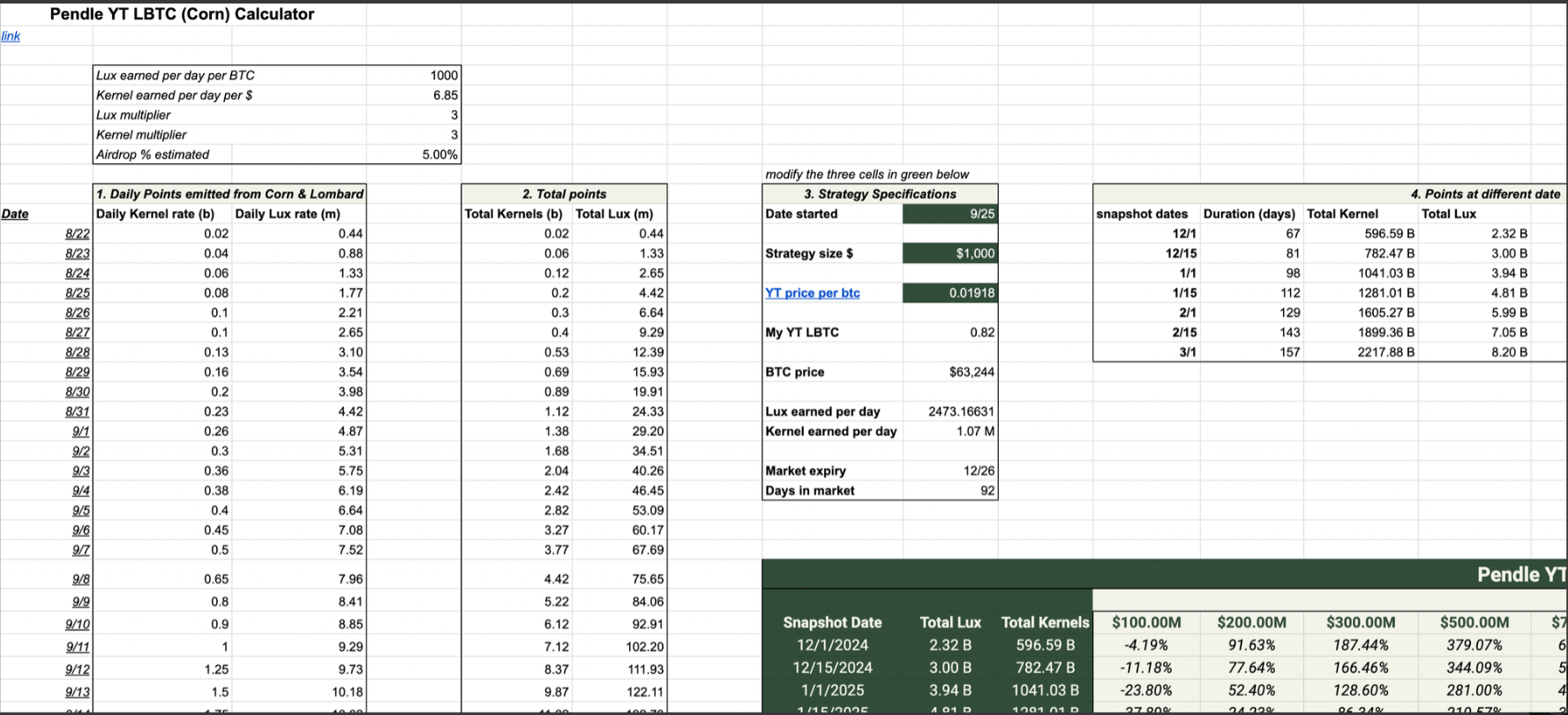
WBTC

如果你想尝试不同的YT/比特币价格、头寸规模和入场日期,这里有一个更深入的YT-LBTC计算器,你可以编辑这些字段。祝你 farming 愉快!

Related Reads

A Trillion-Dollar Frenzy for Memory Sellers, Halved Profits for Memory Buyers

Summary: A stark divide has emerged in the tech industry. While memory chipmaker Micron's stock soared 19% in a single day, pushing its market cap over $1 trillion, smartphone manufacturer Xiaomi reported a 43% plunge in adjusted net profit. The core driver is a severe supply crunch in memory chips, particularly for AI applications. Wall Street analysts, led by UBS and its unprecedented 204% target price hike for Micron, argue that long-term agreements (LTAs) from AI cloud giants are fundamentally ending the sector's notorious boom-and-bust cycles, justifying a re-rating from cyclical to infrastructure-like valuations. However, the "storage" market is now fragmented into three tiers. The first, AI-grade memory like HBM and server DDR5, faces extreme shortages and soaring prices driven by massive cloud capex. The second, mobile memory for smartphones, is also seeing sharp price hikes as manufacturers like Xiaomi are forced to pay more for remaining capacity, severely squeezing their margins. The third, PC retail channels, shows price declines due to existing inventory. The article questions the sustainability of the "supercycle" narrative. It highlights that Micron's revenue surge is driven almost entirely by price increases, not shipment volumes, making it vulnerable to a potential demand slowdown. While LTAs may dampen volatility, history suggests they are often tested during downturns. The current peak earnings, used to justify high valuations, represent a classic cyclical top. The piece concludes with a note of caution: when the entire Street chants "this time is different," it's wise to remember past bubbles, even as it acknowledges AI demand may indeed be structural.

marsbit58m ago

A Trillion-Dollar Frenzy for Memory Sellers, Halved Profits for Memory Buyers

marsbit58m ago

This New Generation of US Stock Trading Gods No Longer Read Financial Reports

The new generation of "stock gods" in the 2026 US AI bull market are not analyzing traditional financial reports. Instead of focusing on giants like NVIDIA, figures like the 22-year-old Leopold Aschenbrenner (who reportedly turned $200M into $14B) and influencers like Serenity on platforms like Reddit's WallStreetBets, X, and Substack are gaining fame and returns by targeting obscure, low-cap "micro-cap" stocks. Their strategy, dubbed "supply chain sniping," involves identifying critical, often monopolistic, bottlenecks in the AI hardware supply chain—such as specific materials or components essential for giants like Google and NVIDIA—that are missed by mainstream Wall Street analysts. Serenity's call on AXTI, a $700M company supplying indium phosphide substrates crucial for photonics and optical interconnects, saw the stock soar from ~$12 to nearly $150. Similarly, accounts like KawzInvests and PhotonCap focus on thematic, supply-chain-driven research in areas like AI infrastructure, optics, and cloud services for SMEs, bypassing traditional valuation metrics. This shift represents a cultural move away from Warren Buffett-style value investing based on deep financial statement analysis. The new approach thrives on low liquidity, early narratives, and strong community propagation on social media, similar to meme stocks or crypto. However, this "attention economy" strategy carries risks: it depends on sustained information gaps, the underlying companies' ability to deliver fundamental results, and the potential for crowded, volatile exits as narratives shift. The trend also shows crypto traders applying their narrative-sensing skills to US micro-caps, marking a significant evolution in trading culture.

marsbit1h ago

This New Generation of US Stock Trading Gods No Longer Read Financial Reports

marsbit1h ago

Trillion-Dollar Euphoria for Memory Sellers, Halved Profits for Memory Buyers

Title: The Trillion-Dollar Memory Seller's Carnival vs. The Buyer's Halved Profits On May 26, a stark contrast unfolded. While memory chipmaker Micron's market cap surged past $1 trillion, smartphone maker Xiaomi reported plummeting profits. Xiaomi's Q1 2026 profits fell 43% year-on-year. Executive Lu Weibing cited memory prices quadrupling from last year, adding roughly $210 to a phone's cost. To survive, Xiaomi is cutting entry-level models, sacrificing volume. Micron's stock, however, skyrocketed over 19% in a day, capping an 8x gain in a year. Major banks like UBS and JPMorgan issued bullish reports, raising price targets drastically. Their core thesis: Long-Term Agreements (LTAs) with AI cloud giants (Microsoft, Google, etc.) are eliminating the memory industry's notorious boom-bust cycle. By locking in fixed-price, multi-year contracts for AI-grade memory (HBM, server DDR5), these deals promise stable, utility-like earnings, justifying a higher valuation (20-30x P/E vs. the historical 8-15x). The article reveals a three-tiered memory market in 2026: 1) **AI Storage (HBM/DDR5/Enterprise SSD)**: Extreme shortage, soaring prices, LTAs. This is Micron's story. 2) **Mobile/Embedded Memory**: Also facing sharp price hikes as AI production crowds out capacity, severely pressuring phone makers like Xiaomi. 3) **PC Retail**: Some spot prices are falling due to channel inventory liquidation, creating a divergence from contract markets. The author questions if LTAs truly end the cycle. It hinges on sustained, hyper-growth AI demand. Micron's current profits are at a cycle peak, driven mostly by price hikes, not volume. If AI capital expenditure growth slows, the massive industry capacity expansion (e.g., Micron's $250B+ CapEx plan) could lead to a glut. Historically, using peak-cycle earnings for valuation is a classic trap. While the AI-driven structural shift might be real, the unanimous Wall Street euphoria warrants caution, echoing past bubbles like Cisco's in 2000. The memory seller's trillion-dollar狂欢 (carnival) continues, but the cycle's shadow remains.

链捕手1h ago

Trillion-Dollar Euphoria for Memory Sellers, Halved Profits for Memory Buyers

链捕手1h ago

Trading

Spot
Futures

Hot Articles

What is $BITCOIN

DIGITAL GOLD ($BITCOIN): A Comprehensive Analysis Introduction to DIGITAL GOLD ($BITCOIN) DIGITAL GOLD ($BITCOIN) is a blockchain-based project operating on the Solana network, which aims to combine the characteristics of traditional precious metals with the innovation of decentralized technologies. While it shares a name with Bitcoin, often referred to as “digital gold” due to its perception as a store of value, DIGITAL GOLD is a separate token designed to create a unique ecosystem within the Web3 landscape. Its goal is to position itself as a viable alternative digital asset, although specifics regarding its applications and functionalities are still developing. What is DIGITAL GOLD ($BITCOIN)? DIGITAL GOLD ($BITCOIN) is a cryptocurrency token explicitly designed for use on the Solana blockchain. In contrast to Bitcoin, which provides a widely recognized value storage role, this token appears to focus on broader applications and characteristics. Notable aspects include: Blockchain Infrastructure: The token is built on the Solana blockchain, known for its capacity to handle high-speed and low-cost transactions. Supply Dynamics: DIGITAL GOLD has a maximum supply capped at 100 quadrillion tokens (100P $BITCOIN), although details regarding its circulating supply are currently undisclosed. Utility: While precise functionalities are not explicitly outlined, there are indications that the token could be utilized for various applications, potentially involving decentralized applications (dApps) or asset tokenization strategies. Who is the Creator of DIGITAL GOLD ($BITCOIN)? At present, the identity of the creators and development team behind DIGITAL GOLD ($BITCOIN) remains unknown. This situation is typical among many innovative projects within the blockchain space, particularly those aligning with decentralized finance and meme coin phenomena. While such anonymity may foster a community-driven culture, it intensifies concerns about governance and accountability. Who are the Investors of DIGITAL GOLD ($BITCOIN)? The available information indicates that DIGITAL GOLD ($BITCOIN) does not have any known institutional backers or prominent venture capital investments. The project seems to operate on a peer-to-peer model focused on community support and adoption rather than traditional funding routes. Its activity and liquidity are primarily situated on decentralized exchanges (DEXs), such as PumpSwap, rather than established centralized trading platforms, further highlighting its grassroots approach. How DIGITAL GOLD ($BITCOIN) Works The operational mechanics of DIGITAL GOLD ($BITCOIN) can be elaborated on based on its blockchain design and network attributes: Consensus Mechanism: By leveraging Solana’s unique proof-of-history (PoH) combined with a proof-of-stake (PoS) model, the project ensures efficient transaction validation contributing to the network's high performance. Tokenomics: While specific deflationary mechanisms have not been extensively detailed, the vast maximum token supply implies that it may cater to microtransactions or niche use cases that are still to be defined. Interoperability: There exists the potential for integration with Solana’s broader ecosystem, including various decentralized finance (DeFi) platforms. However, the details regarding specific integrations remain unspecified. Timeline of Key Events Here is a timeline that highlights significant milestones concerning DIGITAL GOLD ($BITCOIN): 2023: The initial deployment of the token occurs on the Solana blockchain, marked by its contract address. 2024: DIGITAL GOLD gains visibility as it becomes available for trading on decentralized exchanges like PumpSwap, allowing users to trade it against SOL. 2025: The project witnesses sporadic trading activity and potential interest in community-led engagements, although no noteworthy partnerships or technical advancements have been documented as of yet. Critical Analysis Strengths Scalability: The underlying Solana infrastructure supports high transaction volumes, which could enhance the utility of $BITCOIN in various transaction scenarios. Accessibility: The potential low trading price per token could attract retail investors, facilitating wider participation due to fractional ownership opportunities. Risks Lack of Transparency: The absence of publicly known backers, developers, or an audit process may yield skepticism regarding the project's sustainability and trustworthiness. Market Volatility: The trading activity is heavily reliant on speculative behavior, which can result in significant price volatility and uncertainty for investors. Conclusion DIGITAL GOLD ($BITCOIN) emerges as an intriguing yet ambiguous project within the rapidly evolving Solana ecosystem. While it attempts to leverage the “digital gold” narrative, its departure from Bitcoin's established role as a store of value underscores the need for a clearer differentiation of its intended utility and governance structure. Future acceptance and adoption will likely depend on addressing the current opacity and defining its operational and economic strategies more explicitly. Note: This report encompasses synthesised information available as of October 2023, and developments may have transpired beyond the research period.

363 Total ViewsPublished 2025.05.13Updated 2025.05.13

What is $BITCOIN

Discussions

Welcome to the HTX Community. Here, you can stay informed about the latest platform developments and gain access to professional market insights. Users' opinions on the price of BTC (BTC) are presented below.

活动图片