SkyBridge创始人:谁是更适合加密市场的候选人?

Odaily星球日报Pubblicato 2024-08-21Pubblicato ultima volta 2024-08-21

Introduzione

为什么特朗普在美国大选中的胜利不会使加密行业受益?

原文整理 & 编译:深潮 TechFlow
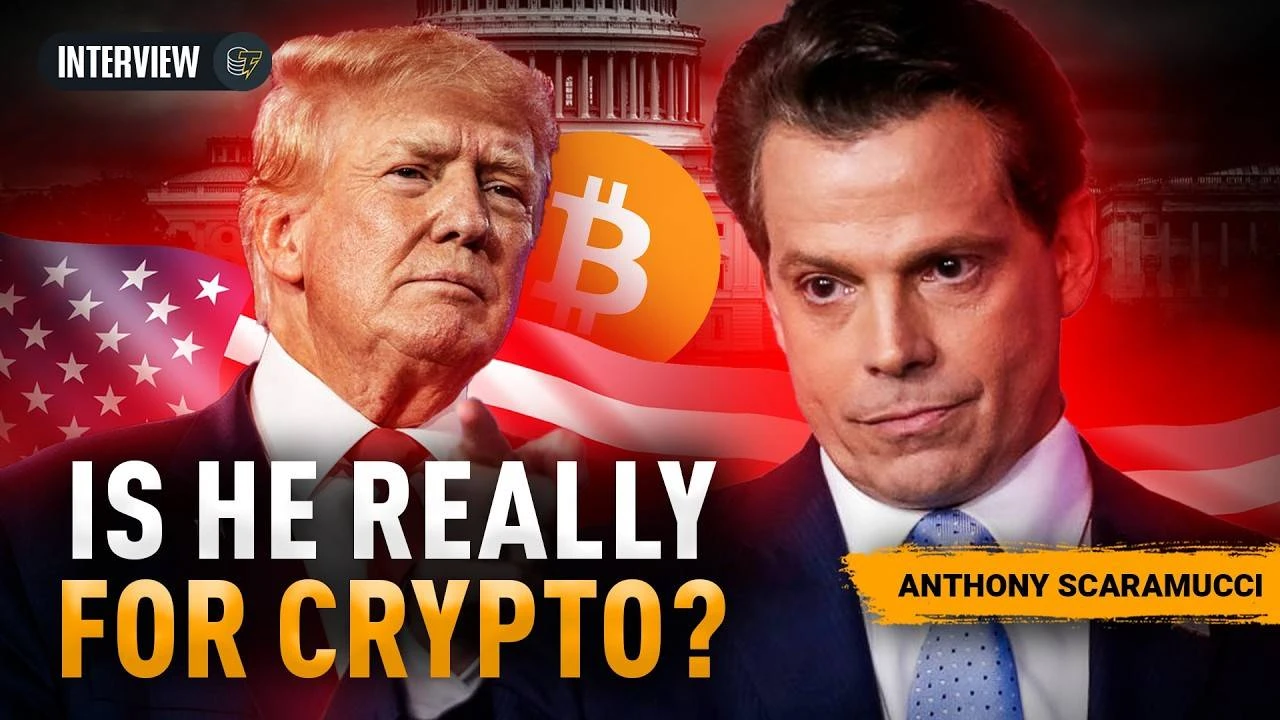
SkyBridge创始人:谁是更适合加密市场的候选人?

嘉宾: Anthony Scaramucci,SkyBridge 创始人

主持人:Giovanni Pigni,Cointelegraph 视频报道记者

播客源:Cointelegraph

原标题:Will the U.S. Elections Trigger the Next Crypto Bull Run?

播出日期: 2024 年 8 月 20 日

背景信息

本期 SkyBridge Capital 创始人 Anthony Scaramucci 解释了为什么特朗普在美国大选中的胜利不会使加密行业受益,以及 Kamala Harris 如何通过忽视支持加密的选民来危及她的机会。

谁在加密货币市场中是更合适的候选人,特朗普还是哈里斯?

  • Anthony 表示,尽管他对特朗普持批评态度,但从加密行业的角度来看,行业普遍认为特朗普是更好的候选人。

  • 然而,Anthony 指出,行业在这一选择上忽视了许多需要谨慎考虑的因素。

  • 他进一步分析了特朗普的政策意图,认为特朗普希望改变美国的体制,削弱司法和立法机构,加强行政权力,这可能导致寡头统治的局面。他警告说,这种变化可能会削弱资本市场以及美国在全球的地位。尽管特朗普可能会推出一些积极的加密货币政策,但也可能导致世界的巨大混乱。

  • 相较之下,Anthony 认为拜登政府在经济上表现良好,尽管他对政府反对加密货币的立场表示不满,但他仍然认为拜登政府在法律尊重方面是值得肯定的。他提到,随着比特币进入获得官方 ETF 的领域,如果哈里斯当选,关于加密货币的监管将会有很大进展。

  • 最后,Anthony 强调,他相信在哈里斯的领导下,比特币会表现良好,世界也会变得更好,因此他决定支持哈里斯。

哈里斯与加密行业合作的尝试,是否被视为“骗局”?

主持人提到,许多加密行业的人士对民主党在加密货币政策上的转变并不抱有信心。他提到,联邦储备在 8 月 9 日对美国少数几家支持加密货币的银行进行了打压,Tyler Winklevoss 表示,民主党试图展现的加密重置实际上是一场骗局,暗示哈里斯的总统任期将继续反对加密货币的政策。

  • Anthony 表示他认为 Tyler 在这一问题上是正确的。他承认这让他感到沮丧,但他并不是单一议题的选民,更关心的是更广泛的影响。他指出,尽管拜登政府的强硬态度,加密货币行业依然表现良好。他强调自己在推动积极的监管改革和结束类似“操作窒息点 2.0 ”的活动方面所做的努力。

  • Anthony 向听众表示,Tyler 的观点是有道理的,如果有人选择支持特朗普,他能够理解这个决定,但他自己不会支持特朗普,因为他了解特朗普的危险性。他希望能够推动加密货币的概念和监管实现两党合作,因为他认为这将更有利于行业的发展。他坚持自己的观点,认为这种双边合作是必要的。

你相信特朗普的比特币储备计划吗?

  • Anthony 对此表示肯定,认为如果特朗普确实实施这一计划,将会是一个非常好的想法。他赞扬特朗普身边有许多聪明的人士,如 David Bailey 等,为他提供建议。他提到自己听过特朗普在比特币大会上的演讲,认为演讲内容相当不错。

  • Anthony 设想,如果美国能够拥有一到三百万个比特币,并将其作为战略资产储备列入国债表上,这将是一个极具智慧的举措。他强调,如果这些比特币的价值达到数十万美元,想象一下这一计划的潜在价值和影响。

加密货币选民能在美国选举中产生影响吗?

  • Anthony 进一步分析,如果副总统哈里斯在选举中失利,事后分析将可能指出,她在加密货币行业的立场是失利的原因之一,因为她低估了拥有加密货币的人数。他提到,美国大约有 5000 万人持有加密货币,其中许多人可能是单一议题的选民。

  • 他提出了一个假设,即:即使只有 2500 万人拥有加密货币,如果其中 5% 是单一议题的选民,这也意味着有 125 万人可能在摇摆州投票。如果这些选民在摇摆州投票,哈里斯可能会因此失去选举。Anthony 强调,民主党对加密货币采取负面策略是一个明显的信号,他正在努力推动一些支持哈里斯的人士倾听加密货币行业的声音,以期改变她的政策方向,但他对她是否愿意这样做表示不确定。

美国选举会引发下一轮加密牛市吗?

  • Anthony 对此表示,首先要回顾一下比特币的发展历程。他提到,自比特币诞生以来,第一次在减半之前达到了历史最高点。此外,在这次减半前还引入了 ETF(交易所交易基金)。减半后,每天的比特币产量从 900 个减少到 450 个,这对市场造成了卖压。此外,他提到 Mt. Gox 破产事件期间,大约有 90 亿美元的比特币在短时间内被抛售。

  • 他认为,尽管面临这些卖压,但比特币仍然能够在 60000 美元附近交易,这表明市场的健康状况。他预测,三个月后比特币可能会达到 100000 美元,并解释说,Mt. Gox 的卖压和美国及德国政府的抛售压力已经消失,加上市场对 ETF 的积极反应,这些都是推动比特币上涨的重要因素。

  • Anthony 最后总结说,虽然选举可能成为一个催化剂,但他认为真正的催化剂是市场上缺乏卖家,特别是在 Mt. Gox 和政府抛售之后,这将是推动比特币价格上涨的关键因素。

你目前看好哪些加密项目?

  • Anthony 表达了他对几个项目的看法,提到他持有的资产包括:

  • Bitcoin - 作为加密货币的领头羊,Anthony 对比特币的长期前景持乐观态度。

  • Ethereum - 作为智能合约平台,以太坊在去中心化应用(dApps)和 DeFi(去中心化金融)领域具有重要地位。

  • Solana- Anthony 表示他对 Solana 的投资,可能是因为其高性能和低交易费用。

  • Algorand - 他也持有 Algorand,可能看重其技术和应用潜力。

  • Avalanche - Anthony 对 Avalanche 团队表示高度尊重,并持有较大头寸。

  • Vulgar Forge - 这是一个游戏代币,Anthony 在其中持有小额头寸。

  • 他总结说,他的主要投资集中在比特币和 Solana 上,表明这些项目在他眼中具有较大的潜力和价值。

我们何时能看到美国批准 Solana 交易所交易基金(ETF)?

  • Anthony 对 Solana 是否会成为下一个获得批准的交易所交易基金(ETF)进行了分析,主要观点如下:

  • SEC 的立场:Anthony 指出,美国证券交易委员会(SEC)将 Solana 视为一种证券,这使得将其纳入 ETF 变得复杂。在美国,单一证券无法被直接纳入 ETF,但可以将多个证券组合在一起。

  • 以太坊的例子:他提到,如果以太坊被认定为非证券,那么为什么 Solana 会被视为证券?这种不一致性让行业感到困惑,并批评当前监管机构的双重标准。

  • 未来的监管变化:Anthony 认为,随着美国选举的进行,现有的 SEC 监管人员可能会被更支持行业的监管者取代,这将有助于推动 Solana ETF 的批准。如果特朗普赢得选举,他认为 Solana ETF 有很大机会在明年第一季度获得批准。

  • 长期展望:即使在特朗普输掉选举的情况下,Anthony 仍然相信到 2025 年底,Solana ETF 仍有可能获得批准,因为他认为行业会在法律上胜诉,而现有的监管行为不公平。

  • 总的来说,Anthony 对 Solana ETF 的未来持乐观态度,但他也承认具体的批准时间仍然不确定,可能会受到政治和监管环境的影响。

原文链接

Letture associate

South Korean Exchanges 'Battle' Regulators, Challenging the Boundaries of Enforcement and Legislation

South Korea's cryptocurrency industry is engaged in a rare, direct confrontation with regulators. The Financial Intelligence Unit (FIU), the primary anti-money laundering (AML) watchdog, has recently imposed heavy penalties on major exchanges like Upbit and Bithumb for alleged violations involving unregistered overseas VASPs and AML procedures. However, exchanges are now actively challenging these actions in court and through industry associations. In a significant shift, the Seoul Administrative Court ruled in favor of Upbit's operator, Dunamu, overturning part of an FIU-ordered business suspension. The court found the FIU's penalty criteria and justification insufficiently clear. Similarly, the court suspended the enforcement of a six-month business suspension against Bithumb pending a final ruling, citing potential irreversible harm to the exchange. Beyond legal battles, the industry is contesting proposed legislative amendments. The Digital Asset eXchange Alliance (DAXA) strongly opposes a draft rule that would mandate Suspicious Transaction Reports (STRs) for all crypto transfers over 10 million KRW (~$6,800). DAXA argues this "poison pill" clause violates legal principles and would overwhelm the STR system, increasing reports from 63,000 to an estimated 5.45 million annually for major exchanges, thereby crippling effective AML monitoring. This conflict highlights a structural tension in South Korea's crypto governance: comprehensive digital asset laws are still developing, while regulators rely heavily on AML enforcement. The industry's move from passive compliance to active legal and legislative challenges signifies a new phase, pressing for clearer rules and more proportionate enforcement. While short-term disputes may intensify, this clash could ultimately lead to a more mature and sustainable regulatory framework for South Korea's vibrant crypto market.

marsbit19 min fa

South Korean Exchanges 'Battle' Regulators, Challenging the Boundaries of Enforcement and Legislation

marsbit19 min fa

After 50x Storage Surge, Justin Sun Always Looks to the Next Decade

Sun Yuchen, known for his controversial stunts like a $30 million lunch with Warren Buffett (canceled due to a kidney stone) and eating a $6.2 million duct-taped banana, is often overshadowed by a significant fact: his decade-long track record of spotting major investment trends. In 2016, he famously advised young people to invest in Bitcoin, Nvidia, Tesla, and Tencent instead of buying property. A hypothetical $20,000 investment in Nvidia and Tesla from that list would now be worth over 50 million RMB. His latest major call was on November 6, 2025, predicting a "50x storage opportunity" tied to the AI boom, which materialized with Sandisk's stock surging nearly 50-fold by 2026. Looking ahead, Sun now focuses on the next frontier: Physical AI. He identifies four key areas: 1. **Embodied AI/Robotics**: He sees this reaching its "iPhone moment," with companies like UBTech and Galaxy General leading in commercialization. 2. **Drones**: Viewed as the first commercially viable form of Physical AI, revolutionizing sectors from warfare (e.g., AeroVironment's Switchblade) to logistics. 3. **Spatial Computing**: Beyond VR, it's about AI understanding physical space, a foundational technology for robotics and autonomous systems, exemplified by Apple's Vision Pro. 4. **Space Exploration**: After a 2025 suborbital flight with Blue Origin, Sun advocates for space as the ultimate frontier, discussing blockchain's potential role in space asset management and data transactions. His investment philosophy involves betting on entire, inevitable trends rather than single companies. For robotics, he sees Tesla (the body/manufacturer) and Nvidia (the brain/AI platform) as complementary plays. In defense drones, he highlights companies making tanks obsolete (AeroVironment) and those augmenting fighter jets (Kratos). For space, he participated in Blue Origin's flight and anticipates SpaceX's potential IPO to redefine the sector's valuation. Sun Yuchen's vision frames the next two decades not as a revolution in information flow (like the internet), but in the fundamental operation of the physical world through AI-powered robots, autonomous systems, and spatial intelligence, ultimately extending human and AI activity into space. While many still focus on conventional assets, he continues to look toward the next technological horizon.

marsbit1 h fa

After 50x Storage Surge, Justin Sun Always Looks to the Next Decade

marsbit1 h fa

The Billionaires Behind the Most Expensive Midterm Election in History

"The Most Expensive Midterm Elections and Their Billionaire Backers" This analysis details the unprecedented scale of spending in the 2026 midterm elections, highlighting the key billionaire donors shaping the political landscape. Jeff Yass, founder of Susquehanna International Group, has contributed over $81 million, ranking third among individual donors behind George Soros ($102.6M) and Elon Musk ($84.8M). Yass is a major donor to Trump's MAGA Inc. and supports school choice and various candidates. Overall, federal committees have raised over $4.7 billion this cycle, with political ad spending projected to reach $10.8 billion. Republican-aligned groups are significantly out-raising their Democratic counterparts. "Dark money" from undisclosed sources continues to grow. The core stakes involve control of Congress and policy direction for Trump's final term. Donors are also motivated by specific issues: Sergey Brin and Chris Larsen are funding opposition to a proposed California wealth tax and supporting crypto-friendly policies. Other top donors include OpenAI's Greg Brockman and his wife Anna ($50M total to MAGA Inc. and an AI-focused PAC), Richard Uihlein ($45.3M to conservative causes), venture capitalists Marc Andreessen and Ben Horowitz (each over $44M to crypto/AI PACs and MAGA Inc.), Miriam Adelson ($42.6M to GOP leadership PACs), Paul Singer ($33.9M), and Diane Hendricks ($25.8M to MAGA Inc.). The article notes that the peak fundraising period is still ahead, with major primaries approaching.

marsbit1 h fa

The Billionaires Behind the Most Expensive Midterm Election in History

marsbit1 h fa

The Largest IPO in History Is Approaching, Surpassing SpaceX, 28 Years of AI Self-Iteration, Countdown to Intelligence Explosion

"Anthropic Nears Trillion-Dollar IPO, Fueled by Explosive Growth and 2028 'Intelligence Explosion' Warning Anthropic is considering a deal valuing the AI company near $1 trillion, potentially leading to one of the largest IPOs ever and surpassing SpaceX. Its revenue has skyrocketed, with Annual Recurring Revenue (ARR) reaching $45 billion in May 2026—a 500% increase in just five months. This vertical growth curve is attributed to its key products, Claude Code and Cowork, dominating AI coding and enterprise collaboration. Beyond commercial success, co-founder Jack Clark issued a pivotal warning in an interview: there is a greater than 50% chance that by the end of 2028, AI systems will achieve recursive self-improvement—the ability to autonomously build a 'better version' of themselves, initiating an 'intelligence explosion.' This prophecy underpins the company's astronomical valuation, as the market prices in the potential for transformative and disruptive AI. Further signaling its ambition, Anthropic formed a $1.5 billion joint venture with Goldman Sachs and Blackstone, aiming to disrupt traditional consulting firms like McKinsey by deploying Claude AI for complex strategic work. This move tests AI's capacity to replace high-level cognitive labor, a precursor to its predicted autonomous evolution. The narrative presents a dual future: unprecedented economic opportunity alongside significant risks like economic restructuring and security threats. Anthropic's meteoric rise and Clark's 2028 prediction frame the coming years as a countdown to a potential technological singularity."

marsbit1 h fa

The Largest IPO in History Is Approaching, Surpassing SpaceX, 28 Years of AI Self-Iteration, Countdown to Intelligence Explosion

marsbit1 h fa

Trading

Spot
Futures
活动图片