关键指标表明多头仍占上风,比特币或将迎来复苏

Odaily星球日报Published on 2024-07-08Last updated on 2024-07-08

Abstract

尽管价格继续下跌,但抛售的压力正在减弱。

原文标题: 5 bullish arguments that Bitcoin price just bottomed at $ 53 K

原文作者:Yashu Gola,CoinTelegraph

原文编译:陶朱,金色财经

尽管比特币价格波动且跌至五个月低点,但几个关键指标表明多头可能仍占上风,暗示比特币价格走势可能出现复苏。

看涨背离增强 BTC 反弹前景

比特币本月开局动荡,截至 7 月 7 日,暴跌超过 10.50% ,徘徊在 57, 000 美元左右。比特币最低点触及 53, 550 美元,其下跌主要是由于市场担心 Mt. Gox 不断向其客户偿还超过 140, 000 比特币以及德国政府清算比特币导致市场抛售。

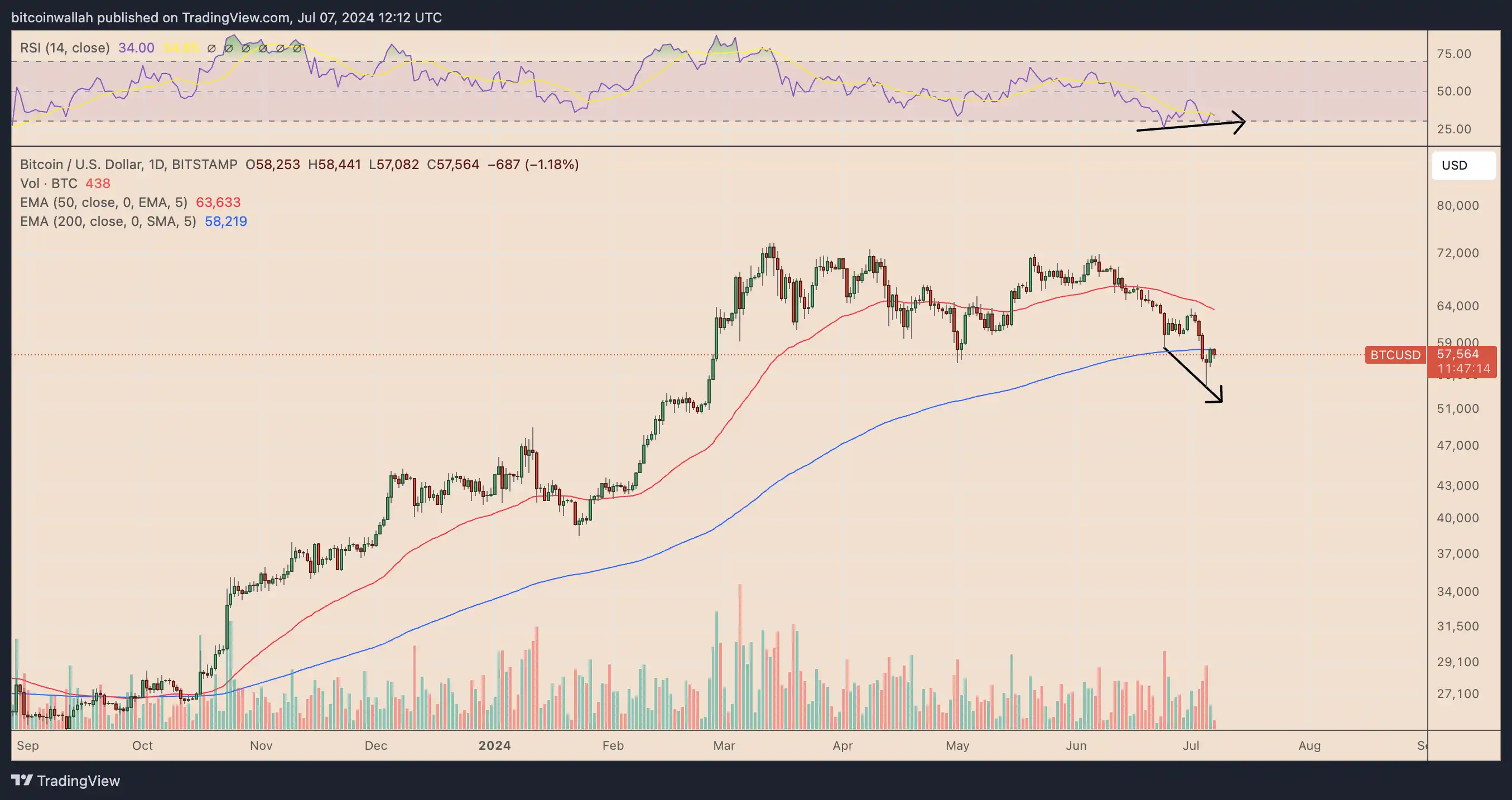
比特币价格的最新下跌伴随着价格下跌与相对强弱指数 (RSI) 上升之间的差距越来越大。这种差距通常表明抛售压力正在减弱,尽管价格继续下跌。
关键指标表明多头仍占上风,比特币或将迎来复苏

BTC/USD 每日价格图表。资料来源:TradingView

从技术分析的角度来看,这种情况通常意味着当前下行趋势可能出现逆转或放缓,暗示随着市场情绪转回看涨,比特币可能很快会出现反弹。

看涨锤头线,超卖 RSI

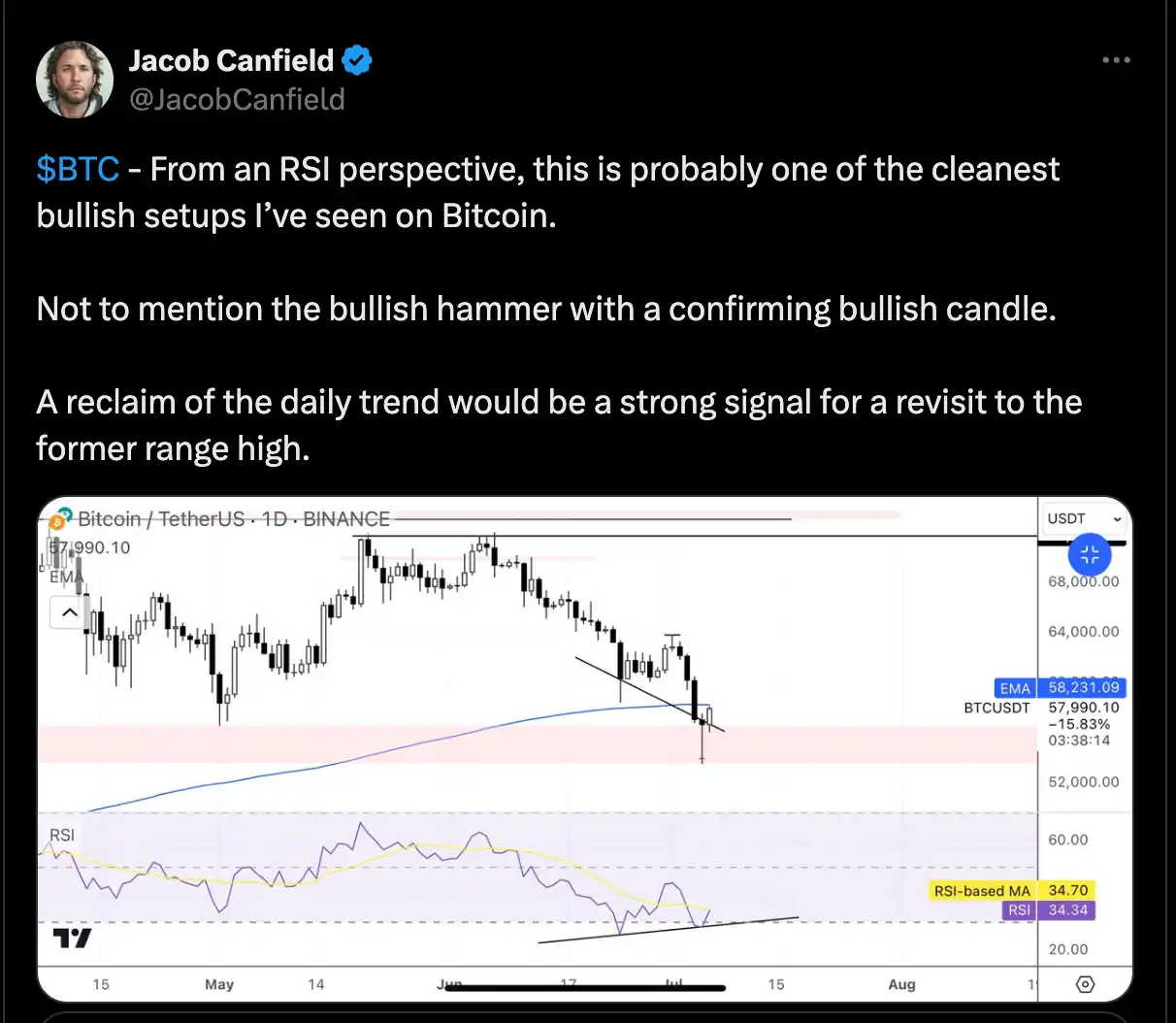
另外两个经典技术指标支持看涨反转情景。首先,比特币在 7 月 5 日形成了看涨锤头烛台形态,其特点是日线蜡烛图上端主体较小,下影线较长,上影线较小。5 月份也出现过类似情况。

其次,比特币的每日 RSI 读数徘徊在超卖阈值 30 附近,这通常预示着盘整或复苏期。分析师 Jacob Canfield 预测,该指标可能预示反弹,BTC 可能会回到 70, 000 美元以上的「前期高点」。
关键指标表明多头仍占上风,比特币或将迎来复苏

来源: X 华尔街押注 9 月降息幅度加大

由于 9 月份利率上升,比特币在未来几周恢复牛市的能力进一步上升。

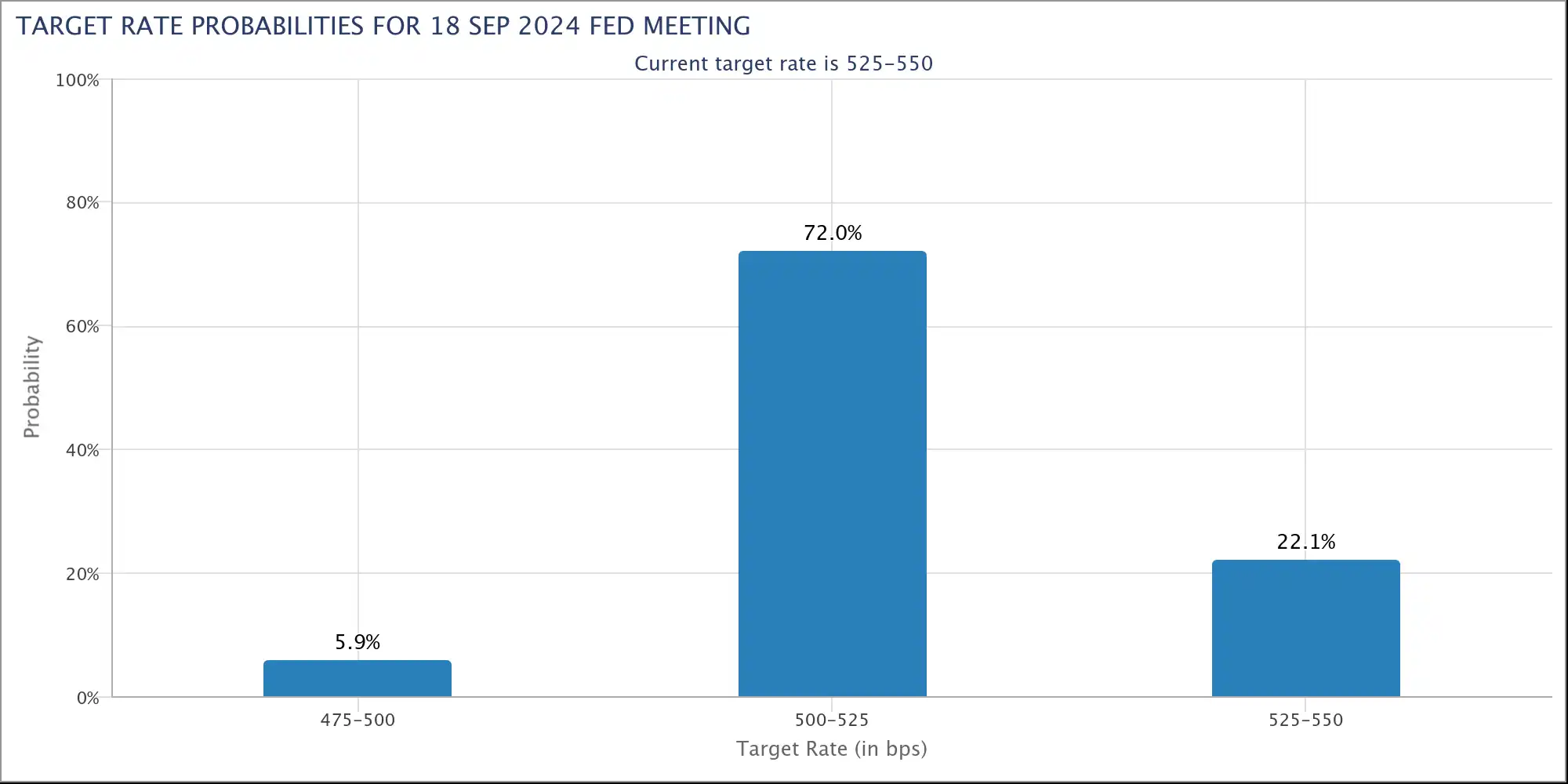
根据芝加哥商品交易所收集的数据,截至 7 月 7 日,华尔街交易员认为美联储降息 25 个基点的可能性为 72% 。一个月前,这一概率为 46.60% 。
关键指标表明多头仍占上风,比特币或将迎来复苏

2024 年 9 月 18 日美联储会议的目标利率概率。来源:CME

由于美国招聘放缓,人们对降息的预期有所上升。

当就业市场疲软时,美联储通常会考虑降息以刺激经济活动。较低的利率通常对比特币和其他风险较高的资产有利,因为它们会使美国国债等传统安全投资变得不那么有吸引力。

比特币 ETF 投资者在 7 月下跌后回归

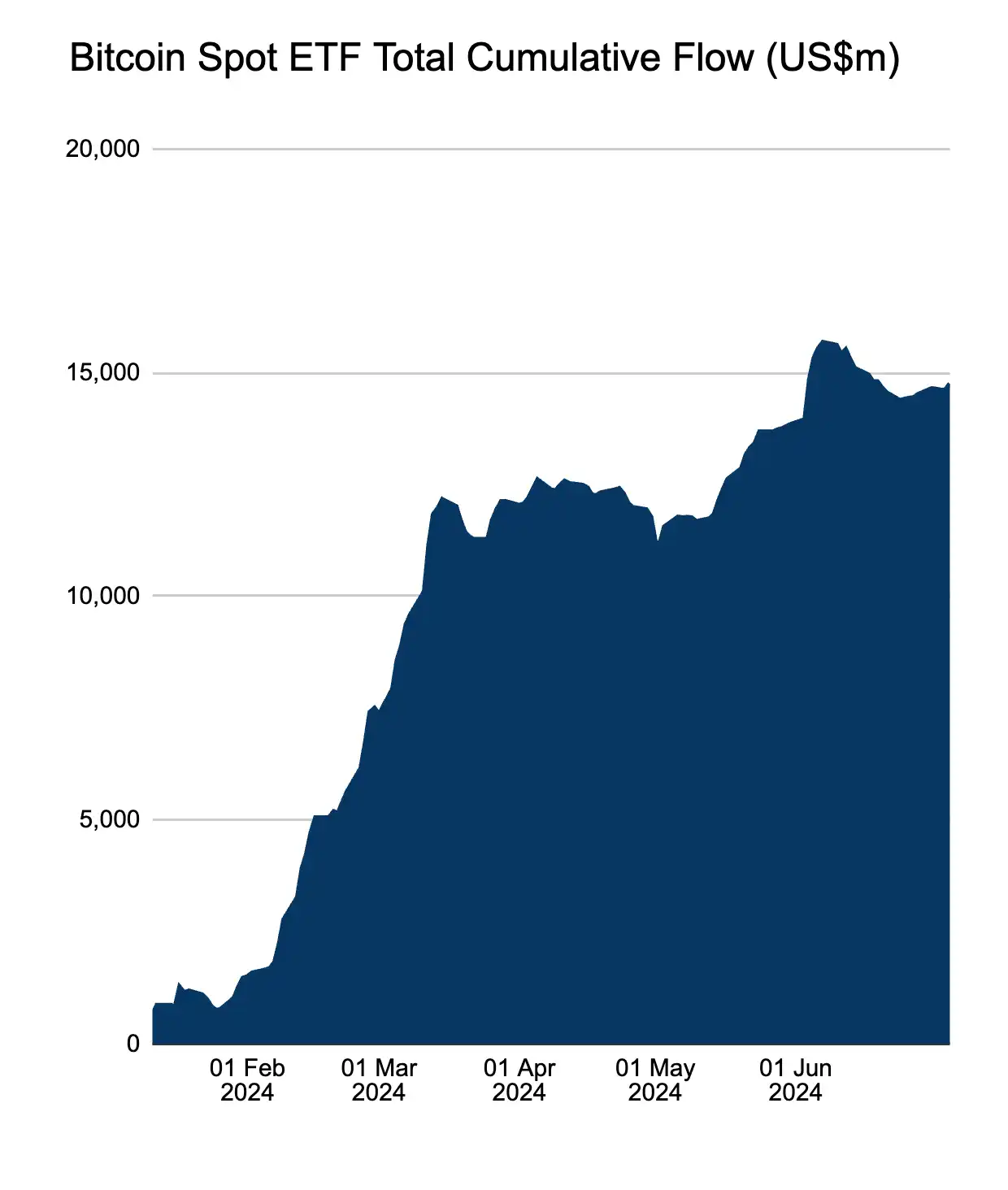
BTC 市场的另一个利好指标是,在连续两天资金流出后,美国现货比特币交易所交易基金 (ETF) 恢复流入。

据 Farside Investors 的数据, 7 月 5 日,当美国公布疲软的失业数据时,这些基金共吸引了价值 1.431 亿美元的 BTC,这表明华尔街投资者的风险情绪正在上升。
关键指标表明多头仍占上风,比特币或将迎来复苏

现货比特币 ETF 累计流入量。资料来源:Farside Investors

富达智库「 Origin Bitcoin Fund」(FBTC) 以 1.17 亿美元的流入领跑。Bitwise 比特币 ETF (BITB) 净流入 3020 万美元,ARK 21Shares 比特币 ETF (ARKB) 和 VanEck 比特币信托 (HODL) 分别录得 1130 万美元和 1280 万美元的流入。

相比之下,灰度比特币信托 (GBTC) 净流出 2860 万美元。

美国货币供应量再次扩大

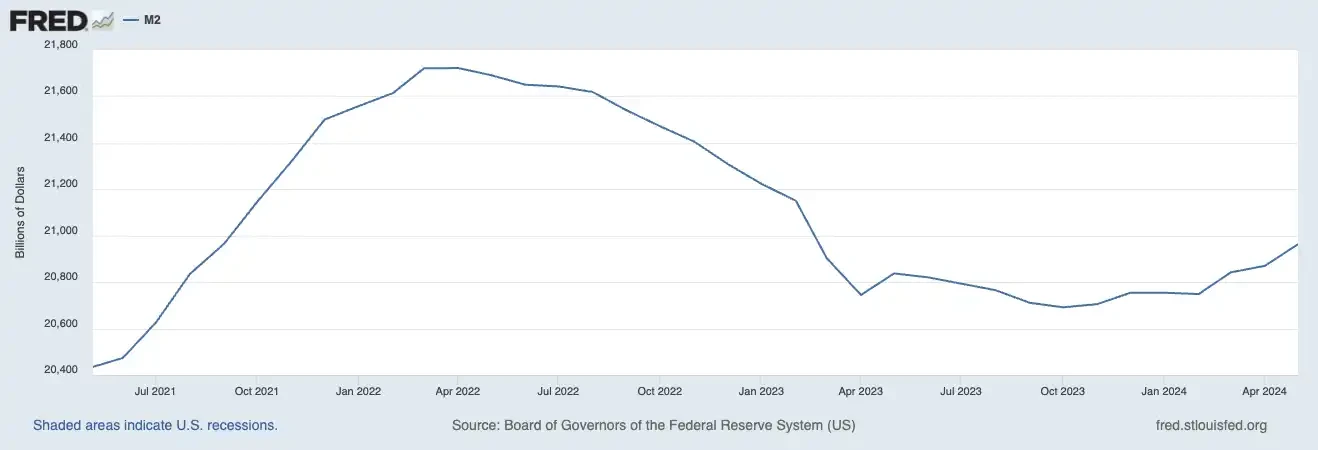
比特币的更多上行线索来自美国 M2 供应量的近期增长,M2 供应量是衡量货币供应量的指标,包括现金、支票存款以及易于兑换的准货币,例如储蓄存款、货币市场证券和其他定期存款。

截至 2024 年 5 月,M2 货币供应量同比增长约 0.82%,其总降幅从 2023 年 10 月的峰值下降 4.74% 降至 3.50% 左右。
关键指标表明多头仍占上风,比特币或将迎来复苏

美国 M 2 供应图。来源:FRED

M 2 供应量增长对比特币有利,因为它增加了经济流动性。流通中的货币越多,人们就会对比特币等风险较高的资产进行更多投资,因为储蓄和债券等传统投资的回报率较低。

比特币矿工投降式抛售暗示比特币价格触底

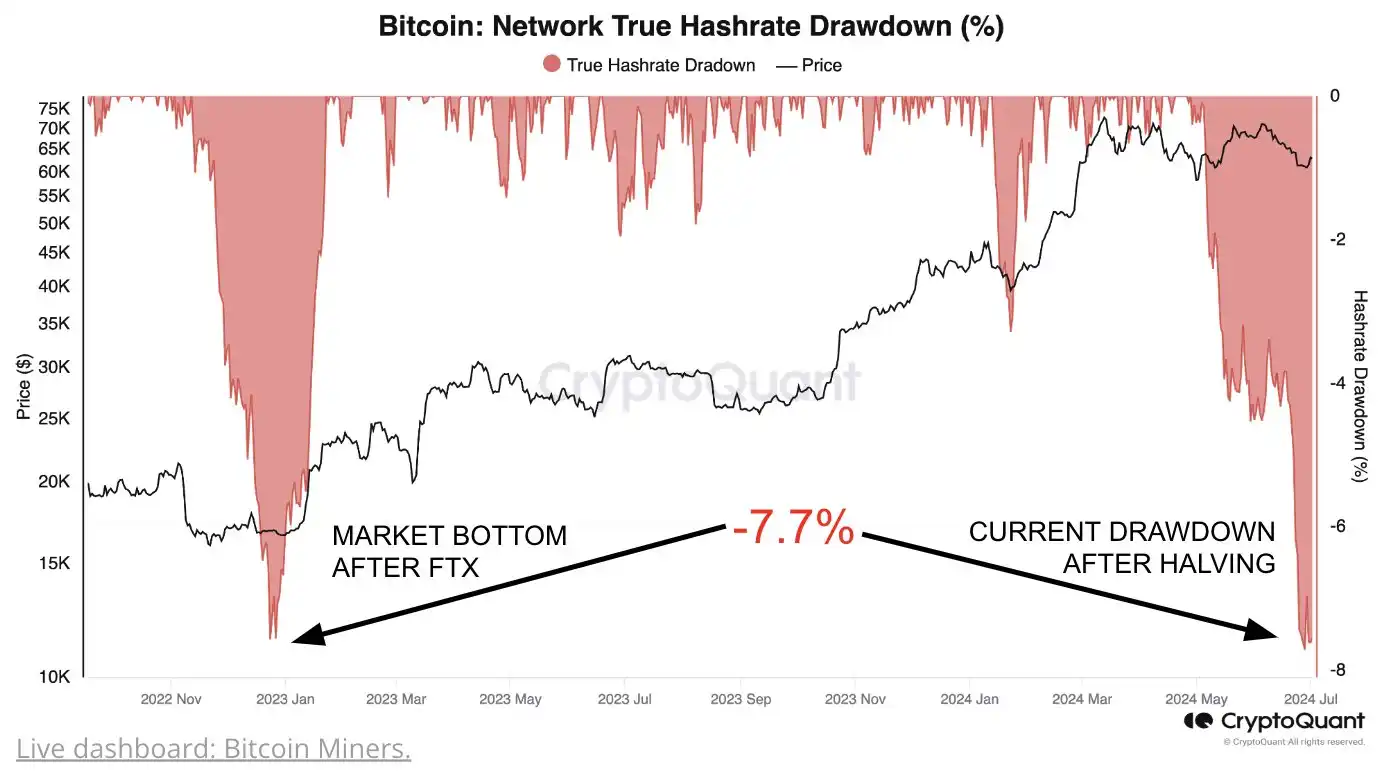
比特币矿工投降式抛售指标接近 2022 年底 FTX 崩盘后市场触底时的水平,表明 BTC 可能触底。矿工投降发生在矿工减少运营或出售部分开采的比特币和储备以维持生计、赚取收益或对冲比特币风险时。

市场分析师在过去一个月中强调了几种投降迹象,在此期间比特币的价格从 68, 791 美元跌至 53, 550 美元。一个值得注意的迹象是比特币哈希率(保护比特币网络的总计算能力)大幅下降。

哈希率下降了 7.7% ,在 4 月 27 日创下历史新高后,降至 576 EH/s 的四个月低点。这一下降表明一些矿工正在缩减运营规模,反映出减半后挖矿社区的财务压力。
关键指标表明多头仍占上风,比特币或将迎来复苏

比特币网络真实哈希率下降。资料来源:CryptoQuant

随着实力较弱的矿工退出市场或缩减运营规模,竞争力更强的矿工将获得更大的利润,从而有可能稳定其运营并减少出售 BTC 的需求。这些指标表明,比特币市场可能已接近底部,类似于之前的周期,即在市场复苏之前,矿工抛售和运营减少。


原文链接

Trending Cryptos

Related Reads

A 380% Soar, Shenzhen’s 100-Billion-Yuan IPO Rings the Bell

HKC Holdings, a major Chinese display panel manufacturer, has successfully listed on the Shenzhen Stock Exchange's main board. The company's shares surged over 380% on its debut, pushing its market capitalization to around 350 billion yuan (formerly reaching 500 billion yuan). Founded by Wang Zhiyong in Shenzhen's Huaqiangbei electronics market nearly three decades ago, HKC evolved from assembling monitors to becoming a global top-tier supplier of semiconductor display panels for TVs, monitors, and smartphones. The IPO marks a significant milestone for HKC and its backers. The company's growth into the capital-intensive panel manufacturing sector was supported through partnerships with state-owned capital from regions like Chongqing, Mianyang, and Chuzhou. Its shareholder list also includes BOE Technology's investment arm. In recent years, HKC reported strong financials, with core panel business contributing over 70% of revenue and clients including Samsung, TCL, and Xiaomi. This listing is seen as part of a broader trend in Shenzhen's evolving tech landscape. Beyond established giants, the city is nurturing clusters of leading companies in specialized sectors like robotics—exemplified by the "Shenzhen Robot Valley"—and storage chips, where a group of firms dubbed the "Storage Five Tigers" has achieved a combined trillion-yuan market valuation. Shenzhen's strategic focus on emerging industries such as AI terminals, low-altitude economy, and humanoid robotics aims to build new industrial depth and foster the next generation of tech champions.

marsbit9m ago

A 380% Soar, Shenzhen’s 100-Billion-Yuan IPO Rings the Bell

marsbit9m ago

Domestic First Explosion-Proof Certification, World's First Fueling Brain Solution: How Did They Secure Two 'Firsts'?

China's embodied AI sector is booming, with over ¥37 billion in funding this year. The focus has shifted decisively to real-world application, particularly in hazardous, repetitive tasks humans should avoid. A key, often prohibitive, barrier to entry for robots in environments like gas stations and oil fields is obtaining explosion-proof certification, requiring meticulous hardware and circuit design from the ground up. The article explores three main application areas. At gas stations, the challenge lies in executing a long, precise sequence of actions (opening caps, handling the fuel nozzle) with millimeter accuracy across diverse car models. For facility inspections, robots need sustained autonomous patrols combined with real-time anomaly detection and response. Port scenarios introduce the complexity of multi-robot coordination. Addressing the core challenge of long-horizon tasks, the piece highlights a technical breakthrough: a "world model"-driven approach. This enables predictive planning, allowing the AI to visualize the desired end-state (e.g., nozzle returned, cap closed) and work backward to synthesize intermediate visual frames. This "imagination" of the task trajectory, as implemented in the H-GAR architecture, guides action generation, significantly reducing cumulative error in multi-step operations. The three-step H-GAR process involves generating a coarse action draft, synthesizing target-conditioned observation frames, and then refining actions based on visual context and a memory of past successful motions. The conclusion emphasizes that success in specialized, safety-critical fields requires long-term commitment and deep integration of the "embodied brain" (AI) with a purpose-built, certified physical "body." Mastering this brain-body-data闭环 (closed-loop) is positioned as a crucial competitive advantage for commercialization.

marsbit57m ago

Domestic First Explosion-Proof Certification, World's First Fueling Brain Solution: How Did They Secure Two 'Firsts'?

marsbit57m ago

Bitcoin Bear Market Triggers Crypto Layoffs, Yet Fuels Industry's Most Aggressive M&A Wave Ever

A prolonged Bitcoin downturn is forcing crypto companies to lay off employees and automate operations, but has simultaneously triggered the industry's most aggressive wave of mergers and acquisitions (M&A). In the first half of 2026, crypto M&A deal value reached $93.7 billion, 26 times higher than the same period last year. This activity is primarily driven by traditional financial institutions—banks, payment processors, and asset managers—who are acquiring compliant crypto infrastructure like custody solutions, payment rails, and regulatory licenses instead of building them internally. Examples include Mastercard's acquisition of stablecoin firm BVNK and Franklin Templeton's launch of a dedicated crypto division via acquisition. This consolidation contrasts sharply with a shrinking crypto labor market, where active job openings have plummeted. Companies like Coinbase are restructuring to become "AI-native," leading to a sharp increase in roles requiring AI skills, while engineering and compliance positions now dominate hiring. Financially pressured crypto firms, such as Messari which was acquired at a fraction of its prior valuation, are becoming prime targets. Capital remains available but is highly selective, flowing overwhelmingly into businesses that bridge digital assets with traditional finance, such as tokenization platforms and regulated trading venues. The trend indicates a market where capital is rewarding compliant, utility-focused infrastructure while weaker models consolidate or downsize.

marsbit58m ago

Bitcoin Bear Market Triggers Crypto Layoffs, Yet Fuels Industry's Most Aggressive M&A Wave Ever

marsbit58m ago

Trading

Spot
Futures

Hot Articles

What is $BITCOIN

DIGITAL GOLD ($BITCOIN): A Comprehensive Analysis Introduction to DIGITAL GOLD ($BITCOIN) DIGITAL GOLD ($BITCOIN) is a blockchain-based project operating on the Solana network, which aims to combine the characteristics of traditional precious metals with the innovation of decentralized technologies. While it shares a name with Bitcoin, often referred to as “digital gold” due to its perception as a store of value, DIGITAL GOLD is a separate token designed to create a unique ecosystem within the Web3 landscape. Its goal is to position itself as a viable alternative digital asset, although specifics regarding its applications and functionalities are still developing. What is DIGITAL GOLD ($BITCOIN)? DIGITAL GOLD ($BITCOIN) is a cryptocurrency token explicitly designed for use on the Solana blockchain. In contrast to Bitcoin, which provides a widely recognized value storage role, this token appears to focus on broader applications and characteristics. Notable aspects include: Blockchain Infrastructure: The token is built on the Solana blockchain, known for its capacity to handle high-speed and low-cost transactions. Supply Dynamics: DIGITAL GOLD has a maximum supply capped at 100 quadrillion tokens (100P $BITCOIN), although details regarding its circulating supply are currently undisclosed. Utility: While precise functionalities are not explicitly outlined, there are indications that the token could be utilized for various applications, potentially involving decentralized applications (dApps) or asset tokenization strategies. Who is the Creator of DIGITAL GOLD ($BITCOIN)? At present, the identity of the creators and development team behind DIGITAL GOLD ($BITCOIN) remains unknown. This situation is typical among many innovative projects within the blockchain space, particularly those aligning with decentralized finance and meme coin phenomena. While such anonymity may foster a community-driven culture, it intensifies concerns about governance and accountability. Who are the Investors of DIGITAL GOLD ($BITCOIN)? The available information indicates that DIGITAL GOLD ($BITCOIN) does not have any known institutional backers or prominent venture capital investments. The project seems to operate on a peer-to-peer model focused on community support and adoption rather than traditional funding routes. Its activity and liquidity are primarily situated on decentralized exchanges (DEXs), such as PumpSwap, rather than established centralized trading platforms, further highlighting its grassroots approach. How DIGITAL GOLD ($BITCOIN) Works The operational mechanics of DIGITAL GOLD ($BITCOIN) can be elaborated on based on its blockchain design and network attributes: Consensus Mechanism: By leveraging Solana’s unique proof-of-history (PoH) combined with a proof-of-stake (PoS) model, the project ensures efficient transaction validation contributing to the network's high performance. Tokenomics: While specific deflationary mechanisms have not been extensively detailed, the vast maximum token supply implies that it may cater to microtransactions or niche use cases that are still to be defined. Interoperability: There exists the potential for integration with Solana’s broader ecosystem, including various decentralized finance (DeFi) platforms. However, the details regarding specific integrations remain unspecified. Timeline of Key Events Here is a timeline that highlights significant milestones concerning DIGITAL GOLD ($BITCOIN): 2023: The initial deployment of the token occurs on the Solana blockchain, marked by its contract address. 2024: DIGITAL GOLD gains visibility as it becomes available for trading on decentralized exchanges like PumpSwap, allowing users to trade it against SOL. 2025: The project witnesses sporadic trading activity and potential interest in community-led engagements, although no noteworthy partnerships or technical advancements have been documented as of yet. Critical Analysis Strengths Scalability: The underlying Solana infrastructure supports high transaction volumes, which could enhance the utility of $BITCOIN in various transaction scenarios. Accessibility: The potential low trading price per token could attract retail investors, facilitating wider participation due to fractional ownership opportunities. Risks Lack of Transparency: The absence of publicly known backers, developers, or an audit process may yield skepticism regarding the project's sustainability and trustworthiness. Market Volatility: The trading activity is heavily reliant on speculative behavior, which can result in significant price volatility and uncertainty for investors. Conclusion DIGITAL GOLD ($BITCOIN) emerges as an intriguing yet ambiguous project within the rapidly evolving Solana ecosystem. While it attempts to leverage the “digital gold” narrative, its departure from Bitcoin's established role as a store of value underscores the need for a clearer differentiation of its intended utility and governance structure. Future acceptance and adoption will likely depend on addressing the current opacity and defining its operational and economic strategies more explicitly. Note: This report encompasses synthesised information available as of October 2023, and developments may have transpired beyond the research period.

459 Total ViewsPublished 2025.05.13Updated 2025.05.13

What is $BITCOIN

Discussions

Welcome to the HTX Community. Here, you can stay informed about the latest platform developments and gain access to professional market insights. Users' opinions on the price of BTC (BTC) are presented below.

活动图片