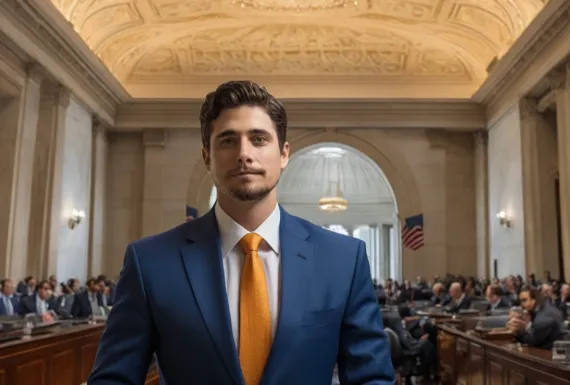
In the whirlwind of April 2024, with Bitcoin ETFs dominating headlines and halving celebration planning in full swing, the Bitcoin Policy Summit emerged as a pivotal moment for policymakers, industry leaders, and human rights champions. Against the backdrop of global discussions on Bitcoin regulation—and coinciding with a solar eclipse—the summit aimed to be a beacon of reason and a catalyst for action in the rapidly evolving world of digital assets.
The Bitcoin Policy Summit boasted a remarkable turnout, with more than 45,000 individuals tuning into the livestream. Among the 500+ in-person attendees were representatives from 26 universities, 75 government officials, and 250 public policy professionals. The summit also garnered attention from over a dozen media outlets. Notably, elected leaders from both major political parties were present, alongside representatives from prominent organizations such as the World Bank, World Economic Forum, International Monetary Fund (IMF), State Department, Department of Commerce, Treasury Department, Environmental Protection Agency (EPA), Department of Energy (DOE), Department of Defense (DoD), and the Commodity Futures Trading Commission (CFTC).
The summit, with its diverse mix of voices and perspectives, shed light on the pressing need for smart and informed decision-making in the realm of digital asset policy. While Bitcoin symbolizes financial freedom and empowerment, it also brings its fair share of challenges, from concerns about money laundering to energy usage. The summit tackled these complex issues head-on, offering insights into the multifaceted world of Bitcoin as it relates to mining, geopolitics, the future of money, and human rights.
The Bitcoin Policy Summit witnessed a significant turnout of policymakers committed to safeguarding the opportunities presented by Bitcoin and addressing its associated challenges. Figures such as Senators Marsha Blackburn, Kirsten Gillibrand, and Cynthia Lummis, alongside House members Wiley Nickel, Tom Emmer, and Patrick McHenry, lent their expertise and bipartisan support to the discussions. Their active involvement not only enriched the conversation but also signaled a united effort to ensure that digital asset policies foster innovation, protect consumers, and uphold transparency and accountability.
One of the most striking features of the summit was its focus on the intersection of Bitcoin and human rights, with speakers like Felix Maradiaga, 2024 Nobel Prize Nominee and prominent human rights advocate from Nicaragua; Anna Chekhovich, financial director of the Anti-Corruption Foundation (ACF) founded by Alexei Navalny; Roya Mahboob, Afghan entrepreneur and women's rights advocate; and Lyudmyla Kozlovska, Ukrainian human rights activist. Their combined emphasis on Bitcoin’s critical role in defending human rights and freedom of expression in the face of dictators and oppressive regimes shed light on broader roles for digital assets that many in the United States may not have previously considered.
Furthermore, the summit stressed the importance of taking a global perspective on digital asset regulation to protect human rights. In a world where digital assets know no borders, fragmented
regulatory approaches risk creating loopholes and undermining financial integrity. Human rights activists stressed the need to protect privacy, free speech, and equal access to financial services for all, regardless of where they are.
The conference hall buzzed with anticipation as attendees dispersed into three specialized rooms for afternoon deep dive tracks: Mining & Energy, Geopolitics, and Future of Money. Concurrent programming featured keynotes such as “A Climate Scientist’s Perspective on Bitcoin” by Margot Paez, BPI fellow and PhD candidate at Georgia Institute of Technology. Fireside chats and panels included "Bitcoin & Financial Inclusion" with Chastity Murphy from the U.S. Treasury, and "Countering Digital Authoritarianism" featuring renowned writer Roger Huang, author of ‘Bitcoin and China’, and Jorge Jrsaissati, President of the Organization for Economic Inclusion.
One of my personal highlights from the Bitcoin Policy Summit was engaging in a fireside chat with Senator Marsha Blackburn from my home state of Tennessee. We explored the connection between Bitcoin and her advocacy for consumer rights and privacy. Additionally, we discussed Tennessee's growing prominence as a Bitcoin hub and her stance on CBDCs (spoiler: she’s not a fan). It's truly inspiring to witness elected leaders championing both monetary and digital freedoms, reinforcing their commitment to safeguarding these fundamental rights.
Another standout moment occurred during a post-summit dinner with Felix Maradiaga and his wife, Berta Valle. Felix, who endured four years of imprisonment under a Nicaraguan dictator, shared firsthand accounts of political dissent and activism. These experiences underscore the importance of Bitcoin as a decentralized monetary network, providing resilience against oppression.
The 2024 Bitcoin Policy Summit in Washington D.C. served as a crucial platform for educating policymakers and advocating for Bitcoin's role in shaping a freer and more sustainable financial future. Through candid dialogue, diverse perspectives, and collaborative efforts across sectors, participants witnessed the transformative potential of Bitcoin to advance global human rights, bolster national security, and accelerate renewable energy adoption. As we reflect on the insights garnered from the summit, let's seize this pivotal moment to shape a regulatory landscape that not only fosters innovation and economic growth but also champions human dignity, justice, and liberty.
This is a guest post by Stephen Pollock. Opinions expressed are entirely their own and do not necessarily reflect those of BTC Inc or Bitcoin Magazine.
Disclaimer: This article is provided for informational purposes only. It is not offered or intended to be used as legal, tax, investment, financial, or other advice.
Read on Bitcoin Magazine Investment Disclaimer