多次延期后,坎昆升级能否推动以太坊”王者归来”?

PanewsPublished on 2023-12-11Last updated on 2023-12-11

Abstract

本文认为,比特币与其生态爆火的发动机主要还是比特币ETF和比特币铭文生态;而以太坊能与之媲美的目前只有“Dencun升级”,这才是真正能将市场注意力和资金吸引过来,并在这轮牛市与比特币生态抗衡的主要大杀器。

作者:比推Asher Zhang
12月5日, Bankless创始人Ryan 在 X 平台发表长文表示“ETH 尚未进入牛市”。此文一出,既有支持者跟随,也有Solana以及比特币等生态的开发者加入激辩。Ryan 从多个方面解释了以太坊基本面:如市盈率高、通货紧缩、POS 不消耗能量因而会获得 ESG 投资者喜爱等,甚至认为 ETH 已经成为所谓的“数字黄金”。但从市场反映看,这些原因很难直接推动以太坊行情异军突起。
本文认为,比特币与其生态爆火的发动机主要还是比特币ETF和比特币铭文生态;而以太坊能与之媲美的目前只有“Dencun升级”,这才是真正能将市场注意力和资金吸引过来,并在这轮牛市与比特币生态抗衡的主要大杀器。伴随Dencun升级临近,本文将围绕其核心问题进行解读。
多次延期后,坎昆升级能否推动以太坊”王者归来”?


Dencun升级何以如是重要
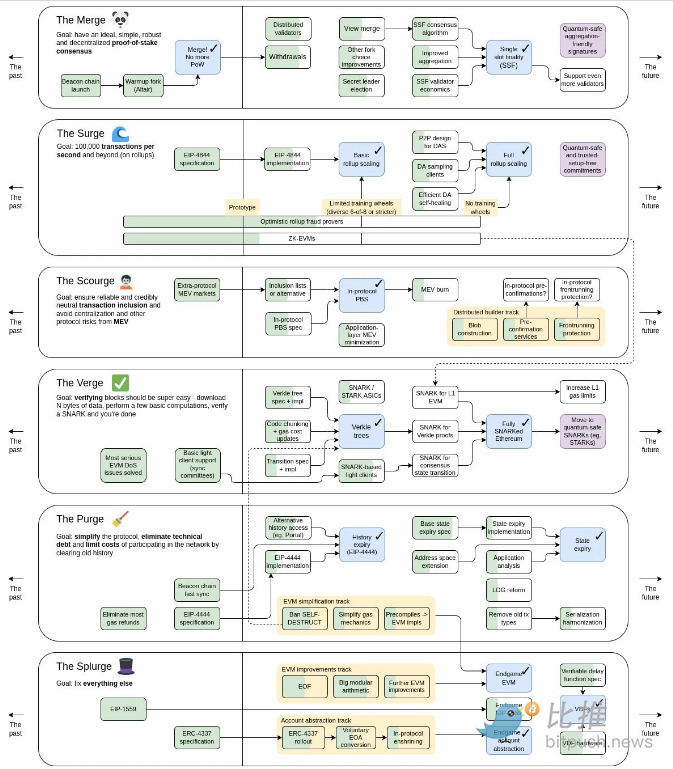
以太坊创始 Vitalik Buterin 曾以六个简洁的阶段来勾画未来的以太坊 2.0 升级路线:The Merge 、The Surge、The Scourge、The Verge 、The Purge 和 The Splurge。每个阶段围绕一个特定主题与功能的升级。The Merge 最主要的成果就是将以太坊从PoW机制转为PoS机制,伴随这次升级成功,当时市场上很多分析人士认为以太坊将在下轮牛市涨幅超越比特币。然而,随着比特币Ordinals协议等诞生,比特币爆火。相比之下,Dencun升级的意义几乎同样重大,其本质是The Surge阶段的一个非常重要环节。
多次延期后,坎昆升级能否推动以太坊”王者归来”?


The Surge 最终是为了解决自区块链技术诞生以来一直困扰着它的可扩展性问题,使其性能最终能达到 10 万 TPS 的水平,接近传统电子支付(例如 visa)的速度,而这一升级是通过 Danksharding(“DS”,即分片)来实现的。Proto-Danksharding(EIP-4844)是 Danksharding 的第一步,也是 Deneb-Cancun(即坎昆升级)的重要步骤,也是以太坊实现分片机制,完成扩展路线图的重要一步。注:Dencun是由Cancun(坎昆)和Deneb两个词组合而成的合成词。Cancun代表了本次以太坊的执行层升级,而Deneb代表了协议层升级。
Decun升级将为哪些赛道带来巨变
伴随加密市场发展,区块链技术已经逐渐走向成熟,Dencun升级便是其中最主要的一个标志。而技术成熟之后,加密市场无疑将开始进入到下一个应用阶段,其中DeFi的成功已经展示了其强大之处。当下,我们正处于这个重要的节点之上。那么,Dencun升级之后,有哪些赛道或者领域值得关注呢?这之间的联系又是如何产生的?
Layer 2
在Layer 2 交易的单位成本中最大的一块费用是「Call Data」,目前占 L2 交易费用的 80% 以上,当在 L2s 上出现恶意验证者活动的情况下,整个 L2 链可以通过使用 L1s 上发布的 Call Data 来重建。以太坊Dencun升级最主要的一个改进提案就是EIP-4844 。它引入了一种新的交易类型,称为 Blob 携带交易,这些交易类似于常规交易,但包含了额外的数据集合,称为 Blob,其相比当前的 Calldata 存储方式更加经济。除了引入 Blob 携带交易,EIP-4844 还会实现执行层逻辑、验证规则、多维费用市场等其他系统改变,以满足未来实现完整的 danks 分片的需求。
模块化区块链
模块化区块链是专注于处理少数职责并将其余部分外包给一个或多个独立层的区块链。从以太坊的技术发展看,其模块化技术堆栈发展进程主要包含三个阶段:1. 单片区块链:代表着以太坊L1或主链,本身是一个单片区块链;2. Rollup:充当执行层的L2解决方案,例如 Arbitrum 和 Optimism ,将执行层从以太坊L1移出,发布 state roots 和 rollup 数据并传回给以太坊L1;3. 模块化 rollup:具有模块化数据可用性的 rollup。
除了Layer2,在模块化区块链中,DA 层(数据可用性)同样值得关注,其充当不可变的公告板,其中发布交易数据和证明。如果没有 DA,Rollup 就无法保证活跃性。利用 DA 层提供的交易数据,任何人都可以从上一个人停止的地方继续计算下一个区块,其中Celestia 和 Avail 等是该领域龙头项目。
全链游戏
在应用领域,除了DeFi,链游或者元宇宙是最值得关注,以及可能破圈的。而在全链游戏中,最值得关注的就是DAW。DAW(即decentralized Autonomous Worlds)属于全链游戏的子集,是一种全链上的、开放式的、没有预设游戏玩法的游戏类型;其通过提供公开可访问的可编程接口,让玩家在这个数字物理现实的边界内自由创造、增强和扩展游戏体验,进一步扩展游戏的剧情。2022 年 10 月,黑暗森林的 Lattice 团队创建的一款全链式 3D Minecraft 主题游戏OPcraft就颇受市场关注。
Layer 3
虽然区块链行业中的 Layer 3 概念目前还没有一个广为接受的定义,但其同样重要。以太坊联合创始人 Vitalik Buterin 认为, Layer 3 在未来有三种可能:Layer 2 用于扩展,Layer 3 用于定制功能,如隐私保护;Layer 2 用于通用扩展,Layer 3 用于定制扩展;Layer 2 用于无信任扩展(Rollups),Layer 3 用于弱信任扩展(Validiums)。
多次延期后,坎昆升级能否推动以太坊”王者归来”?


加密市场大V如何看待以太坊未来发展
Dencun升级是以太坊很重要的一次升级,但市场上还是有不同的声音,本文就一些加密大V的观点进行整理,以供读者参考。
Smarti Lab 发文表示:与普遍看法相反,仅仅依靠 EIP-4844 还不足以让以太坊显著提高可扩展性。我们通过两种计算方法来评估实施 EIP-4844 后可能会减少的 Gas 费、TPS(每秒交易量)和容纳 Rollups 的能力。据估算,在 Calldata 大小分别为 10KB 和 2KB 的情况下,EIP-4844 可能会容纳更多的 Calldata,从 38 倍到 192 倍不等。由于能在同一区块内容纳更多 Calldata,每单位 Calldata 的成本也会相应降低。假设每个 Rollup 的 Calldata 大小统一为 2KB,则 EIP-4844 最多只能容纳 384 个 Rollup。在正常情况下(即区块达到目标大小时),以太坊将通过 EIP-4844 达到 175 TPS,最高可达 350。
前 Solana 核心开发者 @zen_llama 表示:“我个人不同意将 Rollup 作为扩展解决方案,但它们作为 ETH 资产的价值捕获解决方案非常有意义,这会把收入带到不同的网络,这就是为什么我认为 Rollup 对于 ETH 来说是危险的。”
The Daily Gwei 创始人@sassa l0 x 十分乐观的表示:“ETH 将飙升至 1 万美元以上,让观望的投资者陷入法货和垃圾币的泥潭中。在我看来,我们仍然需要向人们阐明 ETH 的价值支撑在何处!”
总结
以太坊核心开发者此前曾表示,今年年底不会进行Dencun升级。12月1日,Galaxy研究副总裁Christine Kim发文称,Dencun升级已于11月30日在Devnet #12上激活。有分析指出,Dencun升级大概率会在明年一季度。从时间和当下进度看,其在明年一季度的概率很大。另外,根据彭博分析师披露的文件, BlackRock (贝莱德)在特拉华州注册以太坊信托,注册实体名为 ISHARES ETHEREUM TRUST。这意味着,一旦比特币ETF落地,那么以太坊ETF同样具备很大炒作预期。整体上看,2024年,Dencun升级最有可能成为以太坊重回王座的发动机,而以太坊ETF则又很大程度会成为助推剂。


Related Reads

$9.4 Billion: The Largest Robotics Funding This Year Has Emerged

Munich-based humanoid robotics company Neura has completed a $1.4 billion (approximately RMB 94.9 billion) Series C funding round, valuing the company at around $7 billion and positioning it among the global leaders in the sector. The investment round is notable not just for its size—reportedly the largest in robotics this year—but also for its strategic backers, which include tech giants like NVIDIA and Amazon, alongside established industrial players such as German engineering firms Bosch and Schaeffler. This mix of investors signals a significant shift in the industry's focus from technological demonstrations and general-purpose narratives toward practical, industrial deployment and commercialization. Neura's approach centers on developing humanoid robots for defined, high-value industrial tasks rather than pursuing a general-purpose model. Its early validation comes from a partnership with BMW, where its robots are being tested on actual production lines. The involvement of Bosch and Schaeffler, companies deeply embedded in global manufacturing, underscores a growing belief that humanoid robots are transitioning from labs to viable factory-floor solutions. The article highlights two converging trends driving investment: advancements in AI and large language models, which enhance robots' perception and decision-making in unstructured environments, and mounting pressure from labor shortages and rising costs in major manufacturing regions. The funding landscape is now bifurcating between companies like Figure AI, focusing on versatile general-purpose robots, and firms like Neura, targeting specific vertical industrial applications with clearer, shorter paths to ROI. While technical hurdles remain, the core challenges for widespread adoption are increasingly seen as engineering and commercial in nature: managing the high integration and customization costs for different factory environments and establishing robust, localized maintenance and service networks. The record investment in Neura, particularly from industrial capital, indicates the industry's growing confidence in moving from proving feasibility to solving the practical problems of scalability, reliability, and building sustainable business models around humanoid robots in real-world settings like automotive manufacturing and hazardous labor environments.

marsbit8h ago

$9.4 Billion: The Largest Robotics Funding This Year Has Emerged

marsbit8h ago

Trading

Spot
Futures

Hot Articles

What is $BITCOIN

DIGITAL GOLD ($BITCOIN): A Comprehensive Analysis Introduction to DIGITAL GOLD ($BITCOIN) DIGITAL GOLD ($BITCOIN) is a blockchain-based project operating on the Solana network, which aims to combine the characteristics of traditional precious metals with the innovation of decentralized technologies. While it shares a name with Bitcoin, often referred to as “digital gold” due to its perception as a store of value, DIGITAL GOLD is a separate token designed to create a unique ecosystem within the Web3 landscape. Its goal is to position itself as a viable alternative digital asset, although specifics regarding its applications and functionalities are still developing. What is DIGITAL GOLD ($BITCOIN)? DIGITAL GOLD ($BITCOIN) is a cryptocurrency token explicitly designed for use on the Solana blockchain. In contrast to Bitcoin, which provides a widely recognized value storage role, this token appears to focus on broader applications and characteristics. Notable aspects include: Blockchain Infrastructure: The token is built on the Solana blockchain, known for its capacity to handle high-speed and low-cost transactions. Supply Dynamics: DIGITAL GOLD has a maximum supply capped at 100 quadrillion tokens (100P $BITCOIN), although details regarding its circulating supply are currently undisclosed. Utility: While precise functionalities are not explicitly outlined, there are indications that the token could be utilized for various applications, potentially involving decentralized applications (dApps) or asset tokenization strategies. Who is the Creator of DIGITAL GOLD ($BITCOIN)? At present, the identity of the creators and development team behind DIGITAL GOLD ($BITCOIN) remains unknown. This situation is typical among many innovative projects within the blockchain space, particularly those aligning with decentralized finance and meme coin phenomena. While such anonymity may foster a community-driven culture, it intensifies concerns about governance and accountability. Who are the Investors of DIGITAL GOLD ($BITCOIN)? The available information indicates that DIGITAL GOLD ($BITCOIN) does not have any known institutional backers or prominent venture capital investments. The project seems to operate on a peer-to-peer model focused on community support and adoption rather than traditional funding routes. Its activity and liquidity are primarily situated on decentralized exchanges (DEXs), such as PumpSwap, rather than established centralized trading platforms, further highlighting its grassroots approach. How DIGITAL GOLD ($BITCOIN) Works The operational mechanics of DIGITAL GOLD ($BITCOIN) can be elaborated on based on its blockchain design and network attributes: Consensus Mechanism: By leveraging Solana’s unique proof-of-history (PoH) combined with a proof-of-stake (PoS) model, the project ensures efficient transaction validation contributing to the network's high performance. Tokenomics: While specific deflationary mechanisms have not been extensively detailed, the vast maximum token supply implies that it may cater to microtransactions or niche use cases that are still to be defined. Interoperability: There exists the potential for integration with Solana’s broader ecosystem, including various decentralized finance (DeFi) platforms. However, the details regarding specific integrations remain unspecified. Timeline of Key Events Here is a timeline that highlights significant milestones concerning DIGITAL GOLD ($BITCOIN): 2023: The initial deployment of the token occurs on the Solana blockchain, marked by its contract address. 2024: DIGITAL GOLD gains visibility as it becomes available for trading on decentralized exchanges like PumpSwap, allowing users to trade it against SOL. 2025: The project witnesses sporadic trading activity and potential interest in community-led engagements, although no noteworthy partnerships or technical advancements have been documented as of yet. Critical Analysis Strengths Scalability: The underlying Solana infrastructure supports high transaction volumes, which could enhance the utility of $BITCOIN in various transaction scenarios. Accessibility: The potential low trading price per token could attract retail investors, facilitating wider participation due to fractional ownership opportunities. Risks Lack of Transparency: The absence of publicly known backers, developers, or an audit process may yield skepticism regarding the project's sustainability and trustworthiness. Market Volatility: The trading activity is heavily reliant on speculative behavior, which can result in significant price volatility and uncertainty for investors. Conclusion DIGITAL GOLD ($BITCOIN) emerges as an intriguing yet ambiguous project within the rapidly evolving Solana ecosystem. While it attempts to leverage the “digital gold” narrative, its departure from Bitcoin's established role as a store of value underscores the need for a clearer differentiation of its intended utility and governance structure. Future acceptance and adoption will likely depend on addressing the current opacity and defining its operational and economic strategies more explicitly. Note: This report encompasses synthesised information available as of October 2023, and developments may have transpired beyond the research period.

363 Total ViewsPublished 2025.05.13Updated 2025.05.13

What is $BITCOIN

Discussions

Welcome to the HTX Community. Here, you can stay informed about the latest platform developments and gain access to professional market insights. Users' opinions on the price of BTC (BTC) are presented below.

活动图片