Прогноз цены на Cardano: ADA прекратила кровотечение после девяти дней, когда самое крупное обновление Cardano достигло 96% готовности

cryptonews.ruPublished on 2026-08-17Last updated on 2026-08-17

Abstract

Cardano's ADA price shows signs of stabilization after a nine-day downtrend, bouncing from the key Fibonacci 0.382 support level at $0.1762. Technical analysis indicates immediate resistance at the 20-day and 50-day EMAs, with further hurdles at $0.1998. Conversely, a break below support could target $0.1617. Fundamentally, the upcoming "Dijkstra" upgrade is a major focus, with the Ouroboros Leios scalability component now reported as 96% complete for a planned mainnet target in Q4 2026. The upgrade is structured in two phases, aiming to significantly boost transaction throughput and finality. However, a key governance vote to appoint Cardano's Constitutional Committee is at risk of failing, which could stall future upgrade proposals. Macro conditions add uncertainty, with the crypto market seeing its lowest trading volume of 2026 and upcoming FOMC meeting minutes poised to influence risk sentiment. The price forecast hinges on ADA holding the $0.1762 support. A successful hold, combined with positive Fed commentary and passing the governance vote, could fuel a move toward $0.1998. Failure on any of these fronts risks a decline toward the next support at $0.1617.

Прогноз цены Cardano сегодня изменился на одном техническом уровне: $ADA отскочил до $0.1770 прямо от поддержки Фибоначчи 0.382 на $0.1762 после девяти подряд красных дней — уровень, который становится чертой между восстановлением $0.1998 и падением к $0.1617.

Анализ цены $ADA: девять красных дней заканчиваются на уровне 0,382 Фибоначчи
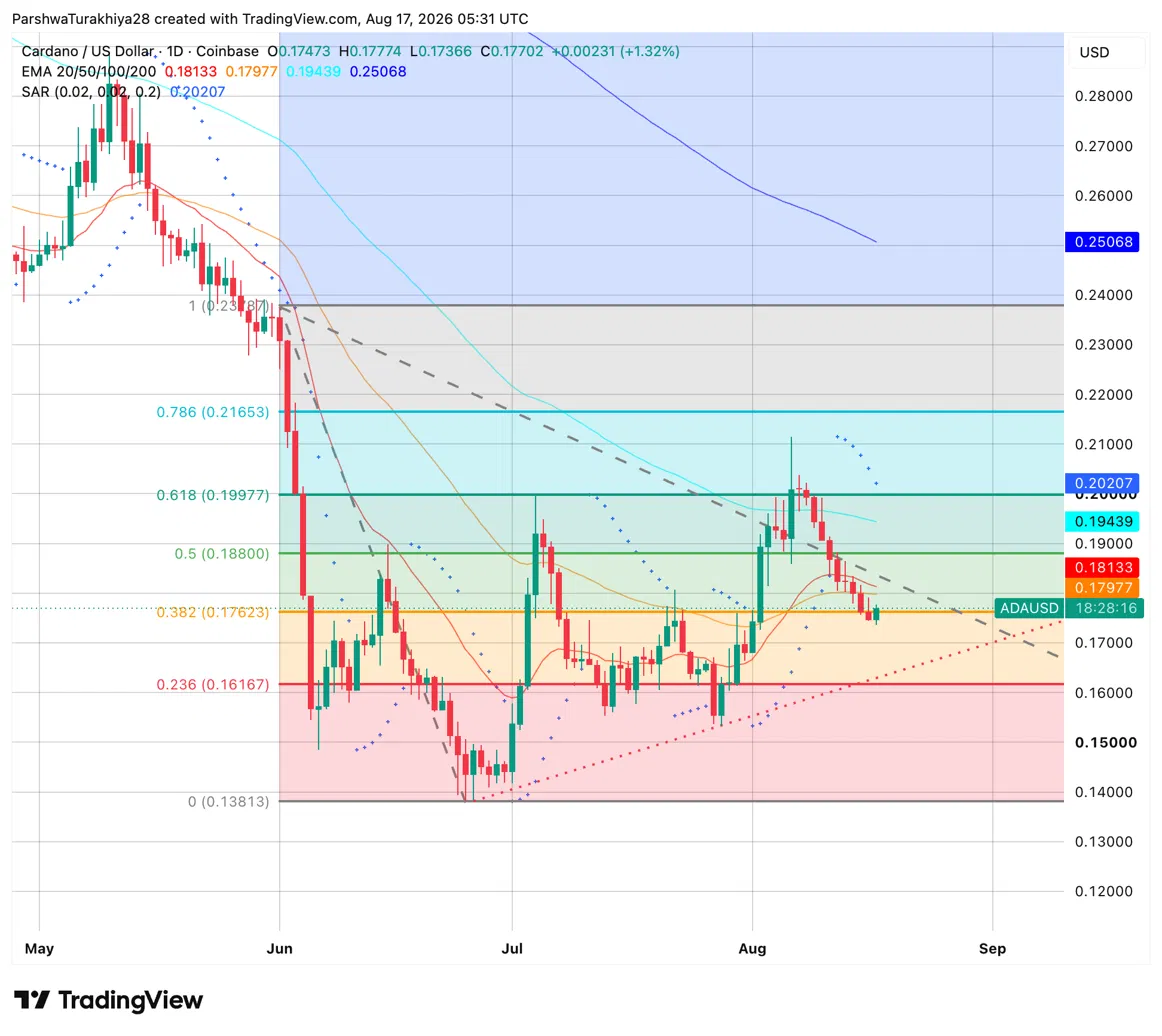
Ценовое действие по $ADA (Источник: TradingView)

$ADA нашла поддержку на коррекции Фибоначчи 0,382 на уровне 0,1762 долларов после девятиссийного отката с августовских максимумов выше $0,20. Сегодняшняя сессия открылась на уровне $0.1747, поднялась до $0.1777 и удерживается на уровне $0.1770, напрямую отскачивая от уровня, который LuckSide Crypto отметила как ключевую зону поддержки перед выходными.

20-дневная EMA на уровне $0,1813 и 50-дневная на $0,1798 обе находятся чуть выше как первый кластер сопротивления. Особенно стоит следить за 50-дневной EMA к текущей цене, поскольку растущая скользящая средняя, приближающаяся к цене сверху, может перейти в динамичную поддержку — уровень, который со временем поднимается, а не остаётся фиксированным, если $ADA стабилизируется здесь.

Параболический SAR на уровне $0.2021 остаётся медвежьим выше цены. 100-дневная EMA на уровне $0.1944 и 0.618 Фибоначчи на $0.1998 образуют следующее значимое сопротивление выше этого, при этом 200-дневное сопротивление на уровне $0.2507 является долгосрочным потолком. Ниже текущей цены уровень Фибоначчи 0,236 на уровне 0,1617 становится следующим уровнем, на который будет целиться прогноз Cardano, если уровень 0,382 уступит.

Уровни поддержки и сопротивления $ADA, 17 августа 2026 года

Тип Цена Уровень
Сопротивление $0.1798 50-дневная EMA
Сопротивление $0.1944 100-дневная EMA
Сопротивление $0.1998 0.618 Фибоначчи
Сопротивление $0.2021 Параболический SAR
Поддержка $0.1762 0,382 Фибоначчи, текущий уровень отскока
Поддержка $0.1617 0.236 Фибоначчи
Поддержка $0.1381 Июньский минимум, последний крупный этаж

Cardano News: Лейос достиг 96% готовности по мере формирования дорожной карты Дейкстры

Ouroboros Leios, предстоящее обновление пропускной способности Cardano, теперь сообщает о 96% готовности к своему показателю с 1 000 транзакций в секунду, согласно трекеру прогресса, на который ссылается LuckSide Crypto.

Cardano Plans Two-Phase Dijkstra Upgrade With Leios and Peras

Cardano has outlined a two-phase rollout for its upcoming Dijkstra era. Phase 1, targeting Q4 2026 code completion, will activate Ouroboros Linear Leios (CIP-164) to increase throughput through supplementary Endorser... pic.twitter.com/eBGNwaNG9M

— Wu Blockchain (@WuBlockchain) August 16, 2026

Этот рубеж поддерживает ноябрьскую цель по основной сети и является одним из самых значимых показателей технической готовности, которые сеть разместила. Wu Blockchain сообщил, что Cardano формализовала двухфазную структуру для следующего крупного цикла обновления, известного как эра Дейкстры.

Фаза 1: Линейные Leios и вложенные транзакции

Фаза 1 нацелена на завершение кода за 4-й квартал 2026 года и активирует Ouroboros Linear Leios для увеличения пропускной способности за счёт дополнительных блоков Endorser Blocks — дополнительных производителей блоков, помогающих быстрее обрабатывать транзакции, а также вкладываемые транзакции, скрипты защиты, улучшения адресов аккаунта и более простые выводы средств за скрепки с наградами.

Фаза 2: Уроборос Перас и Быстрое Заселение

Фаза 2, запланированная на второй квартал 2027 года, активирует Ouroboros Peras, добавляя слой голосования с пулом стейков, предназначенный для ускорения расчёта и того, насколько быстро сделка становится окончательной и необратимой. Обе фазы требуют развертывания тестовой сети и одобрения управления цепочкой перед активацией основной сети, следуя структурированному пути от релиза узла до предпросмотра и предпродакшн-хардфорков.

Фаза Дейкстра Цель Ключевая особенность
Фаза 1 Завершение кода в четвертом квартале 2026 года Линейные Leios, вложенные транзакции, скрипты защиты
Фаза 2 Второй квартал 2027 года Уроборос Перас, ускоренное заселение

Cardano News: Голосование конституционного комитета рискует провалом

Голосование по управлению по назначению недавно избранного Конституционного комитета Кардано находится под угрозой провала. Данные GovTool, на которые ссылается LuckSide Crypto , показывают, что одобрение DRep составляет всего 30% от требуемых 67%, тогда как операторы стейкпулов едва зарегистрировали менее 1% от требуемых 51%, а действие истекает 1 сентября.

Конституционный комитет — это орган, который рассматривает и утверждает предложения по управлению Cardano. Если голосование не проходит, число членов сокращается с семи до трёх, что ниже минимального уровня, необходимого для работы. Это означает, что большинство предложений по управлению, включая внедрение Alpha Growth Prime и голосование, связанные с Дейкстрой, будут приостановлены до разрешения ситуации. LuckSide призвал DReps и SPO голосовать до крайнего срока.

Макроконтекст: День с наименьшим объемом в 2026 году и протоколы FOMC в среду

Крипторынок зафиксировал всего 27 миллиардов долларов за 24-часовой торговый объём 16 августа, что стало самым низким объёмом в 2026 году по данным LuckSide Crypto, по сравнению с уже спокойными 33 миллиардами долларов в предыдущие выходные. Условия низкого объёма облегчают запуск колебаний цен в обе стороны, что отметил LuckSide как причину следить за возможной волатильностью, а не рассматривать тишину как признак стабильности.

Главным макрокатализатором этой недели стали протоколы заседания FOMC в среду, 19 августа, которые покажут, насколько близко было голосование 29 июля к перевороту и насколько жёсткой была внутренняя дискуссия. С учётом того, что вероятность повышения ставки в сентябре сейчас около 35%, минутный тон может существенно изменить эту вероятность в любую сторону. LuckSide также указал на радужную позицию Биткоина на графике регрессии, отметив, что BTC никогда не оставался ниже диапазона огненных продаж так долго, что исторически проявлялось у дна цикла.

Прогноз цены по $ADA: цели вверх и снижения

Бычий случай, цель: $0.1998 (0.618 Фибоначчи)

$ADA удерживает индекс Фибоначчи 0,382 на уровне 0,1762 долларов на дневном закрытии, завершая девятисессионную красную серию с подтверждённым отскоком. 50-дневный рост EMA к текущей цене обеспечивает динамическую поддержку, а достижение 96% готовности Leios привлекает новое техническое внимание к фундаментальному прогрессу Cardano. Протоколы FOMC в среду оказались менее жёсткими, чем ожидалось, что устраняет макровстречный ветер, а $ADA продвигает 20-дневные и 50-дневные EMA к 0,618 Фибоначчи на уровне 0,1998 доллара.

Медвежий случай, уровень риска: $0.1617 (0.236 Фибоначчи)

Индекс Фибоначчи 0,382 на уровне $0,1762 не удерживает дневное закрытие, поскольку сбой в управлении Конституционным комитетом сказывается на доверии экосистемы, а голосование по CC не достигло порога до 1 сентября. Протоколы FOMC показывают более строгий внутренний тон, чем предполагалось в заявлении после заседания, что снижает шансы повышения в сентябре выше 50% и снижают рисковые активы. $ADA движется к 0,236 Фибоначчи на уровне 0,1617 в качестве следующей значимой поддержки.

Часто задаваемые вопросы

Заключение

Отскок $ADA от $0,1762 происходит на пересечении трёх отдельных историй: технического теста, действительно сильного этапа развития в Leios и голосования по управлению, которое сейчас находится на пути к провалу. Ни один из этих трёх не является решающим сам по себе.

Коэффициент Фибоначчи 0,382 — это тот уровень, который их связывает: если удерживать его до протоколов FOMC в среду и до крайнего срока управления 1 сентября, то $0,1998 становится реалистичным, а потеря превращает любой из этих катализаторов — агрессивный сюрприз ФРС, неудачное голосование в CC или простую волатильность с низкими объемами — в триггер для движения к $0,1617.

end-content

Trending Cryptos

Related Questions

QWhat key technical level did Cardano (ADA) bounce from after nine consecutive down days?

ACardano (ADA) bounced from the 0.382 Fibonacci retracement level at $0.1762.

QWhat are the details of the two-phase Dijkstra era upgrade for Cardano?

AThe two-phase Dijkstra era upgrade consists of: Phase 1 (targeting Q4 2026 code completion) activating Ouroboros Linear Leios for increased throughput. Phase 2 (targeting Q2 2027) activating Ouroboros Peras to accelerate settlement finality. Both require testnet deployment and on-chain governance approval.

QWhat is the risk to Cardano's governance vote regarding the Constitutional Committee, and what is the deadline?

AThe governance vote to seat the recently elected Constitutional Committee risks failure. As of the article, DRep approval is at only 30% of the required 67%, and stake pool operators have registered less than 1% of the required 51%. The action expires on September 1.

QWhat are the bullish and bearish price targets for ADA mentioned in the article?

AThe bullish price target is $0.1998 (the 0.618 Fibonacci level). The bearish risk level is $0.1617 (the 0.236 Fibonacci level).

QAccording to the article, what was a notable macro event for the crypto market in mid-August 2026?

AThe crypto market recorded only $27 billion in 24-hour trading volume on August 16, which was the lowest volume day of 2026 up to that point.

Related Reads

'The Idea of Catching the Absolute Bottom Is Wrong': Experts on a New Phase of Bitcoin Capitulation

Analysts from CryptoQuant advise investors against trying to pinpoint the exact bottom of Bitcoin's price. Their data shows the percentage of the Bitcoin supply in profit has fallen to 51.4%, a level historically associated with capitulation phases followed by accumulation. This means approximately 48.6% of circulating coins are held at an unrealized loss. The metric, based on UTXO analysis comparing a coin's last moved price to its current market value, last neared this level in early 2023 when Bitcoin traded between $16,000 and $20,000. CryptoQuant states that the idea of catching the "absolute bottom" is flawed. The decline in the average cost basis during a bear market reflects coins transferring from weak hands to stronger, long-term holders. While some investors realize losses, others may use the decline for gradual accumulation. The accumulation window may last longer than many expect, even as fear drives some participants away. Historically, a supply in profit below 55% has been linked to re-accumulation periods. Separately, Swan Bitcoin CEO Cory Klippsten offered a forecast, suggesting Bitcoin could form a bottom in October 2026, followed by a recovery towards approximately $130,000 ahead of the 2028 halving. This aligns with the historical pattern of local lows forming about 12 months after bull market peaks; Bitcoin hit its all-time high above $126,000 in early October 2025. However, Klippsten cautioned against over-relying on past cycles due to limited historical data.

cryptonews.ru3m ago

'The Idea of Catching the Absolute Bottom Is Wrong': Experts on a New Phase of Bitcoin Capitulation

cryptonews.ru3m ago

How Does FalconX Bring Institutional Lending On-Chain? Deep Dive into the FALX Operational Mechanism

FALX is a structured credit facility that brings institutional prime brokerage loans on-chain as fixed-income assets. It works by having FalconX originate overcollateralized loans to institutional clients (e.g., quant funds, market makers). These loan exposures enter a bankruptcy-remote SPV. The Pareto protocol provides the on-chain credit vault infrastructure, while M11 Credit acts as the credit curator, administrative agent, and collateral agent. Platforms like Plume, Ethereum, and Solana serve as distribution channels for investors. Investors deposit USDC into the vault, receiving an estimated ~7.4% net yield (after a 10% performance fee). This yield represents a premium over low-risk on-chain alternatives (like tokenized Treasuries at ~4%) to compensate for risks including FalconX operational risk, collateral liquidation risk, SPV legal risk, M11's execution risk, a 31-day redemption notice period, and potential contagion from DeFi re-collateralization. The structure incorporates multiple risk mitigations: overcollateralized underlying loans, a first-loss capital contribution from FalconX, and independent oversight by M11. However, challenges remain, such as scaling investor demand (current AUM is ~$148M against a ~$1B potential capacity), managing redemption liquidity, and addressing new risks from the vault token's use as collateral in DeFi lending protocols like Morpho. FALX demonstrates a pragmatic path for on-chain credit by leveraging existing institutional loan origination and combining it with legal structures, external curation, and blockchain-based distribution.

marsbit5m ago

How Does FalconX Bring Institutional Lending On-Chain? Deep Dive into the FALX Operational Mechanism

marsbit5m ago

AI Isn't Smarter Than Humans, It Can Just Afford to Fail; Fields Medalist Highlights 10 OpenAI Breakthroughs

"AI isn't smarter than humans, it just loses more." This is the core idea from Fields Medalist Timothy Gowers, analyzing OpenAI's ten new mathematical breakthroughs. These results, including disproving the 80-year-old Erdős unit distance conjecture and finding the first non-sofic group, caused a "Deep Blue moment" among mathematicians, prompting some to question their future role. Gowers argues the distinction between finding counterexamples and proving theorems is artificial. The real difference lies in the search strategy. AI excels in problems with well-defined, data-rich search paths where it can afford countless failed attempts—it "can lose." Its strengths are breadth of knowledge, speed, and resilience in brute-force exploration. However, AI currently struggles with problems requiring deep "pruning" of a vast decision tree—the intuitive judgment of which paths are fruitless. This is because training data consists of polished final proofs, lacking the crucial "natural friction" of human reasoning that highlights difficult steps. As Terence Tao noted, AI often misallocates emphasis, smoothing over this informative friction. True AI breakthrough, per Gowers, will arrive not when it solves isolated hard problems, but when it produces a method so novel and generative that it immediately redirects the research of an entire human mathematical community—like the cap-set problem solution did in 2016. For now, AI's advantage is stamina, not genius.

marsbit10m ago

AI Isn't Smarter Than Humans, It Can Just Afford to Fail; Fields Medalist Highlights 10 OpenAI Breakthroughs

marsbit10m ago

Looking Back at Information Hiding in the GenAI Era from Claude's Invisible Watermark: How Can Embedded Watermarks Ensure Losslessness?

On August 11, 2026, Anthropic announced that its new Claude models will embed invisible, machine-readable watermarks into generated text, allowing AI-generated content to be traced even after copying and redistribution, without affecting semantic quality or readability. This move follows global initiatives to watermark AI outputs, highlighted by the World Economic Forum and futurist Kevin Kelly. A core challenge is ensuring watermarking does not degrade model performance, leading to the key research goal of "provably lossless" generation. The theoretical foundation lies in provably secure steganography, which requires that watermarked data be indistinguishable from normal data in distribution. Early theoretical work was limited by the inability to precisely sample natural data distributions. The rise of generative AI models around 2018 provided a breakthrough, as these models learn and sample from explicit distributions. Pioneering work by a University of Science and Technology of China (USTC) team proposed frameworks for provably secure steganography using generative models, mapping encrypted messages to drive content generation. Subsequent research expanded the practicality of these techniques. Advancements include public-key steganography for asymmetric extraction, "box-less" extraction where the receiver doesn't need the original model, and "grey-box" scenarios for resource-constrained devices. A key innovation, SyncPool, resolved tokenization ambiguities in LLMs to ensure reliable message recovery. The principles of provably secure steganography directly enable "provably lossless" watermarks. If a watermark can be embedded without altering the model's sampling distribution, generation quality remains mathematically guaranteed. USTC's system, applied in platforms like Spark AI, offers plug-and-play watermarking for robust detection and model attribution. Internationally, research on "unbiased" or "distortion-free" watermarks for LLMs has accelerated, with work from Stanford, University of Maryland, and others. In the image domain, techniques like Gaussian Shading (CVPR 2024) embed watermarks by randomizing them into the latent space of diffusion models, proving no performance loss. Follow-up works enhanced robustness and addressed issues like parameter variation. The concept of "losslessness" has also been extended to model watermarking itself, using cryptographic constructs to ensure the watermark doesn't interfere with normal model use. The field has thus evolved from "empirical security" to "provable security," offering a theoretical guarantee against quality degradation from watermarking. The watermarking ecosystem involves an ongoing arms race between embedding and removal attempts, where the constraint of preserving content quality is a shared pursuit for both defenders and attackers, making the cost of removal a central part of the security博弈.

marsbit11m ago

Looking Back at Information Hiding in the GenAI Era from Claude's Invisible Watermark: How Can Embedded Watermarks Ensure Losslessness?

marsbit11m ago

Trading

Spot

Hot Articles

Discussions

Welcome to the HTX Community. Here, you can stay informed about the latest platform developments and gain access to professional market insights. Users' opinions on the price of ADA (ADA) are presented below.

活动图片